

Cala Health Files IPO: Pioneering Wearable Neuromodulation Therapy Offers Non-Invasive Alternative to Brain Surgery for Essential Tremor

Cala Health
Peripheral Nerve Therapy Developer
Can a Simple Wristband Replace Invasive Brain Surgery? Bioelectronic medicine company Cala Health has developed Cala Trio, a wearable electronic device resembling a smartwatch that delivers electrical stimulation to nerves in the wearer’s wrist. It is used to treat essential tremor (ET) in adults, offering an alternative to surgery for the 7 million Americans affected by the condition.
Cala Health, founded in 2014 and headquartered in the San Francisco Bay Area, is a bioelectronic medicine company dedicated to transforming the standard of care for chronic diseases.The company has pioneered a novel form of electroceuticals known as Neuro-Peripheral Therapy, which treats chronic diseases by delivering transcutaneous electrical stimulation to peripheral nerves.The company’s wearable neuromodulation therapy integrates innovations in neuroscience and technology to deliver personalized peripheral nerve stimulation, while its vertically integrated business model is transforming the delivery of prescription therapies.
When Kate Rosenbluth was still a biodesign fellow at Stanford, she was drawn to the formidable challenge of treating hand tremors.
Essential tremor (ET) affects more than 7 million Americans and is one of the most common movement disorders. The primary symptom of this condition is hand tremors; its prevalence is eight times that of Parkinson’s disease, yet it is frequently misdiagnosed as Parkinson’s. ET commonly occurs in individuals aged 40 and older. In addition to hand tremors, some patients also experience tremors of the head, voice, and legs. Pharmacological treatments for ET not only demonstrate limited efficacy but also cause severe side effects. Although invasive deep brain stimulation can effectively alleviate symptoms, it is costly and not widely accessible.
Kate Rosenblut, Founder and Chief Scientific Officer of Cala Health, discovered in a study that stimulation of the nerves around the wrist could reach deep into the brain. She then collaborated with Scott Delp, Director of the Neuromuscular Biomechanics Laboratory at Stanford University, to explore whether wrist nerve stimulation could be used to treat movement disorders.
This concept has garnered support from leading investors in the healthcare and technology sectors.
On August 6, 2014, Kate and Scott raised $3.3 million in Series A financing to explore the feasibility of the concept. Research indicated that stimulating the wrist nerves to interrupt tremor signals driving brain tremors has therapeutic potential.
In 2016, the team completed an $18 million Series B financing round to seek regulatory approval for a device designed to treat essential tremor. They assembled an expert team spanning the intersecting fields of medical devices, pharmaceuticals, and technology.
In 2018, the company’s product Cala ONE received approval from the U.S. Food and Drug Administration (FDA) for the temporary relief of hand tremor symptoms in patients through personalized wristband therapy. In the same year, Cala Health’s proprietary electrode was approved by the FDA and incorporated into the company’s third-generation device, Cala Trio.
On May 22, 2019, Cala Health completed a $50 million Series C financing round to advance the commercialization of its wearable electronic device, Cala Trio.Multiple venture capital firms, including Novartis, Baird Capital, LifeSci Venture Partners, TriVentures, Johnson & Johnson Innovation, Lux Capital, Lightstone Ventures, Action Potential Venture Capital, dRx Capital, and GV, participated in this financing round. As part of the transaction, industry veteran Stacy Enxing Seng joined Cala Health as an Independent Director and Chair of the Board.
In September of the same year, Cala Health announced the appointment of Renee Ryan as Chief Executive Officer. Ms. Ryan has been tasked with leading the company’s operations and innovative commercialization strategies, building upon its significant scientific advancements to support the next phase of growth. She brings over 20 years of experience in building category-creating healthcare companies. Notably, during her tenure as Vice President of Venture Capital at Johnson & Johnson Innovation – JJDC, she led more than 16 new investment projects, including Cala Health’s Series A financing round. Prior to leading JJDC, Ms. Ryan served as a healthcare investment banker at R.W. Baird, Jefferies, and Goldman Sachs.
In this context,Cala Trio entered the U.S. market with a vertically integrated business model, reshaping the delivery of prescription therapies: patients can obtain prescriptions through in-person consultations or telehealth appointments, Cala Trio is conveniently delivered to their homes, and Cala Health provides personalized instruction tailored to each patient’s learning style.
The therapy’s responsiveness and interconnectivity enable a high-quality patient experience, from prescription to user feedback. The team firmly believes that wearable electronic neuromodulation therapies will soon transform the standard of care for patients with chronic diseases.
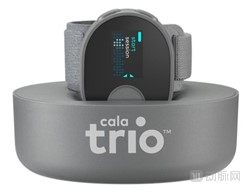
Cala Trio (Image source: Company website)
Notably, Cala Trio is currently the only non-invasive prescription therapy for essential tremor and also holds potential in the fields of neurological, cardiovascular, and psychiatric disorders.Approved by the FDA in April 2018, this device has become the leading non-invasive therapy for essential tremor (ET) using targeted neurostimulation.
According to publicly available data from the International Society for Pharmacoeconomics and Outcomes Research (ISPOR) 2020 European Virtual Conference, an analysis of claims data from 819,661 patients with commercial or Medicare insurance revealed that the prevalence of essential tremor in this population increased at an annual growth rate of 6.27% between 2010 and 2018.The prevalence of essential tremor is continuously increasing, driving growing demand for devices such as the Cala Trio.
Patients with essential tremor exhibit high rates of depression and anxiety, while Cala Trio demonstrates superior safety and efficacy in clinical practice.
Cala Health Presented a Set of Trial Data at the ISPOR Conference, Measuring Tremor Severity in Patients Before and After Treatment Using Motion Sensors in an Unmonitored Real-World Setting. Among 178 Patients Who Received Treatment, 90% Experienced a 50% Reduction in Tremor Symptoms. Of the 48 Subjects Studied Post-Market Launch, 69% Reported Improvements in Their Ability to Eat, Drink, and Write, While 48% Reported Enhanced Quality of Life. More Than Half (56%) of the Patients Indicated a Preference for Using Cala Trio Over Existing Medications and Surgical Treatments.
When the patient places the Cala Trio on the charging dock, data is uploaded to the cloud, where Cala Health can access usage and tremor data. The data indicate that, in real-world settings, patients’ tremor severity is similar to that of patients enrolled in prior studies.
“Patients with essential tremor have to choose between the inconvenience caused by the disease and the risks associated with pharmacological treatment. Our mission is to change this situation and improve their lives,” said Kate Rosenbluth. “From a commercial perspective, we are expanding our business model and connected ecosystem to serve the entire product lifecycle—from prescription fulfillment and reimbursement management to product delivery and patient use. Meanwhile, we are developing next-generation features that integrate our electronic prescription drug with patient-facing services such as telemedicine, medication management, and behavioral therapy. In terms of product development, we are collaborating with leading scientists worldwide to expand our platform to new indications, including treatments in neurology, psychiatry, and cardiology.”
In October 2020, the FDA granted Cala Trio Breakthrough Device designation for the treatment of hand motor tremor in adult patients with Parkinson’s disease.
The FDA’s Breakthrough Devices Program is a voluntary initiative for specific medical devices and device-led combination products, designed to provide more effective treatment or diagnosis for life-threatening or irreversibly debilitating diseases or conditions. Its goal is to provide patients and healthcare providers with timely access to these medical devices by accelerating development, assessment, and review, while maintaining the statutory standards for premarket approval, 510(k) clearance, and De Novo marketing authorization.
“Although hand tremors in patients with Parkinson’s disease typically occur at rest, it is estimated that more than half of patients also experience kinetic tremors,” said Stuart Isaacson, M.D., Director of the Center for Parkinson’s Disease and Movement Disorders in Boca Raton, Florida.
“Furthermore, previously published data indicate that levodopa, the most commonly used medication in the treatment of Parkinson’s disease, is ineffective against motor tremors. Therefore, the management of motor tremors in patients with Parkinson’s disease remains a serious and unmet medical need.” Cala Health is seeking Breakthrough Device designation for Cala Trio precisely because many patients with Parkinson’s disease are experiencing symptoms similar to those seen in patients with essential tremor.
In 2020, the company launched a new virtual clinical trial of Cala Trio in patients with Parkinson’s disease, encouraging interested physicians and patients with Parkinson’s disease to participate. The trial allowed participants to volunteer from home, use the therapy as specified in the study design, and conduct telemedicine visits with neurologists. To date, the company has not released any data from this trial.
“Cala Health is committed to conducting rigorous scientific and clinical studies to demonstrate the mechanism, benefits, usability, and safety of our technology,” said Kate Rosenbluth. “We are delighted that the FDA has recognized the innovation and potential of our neuromodulation therapy.”
On June 17, 2021, the company announced a collaboration with the University of California, San Francisco (UCSF) to develop non-invasive, personalized peripheral nerve stimulation therapies.Cala Health will collaborate with renowned neuroengineering expert Karunesh Ganguly, M.D., Associate Professor of Neurology at the University of California, San Francisco, and others to advance non-invasive treatments for severe neurological disorders.
Dr. Karunesh Ganguly stated, “In clinical practice, I have witnessed the profound impact of motor impairments resulting from brain injury and various neurological disorders such as Parkinson’s disease. We are committed to advancing new therapies to enhance motor function.”
UCSF is dedicated to the health sciences, committed to advancing global health through cutting-edge biomedical research, graduate education in the life sciences and health professions, and excellence in patient care. As UCSF’s primary academic medical center, UCSF Health comprises top-tier specialty hospitals and other clinical programs, with locations throughout the Bay Area. Its neurology program has ranked first nationally among U.S. medical schools’ departments of neurology for ten consecutive years.
In this collaboration, UCSF’s technology licensing expands Cala Health’s therapeutic pipeline in neurology. Furthermore, it advances the company’s mechanistic research into novel personalized therapies and integrates a robust data science platform to drive a software-defined future, with the goal of delivering tailored treatment solutions to patients more rapidly.
Kate Rosenbluth stated, “We are delighted to partner with UCSF. Dr. Ganguly’s pioneering research in leveraging precisely targeted electrical stimulation to modulate neural networks has opened up exciting avenues for personalized treatment for each patient. This collaboration brings us closer to our goal of providing millions of patients with neurological disorders access to non-invasive, effective therapies that improve their quality of life.”