

High-Margin Medical Nutrition Sector Attracts Heavyweights like Hengrui, Beingmate, Synutra, Nestlé, and Danone; Startups Accelerate Amid 80% Gross Profit Potential

Hengrui Pharma
Innovative and High-Quality Pharmaceutical Developer

Danone
--

Nestle
Provider of Grains, Bottled Water, Dairy Products, and Health Nutritional Foods
Since the world’s first “Food for Special Medical Purposes” (FSMP) emerged in 1957, FSMPs have witnessed substantial development globally. Entering the 21st century, attention to FSMPs within the medical community has reached an unprecedented height, and the global industry has entered a period of rapid growth.
According to the article “Current Status of China’s Formula Foods for Special Medical Purposes Industry,” global annual consumption of FSMPs is currently approximately RMB 56–64 billion, with the market growing at an annual rate of 6%. Among this, the European and American markets account for approximately RMB 40–50 billion, with an annual growth rate of about 4.5%; the Japanese and South Korean markets amount to approximately RMB 15–22 billion, with an annual growth rate of about 4.8%; and the Australian and New Zealand markets stand at RMB 100–200 million, with an annual growth rate of about 4.5%. China’s market size accounts for only 1% of the global market, totaling RMB 600 million, with an annual growth rate of approximately 37%. Additionally, surveys indicate that the ratio of enteral nutrition to parenteral nutrition in developed countries or regions is 10:1, whereas in China it is only 1:5 to 1:15.
In recent years, the prevalence of chronic diseases and the number of patients have surged dramatically in China and worldwide. Globally, a significant number of disease sufferers have died from starvation due to inadequate nutritional supplementation. Meanwhile, global population aging is deepening continuously, and nutrition has garnered increasing attention. Despite this, 30%–50% of hospitalized patients still suffer from malnutrition, with the majority at risk of becoming malnourished.
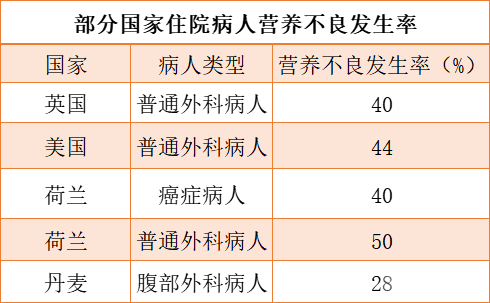
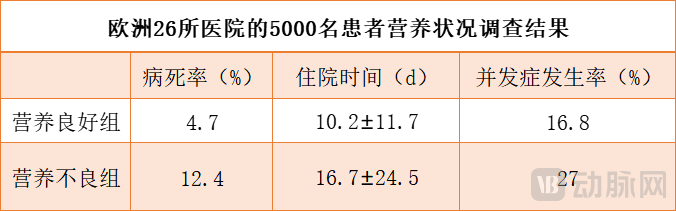
The prevalence of malnutrition among hospitalized patients in China is no exception: the rate ranges from 30% to 55%, and can reach as high as 80% in critically ill patients. Malnourished patients are prone to postoperative complications such as infections, pulmonary dysfunction, anastomotic leakage leading to fistula formation, and poor wound healing, which prolong hospital stays and increase mortality. A multicenter clinical survey conducted across Europe, involving 5,000 patients from 26 hospitals, demonstrated that well-nourished patients had significantly lower mortality rates, shorter hospital stays, and reduced incidence of complications.
Abroad, the use of standard foods for special medical purposes (FSMP) has become a long-term nutritional support strategy in home settings. In Japan, the FSMP market is distributed as follows: 48% in hospitals, 23% for home care, and 29% for elderly care.
In China, the primary form of nutritional support is parenteral nutrition. This is partly because parenteral nutrition does not require patients to have functional gastrointestinal tracts, allowing for its broader application. Additionally, healthcare professionals within hospitals generally have limited awareness of enteral nutrition, leading to its underutilization; the prevailing approach is to use parenteral nutrition whenever possible without considering enteral nutrition. In contrast, practices abroad are precisely the opposite: enteral nutrition is preferred whenever feasible, and parenteral nutrition is reserved only for cases where enteral nutrition is not viable.
This is also related to the development of foods for special medical purposes (FSMP) in China. In the late 1980s, driven by clinical needs, FSMP entered the Chinese market in the form of enteral nutrition formulations and were regulated as chemical drugs, requiring drug registration approval before they could be marketed. However, because China has consistently managed FSMP as pharmaceuticals, domestic industrial innovation has been sluggish, and corporate compliance costs have been high. As a result, domestically produced products are extremely scarce, and the domestic market is dominated by foreign companies. Moreover, most foreign products are unable to enter the Chinese market, leading to a limited availability of usable products and lacking a broad foundation for clinical application.
Secondly, China did not have a dedicated regulatory framework for foods for special medical purposes (FSMP) until 2010. It was only in 2010 that China introduced more detailed regulations specifically for infant formula products for special medical purposes. In 2015, the Food Safety Law of the People's Republic of China formally reclassified FSMP from drugs to food products.
To date, within hospitals in China, there are still issues such as inadequate nutrition diagnosis and treatment services related to foods for special medical purposes (FSMP), insufficient development of nutrition departments, a shortage of clinical dietitians, and a lack of nutritional knowledge among attending physicians. These challenges have significantly constrained the development of FSMP.
Currently, in addition to intensifying efforts in product research and development, another critical task for enterprises is to conduct market education and promotion to expand the market for foods for special medical purposes (FSMP).
As of August 9, 2021, a total of 72 foods for special medical purposes (FSMP) had been approved in China, involving 28 companies. Among these, six foreign companies obtained approval for 31 products, while 22 domestic companies secured approval for 41 products. The six foreign enterprises alone accounted for nearly half of all approved products in China, with the vast majority held by Nestlé, Abbott, and Danone. Among domestic companies, only Hengrui Pharma, Shengyuan, Beingmate, Junyue Pharmaceutical, and Maifu Nutrition had more than three approved products; the remaining 17 companies each had only one or two approvals. This reflects a clear dominance by large enterprises, while many other companies are merely testing the waters in the FSMP sector.
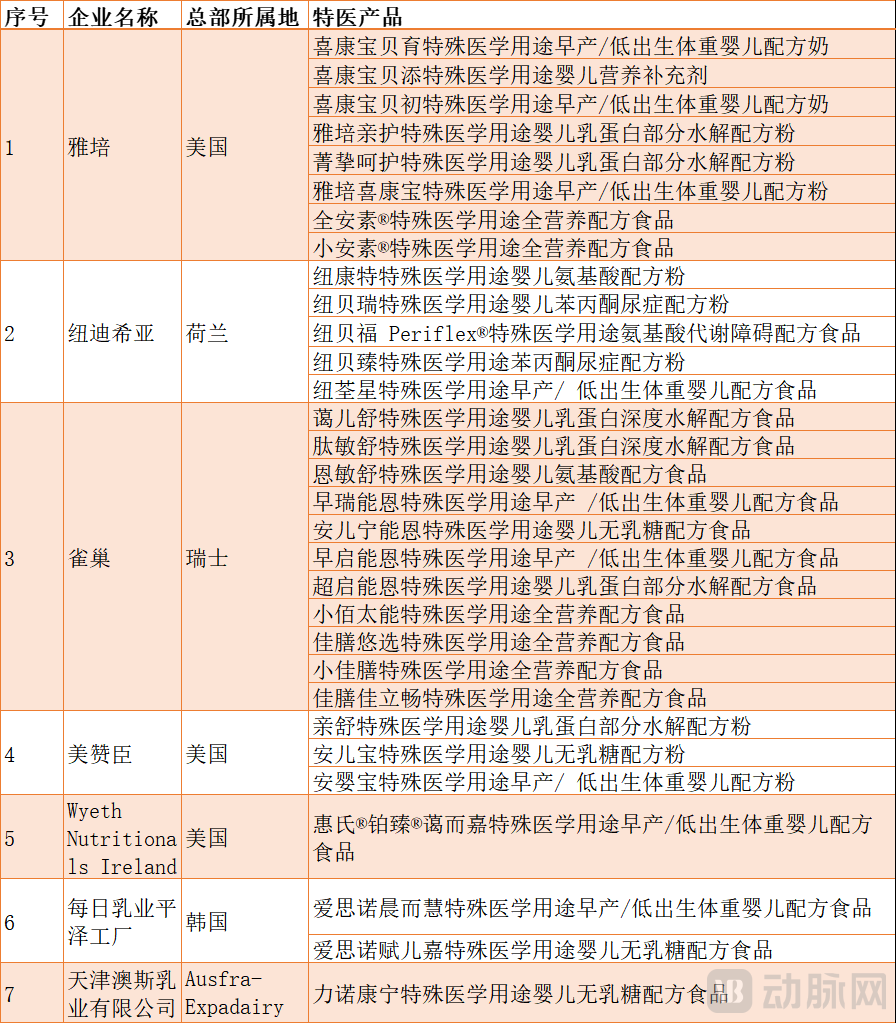
Approval Status of Foreign Companies’ Foods for Special Medical Purpose (FSMP) Products in China (Compiled Based on Data from the State Administration for Market Regulation)
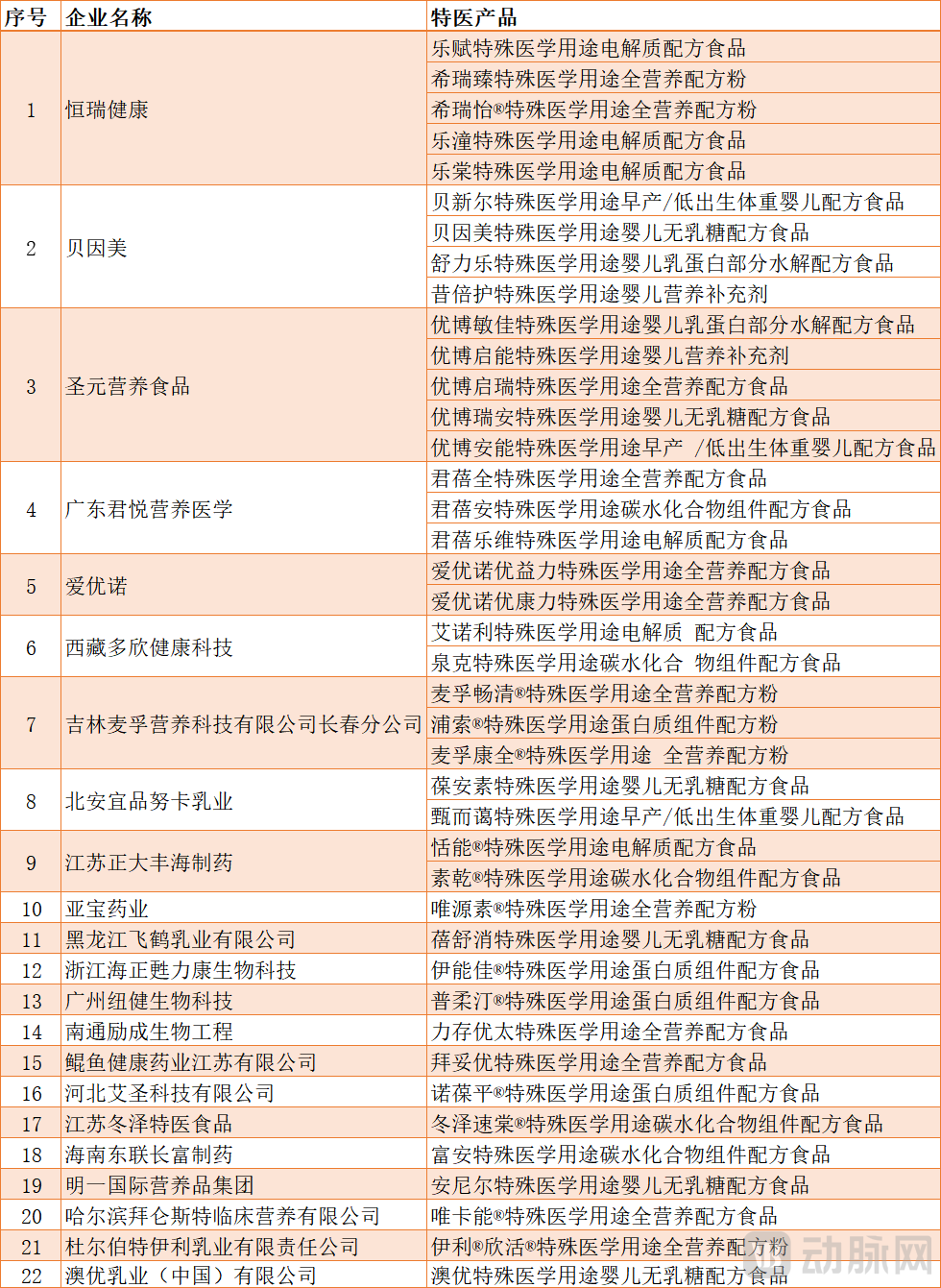
Approval Status of FSMP Products from Domestic Enterprises (Compiled Based on Data from the State Administration for Market Regulation)
VCBeat attributes this situation to the following factors:
First, national policy maintains a cautious and conservative stance.In light of the development trajectory of health supplements in China, national authorities have adopted a stance of stringent, comprehensive, and conservative regulation toward Foods for Special Medical Purpose (FSMP). The approval process for FSMPs, particularly for domestic enterprises, is subject to rigorous control, with a firm commitment to preventing the emergence of another "health supplement" scenario.
In our previous article, “Sales Exceed $2 Billion with an 11.9% Growth Rate: How Does Abbott, a Giant in the FSMP Industry, Achieve High Growth?”, we noted that the entire process of foods for special medical purposes (FSMP), from R&D to distribution, is subject to stringent regulation. This regulatory oversight has also been maintained at the local government level. According to incomplete statistics, 19 provinces, including Jiangsu, Zhejiang, Jiangxi, Sichuan, Shandong, and Jilin, have issued normative documents or launched special rectification campaigns targeting FSMP, implementing vigorous measures to regulate FSMP and ensure food safety. Among them, Jiangsu Province promulgated the Administrative Measures for the Operation and Use of Foods for Special Medical Purposes, further standardizing the provincial FSMP market.
According to industry insiders, it took nearly two years from the promulgation of the Administrative Measures for the Registration of Foods for Special Medical Purposes in 2016 until companies actually obtained registration approval. It was not until late 2017 to 2018 that foreign enterprises secured approvals by leveraging their mature overseas production standards. In the period that followed, the approval process for FSMP registrations submitted by foreign companies was generally faster than that for domestic enterprises. To some extent, large multinational corporations have influenced China’s production standards for foods for special medical purposes.
Second, large enterprises possess more comprehensive, mature, and well-established capital, technology, and talent resources.As mentioned above, foods for special medical purposes (FSMP) emerged abroad as early as 1957 and were classified as food in 1972. In contrast, China did not introduce enteral nutrition formulations until the 1980s, only classified FSMP as food in 2015, and saw the advent of FSMP in the true practical sense not until 2017. This time lag reflects gaps in products, technology, talent, and even regulatory standards.
Furthermore, as various regulatory frameworks continue to improve and the policy dividends of the “Healthy China” initiative are increasingly realized, large enterprises have demonstrated a strong intent to secure early market positioning. As previously analyzed by VCBeat in its special report on foods for special medical purposes (FSMP), major industry players have been continuously expanding their nutrition-sector businesses through acquisitions and mergers. They are racing to establish R&D centers and manufacturing facilities in China, securing product registrations ahead of competitors, accelerating the deployment of sales channels, and broadening sales scenarios, thereby capturing nearly 90% of the current FSMP market share.According to industry insiders, the gross profit margin in the field of foods for special medical purposes (FSMP) can be benchmarked against that of biopharmaceuticals, reaching 70%–80%.
For domestic enterprises, foods for special medical purposes (FSMP) undoubtedly represent a blue ocean market. However, the market has yet to be fully tapped, and the industry remains in its nascent stage. Most companies are currently focusing their efforts on product research and development. Given that domestic production technologies lag behind those abroad, Chinese firms currently lack the core competencies necessary to compete with major international corporations. The near-monopoly of the domestic market by foreign enterprises is unlikely to be broken until domestic products develop genuine core competitiveness.
Third, the FSMP sector is still in its nascent stage, with an uncertain outlook.2019 was hailed as the inaugural year for Foods for Special Medical Purpose (FSMP) in China, as a significantly larger number of FSMP products received regulatory approval compared to previous years. With continuous improvements in relevant regulations and systems, the market dividends for FSMP in China have been steadily released.
However, for large pharmaceutical companies like Hengrui Pharma, foods for special medical purposes (FSMP) remain an untapped market “cake.” What is currently needed is to fully prepare the “tools” for dividing this cake—namely, FSMP products. Yet, the current domestic policy environment in China is relatively unfavorable for local enterprises. According to industry insiders, the development prospects for domestic companies are not optimistic. Although major players such as Hengrui Pharma and Huasen Pharmaceutical recognize the growth potential of FSMP and are making strategic moves—for instance, Hengrui is among the Chinese companies with the highest number of approved FSMP products, and Huasen Pharmaceutical invested RMB 12.5 million to acquire a stake in Shangyi Technology—their current development focus does not lie in the FSMP sector.
For startups, securing funding and mastering technology present significant challenges. As national standards for foods for special medical purposes (FSMP) are not yet fully clarified, companies must conduct product development and prepare for regulatory submissions in accordance with the highest possible standards. Consequently, while product development and submission might originally require an investment of RMB 20 million, companies may need to invest more than double that amount—RMB 40–50 million—to maximize the likelihood of successful approval. This substantially increases the cost of innovation and raises the barriers to entry for both innovation and regulatory submission.
In terms of products, 53 non-nutritionally complete foods for special medical purposes (FSMP) have been approved, 19 nutritionally complete FSMPs have been approved, and no disease-specific nutritionally complete FSMPs have received approval.
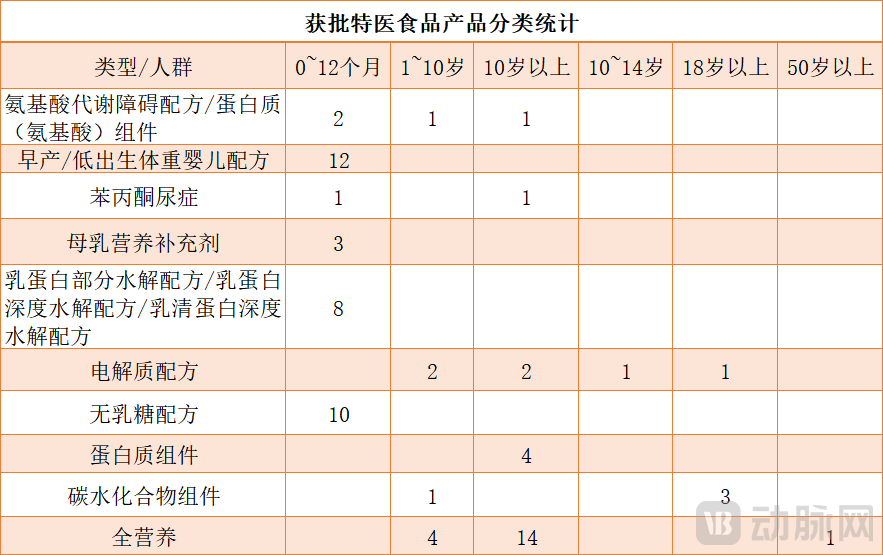
(Compiled from data of the State Administration for Market Regulation)
As shown in the figure, product concentration is relatively high, and homogeneity is severe. Approved non-complete nutritional foods for special medical purposes (FSMP) are primarily targeted at infants, mainly addressing lactose intolerance, cow’s milk protein and food protein allergies, and prematurity/low birth weight. These three categories account for a total of 30 products, representing nearly half of all approved products. If breast milk fortifiers (also primarily targeting premature/low birth weight infants) are included, these three types of infant formula powders constitute half of the total volume of approved products. Secondly, complete nutritional FSMPs are mainly concentrated on individuals aged 10 years and older who require nutritional supplementation due to restricted food intake, digestive and absorptive disorders, or metabolic disturbances.
In the treatment of rare inherited metabolic disorders such as phenylketonuria, Danone has only two products available. There is also a significant shortage of domestically produced foods for special medical purposes (FSMP) for adults in China.
Based on registration filings, infant formula powder has emerged as the primary strategic focus for companies. According to VCBeat’s analysis, this is largely because infant formula powder presents lower technical barriers compared with other products, benefits from an established baseline market, and requires less intensive preliminary educational outreach, thereby enabling direct market entry.
Relatively speaking, non-complete nutritional FSMPs and complete nutritional FSMPs targeting specific diseases, such as phenylketonuria, involve higher technical complexity. Moreover, substantial educational efforts are required to expand their application scenarios and sales channels, particularly for disease-specific complete nutritional FSMPs.
The Implementing Regulations of the Food Safety Law of the People’s Republic of China, which came into effect on December 1, 2019, elevated the regulatory standards for “foods for special medical purposes” (FSMP) to a level as strict as, or even stricter than, that for pharmaceuticals: advertisements for specific complete nutritional formulas within FSMP are regulated in accordance with those for prescription drugs, while advertisements for other categories of FSMP are regulated in accordance with those for over-the-counter drugs; specific complete nutritional formulas within FSMP shall be sold to consumers exclusively through medical institutions or pharmaceutical retail enterprises.
As of September 2020, only the technical guidelines for three diseases—nephropathy, tumors, and diabetes—had been issued on September 27, 2019. This means that clinical trials for disease-specific complete nutritional formula foods now have standards to follow. Companies are also developing disease-specific complete nutritional formula foods in accordance with these regulations.
The current state of nutritional support within hospital channels further increases the difficulty for foods for special medical purposes (FSMP) to enter these channels; there is still a long way to go to complete market education for FSMP.
First, nutritional diagnosis and treatment services associated with the use of foods for special medical purposes (FSMP) rarely have independent fee schedules.Under the currently implemented National Specifications for Pricing of Medical Service Items (2012 Edition), there are only two service items listed under nutritional consultation and assessment, and only one item related to enteral nutrition, namely “enteral nutrition infusion.” Furthermore, a large number of other routine clinical nutrition tasks (such as clinical nutritional screening) are not included in the National Specifications for Pricing of Medical Service Items and still lack standardized charging criteria. This has led to issues in most hospitals, including limited provision of nutritional diagnosis and treatment services, difficulties in billing, and undervaluation of the labor value of nutrition departments, thereby constraining the application of foods for special medical purposes.
Second, China currently has approximately 6,800 registered clinical physicians specializing in nutrition, and among tertiary hospitals in the four major cities of Beijing, Shanghai, Guangzhou, and Shenzhen, no more than 40% have established a department of clinical nutrition.In the United States, there are approximately 89,300 registered dietitians. Furthermore, over 70% of hospitals have established “Nutrition Care Teams” composed of physicians, clinical dietitians, pharmacists, and nurses to comprehensively assess patients’ nutritional risks and provide enteral or parenteral nutrition support to those in need. Evidently, China lags significantly behind the United States in terms of the number of hospital-based nutrition departments and clinical dietitians, which is one of the reasons for the current low penetration rate of foods for special medical purposes (FSMP) in hospital settings.
Third, attending physicians lack adequate nutritional knowledge, particularly in hospitals located in non-tier-1 and non-tier-2 cities, as well as in district and county-level hospitals.Many attending physicians in China lack sufficient understanding of the metabolic changes of nutrients under stress conditions and are unfamiliar with the characteristics of various nutritional formulations. Consequently, their decisions regarding the selection of formulation types, dosage administration, and infusion methods are often unscientific, leading to suboptimal outcomes in nutritional support therapy and an increased incidence of complications.
Fourth, the "identity" of foods for special medical purposes within hospitals is unclear.Currently, foods for special medical purposes (FSMP) are commonly referred to as “nutritional agents” in hospitals and constitute a major expenditure item for patient nutritional support. In most hospitals, these nutritional agents are categorized into two types: pharmaceutical-grade products (enteral formulations) and food-grade products (FSMP with batch numbers starting with “TY”). The non-pharmaceutical “nutritional agents” are procured and managed by the Department of Clinical Nutrition, resulting in low overall hospital engagement. Furthermore, due to the lack of relevant nutritional policies, concepts, and infrastructure, there are no unified standards for product variety, pricing, or even quality, leading to uneven product quality. Currently, the majority of nutritional support in China still relies on parenteral nutrition.
Additionally, according to relevant data, the product forms in the international market are distributed as follows: powders account for 40.4%, liquids for 49.6%, semi-solids for 2.5%, and solids for 7.4%. The total number of products is approximately 710, categorized into whole-protein complete nutrition formulas, disease-specific formulas, special disease formulas, genetic disease formulas, other nutritional components, and others. By age group, there are 39 products for ages 0–1 year, 170 for ages 1–10 years, 469 for ages over 10 years, and 17 for the elderly.
In contrast, the situation in China is reversed: liquid FSMPs account for 20%, while powdered formulations make up 80%. Moreover, raw materials are predominantly reliant on imports, with imported materials constituting 85% and domestically produced materials only 15%. This places significant pressure on domestic manufacturers.
Although the market for foods for special medical purposes (FSMP) is currently characterized by high concentration and product homogenization, it remains unsaturated. Beyond addressing gaps in existing product categories, it is more critical for major enterprises to diversify their product portfolios and drive product innovation.
From the perspective of applicant companies, those that have received approval are either large enterprises or subsidiaries controlled by large enterprises, or they are startups. There is a lack of mid-sized enterprises, resulting in a polarized distribution. Moreover, large enterprises hold an absolute advantage in the number of approved products, while most startups have only one or two approved products.
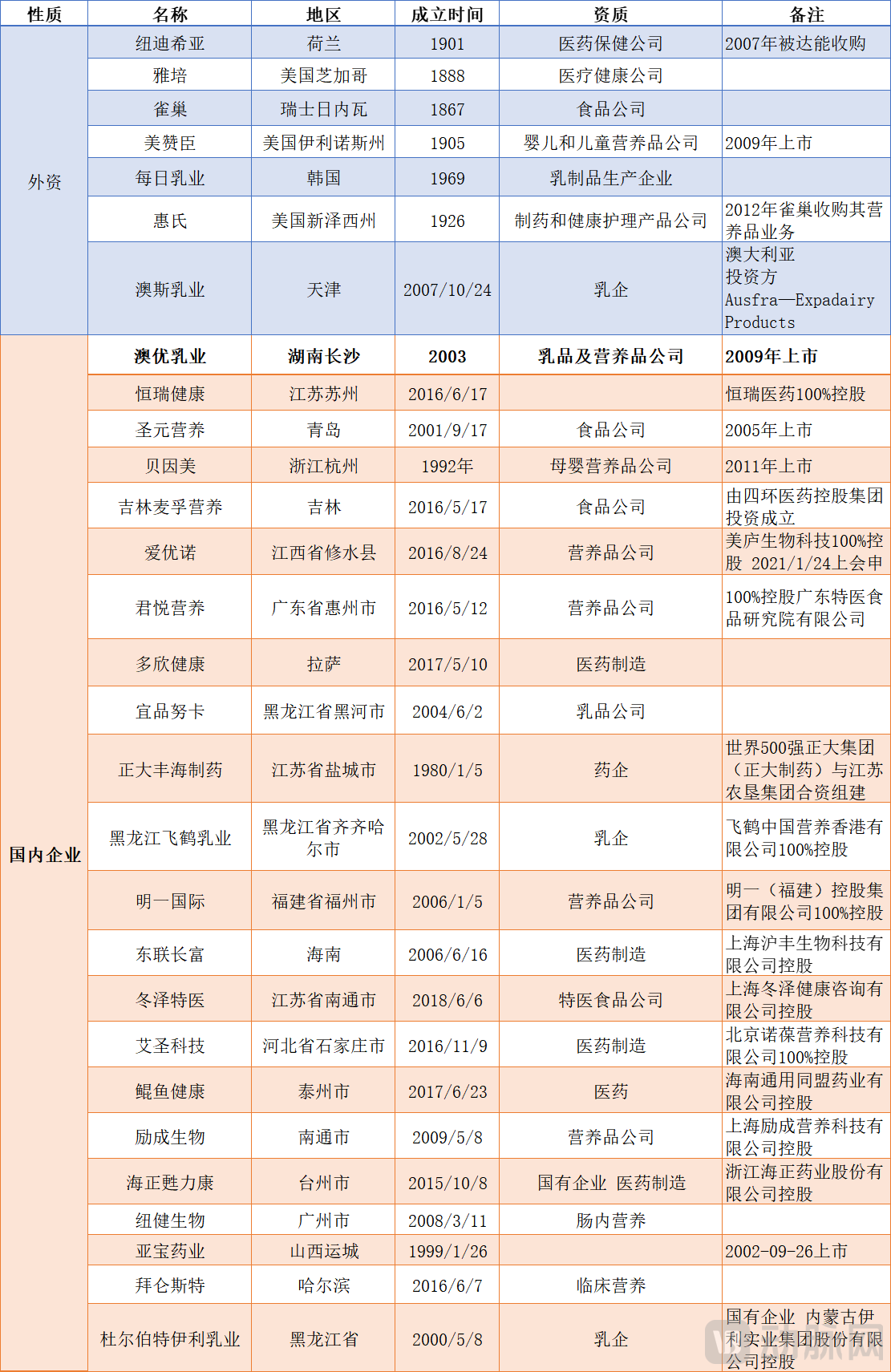
Overview of Companies with Approved FSMP Products (Compiled from Data of the State Administration for Market Regulation, Qichacha, and Tianyancha)
From a financing perspective, companies in this sector are either publicly listed or startups that have not disclosed their funding status. This also reveals that, although there is a broad consensus that the special medical purpose food (FSMP) sector holds significant development potential and room for growth—marking it as a blue ocean market—the industry remains in its nascent stages. Major companies are currently concentrating their efforts on product R&D, racing to secure first-mover advantages and claim market share, while maintaining a low public profile. For investment institutions, current returns are not yet apparent, and the industry’s inflection point has not yet arrived. Consequently, investors remain in an observation phase, though they generally maintain a positive outlook on the sector’s future development.
In terms of establishment dates, startups and large enterprise investment holding companies were predominantly founded between 2015 and 2017, totaling nine entities, with six established in 2016 alone. This period coincided with the introduction of a legal framework for foods for special medical purposes (FSMP), during which various regulations were continuously formulated and refined. Evidently, these companies targeted the FSMP sector, demonstrating a clear intent to seize first-mover advantage.
From the perspective of regional distribution, enterprises are concentrated in eastern regions such as Jiangsu and Zhejiang, as well as northeastern regions such as Heilongjiang and Jilin. Companies clustered in Jiangsu and Zhejiang are predominantly technology-driven, whereas those in Heilongjiang and Jilin are mainly dairy enterprises. This pattern is undoubtedly influenced by regional policies and local environments.
In 2021, Jiangsu Province issued the Administrative Measures for the Operation and Use of Foods for Special Medical Purposes to facilitate the high-quality development of the FSMP industry. The Measures highlight three key aspects: First, they consolidate and integrate regulatory requirements for the operation of foods for special medical purposes (FSMPs) stipulated in relevant laws, regulations, rules, and food safety standards, thereby clarifying the respective responsibilities and division of labor among market regulation, health, and healthcare security authorities. Second, they define the role of FSMPs within medical institutions, encourage active clinical application of FSMPs by these institutions, and incorporate their management into institutional information systems to standardize practices and address bottlenecks and obstacles in clinical use. Third, they establish principles for market access licensing and prohibitions regarding FSMP operations, further regulating market order.
From the perspective of corporate qualifications, both pharmaceutical companies and food companies (including dairy enterprises) have entered the market, with each side holding distinct advantages. Although the FSMP (Food for Special Medical Purpose) industry falls under the food sector, its requirements exceed those for ordinary food, and its R&D approaches are increasingly akin to those of pharmaceuticals. The FSMP industry is a specialized sector that demands expertise in both food science and medicine.
Dairy companies possess production experience and manufacturing lines for infant formula, while nutritional supplement companies have extensive expertise in producing nutritional products. Furthermore, the production lines for foods for special medical purposes (FSMP) are highly similar to general food production lines, and regulatory policies require that they be managed by enterprises with food management experience.
For pharmaceutical companies, the registration system for foods for special medical purposes (FSMP) is modeled after that for drugs. The development of FSMP requires specialized nutrition professionals, and pharmaceutical enterprises possess dedicated R&D personnel as well as extensive experience in clinical nutrition. Furthermore, the long-term nature of pharmaceutical R&D demands strong cash reserves to sustain prolonged investment in research and development.
Overall, for companies in the field of Foods for Special Medical Purpose (FSMP), capital, technology, and talent are all indispensable to reach the finish line. At the current stage, competition is primarily technological; product quality and a comprehensive product portfolio form the foundation for subsequent market education and expansion. Industry insiders predict that the number of FSMP products approved in the next two years will experience explosive growth. The ability to expand market share for one’s own products while simultaneously intensifying R&D efforts will serve as a further test for these enterprises.