Yiying Medical Secures RMB 65 Million Series A+ Financing to Advance Precision Orthopedic Surgery with 3D Imaging, Robotics, and AI

Everbright
An Investment Firm

First Imaging
Medical 3D Imaging Equipment R&D Service Provider
VCBeat has learned that Jiangsu First-Imaging Medical Equipment Co., Ltd. (hereinafter referred to as “First Imaging”), a medical imaging equipment company specializing in therapeutic scenarios such as operating rooms, recently secured RMB 65 million in Series A+ financing. This round was solely invested by China Everbright Limited and will be used to further expand the product line of intraoperative 3D imaging equipment and to establish vertical and horizontal collaborations across the industry chain.
In early 2021, First Imaging launched its intraoperative mobile 3D C-arm device designed for orthopedic surgical robots. To date, the system has been installed and put into use in multiple Grade A tertiary hospitals across China, and has achieved connectivity with various domestic and international orthopedic surgical robots and navigation systems, thereby delivering a comprehensive solution for precision orthopedic surgery.
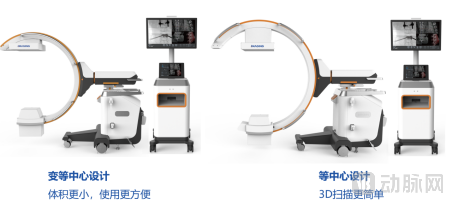
3D imaging data often serves as the entry point for precision surgery. Based on this data, surgical planning is conducted and multimodal data registration is achieved. However, in scenarios such as orthopedic and neurosurgical operating rooms, environmental constraints and the need for deep integration with surgical workflows impose stringent requirements on equipment size, form factor, and operational convenience. To address these challenges, First Imaging’s product team has leveraged various advanced technologies to match the functionalities of high-end international products while achieving a compact footprint (through variable isocenter design) and a wide field of view (via three-axis linkage technology), thereby deeply engaging in and optimizing clinical usage. Multiple innovative products are currently under development.
(Some images are sourced from the internet)
With advancements in technologies across upstream and downstream industries, including medicine and materials science, orthopedic technology is continuously evolving toward digitalization, personalization, minimally invasive procedures, precision, and intelligence. Consequently, the application of surgical robots has become a research hotspot in this field.
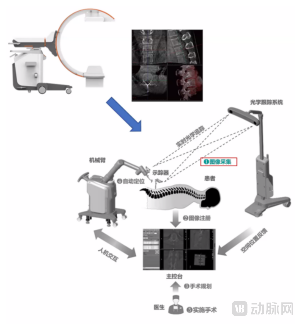
Currently, the pain points in the clinical use of orthopedic surgical robots are the long learning curve and prolonged operation time. To address this, First Imaging has innovatively proposed an interaction method that enables underlying interoperability between imaging equipment and other devices.RoboLINK。

RoboLINK is an open connectivity protocol proposed by First Imaging to optimize the operational workflow of orthopedic surgical robots and reduce surgery time. RoboLINK establishes connectivity between surgical robots and intraoperative imaging devices at the underlying device level. In addition to supporting traditional DICOM data transmission, it exposes motion control and exposure control functions of intraoperative imaging devices to the robot, thereby integrating intraoperative localization, imaging, and robotic surgical procedures to save surgery time.
RoboLINK is based on the standard DICOM protocol, enabling the integration of surgical robots and intraoperative imaging devices into a single system without the need for additional hardware connections.
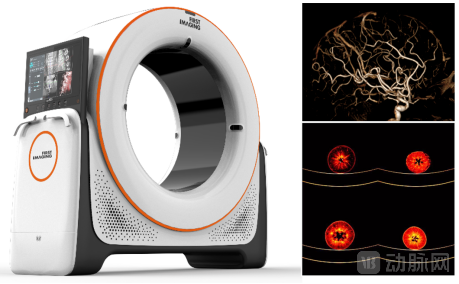
In addition to C-arm 3D imaging systems, O-arm 3D imaging systems are also utilized in orthopedic operating rooms, delivering superior image quality. Beyond orthopedics, O-arm 3D systems can be extended to neurosurgical operating rooms, where they integrate with neuronavigation systems, surgical robots, and other equipment to enable broader intraoperative 3D image-guided navigation.
The “EvaluateMedTech® World Preview 2018, Outlook to 2024” report predicts that from 2017 to 2024, the neuroscience sector will become the fastest-growing device segment, with a compound annual growth rate (CAGR) of 9.1%. As an incremental market, neurosurgical robots hold substantial market potential. By leveraging neurosurgical robot platforms, medical device manufacturers can integrate surgical robots with existing medical devices, thereby expanding the capabilities of current products and developing additional medical devices to support increasingly automated surgical procedures in the future.
According to the latest data released in the "2016 Stroke Epidemiology Report," a Chinese person suffers a stroke every 12 seconds, and one dies from stroke every 21 seconds. Timeliness is critical in stroke rescue; earlier treatment yields better curative outcomes. Currently, intravenous thrombolysis is one of the optimal treatments for cerebral infarction. If administered within three hours of onset, it offers a one-in-three chance of vascular recanalization; however, the opportunity for intravenous thrombolysis is lost if more than six hours have elapsed. The Cerebrovascular Disease Group of the Neurology Branch of the Chinese Medical Association formulated and released the 2018 Chinese Guidelines for Diagnosis and Treatment of Acute Ischemic Stroke. Compact mobile CT scanners installed in ambulances are important tools for pre-hospital stroke diagnosis.
First Imaging’s mobile CBCT system leverages spectral imaging technology to achieve superior soft-tissue visualization under low-dose conditions. Combined with advantages such as portability, compact design, and a large bore, it facilitates convenient intraoperative imaging, thereby better serving clinical applications.