

BreathDx Announces Global First NMPA-Approved Exhaled Breath Mass Spectrometer for 1-Minute VOC-Based Rapid Detection of Cancer and Infectious Diseases
On July 23, 2021, it was learned from the official website of the National Medical Products Administration (NMPA) that Hunan Burui Biotechnology Co., Ltd. (hereinafter referred to as “Burui Technology”), a wholly-owned subsidiary of Shenzhen Burui Technology, had independently developed“Mass Spectrometer for Human Exhaled Breath Analysis” Has Obtained National Class II Medical Device Registration Certification, the product is suitable for detecting and analyzing small-molecule volatile characteristic metabolites in human exhaled breath.
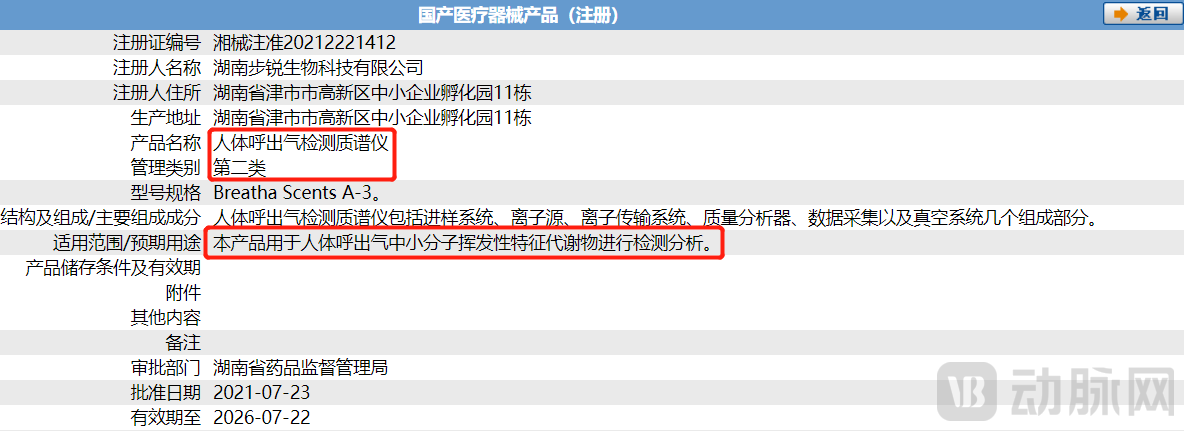
It is worth mentioning that this isThe world’s first platform-based product in the field of human exhaled breath detection and analysis to achieve successful commercialization and obtain NMPA certification, marking a significant milestone in the industry. Meanwhile, this product is byBurui Technology holds all intellectual property rights., is a typical Chinese creation, markingChina’s Domestic Teams Have Achieved International Leadership in Technology and Products for Breath Testing。
The “Human Exhaled Breath Mass Spectrometer” can detect and analyze small-molecule volatile organic metabolites (VOCs) in human breath samples for the diagnosis and screening of tumors and infectious diseases. It features non-invasiveness, high accuracy, rapid analysis (1 minute per sample), high throughput, low cost, and ease of operation, effectively meeting the clinical needs of in vitro diagnostic (IVD) testing.
As the sole R&D manufacturer behind this product, Burui Technology has been dedicated to research on exhaled breath metabolomics since its inception. The company independently developed Single-Photon Ionization Time-of-Flight Mass Spectrometry (SPI-TOFMS) technology, which enables precise detection of volatile organic compounds (VOCs) in human exhaled breath, thereby facilitating early screening for malignant tumors and infectious diseases. Based on the technical principles of VOC detection using SPI-TOFMS, Burui Technology submitted relevant documentation for review to the National Medical Products Administration (NMPA) as early as September 2020. With the product now having received official approval, the company will vigorously develop follow-up screening and diagnostic products for tumors and infectious diseases.
Commenting on this approval, Wang Dongjian, founder of Burui Technology, expressed his gratitude, attributing the achievement to the hard work and dedication of Burui Technology’s excellent team and the physicians at its partner medical institutions. He also noted that favorable national policies encouraging innovative medical products were a key external factor enabling the company to secure the industry’s first such certification.
Seizing Clinical Testing Demand: Breath Testing Poised to Become a Breakout Segment in the IVD Market
In clinical disease detection, non-invasive, rapid, accurate, low-cost, and easy-to-operate methods have always been core requirements. This is particularly true for infectious diseases such as tuberculosis (TB). According to WHO guidelines, the gold standard for TB detection is sputum culture. Although this method ensures high specificity, it is technically complex. Moreover, approximately 40% of TB patients do not exhibit productive cough, further complicating sputum collection. Even when sputum samples are successfully obtained, the success rate of sputum culture remains below 50%.
With China still seeing 800,000 new tuberculosis (TB) cases annually, the “sputum culture” testing method has significantly constrained TB prevention and control efforts. A large number of smear-negative patients cannot receive a definitive diagnosis, which seriously hinders early detection and timely treatment of TB.
Similarly, early cancer screening represents a significant market within clinical disease detection. Compared to other in vitro diagnostic (IVD) applications, tumor early screening imposes higher requirements on both clinical test sensitivity and cost-effectiveness. It not only necessitates the identification of every potential tumor risk but also demands that testing costs be reduced to a level affordable for the general population. Clinically, although molecular diagnosis-based disease detection methods can ensure high sensitivity and specificity, their per-capita cost—ranging from several thousand to nearly ten thousand yuan—hinders their widespread adoption in clinical screening programs.
In contrast, the advantages of breath testing are more pronounced, enabling rapid and simple detection through breath analysis,Test results are available within one minute, with verified sensitivity and specificity both exceeding 95%., which is expected to disruptively transform the clinical testing pathways for various diseases in the future, becoming a major growth driver in the global IVD (in vitro diagnostics) market, valued at over $10 billion.
“For general hospitals, respiratory diseases account for the highest outpatient volume. Physicians must first consider confirming or ruling out tuberculosis and tumors. Wang Dongjian, founder of Burui Technology, stated: ‘The high compliance and low cost of breath testing can help physicians make rapid assessments, with the potential to become a routine outpatient test as essential as a complete blood count.’”
A ¥3 Billion Breath Testing Market: Domestic Leaders Emerge
In 1970, American chemist Linus Pauling used gas chromatography (GC) to detect more than 200 volatile organic compounds (VOCs) in human exhaled breath, which can be used to assess physical health and disease status. After more than 50 years of development, the correlation between VOCs and diseases has been supported by hundreds of thousands of clinical samples and documented in over 2,000 research articles included in the Human Breathomics Database, establishing strong associations between nearly 60 diseases and specific VOC biomarkers in exhaled breath.
However, in the past, due to the lack of dedicated platforms for exhaled breath analysis, the vast majority of volatile organic compound (VOC) studies were conducted using general-purpose laboratory platforms based on gas chromatography-mass spectrometry (GC-MS). This detection process requires sample adsorption and enrichment, thermal desorption, chromatographic separation, and mass spectrometric qualitative and quantitative analysis. Not only is this approach costly, but each sample also takes 2–7 hours to analyze, and the procedure demands a high level of technical expertise. Consequently, GC-MS has been limited to scientific research and has not been amenable to productization or large-scale clinical deployment.
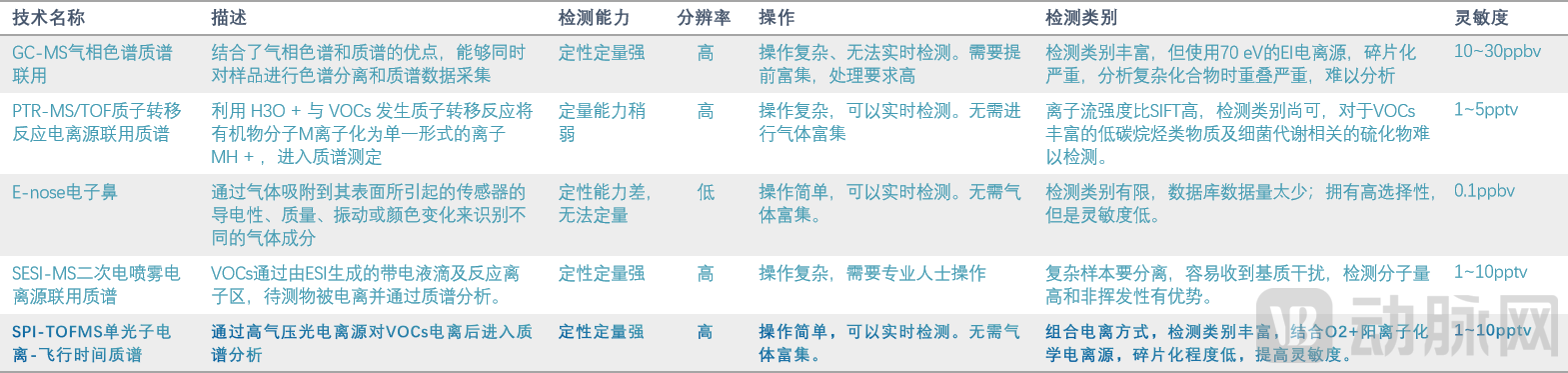
Comparison of Principles and Performance of Several Breath Analysis Technologies
“Only by standing on the shoulders of giants can one see farther.” said Wang Dongjian, founder of Burui Technology. Burui Technology’s “Human Breath Analysis Mass Spectrometer” is based on the company’s independently developed Single-Photon Ionization Time-of-Flight Mass Spectrometry (SPI-TOFMS) technology. It enables direct sample introduction, eliminates the need for adsorption and enrichment processes, and allows for low-cost, rapid detection. This innovation thoroughly addresses many pain points in scientific research on volatile organic compounds (VOCs), making it possible to commercialize breath analysis products and facilitate their large-scale clinical application.
According to Frost & Sullivan data,In 2018, the market size of breath testing in China was approximately RMB 1.9 billion, which grew to RMB 3 billion in 2020.. AndThe diagnostic market for infectious diseases has exceeded RMB 100 billion, while the tumor diagnosis and screening market has reached the trillion-yuan level.. As people’s demands for a higher quality of life continue to rise, there is a growing pursuit of diagnostic and screening products that are more accurate, convenient, and cost-effective,VOCs Detection Industry Has Huge Potential for Future Growth。
Globally, the VOC detection industry abroad and in China started from roughly the same baseline. In 2015, when Burui Technology was founded, only Owlstone Medical in the United Kingdom had begun to advance its R&D technologies and products into clinical validation and refinement. Currently, VOC detection technologies both domestically and internationally each have their own characteristics, with no significant gap between them.
From a developmental perspective, exploring and establishing spectral libraries for multiple diseases represents a higher barrier for enterprises, built upon the foundation of hardware technological barriers. Chinese companies hold greater advantages in this regard; compared with Western counterparts, they face lower difficulties and achieve higher efficiency in acquiring clinical samples, which is more conducive to leveraging these advantages for rapid development. With the recent approval of Burui Technology’s “Human Exhaled Breath Mass Spectrometer,” it has become the world’s first dedicated detection platform for volatile organic compounds (VOCs) in exhaled breath. This positions Burui Technology with a greater opportunity to take the lead in completing the construction of its spectral library and joining the top international tier in the field of breath analysis.
As the breath testing industry develops, more companies will enter the market, leading to increasing diversification in technological approaches and products. Breath volatile organic compound (VOC) testing will form both complementary and competitive relationships with technologies such as genomics, immunomics, and proteomics. As a leader in this sector, Burui Technology will have greater opportunities to participate in the formulation of industry standards, which will facilitate its market expansion and strengthen its home-field advantage driven by technology and capital.
In the field of disease detection, Western entities currently hold the majority of influence over clinical diagnostic standards, guidelines, and clinical pathways. Therefore, companies are required not only to conduct research and promote their products domestically but also to actively collaborate with top-tier international medical and research institutions. The goal is to gain broad recognition from global industry experts and have their products and technologies included in guideline recommendations. Wang Dongjian, founder of Burui Technology, told VCBeat that although the pandemic has temporarily hindered comprehensive overseas collaboration, Burui Technology has already engaged in online communications with experts from leading research institutions such as the U.S. National Cancer Institute and Imperial College London to explore future cooperative opportunities.
10-12Trace-Level Concentration SPI-TOFMS “Robotic Dog Nose”: Burui Technology Has Completed Nearly 10,000 Clinical Verifications
As a pioneer in the field of breath testing, Burui Technology’s online analysis mass spectrometry platform has already reached the parts-per-trillion (PPT) level (10-12) detection limit and second-level response speed, achieving VOCs detection 10-9Qualitative and quantitative detection at trace-level concentrations. To visualize the picogram (pg) scale, the device’s sensitivity to odor concentrations rivals that of a dog’s olfactory acuity. Wang Dongjian jokingly remarked that the mass spectrometer for analyzing human exhaled breath is more akin to a “robotic dog.”
This mass spectrometer employs a novel high-pressure photoionization and photochemical ionization composite ion source based on vacuum ultraviolet lamps, enabling rapid switching among multiple ionization modes. It achieves efficient ionization and broad-spectrum analysis of small-molecule volatile metabolites with diverse types and properties, effectively expanding the range of analyzable substances. The instrument features low sample fragmentation and enables the analysis of alkane-type volatile organic compounds (VOCs).No Sample Separation, Purification, or Pretreatment Required, to avoid loss,60-Second Rapid Test, Report in 1 Minute。
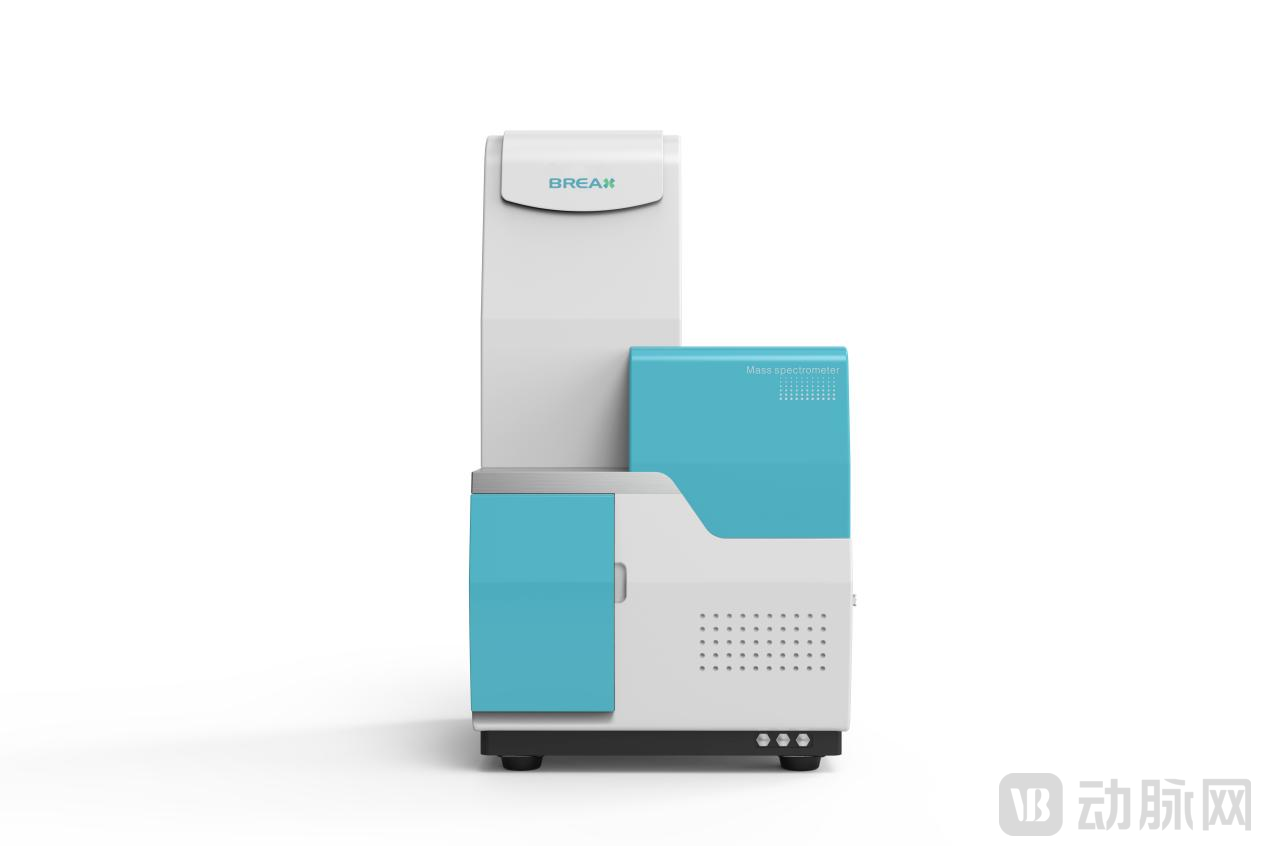
Mass Spectrometer for Human Exhaled Breath Analysis
Leveraging its SPI-TOFMS online mass spectrometry analysis platform, Burui Technology’s product pipeline is primarily focused on infectious diseases and oncology, with prospective clinical studies already underway for conditions including tuberculosis, lung cancer, and esophageal cancer.
In the field of tuberculosis, Burui Technology has completedNearly 10,000 casesDiagnosis and Screening of Clinical Samples,Prospective trial results demonstrated exceptionally high sensitivity and specificity (both >95%).. Its research findings alsoAt the 51st World Conference on Lung Health in 2020, Dr. Fu Liang from the expert team at Burui Technology shared his clinical application achievements, marking the first time a Chinese physician delivered a presentation at this conference.。
In the field of lung cancer, Burui Technology has completedOver 4,000 samplesvalidation, achieving remarkable progress. VOC detection based on SPI-TOFMS mass spectrometry equipment is more advantageous than the clinically mainstream CT scans or LDCT (low-dose CT), featuring non-invasiveness, absence of radiation, better patient compliance and accessibility, simple operation, and lower cost.
It is worth mentioning that Burui TechnologyPreliminary findings from a collaborative study with Academician Wang Jun’s team in the Department of Thoracic Surgery at Peking University People’s Hospital on the use of exhaled breath analysis for lung cancer diagnosis have been published in the prestigious clinical medical journal JAMA Network Open.; another study on breath testing for esophageal cancer is also forthcoming.
Following NMPA certification of Burui Technology’s testing platform, the company plans to apply for FDA and CE certifications to prepare for entry into international markets. Meanwhile, it will continue to strengthen scientific research collaborations with leading domestic and overseas medical institutions in areas such as tuberculosis, lung cancer, and esophageal cancer, aiming to complete multicenter, large-sample, prospective validation studies as soon as possible, and systematically advance product development for other infectious diseases and cancer types.
Furthermore, Burui Technology has initiated the NMPA Class II and Class III certification processes, as well as FDA and CE certifications, for its multi-disease analytical diagnostic software products. These products provide auxiliary tools for the rapid diagnosis of various metabolism-related diseases, offering hospitals, research institutions, and third-party testing centers novel screening and differential diagnostic solutions that are highly sensitive, non-invasive, precise, convenient, and cost-effective, thereby helping clinicians rapidly improve the accuracy and efficiency of screening and diagnosis.
At present, Burui Technology has positioned itself at the global forefront in terms of product commercialization, accumulation of disease-spectrum image libraries, and regulatory approvals. As an industry pioneer, Wang Dongjian, founder of Burui Technology, concluded by stating that for enterprises to achieve long-term development in the field of breath testing, they must first chooseMeeting Scenario-Specific Needstechnical direction, striving for accuracy, simplicity, speed, convenience, and low cost; secondly, it should be based on scientific thinking, continuously advancing amidst rapid developmentStrengthening Basic Research; Finally, enterprises are required to pay attention toCollaborate Closely with Clinical Institutions, continuously reinforcing through validation with large sample sizes, striving to gain recognition from the community of industry experts; there are no shortcuts on this path.
It is reported that Burui Technology completed a Pre-A financing round worth tens of millions of yuan at the end of 2020, with all key personnel in place and forming a strong operational capability. Currently, Burui Technology has also launched a new round of financing plans, with the funds raised mainly intended for the registration of its Class II and Class III breath analysis and diagnostic software products, as well as further conducting multi-center, large-sample, prospective studies and product market introduction.