

Changzhou's DRG Pilot Model: Six Key Practices and Four Major Innovations
Not long ago, the State Council held a regular policy briefing to introduce the circumstances surrounding the "Opinions on Promoting the High-Quality Development of Public Hospitals." When introducing supportive measures for advancing reforms in medical insurance payment methods, the National Healthcare Security Administration stated that the number of pilot cities for DRG and DIP across China has exceeded 200.
Among these, there are 30 national pilot cities for CHS-DRG and 71 national pilot cities for DIP. As Tianjin participates in both the CHS-DRG and DIP pilots, the combined total of official pilot cities amounts to exactly 100. In addition to the national pilot cities, more than half of the pilot cities are voluntary participants, underscoring the high level of attention local governments are paying to DRG payment reform.
Currently, the progress of DRG pilot programs varies across different regions. As of May 31, 2021, only two out of the 30 national-level CHS-DRG pilot cities in China had implemented formal payment systems. Although not a national-level pilot city, Changzhou in Jiangsu Province is one of the few cities that have entered the actual payment phase—Changzhou officially implemented DRG-based payments on January 1, 2021, with favorable outcomes.
Given that Changzhou is not a national pilot city and its DRG payment reform initiatives started relatively late, the current achievements are hard-won. Therefore,What Exactly Did Changzhou Do Right to Overtake and Cross the Finish Line in the Final Stage of the DRG Pilot Program??
Compared with the national-level pilot cities within the province, Changzhou started slightly later in DRG payment reform. However, Changzhou subsequently accelerated its DRG pilot initiatives. In May 2019, Changzhou launched its DRG reform pilot program. By October, partner organizations had been onboarded, marking the commencement of substantive reforms. Then, just six months after the national CHS-DRG grouping scheme was officially released in June 2020,The Changzhou Municipal Healthcare Security Administration entered the formal payment phase on January 1, 2021. At that time, only two of the first batch of 30 national pilot cities had commenced actual payments.
As of May 2021, the DRG grouping rate for payment in Changzhou City reached 99.7%, with the overall difference between actual costs and simulated projections being less than 5%. Following evaluation by experts at various levels, it was determined that Changzhou’s medical insurance DRG payment reform plan complies with the national requirements for DRG implementation. The plan is reasonably designed and suitable for current application in medical insurance payments.
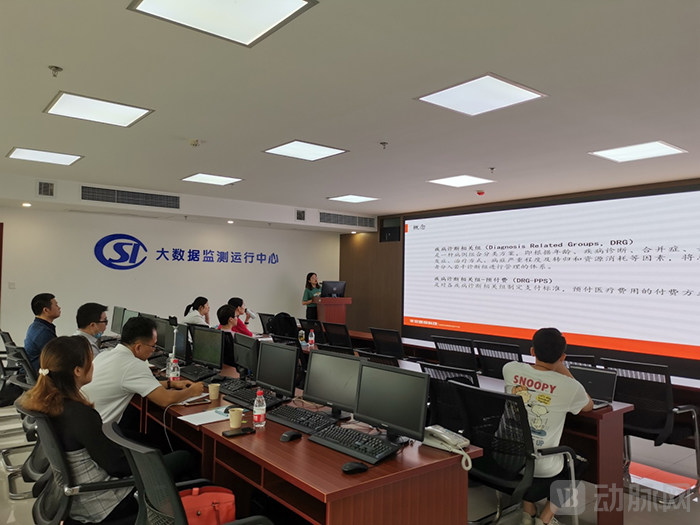
On-Site Demonstration Meeting for the Localization of CHS-DRG Grouping in Changzhou City (Image Source: Official Website of Changzhou Medical Security Bureau)
As early as the initial pilot phase, the National Healthcare Security Administration divided the DRG pilot into three stages: top-level design (formulating grouping schemes), simulated operation, and actual payment. Currently, most pilot cities have completed the first two stages and are either in or about to enter the actual payment stage. Although actual payment appears to be the final step, its successful implementation is closely intertwined with the preceding two stages.
To ultimately achieve actual payment under the Diagnosis-Related Groups (DRG) system, substantial work must be completed in areas such as coding standards, refinement of grouping methodologies, organizational training, rate calculation, supporting policies, and detailed health insurance settlement rules. Any issue arising in any of these links will hinder the smooth implementation of DRG-based payment.
Changzhou City attaches great importance to the pilot program for DRG-based payment and has implemented various measures throughout the process.
First, establish a multidisciplinary expert team to provide technical support.To ensure the accurate and smooth implementation of all aspects of the reform process, Changzhou City established a Think Tank for Medical Insurance Payment Reform. This group comprises six national-level payment reform experts, six provincial- and municipal-level medical insurance experts, and over 100 clinical experts and discipline leaders from various specialties, providing comprehensive guidance throughout the DRG payment model reform. Notably, the Changzhou Municipal Healthcare Security Administration has long prioritized talent development, boasting a robust reserve of medical insurance professionals, including one national-level payment reform expert and four provincial- and municipal-level experts.
Second, unify understanding and build consensus on reform.In 2019, after Changzhou was designated as a provincial pilot city for Diagnosis-Related Groups (DRG), the Municipal Committee of the Communist Party of China and the Municipal People’s Government attached great importance to this initiative, incorporating it into the key deepening-reform projects of the Municipal Committee. A joint conference mechanism was established, convened by the Deputy Secretary-General in charge. Relevant departments—including the Healthcare Security Administration, Finance Bureau, Health Commission, and Human Resources and Social Security Bureau—were explicitly tasked with participating in research, coordination, and implementation, thereby laying the foundation for Changzhou’s healthcare insurance payment system reform with a tone of “multi-party collaboration and unified coordination.”
Third, strengthen organizational communication and training.Relevant institutions in Changzhou conducted multiple rounds of discussions and training sessions on key and high-profile topics related to the DRG pilot program, engaging more than 120 experts from various disciplines across both pilot and non-pilot hospitals. In addition to expert meetings, these institutions established a dedicated communication group for payment reform initiatives, providing hospitals with a channel for timely professional consultation. Statistics show that the daily volume of inquiries addressed—covering case grouping, coding, and operational issues—exceeded 100 person-times.
Fourth, adopt a gradual approach to ensure a smooth transition in the payment system.Changzhou City did not compress the mandatory procedures for the DRG payment pilot project despite its late start. In the early stages of reform, it established the principle of “pilot first, evaluate next, and implement thereafter.” Throughout the pilot phase, the city consistently advocated for the reform principles of “prioritizing effectiveness over timelines” and “placing equal emphasis on advanced technology and professional expertise,” striving to “solidify the foundation and seek truth from facts” in advancing the reform efforts.
Fifth, establish a comprehensive supporting system for DRG payment.Drawing on the experiences and lessons learned from various regions, Changzhou City has established a relatively comprehensive supporting system for its DRG payment pilot program. First, it introduced an intelligent supervision platform capable of fully meeting the operational needs of DRG fund security oversight. Second, it developed a multi-dimensional performance evaluation system for medical insurance through a multi-indicator comprehensive assessment framework. These measures have laid a solid foundation for the smooth implementation of subsequent actual DRG payments.
Sixth, Exploration of Refined Prepayment System Tools.Having gained a thorough understanding of the Diagnosis-Related Group (DRG) payment mechanism, relevant institutions in Changzhou have clearly recognized its limitations and actively initiated discussions on more innovative payment models. For rehabilitation and psychiatric cases that are not suitable for DRG-based payment, they are exploring the feasibility of developing specialized payment tools tailored to these specific case types.
Through these measures, Changzhou’s DRG pilot program has demonstrated a balance of pragmatism and innovation, efficient coordination and collaboration, and initial tangible results from the reforms. The standardization of basic DRG data across the city and the efficiency of medical insurance fund utilization have significantly improved; the growth rate of average medical costs per visit in pilot hospitals has markedly declined; meanwhile, preliminary effects have also emerged in guiding tiered diagnosis and treatment and providing support for traditional Chinese medicine services. Ultimately, Changzhou’s DRG pilot project achieved an overtaking maneuver in its final stage, becoming the first to cross the finish line and enter the phase of actual payment implementation—a notable accomplishment.
The rational and forward-looking application of information technology has undoubtedly been a major factor in Changzhou’s DRG pilot program crossing the finish line ahead of others. As the technical support provider for Changzhou’s DRG pilot initiative, Pingan Medical Health Management Co., Ltd. (hereinafter referred to as “Ping An Health Insurance Technology”) delivered high-quality, highly responsive services throughout the process and accelerated system deployment and implementation through multiple innovations.
Innovation in Information Systems
Implementing DRG-based payment is a systematic project that requires close collaboration among all stakeholders. This places high demands on DRG information systems, which must provide technical support aligned with the business management functional needs of various parties and the transformation of related management models following the implementation of DRG payment reform. Drawing on years of experience in medical insurance operations, Ping An Health Technology has optimized and innovated its DRG information system.
Data collection is the foundation of DRG implementation, and any deviations can significantly impact its execution. Ping An Health Insurance Technology has innovated in this area with its DRG solution by adopting a comprehensive data collection approach and full-scale data quality control to achieve complete medical record data acquisition. The collected data includes the front page of medical records, settlement lists, electronic medical records, and discharge summaries, thereby enabling thorough quality control and facilitating online regulatory audits.
Furthermore, the Changzhou DRG pilot project has established a matrix system of indicators based on the decomposition of full-scope data and constructed inter-indicator correlations. This shifts comprehensive evaluation from merely highlighting “poor indicator performance” to providing actionable guidance on “how to improve,” thereby supporting multi-dimensional assessment. Meanwhile, the solution has been specifically optimized for usability by adopting a user-friendly design combined with configurable personalized applications. Front-end logical configuration capabilities are provided for DRG grouping schemes, DRG settlement methods, intelligent audit logic, and comprehensive evaluation indicator configurations. This ensures rapid system response to business requirements and facilitates easier adoption by end-users, which has objectively contributed to accelerating the progress of the DRG pilot.
Business Standard Innovation
In terms of business standards, the Changzhou DRG pilot has also introduced innovations, with a think tank composed of local and industry experts providing “dual-specialist” assurance for the project. In the development of the grouper, the Changzhou DRG pilot strictly adhered to the CHS-DRG core groups, leveraging big data to conduct high-quality collection and analysis of over 2 million medical record front-page data samples, thereby generating a localized subdivision scheme.
This localized subdivision scheme, optimized through big data, provided experts with comprehensive data support. Local and industry experts completed eight professional review sessions involving over 200 participants within six months. Ultimately, a local DRG grouping system that “complies with national construction standards and aligns with Changzhou’s actual conditions” was established, comprising 366 ADRG groups and 735 DRG subgroups. This grounder has become one of the most rapidly implemented CHS-DRG groupers.
Based on specific circumstances, the Changzhou DRG pilot program has innovated its settlement methods. For instance, the pilot comprehensively considered the unique characteristics of Traditional Chinese Medicine (TCM) and formulated corresponding compensation measures. Overall, in the first quarter of 2021, the proportion of TCM services citywide increased by an average of 2.46%, with Changzhou Hospital of Traditional Chinese Medicine, a major TCM provider, seeing an increase of 2.93%. Meanwhile, the average cost per TCM visit showed a downward trend, decreasing by approximately 6.78% in March 2021 compared to January, indicating a structural adjustment in the cost distribution between traditional Chinese and Western medicine.
Innovation in Project Model
The DRG pilot in Changzhou also innovated the project model by adopting an implementation approach featuring coordinated action between the healthcare administration bureau and hospitals, with synchronized promotion. This integrated approach ensured effective implementation, optimized medical record quality management at the source, improved group assignment and settlement efficiency, facilitated refined internal hospital management, strengthened cost and quality control within hospitals, and promoted operational refinement in hospitals. Practice has proven that this integrated bureau-hospital model can effectively foster alignment between the two parties, enabling them to collaboratively address payment system reforms and thereby accelerate the DRG pilot process.
Innovation in DRG Supervision
During the DRG pilot program, the Changzhou Municipal Healthcare Security Administration introduced intelligent supervision technology. By selecting 1,041 big data models to screen reimbursed cases individually, the system automatically identifies common fraudulent practices in DRG payments, such as upcoding, non-compliance with hospitalization criteria, and cost shifting. The solution also integrates a clinical knowledge base with natural language processing (NLP) technology and leverages big data mining models to achieve dual control over healthcare fund risks and medical service quality under bundled payment methods. This approach has attained a precision rate of up to 95%, thereby reducing the operational burden on the Healthcare Security Administration.
Since the trial operation of intelligent supervision began in June 2020, the system has identified approximately 4,500 cases suspected of non-compliance, averaging 370 cases per month. Following manual review, a total of 4,000 actual non-compliant cases were confirmed, yielding a precision rate of nearly 88% for the audit model. This innovative technical approach has effectively curbed security risks threatening the stability of fund payments under the new payment risk landscape, improved audit efficiency, promoted the rational use of funds, and safeguarded the vital interests of insured individuals.
Ping An Health Insurance Technology’s outstanding performance in the DRG payment pilot project in Changzhou is merely one facet of its sustained and in-depth engagement in the health insurance sector. Currently, Ping An Health Insurance Technology’s comprehensive suite of solutions for health insurance has gained widespread recognition from local healthcare security administrations across China and has secured numerous contracts in national healthcare security system tenders.
Since winning the bid in May 2019 for Lot 7 of the National Healthcare Security Administration’s Healthcare Security Information Platform Construction Project—covering the procurement of the Macro-Decision Big Data Application Subsystem and the Operation Monitoring Subsystem—Ping An Health Insurance Technology has subsequently secured bids for numerous major healthcare security informatization projects, including provincial and municipal intelligent supervision platforms for healthcare security and DRG/DIP systems. As of June this year, it has cumulatively won bids for 22 provincial healthcare security platform construction projects.
As the pilot programs for Diagnosis-Related Group (DRG) payment continue to advance, a growing number of cities have recognized that DRG-based reimbursement is an irreversible trend. Rather than resisting this change in vain, it is more prudent to proactively align with the times. This explains why an increasing number of cities are joining the DRG payment pilot initiatives.
As an outstanding representative, the DRG pilot program in Changzhou has provided valuable lessons. Empowered by information technology, Changzhou, despite its late start, achieved a final-stage overtaking to cross the finish line first. The industry continues to explore how to effectively leverage DRG or DIP payment models, with new application outcomes continually emerging and maturing. VCBeat will continue to monitor industry developments, draw extensively on domestic and international experience, and collaborate with partners to discuss response strategies for all stakeholders within the industrial ecosystem amid the transformation of DRG-based payment methods, thereby offering development recommendations to relevant ecosystem partners, including medical insurance authorities, health commissions, hospitals, insurers, and pharmaceutical companies.
References
Changzhou Municipal Finance Bureau: “Changzhou’s DRG-based Health Insurance Payment Reform Drives Orderly and Effective Results”
Changzhou Municipal Healthcare Security Administration: "Changzhou Holds Demonstration Meeting on Localized Grouping of CHS-DRG"
Changzhou Healthcare Security Administration: “On-Site Demonstration Meeting for the Localization of CHS-DRG Grouping in Changzhou Concludes Successfully”