

Apple, Huawei, and Huami Deliver Dimensional Reduction Attack: A Billion-Dollar Medical Wearables Market Faces Major Disruption

OPPO
Intelligent Terminal and Mobile Internet Service Provider

Apple
Designers, manufacturers, and sellers of electronic products such as personal computers and software

THOTH
Developer of Flexible Wearable Medical Devices
Not long ago, Apple’s mobile ECG app for atrial fibrillation notification received medical device approval from the National Medical Products Administration (hereinafter referred to as the NMPA), meaning that Apple Watch users will soon gain access to this feature via a software update. Of course, this is not an entirely new feature—the U.S. Food and Drug Administration (FDA) granted medical device clearance for this product back in 2018.
In recent years, the National Medical Products Administration (NMPA) has approved multiple devices with similar functionalities, including products from consumer electronics giants such as Huawei, Huami, and OPPO. Despite prior preparations, the sudden surge from zero to tens of millions of users overnight will still have a significant impact on the landscape of China’s wearable medical health device market.
So, why are wearable consumer brands (hereinafter referred to as “consumer brands”) making significant inroads into the medical device sector? How will the industry evolve? And what path should wearable professional medical and health device brands (hereinafter referred to as “professional medical brands”) take? VCBeat (WeChat ID: Vcbeat) has conducted an industry analysis to clarify these underlying trends.
As early as 2018, Apple’s ECG app and irregular heart rhythm notification feature received FDA clearance through the De Novo pathway. This single-lead ECG function can monitor cardiac rhythm in the background and promptly alert users when atrial fibrillation (AFib), an irregular heart rhythm, is detected.
At the time, this feature from Apple was considered groundbreaking and regarded as a significant step in its healthcare strategy, generating considerable anticipation among Apple Watch users. However, the delayed launch of this feature in China disappointed many users. Even in the United States, Apple’s ECG function remained under De Novo review. The De Novo pathway is primarily used for novel medical devices without existing predicates, which indirectly underscores the advanced nature of this feature at that time.
It was not until October 2020 that Apple’s ECG feature received FDA 510(k) clearance, obtaining Class II medical device certification. Given that similar products had already been approved in China, it was only natural for Apple to secure approval from the NMPA shortly thereafter.
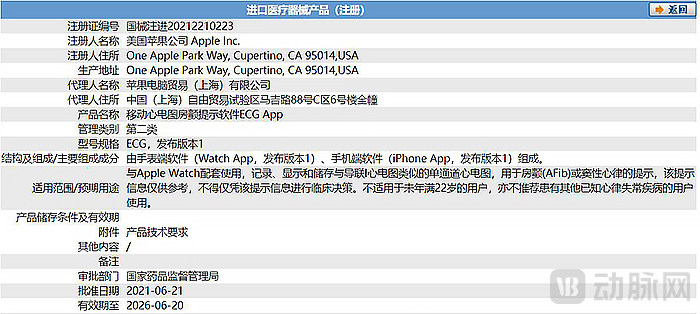
Apple ECG Receives NMPA Approval (Image Sourced from the NMPA Official Website)
This is undoubtedly great news for Apple Watch users who support this feature. However, it may not be so favorable for other players in the industry. Overnight, the user base of Apple devices with healthcare and medical functions surged from zero to tens of millions, instantly creating a new giant in the industry.
Although this figure alone does not reflect its actual clinical value, the massive scale still leaves ample room for future possibilities. In July 2021, Rockley Photonics, a supplier of silicon photonics chips and modules, announced that it was on the verge of developing a non-invasive blood glucose monitoring sensor. As the company is a key supplier to Apple, foreign media have predicted that future Apple Watch models will soon incorporate this feature.
If the Apple Watch with ECG functionality is not yet sufficient to shake the stronghold of professional medical brands, then non-invasive blood glucose monitoring may well be enough to compel traditional medical device giants to take it seriously.
However, this is ultimately a prediction. Although Apple has been attempting to enter the healthcare sector, its achievements in this field pale in comparison to its resounding successes in other areas and can hardly be deemed successful. On one hand, Apple’s longstanding corporate culture of strict project confidentiality clashes with the healthcare industry’s tradition of dialogue and open clinical research, making the advancement of medical projects fraught with difficulties. On the other hand, Apple’s healthcare team has frequently undergone significant strategic shifts and personnel changes.
By comparison, domestic consumer brands may be more proactive in their exploration of the medical field. Taking Apple’s long-time rival Huawei as an example, its smartwatch with ECG functionality had only just received approval from the NMPA in 2020, yet it achieved further advancements within merely a year. At the Huawei All-Scenario Launch Event on May 19, 2021, Huawei announced that its first smartwatch supporting blood pressure measurement had passed medical device registration testing. The next step involves collaborating with professional medical institutions to initiate registration clinical trials, with expectations for official release following NMPA approval in the second half of the year.
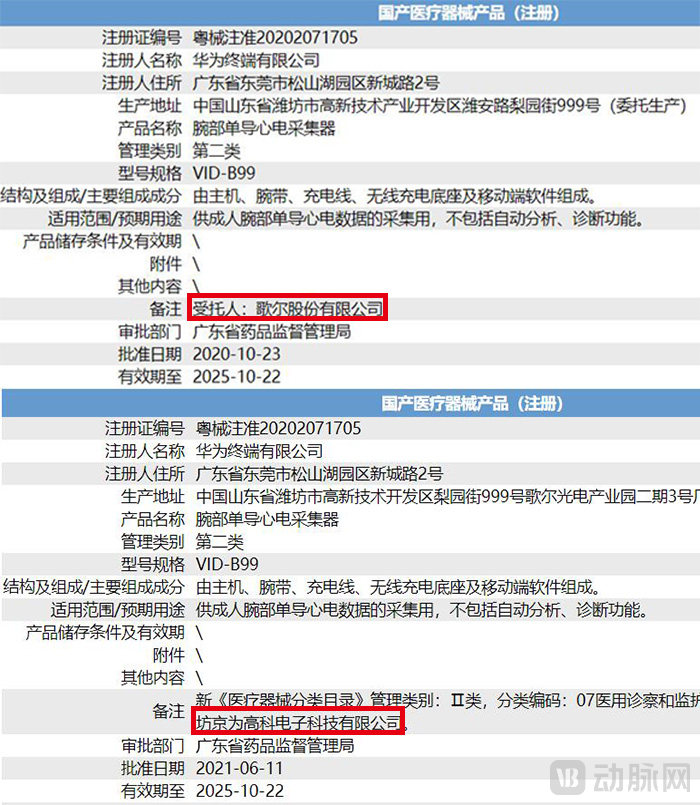
The upper part of the figure shows data collected by VCBeat from the NMPA official website in January 2021, while the lower part shows data collected by VCBeat from the NMPA official website in August 2021. It is evident that the commissioned manufacturer for Huawei’s single-lead ECG wrist-worn collector has changed, but the production address remains unchanged.
Coincidentally, another major consumer brand, Huami, also released its PumpBeats blood pressure monitoring engine in July. This engine enables users to measure their blood pressure anytime and anywhere, with the entire process requiring only a 30-second press. This signifies that Chinese wearable device manufacturers, represented by Huami and Huawei, have taken a significant step forward in the field of non-invasive, cuff-less blood pressure measurement technology.
Using smartwatches for blood pressure measurement is a global challenge, primarily due to the stringent requirements for measurement accuracy. Heart rate monitoring is relatively easy to implement on wearable devices because it only requires tracking the frequency of pulse wave beats. It does not rely heavily on the structural, morphological, or other related information of the pulse wave itself; as long as the corresponding frequency is captured and analyzed in the frequency spectrum, the heart rate can be calculated.
“Unlike heart rate, blood pressure monitoring requires not only the pulse wave frequency but also waveform information. However, optical sensors used to measure pulse waves are susceptible to various environmental factors, as well as individual differences in skin, hair, and sitting posture. Consequently, these sensors can degrade the quality of pulse waveforms; if the waveform quality deteriorates significantly, measurement reliability will be compromised,” said a technical expert from Huami Technology in an interview with VCBeat.
In addition to the algorithm, this method of measuring blood pressure using optical sensors also places high demands on the sensors themselves. Huami Technology stated that its sensor systems are independently developed and have now evolved to the third generation. The internal design is more complex, the underlying optical signals are of higher quality, and anti-interference capabilities are stronger than before, allowing for perfect integration with the latest AI-based blood pressure algorithms.
Currently, the first phase of the clinical trial conducted by Huami in collaboration with Peking University First Hospital has been completed. Analysis of blood pressure monitoring data from enrolled patients revealed that the Huami Blood Pressure Engine achieved a mean absolute deviation of less than 5.14 mmHg for systolic blood pressure and less than 4.88 mmHg for diastolic blood pressure, demonstrating high reliability.
It is understood that this feature can also facilitate screening for masked hypertension. Meanwhile, Huami Technology will continue to advance 24-hour continuous blood pressure monitoring, thereby enabling nighttime sleep monitoring and passive blood pressure monitoring.
Leading wearable technology companies are also turning their attention to the professional healthcare market. After several changes, Huawei now possesses the qualifications to develop, manufacture, and sell medical devices. Given the significant challenges Huawei has encountered in its core business, it is not inconceivable that the company may seek breakthroughs in the medical device sector.
Huami Technology has directed its research efforts toward the more specialized field of magnetic resonance imaging (MRI). The company has not only invested globally in two leading next-generation MRI companies, Hyperfine and Promaxo, but also announced at the recently held Next Beat 2021 conference that an independent team backed by Huami is developing innovative portable MRI technology.
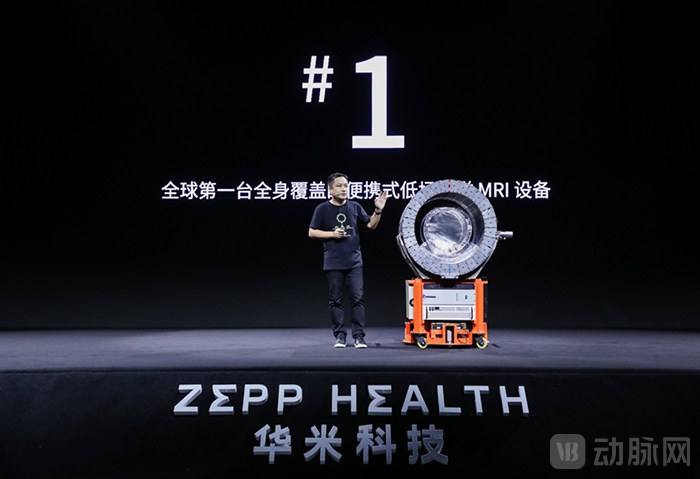
Portable MRI Device Showcased by Huami Technology
Compared with traditional medical MRI systems, which weigh up to 10–13 tons, occupy an entire room, and cost tens of millions of yuan, the portable MRI showcased by Huami Technology at the conference weighs only 0.8 tons, stands just 1.5 meters tall, and has a footprint of less than 2 square meters. More importantly, it does not require a dedicated shielded room and reduces the cost to the million-yuan level. Once widely adopted, it can be deployed in ordinary outpatient clinics and even primary healthcare institutions, thereby promoting the widespread use of MRI.
Subsequently, on July 29, Huami Technology announced that it had led the Series A financing round for neuro42, with the funds to be used for the development of magnetic resonance imaging (MRI) and robotics technologies. It is understood that this company focuses on researching and developing a portable, intraoperative MRI integrated platform that combines artificial intelligence and robotics technologies for the screening, diagnosis, and intervention of neurological disorders. This move further demonstrates Huami’s ambitions in the field of MRI.
In addition to Huawei and Huami, which have long cultivated this space, more consumer brands are also taking notice of this sector. The smart wearable devices from mobile phone giant OPPO and consumer electronics manufacturing giant Goertek have successively obtained NMPA certification.
This is not difficult to understand. As competition intensifies, obtaining medical device certification from the National Medical Products Administration (NMPA) will significantly enhance the professional credibility of wearable devices, thereby securing a competitive advantage. Subsequently, it is only logical that consumer brands will recognize the immense potential of the healthcare market and seek further development in this sector.
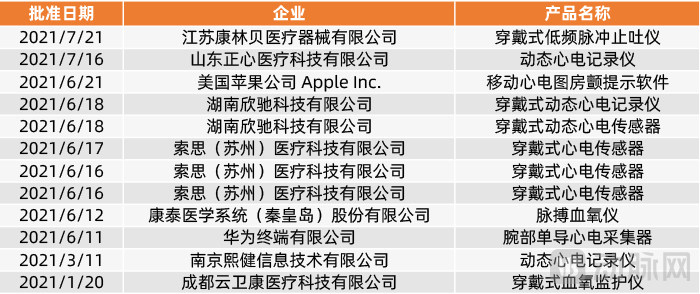
Wearable Medical Devices Approved or Updated by the NMPA in 2021 (as of July) (Please contact VCBeat if any are omitted)
How do established professional medical brands, once content in their own niche, view the aggressive entry of consumer brands into the wearable medical device sector?
In an interview with VCBeat, Ji Hualei, Chairman of Yuefan Medical, stated that professional medical brands and consumer brands were once clearly distinct: the former prioritized regulatory compliance, featured slow iteration cycles, and enjoyed high profit margins, while the latter focused on user experience, rapid iteration, and large industrial scale. However, as consumer brands pursue growth and profitability, and technological advancements in smart sensing, edge computing, and data transmission make integration feasible, the boundary between these two categories is becoming increasingly blurred.
“To be frank, traditional medical devices suffer from relatively poor operability and subpar user experience. The advantage of consumer brands lies in their user-centric approach and emphasis on user experience. From an industry perspective, the life and health sector—including pharmaceutical and medical device developers, hospitals, government regulatory agencies, and insurance companies—is relatively conservative. The entry of these cross-industry players will introduce concepts from other sectors and elevate industry standards through competition. Therefore, I believe that the entry of consumer brands into the healthcare sector will deliver a better experience for consumers,” he stated.
Gao Linming, founder of THOTH Medical, also stated that consumer brands boast high brand recognition, and their entry has brought unprecedented attention to wearable medical devices. This will accelerate the awareness of wearable medical devices among users and professionals (especially doctors). Meanwhile, more capital will flow into this sector, driving the development of the entire industry.
On the other hand, this will also ignite a talent war within the industry. Wearable medical devices involve multiple interdisciplinary fields, such as medicine, biomedical engineering, semiconductors, materials science, and artificial intelligence. Talent in these areas is already scarce, and the cultivation cycle is lengthy.
Meanwhile, he believes that the industry status quo will not change in the short term simply because consumer brands have obtained medical device registration certificates. For the medical sector, obtaining certification is merely a prerequisite and is entirely distinct from clinical application.
Current technological limitations will ensure that consumer brands and professional brands continue to operate in separate spheres for the foreseeable future. On one hand, professional medical brands fall short of consumer brands in terms of user experience, cost, and aesthetic appeal; on the other hand, consumer brands currently lack the clinical significance achieved by professional medical brands.
Furthermore, he expressed concern over certain industry practices where companies pass off inferior products as high-quality ones and engage in false advertising. “Wearable medical devices are not a new concept. However, in recent years, the immediate public perception of ‘wearables’ has been that they are unreliable. Currently, professional medical brands are still in their nascent stage and cannot compete with consumer brands in terms of brand recognition and scale. Therefore, this industry requires all participants to uphold ethical standards and work together to foster its growth.”
Compared with professional medical brands, consumer-branded wearable medical devices have several distinct advantages.
First, in terms of product design and user experience, consumer brands place significant emphasis on the user experience, combining practicality with trendy aesthetics in their external design, while their software is built upon wearable device operating systems. Their intelligent and human-centric designs have gained user recognition.
Consumer brands continue to evolve along this trajectory, developing proprietary operating systems to create a more seamless user experience. For instance, Huami Technologies recently launched Zepp OS, a new smartwatch operating system focused on health.
This system is developed based on the mainstream FreeRTOS open-source project. As a dedicated IoT operating system, Zepp OS features real-time capabilities and extremely smooth interface transitions. Meanwhile, it occupies only 55MB of storage space, one-tenth that of the previous-generation Amazfit OS. Power consumption has been reduced by 65% compared to Amazfit OS, enabling continuous 24/7 health data monitoring.
FreeRTOS is a mainstream IoT operating system with extensive hardware compatibility. Therefore, Zepp OS is suitable for various wearable devices, offering seamless compatibility with both microcontrollers and high-performance SoCs. It can also connect to a wide range of medical health IoT devices, including third-party blood pressure monitors and glucose meters, as well as medical SaaS service platforms similar to Huami Health Cloud.
Secondly, consumer brands possess scale advantages within the industrial ecosystem. Wearable medical and health devices constitute a complex system that demands strong R&D capabilities and tight control over upstream and downstream resources. Take Huami Technology, which ranked fourth globally in wearable watch shipments in Q1 2021 (according to IDC data), as an example. The company shipped 45.7 million health devices throughout 2020, and its cumulative shipments of health devices have exceeded 170 million units to date. It is indeed challenging for professional medical brands to compete with rivals of this magnitude in terms of supply chain capabilities.
In terms of R&D investment, the two are hardly comparable. Huami has averaged an annual R&D expenditure of RMB 410 million over the past three years, with its spending reaching RMB 538 million in 2020—two to three times that of other emerging internet and smart hardware companies. These investments have yielded proprietary hardware and software solutions, as well as more than 1,000 patents, nearly half of which are invention patents.
Driven by sustained, high-intensity R&D investment, Huami has also developed its proprietary chips. In 2018, Huami launched Huangshan No. 1, an AI chip designed for smart wearables. In 2020, the company introduced the upgraded Huangshan No. 2, and more recently unveiled the latest Huangshan 2S. This chip not only enables continuous, 24/7 monitoring of biological data but also supports faster hardware-based AI acceleration. For atrial fibrillation detection, for instance, its recognition speed is 26 times faster than that of pure software algorithms.
Finally, as consumer brands have recognized this vast market and invested more resources in research and development, they have made significant progress in specific fields, thereby enhancing their clinical medical value.
Driven by massive investment, the health and medical capabilities of consumer-grade wearable devices have evolved in just a few years from optional step-counting features to blood oxygen saturation (SpO2) monitoring and electrocardiography (ECG), with non-invasive blood pressure monitoring imminent and non-invasive glucose monitoring on the horizon. In specific domains, their functionality and performance now even surpass those of most professional-grade wearable medical devices.
Meanwhile, consumer brands are also striving to build their own ecosystems and lay out a blueprint for the broader health sector. Huami, for instance, has targeted the insurance industry, entering into a series of collaborations with Prudential plc, GenRe, ZhongAn Insurance, and德华 AnGuo Life Insurance to explore the integration of wearable-derived big data and algorithms into insurance applications.
In contrast, there is a significant gap between professional medical brands and consumer brands in terms of design, user experience, and brand awareness. It is no exaggeration to say that consumer brands exert a “dimensional strike” against professional medical brands.
So, are professional medical brands left with no choice but to surrender? Certainly not. Synthesizing industry perspectives, VCBeat believes that for professional medical brands to survive the “dimensionality reduction” assault from consumer brands, they must rationally assess their strengths and weaknesses, make strategic trade-offs, and invest heavily in depth and expertise. At the same time, they should adopt the best practices from consumer brand strategies and adapt them to their own circumstances.
Professional medical brands must first strive for depth. Healthcare is a long-term industry that requires sustained research and patience. While consumer brands indeed possess incomparable advantages in product iteration and evolution, they often remain self-centered, lacking the time and patience to deeply understand the needs of medical institutions and patients and implement targeted improvements.
Ji Hualei, Chairman of Yuefan Medical, believes that professional medical brands rooted in therapeutic contexts have a clearer understanding of clinical needs and can establish a closed loop of “data acquisition–computation–treatment,” thereby delivering precise medical services. Although consumer brands collect vast amounts of data and engage in computational processes, they make limited use of data to drive treatment and still have a long way to go before providing personalized medical interventions.
Gao Linming, founder of THOTH, also stated that in addition to meeting the performance standards of conventional medical devices, wearable medical devices must simplify complex issues. Their development difficulty far exceeds that of ordinary medical devices. Therefore, professional medical brands often need to spend a considerable amount of time refining every detail.
Take THOTH as an example; it launches new compatible ECG sensors nearly every year, injecting fresh vitality into its wearable medical devices. To date, THOTH has accumulated 16 NMPA medical device registration certificates. In contrast, healthcare devices are merely an ancillary offering for consumer brands. This difference in positioning means that consumer brands do not devote significant attention to the nuances of medical-grade features.
Gao Linming believes that if professional medical brands attempt to take shortcuts in developing “medical wearables,” it is only to be expected that they will be outmaneuvered by consumer brands through asymmetric competition: “Professional medical brands must face reality. They cannot compete with consumer wearables in terms of scale, cost, or brand marketing. Instead, they must seek breakthroughs at critical junctures by ‘moving toward both ends.’”
The first pillar is fundamental research, encompassing domestically produced chips, biomaterials compliant with medical device registration standards, and customized batteries with specialized discharge curves, thereby ensuring product performance that leads the industry. “These are areas where consumer brands typically do not invest time in research; they tend to procure mature modules instead. However, due to the short development history of this industry, the supporting supply chain remains incomplete. Without in-house fundamental research, it is often difficult to source suitable components,” he stated.
The second end is the clinical side, i.e., physicians. He believes that physicians are often the users of products, the initiators of demand, the recommenders of products, and even the primary providers of healthcare services throughout the entire care continuum. Therefore, when developing products, we must stay close to clinical practice and avoid becoming so engrossed in our own world that we neglect clinical requirements. Furthermore, do not deliberately evade clinical validation.
“In addition to meeting performance standards under ideal conditions (type testing), clinical trials are a critical process for demonstrating product usability. Many technical issues, including the refinement of business processes, can only be perfected through continuous clinical validation,” added Gao Linming.
Professional medical brands can also elevate product positioning and build a competitive moat. Ji Hualei, Chairman of Yuefan Medical, believes that for professional brands to survive, they must cultivate deep expertise in specific fields, establishing technical barriers such as intellectual property and algorithms—for instance, targeted neuromodulation technology and flexible ECG. These areas may have relatively niche applications for consumer brands, making it cost-prohibitive to invest substantial resources in long-term R&D. Therefore, seeking technology licensing or partnerships with professional medical brands is a more acceptable approach for them.
Furthermore, specialized brands with unique competitive barriers can even penetrate the consumer sector in reverse. For instance, Yuefan Medical’s WAT Med anti-nausea wristband, based on targeted neuromodulation technology and positioned as a “wearable therapy,” has obtained medical device registration certifications in seven countries and regions worldwide. Currently, 70% of its sales revenue comes directly from consumers.
Yuefan Medical is collaborating with automotive brands in China and Japan to integrate neuromodulation devices into vehicles, aiming to prevent motion sickness and drowsy driving. Meanwhile, Yuefan Medical’s next-generation anti-nausea wristband can be paired with Apple and Android smartwatches through its proprietary design, enabling users to access both professional neuromodulation functions and smartwatch services with a single device.
Ji Hualei believes that for professional medical brands to survive the disruptive competition from consumer brands, they must not only maintain their professional attributes but also avoid intellectual stagnation. They need to adopt the rapid evolution and iterative mindset of consumer brands, and he proposed four recommendations:
First, professional medical brands must shorten their iteration cycles and break away from the current state of complacency; otherwise, they will fall increasingly behind consumer brands that iterate at lightning speed.
Second, professional medical brands need to expand their usage scenarios. With the widespread adoption of wearable medical devices, medical activities will no longer be confined to hospitals but will extend into homes, transportation, and workplaces, becoming ubiquitous.
Third, professional medical brands need to re-identify who the decision-makers are. Currently, it is an established fact that consumers are participating in health management and medical decision-making. Therefore, it must be recognized that consumers hold significantly greater importance than healthcare professionals in the purchase, use, and evaluation of wearable medical devices;
Fourth, professional medical brands should be bold in experimenting with new marketing tools, such as various new media platforms including Douyin (TikTok), Facebook, and e-commerce channels. In addition to participating in specialized trade shows like the China Medical Equipment Fair (CMEF), these brands can also leverage distributor networks to exhibit at consumer-oriented exhibitions such as CES, thereby expanding brand awareness.
The industry’s concerns are not unfounded; the evolution of seasoned consumer brands has indeed been remarkably rapid. Although professional brands have traditionally prioritized clinical validation and maintained close collaborations with healthcare institutions, consumer brands have demonstrated strong capabilities in learning and replication, and are now strengthening their partnerships with healthcare institutions.
For instance, Huami has conducted in-depth research in collaboration with a series of top-tier hospitals and scientific research institutions both in China and abroad. Its initiatives encompass post-operative tracking and early warning for atrial fibrillation ablation, rehabilitation management and chronic disease management following myocardial infarction procedures, follow-up care for chronic obstructive pulmonary disease (COPD) in partnership with Academician Zhong Nanshan, as well as post-operative follow-up for breast cancer and comprehensive management of osteoporosis in the elderly.
Furthermore, Huami has collaborated with the Guangzhou Institute of Respiratory Health at the First Affiliated Hospital of Guangzhou Medical University and Academician Zhong Nanshan’s team to actively advance projects on the prevention of pediatric asthma exacerbations and pediatric obstructive sleep apnea syndrome (OSAS). The resulting research findings are expected to significantly benefit future iterations of children’s smartwatches.
There are also differing views within the industry regarding consumer brands’ efforts to strengthen collaborations with healthcare institutions in an attempt to disrupt the competitive advantage held by professional brands.
Ji Hualei, Chairman of Yuefan Medical, believes that this penetration will drive the industry’s transition from being “doctor-centric” to “patient-centric.”
First, patients have significantly increased access to professional knowledge in the internet era and hope to leverage information technology tools to engage more actively in self-medication management and health management.
Secondly, the entry of consumer brands that prioritize user experience into the healthcare sector will bring a better experience to consumers.
Finally, medical device regulatory authorities have also undergone changes. The Jiangsu Medical Device Usability Testing Platform, jointly established by the Jiangsu Institute for Medical Device Testing in collaboration with entities such as the Swiss SGS Group and the University of Shanghai for Science and Technology, conducts a wide range of tests—including interaction design, human-computer interaction, human-machine interface, human factors engineering, ergonomics, usability testing, and user experience—by simulating healthcare environments for usability assessment.
Gao Linming, founder of THOTH Medical, stated that although consumer brands are also strengthening their clinical capabilities, they differ fundamentally from professional medical brands in terms of target customer segments and product design logic: “Professional medical brands target patients, who, despite being low-frequency users, are willing to pay a premium for solutions that address critical medical pain points. In contrast, consumer brands target the general public, or at most, individuals in a sub-health state. This demographic views such features merely as add-ons to electronic devices; while usage may appear frequent, there is essentially no willingness to pay.”
He stated that the industry, including THOTH, has been striving to develop products that can accompany users over the long term while meeting clinical requirements. However, neither smart bands nor smart watches in their current forms can satisfy these needs. A key reason is that vital signs measurable at the wrist are relatively limited with existing technology. “In our system architecture, smart bands and watches can only serve as gateways to address data transmission and simple distributed computing tasks, rather than functioning as sensors. I personally believe that form factors such as electronic skin or implantable devices may be more ideal. Achieving this level of performance requires indispensable advances in chip (sensor) technology, materials, and battery technology. In my view, current technology is not yet capable of reaching this standard.”
Wearable medical devices hold significant application potential in the healthcare sector. What we see today is merely the tip of the iceberg. With technological advancements, we will witness an increasing number of application scenarios being implemented in the future.
It has become an irreversible trend for consumer brands to cross over into the healthcare industry. This will promote the development of the medical and health sector, bringing better healthcare and lifestyle options to consumers. The boundary between low-risk medical devices and consumer products will become increasingly blurred, a trend that is expected to gain consensus among regulatory authorities for medical devices worldwide.
Meanwhile, the entry of consumer brands will undoubtedly bring about significant changes to the landscape of wearable medical devices. As the saying goes, “the waves wash away the heroes.” Whether they are consumer brands or professional medical device manufacturers, only by staying true to their original mission, paying meticulous attention to critical details, and genuinely addressing user needs can they remain resilient amidst fierce competition.
References
Gsmarena.com:Apple Watch 8 to offer blood pressure, blood sugar and alcohol levels