

Digital Health Management: A Strategic Solution to Cost Control Challenges in Public and Commercial Health Insurance
In recent years, under the combined effects of factors such as the gradual improvement of the universal health insurance system, the intensifying trend of population aging, and the continuous rise in medical costs,The financial pressure on the medical insurance fund is increasing day by day, posing a risk of medium- to long-term unsustainability.
Therefore,Cost Containment in Medical Insurance Has Become the Focus of China’s New Round of Healthcare Reform: To address the increasingly severe payment pressures on the basic medical insurance fund, the government, enterprises, and various sectors of society are intensifying their collaborative efforts.Promote the integrated development of basic medical insurance and commercial health insurance through institutional and mechanistic innovation.
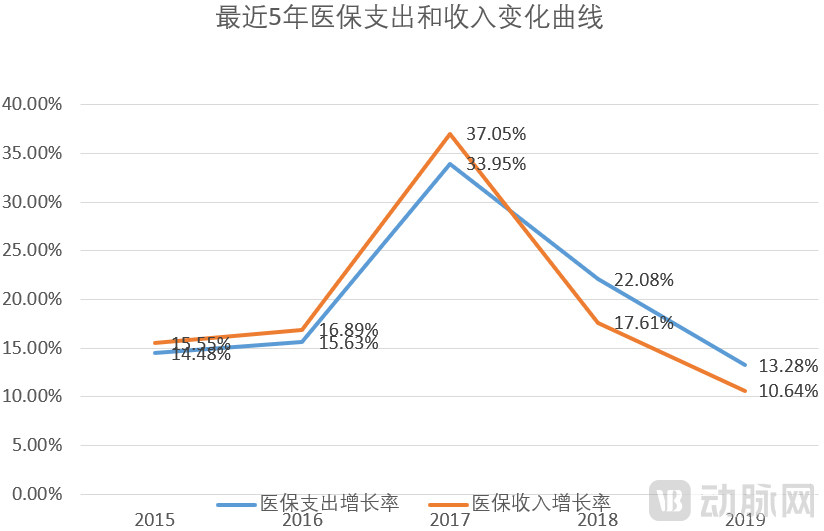
Just last year, the Central Committee of the Communist Party of China and the State Council issued the “Opinions on Deepening the Reform of the Medical Security System,” which prominently highlighted the development of commercial health insurance. Consequently, building upon existing critical illness insurance and high-limit medical insurance products, a variety of other insurance products—such as specific drug insurance and Huiminbao (inclusive supplementary medical insurance)—were rapidly rolled out across various regions under policy incentives.
Likewise,Commercial health insurance, still in a phase of rapid development, must implement reasonable cost containment measures during its scaled expansion to enhance the sustainability of its products.Among these, the accessibility of medical data, as well as accurate pricing and user management, are the “major obstacles” to cost control in commercial health insurance.
How to help control costs for both public health insurance and commercial health insurance has clearly become a key focus for all stakeholders in the industry, as well as an urgent pain point that needs to be addressed. Against this backdrop, the emergence and development of digital health management may offer a solution to this challenge.
Regarding the concept of health management, the former China Insurance Regulatory Commission (CIRC) issued a policy in 2012 to provide its definition, with the core focus on “improving health status.”
In 2020, the General Office of the China Banking and Insurance Regulatory Commission (CBIRC) issued the Notice on Regulating Health Management Services of Insurance Companies, which redefined the concept and classification of health management, replacing the 2012 version. The core emphasis lies in “maintaining a state of health.” From a regulatory perspective, the 2020 version imposes stricter requirements than those in 2012, thereby necessitating more comprehensive management measures for implementation. Meanwhile,The 2020 edition places greater emphasis on the monitoring, analysis, assessment, and intervention of health status.
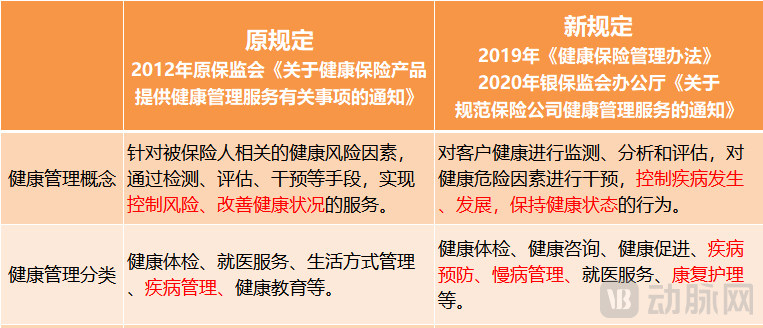
Comparison of Old and New Regulations on Health Management Services in Health Insurance Products. Source: Official Website of the China Banking and Insurance Regulatory Commission; Graphic by VCBeat
Policymakers are increasingly prioritizing the continuity and timeliness of health management. This is because, for patients with chronic diseases, ineffective management of their health status increases the likelihood of disease progression, thereby leading to higher insurance claim ratios.
Notably, behind the evolving policy regulations lies a broader context of continuous breakthroughs in China’s overall health management ecosystem, driven by advances in intelligent devices and technologies in recent years.Health management has increasingly converged with technologies such as artificial intelligence, the Internet of Things, and big data, exhibiting digital characteristics. This involves collecting human physiological data to provide personalized health recommendations and develop tailored health management plans.
It can be observed that the emergence and development of digital health management have significantly improved the accessibility, effectiveness, and precision of health management. From a commercial perspective,Digital health management also offers the following four advantages.
① Digital health management will help users avoid illness, reduce the frequency of illness, and mitigate the severity of illnesses when they do occur, thereby alleviating the payment pressure on medical insurance.
② It can channel the surplus capacity of certain medical resources into digital health management, encouraging patients to seek treatment at primary care facilities, thereby optimizing the allocation of medical resources and alleviating the diagnostic and treatment burden on core hospitals.
③ Digital health management enables the tracking and assessment of user adherence to and outcomes of health management plans, while integrating in-hospital and out-of-hospital data to establish a closed-loop data system, thereby helping healthcare providers continuously refine their health management solutions;
④ With the proven effectiveness of digital health management, society will be more willing to allocate additional resources, thereby fostering greater development in the commercial health insurance industry and creating a virtuous industry ecosystem.
In summary, digital health management leverages technological means to match users with the most scientifically sound and effective health plans. By providing data-driven services and linking comprehensive resources, it encourages greater user engagement in taking action, thereby delivering superior health management outcomes. On the other hand,The integration of data between in-hospital and out-of-hospital settings has created a closed-loop health management service, truly aiding cost containment efforts for both public medical insurance and commercial insurance.
Faced with the tremendous opportunities brought by digital health management, numerous medical innovation enterprises and capital investors are eager to seize the initiative. However, the journey from theory to implementation is fraught with challenges, spanning resource integration, technological hurdles, and service model innovations.
How to address these issues has become a critical priority for enterprises. Among them,As a pioneer in the field of digital health management in China, Miao Health has recently entered into a strategic partnership with Guoxin Health, emerging as a landmark model for industry implementation.
Specifically,In this strategic collaboration, Guoxin Health and Miao Health will focus on the “two major payers—basic medical insurance and commercial health insurance,” jointly develop integrated solutions, and bring to market a digital health management model for cost containment.Furthermore, the two parties will promote the implementation of industry benchmark projects, such as health management centers and health demonstration communities, across China. They aim to establish regional health service complexes to meet residents’ health needs and foster innovative development in the broader health industry.
From the Perspective of Each Partner's Comparative Advantages, as a central state-owned enterprise listed company under China Reform Holdings Corporation,Guoxin HealthIt is a state-owned enterprise specializing in health security services, with integrated medical insurance management services as its core business. Leveraging the professional knowledge system of the pharmaceutical and healthcare industry, and employing advanced technologies such as artificial intelligence and big data, the company has established itself as a specialized health security services group.
In terms of business operations, as of now, Guoxin Health’s comprehensive medical insurance management services have covered more than 190 medical insurance pooling areas across 26 provinces (including municipalities directly under the Central Government and autonomous regions), serving over 600 million insured individuals and covering a medical insurance fund scale exceeding RMB 1 trillion. The region-specific DRG point-based payment model promoted by Guoxin Health has demonstrated significant effectiveness since its implementation.
Revisiting Miao HealthAs a health technology company built on big data of health behaviors and artificial intelligence, the enterprise has developed a digital precision health management platform that integrates pharmaceuticals, medical services, and insurance, enabling customized lifelong health management plans for each user.
Miao Health’s core strength lies in its comprehensive, scenario-based health management services. By partnering with the Canadian Wellness Institute (CWI), a global leader in chronic disease prevention and control and health management, Miao Health integrates online services with offline health management centers, and combines human expertise with AI to help users effectively improve their lifestyles and health indicators. Leveraging its technological and service capabilities, the company is continuously expanding into the commercial insurance sector, providing digital solutions that integrate “insurance + health management” to address the pain point of cost containment in commercial health insurance.
Leveraging its capabilities in dynamic and continuous health data analysis, insurtech, and health promotion services, Miao Health has established partnerships with dozens of insurance companies in China. It participates in multiple stages of the insurance value chain, including insurance product design, data monitoring, customer acquisition and marketing, intelligent underwriting and claims processing, risk management, and customer operations, thereby accumulating extensive practical experience in cost containment for commercial insurance. Notably, in January 2020, the CPIC·Miao Health Management Center, a joint venture between China Pacific Insurance Company and Miao Health, opened its facilities in Hangzhou and Zhengzhou. As lifestyle medicine centers tailored to the health management needs of insurance customers, they have become an industry benchmark.
At the service level, Miao Health continues to strengthen its collaborative capabilities with hospitals, insurance providers, government agencies, and other multi-channel partners, accelerating the implementation of its “Digital Health Community (City)” solutions. Supported by urban headquarters for health management centers and community-based health management centers, it provides services such as data collection, lifestyle interventions, and precise medical care coordination to a broader population, thereby reducing disease risks and healthcare expenditures.
Guoxin Health and Miao Health have joined forces to leverage their respective strengths, share resources, and integrate online and offline service delivery capabilities. By pooling their expertise in cost containment for both basic medical insurance and commercial health insurance, and by fully leveraging the connective power of big data platforms to close the data loop between in-hospital and out-of-hospital settings, they enable full-lifecycle management for insured individuals, thereby creating greater possibilities for controlling medical insurance costs.
Moreover, Guoxin Health will collaborate with Miao Health to establish a comprehensive digital health service assurance system, centered on creating model healthy communities and launching pilot projects for regional health complexes. By increasing investment in preventive care, enhancing chronic disease management capabilities, and comprehensively improving residents’ health literacy, the company aims to fulfill its social responsibilities, demonstrate corporate commitment, and further advance the implementation of the Healthy China initiative.
Although China’s digital health management industry started relatively late, it has been developing rapidly. This is because,The entire industry not only boasts a vast user base but also aligns with the trends of medical insurance cost containment and the robust growth of commercial health insurance.
According to the report "Digital Upgrade of China's Health Management Market," the current scale of China's health management market exceeds one trillion yuan. It is projected that by 2030, the value created by digitalization in the healthcare industry will account for 12%–45% of the industry's revenue.
In light of this opportunity,For all stakeholders in the industry, it is particularly crucial to identify development pathways suited to their specific needs during this window of opportunity.After all, as the industry evolves, health protection needs across different population groups will become more granular, requirements will grow increasingly diverse, and the challenges facing enterprises will intensify.
For instance, in terms of service models, in addition to leveraging digital technologies for user data collection and integration, and employing intelligent analytics for individualized health assessment and behavioral intervention, value-added health services can also be provided, thereby establishing a professional, closed-loop health management platform.
Alternatively, from a technological standpoint, in addition to wearable devices, companies entering the market can also focus on developing lightweight and miniaturized products, thereby providing users with more convenient and diverse options for their daily health management needs.
In other words, in the blue ocean of digital health management, besides building a comprehensive closed-loop service system, participants can also achieve breakthroughs at specific points within certain segments. However, the core objective is to genuinely deliver a superior health management experience to every user.
Policies are also driving this trend. In 2016, health across the entire life course was elevated to the level of national strategy for the first time. By 2020, the state once again emphasized that the concept of whole-life-cycle health management should be integrated into all stages of urban planning, construction, and governance.
The development of the health management industry not only improves the national health level, extends healthy life expectancy, and alleviates the pressure of population aging, but also generates economic benefits for the industry and drives the vigorous growth of related health sectors.
We believe that, driven by the proactive efforts of all stakeholders across the industry, digital health management will unlock greater possibilities for the entire healthcare ecosystem.