

ChallenBio: Focused on Flow Cytometry Technology, Expanding New Industry Horizons

Challenbio
IVD Diagnostic Instrument and Reagent Developer
Since the development and production of the first commercial flow cytometer, FACS I, in the 1970s, flow cytometry has been increasingly applied to clinical medicine and basic research fields such as immunology, hematology, oncology, and cell biology. It has also gradually become a key technological tool in biology and medicine, clinical diagnostics, and drug development.
As a method for precise quantitative analysis of cells and proteins, flow cytometry offers advantages such as high speed, high precision, and superior accuracy compared to traditional fluorescence microscopy. Compared with ELISA or chemiluminescence assays, it provides a broader dynamic range and greater multiplexing capability. In recent years, the flow cytometry market has continued to expand alongside the development of the biopharmaceutical industry, holding immense potential for future growth. Industry giants such as BD, Beckman Coulter, Sony, Agilent, and Luminex are also continuously increasing their investments in this field.
Despite the optimistic market outlook and expanding application scope, China had few independently developed flow cytometers before 2014 (when Mindray launched its flow cytometer), with most instruments sold in the domestic market relying on imports. Driven by the broad technological applications and significant potential for import substitution, an increasing number of domestic innovative enterprises are focusing on flow cytometry technology. Beijing Challen Biotechnology Co., Ltd. (hereinafter referred to as “Challenbio”) is one such company.
Overview of the Evolution of Flow Cytometry Technology
Technical Overview
The core of flow cytometry technology lies in the technique whereby sheath fluid hydrodynamically focuses sample particles into a single-file stream, which then passes through laser excitation to generate optical signals (excluding mass cytometry). The term "flow" is derived from this fluidic technology that utilizes sheath fluid to encase the sample stream. The main features of this technology are summarized in the following three aspects:
First, particle detection. Individual particles are aligned to pass through a laser beam for excitation;
Second, laser excitation. Laser excitation generates scattered light and fluorescence signals, which is distinct from the self-luminescence of chemiluminescence;
Third, multiplex detection. Parallel detection across multiple color channels is achieved through an optical collection and beam-splitting system.
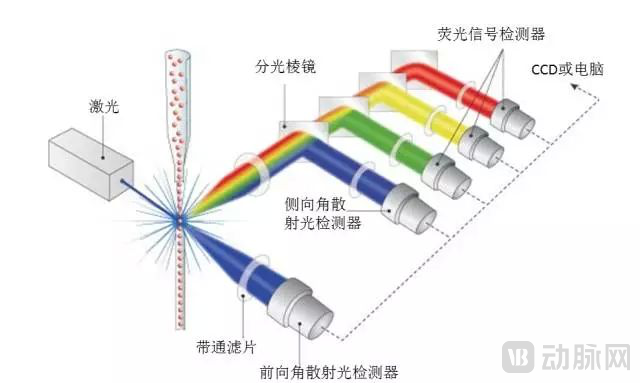
Basic Principles of Flow Cytometry Technology (Image Source: Provided by the Company)
Application Scenarios
1. Cell Analysis: Analyze cells using flow cytometry technology, including red blood cells, five-part differential white blood cell counts, and platelet analysis; additionally, through reagent staining techniques, human cells such as lymphocytes can be further sub-classified. Specific products include hematology analyzers and flow cytometers;
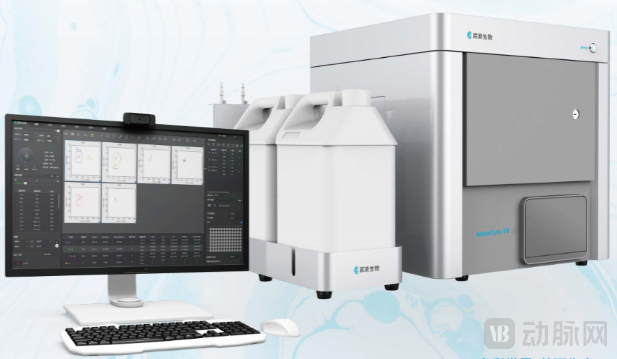
Challenbio MateCyte Flow Cytometer (Image source: Provided by the company)
2. Liquid Chip: Extends flow cytometry to the fields of protein analysis and molecular diagnostics, enabling the detection of both proteins and nucleic acids. It is a combination of flow cytometry and microsphere technology, also known as flow fluorescence. The product comprises three main components: microsphere reagents, flow cytometers, and automated diagnostic software.
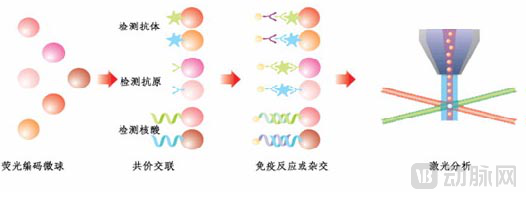
Image source: Provided by the company
Technical Direction
1. Multi-laser, multi-color: Conventional flow cytometry typically employs 2 lasers with 4 or 6 colors. The powerful optical system offers greater flexibility and convenience in experimental design options; currently, the most advanced optical systems support up to 9 lasers.
2. Spectral Flow Cytometry: Spectral flow cytometry represents a new trend in instrument technology development in recent years, significantly increasing the optical information content of flow cytometry detection and expanding from simple signal intensity analysis to spectral feature analysis. This technology can effectively reduce the complexity of reagent selection, experimental protocols, fluorescence compensation, and other issues, marking the entry of flow cytometry technology into a new era;
3. Mass Cytometry: Mass cytometry utilizes mass spectrometry principles to perform multiparametric analysis at the single-cell level. It combines the high-throughput analytical capabilities of conventional flow cytometry with the high-resolution detection power of mass spectrometry. By replacing laser-induced optical detection with mass spectrometric detection, this technology represents a new direction in the evolution of flow cytometry.
4. Nano Flow Cytometry: Nano flow cytometry enables multiparametric comprehensive characterization of nanoparticles (<100 nm). It facilitates rapid, multiparametric comprehensive characterization of the physicochemical and biochemical properties of functionalized nanoparticles and natural biological nanoparticles—such as exosomes, viruses, bacteria, and subcellular organelles—at the single-particle level. This technology holds significant importance for advancing the fields of nanobiology and nanomedicine, as well as fundamental life sciences research.
5. Cell Sorting Flow Cytometry: Conventional flow cytometry is limited to cell analysis, whereas cell sorting flow cytometry enables the isolation of specific cells during analysis. Currently, the two commonly used sorting methods are electrostatic sorting and mechanical sorting;
6. Fully Automated Flow Cytometry: Since their inception, flow cytometry products were primarily used as research instruments. Operators possessed strong scientific literacy and research capabilities, enabling them to flexibly design experimental protocols, prepare samples, and perform measurements and data analysis on the instruments. However, with the gradual expansion of clinical applications, manual sample preparation and various parameter settings no longer meet the needs of current users. The market increasingly demands fully automated flow cytometry systems featuring one-touch operation and automated reporting. This trend also reflects the development direction of equipment technology: automation, standardization, and intelligence.
From Mindray to Challenbio: A Decade of Focus on Flow Cytometry Technology
Challenbio’s core team has focused on flow cytometry technology for over a decade, committed to being pioneers and innovators in the field. The founder previously served as the system designer for Mindray’s BriCyte E6 flow cytometer, dedicating four years to contributing from the ground up to the development of China’s first clinical flow cytometer.

Liu Tiefu: Founder of Challenbio, formerly served as a System Designer at Mindray’s North China IVD R&D Center. He possesses a profound understanding of market demands, industry landscape, and development trends in flow cytometry technology, along with extensive experience in this field.
After more than a decade of industry practice and reflection, and through extensive customer visits and in-depth research to distill the essential insights, Challenbio has been diligently exploring the various technological directions mentioned above, successively launching multiple independently developed flow cytometry products. Currently, Challenbio’s flagship product, the MateCyte 2-laser 8-color flow cytometer with automated sample loading, has successfully obtained NMPA registration certification, offering advantages of simplicity, intelligence, stability, and reliability. The subsequent high-end model, LongCyte, can be configured with up to 3 lasers and 14 colors, and is expected to launch within the next few months, poised to become China’s first three-laser flow cytometer.
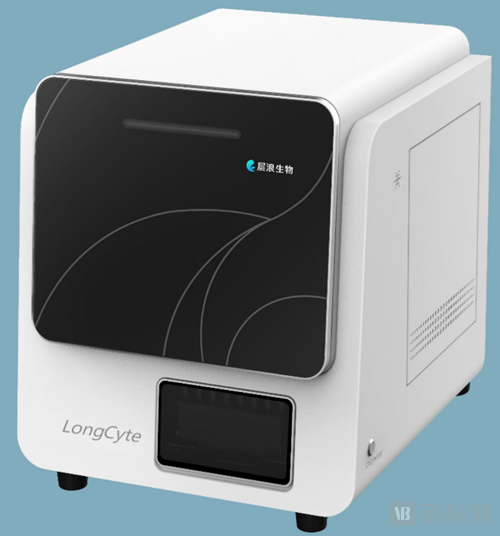
3-Laser 14-Color Domestic Flow Cytometer LongCyte
In the field of immunoassays, chemiluminescence technology has gradually matured after years of development. Compared to its traditional single-analyte testing capabilities, there is now a growing market demand for multiplex assays. Furthermore, in terms of sensitivity, the field is advancing toward higher sensitivity, even reaching the level of single-molecule detection. Regarding technological categories, spectral flow cytometry, mass cytometry, nano-flow cytometry, and cell-sorting flow cytometry have emerged as rapidly developing areas in recent years. In the realm of reagent R&D, various applications such as lymphocyte subset analysis, cytokine profiling, and reproductive health testing continue to emerge, while some practitioners are also exploring liquid chip technologies.
Overall, looking ahead, numerous peaks await industry practitioners to conquer; looking outward, industry giants stand tall while emerging forces rise rapidly; focusing on users, there are many pain points to address and high expectations to meet; looking to the future, new technologies and solutions will continue to emerge. This presents opportunities for Challenbio’s development, inspiring it to surge forward.
Next, Challenbio will launch its next flagship product: a fully automated flow cytometer with integrated sample preparation and detection capabilities, compatible with common assays such as lymphocyte subset analysis and cytokine profiling. The platform will be open for collaboration, partnering with industry stakeholders, including reagent manufacturers, to deliver a hassle-free testing experience for customers. Scheduled for release in the first half of next year, the company welcomes communications with industry players to establish strategic partnerships.
Over the next 3–5 years, Challenbio will closely follow technological trends, actively explore new frontiers, strive to elevate domestic flow cytometry technology to higher levels, and promote Chinese-made flow cytometry products worldwide. Throughout its development, Challenbio will maintain an open and inclusive mindset, collaborate sincerely with industry partners, serve customers, and achieve mutual success. To accelerate the realization of these objectives, Challenbio has decided to launch its Series A financing round. We welcome interested investors to explore collaboration opportunities and co-create a promising future.