

How Listed-Backed Ronglian Qimo Empowers Growth in the Aesthetic Medicine Industry
Recently, listed companies have increasingly turned their attention to the medical aesthetics sector.
According to incomplete statistics,Since 2021, more than 20 listed companies have announced their cross-industry entry into the medical aesthetics sector., primarily entering the market rapidly through mergers and acquisitions. These participants include well-known real estate enterprises such as Aoyuan Beauty Valley and Lushen Development, as well as large companies from traditional sectors like pharmaceuticals and maternal and infant care.
They swiftly entered the medical aesthetics sector, recognizing the significant market opportunities behind the industry. According to the "2020 Medical Aesthetics Industry White Paper" released by Gengmei APP, a professional domestic medical aesthetics platform,In 2020, the market size of China's medical aesthetics industry reached RMB 197.5 billion, a year-on-year increase of 11.6%, marking ten consecutive years of high-speed growth exceeding 10%.
However, the potential of China’s medical aesthetics industry has not been fully tapped. This is primarily because, compared with the market penetration rate of approximately 10% in leading countries such as the United States, Brazil, and Japan, China’s market penetration rate remains considerably low at only around 2%, indicating at least a fivefold room for growth. Therefore, VBInsight estimates thatChina's medical aesthetics market is projected to reach RMB 366.8 billion in 2023, poised to surpass the United States and become the world's largest market for medical aesthetics.
A sector brimming with imagination has never lacked followers. As a leader in China’s SaaS-based intelligent customer service field,7Moor7MoorIt has also been deeply involved, leveraging its own strengths to forge a unique development path in the medical aesthetics sector.
Struggling Amidst Rapid Growth: What Is Holding Back Aesthetic Medicine Clinics?
The medical aesthetics industry chain encompasses consumables, devices, and medical aesthetics institutions. The upstream segments of consumables and devices are often described as “effortlessly profitable,” with the “Big Three Hyaluronic Acid Manufacturers”Imeik, Bloomage Biotech, Haohai Biological TechnologyGross profit margins all exceed 90%, but the downstream medical aesthetics clinics present a vastly different landscape, with most operating at a loss and a remarkably high market elimination rate.
This is primarily “thanks to” the sky-high customer acquisition costs borne by medical aesthetic institutions.CSC Financial has found that marketing channels and sales expenses account for 50% and 20%, respectively, of the total costs of medical aesthetic institutions. After deducting these along with expenditures on consumables, operations, and labor, the net profit margin of such institutions generally ranges from only 1% to 10%.
that listed in Hong Kong at the end of last yearRuili Medical AestheticsFor example, from 2017 to 2020, the company’s gross profit margins reached as high as 66%, 58.2%, 52.9%, and 48.72%, respectively, while its net profit margins were only 15.4%, 11.6%, 5.4%, and 2.98%. The root cause of this significant disparity is the high customer acquisition costs.
This trend is becoming increasingly severe. Before internet-based healthcare gained dominance, medical aesthetics institutions primarily advertised through traditional media, with customer acquisition costs exceeding RMB 2,000. Later, due to Baidu’s paid ranking system, these costs rose to over RMB 3,000. As multi-dimensional marketing models emerged, costs climbed further. Currently, the industry has shifted toward a channel-based model, but market rebates have reached as high as 70%.
In fact, the medical aesthetics platforms and apps that have emerged in recent years were mostly designed to reduce customer acquisition costs for medical aesthetics institutions, but the landscape has clearly changed.
It is understood that after the emergence of medical aesthetics apps, medical aesthetics institutions have abandoned traditional channels and brokers, opting instead to advertise directly on these platforms to acquire customers. When advertising costs and transaction commissions are taken into account, the customer acquisition cost per individual often amounts to only RMB 200–300, indicating a significant reduction in customer acquisition costs for medical aesthetics institutions.
However, the good times did not last long. As medical aesthetics platforms and apps “squeezed out” a large number of beauty clinics acting as intermediaries or brokers, customer acquisition costs for medical aesthetics institutions on these platforms began to rebound. The most notable turning point occurred in 2019, when some medical aesthetics platforms simultaneously raised their advertising fees and commissions, with increases reaching as high as 120%.
According to industry insiders, in the first half of this year, their institution generated nearly RMB 3 million in monthly revenue through the platform. A 10% commission, referred to as the platform consultation fee, is charged on each completed order. Calculated comprehensively, the monthly payment to the medical aesthetics app amounts to approximately RMB 1.5 to 1.8 million, resulting in a return on investment (ROI) ratio of about 1:2, which is significantly lower than the 1:8 ratio observed in 2018.
It is not difficult to see that medical aesthetic institutions are bearing a considerable financial burden in customer acquisition, with the vast majority of funds ultimately ending up in the coffers of medical aesthetic platforms and apps.
Integrate End-to-End Data to Build a User-Centric Comprehensive Marketing System
Undeniably, the medical aesthetics industry boasts broad prospects and high gross margins. However, compared with the upstream sector—characterized by prohibitively high barriers that deter many despite its “passive income” potential—the downstream segment, comprised of medical aesthetics institutions, remains an elusive “beautiful myth.” Although these institutions enjoy high gross margins, their net profit margins are extremely low. Venturing in rashly could turn what seems like honey into arsenic; therefore, identifying the right entry point is critical.
7Moor, established in 2014, is a technology-driven company centered on AI and communications technologies and powered by data. Through continuous technological innovation, it has successively launched multi-dimensional products designed to support enterprise marketing, customer service, and digital transformation.
In terms of marketing, core products such as JuKe, Cloud Telemarketing, and AIcall can help enterprises break through the challenges of stagnant growth and customer acquisition difficulties. In terms of service, personalized offerings like Cloud Customer Service, X-Bot, and Cloud Call Center can address the issue of low service efficiency. Regarding digital transformation, the MoPower no-code development platform provides enterprises with a digital operations middle office, delivering end-to-end solutions—from marketing and customer acquisition to service operations—through a comprehensive product matrix across all scenarios, thereby helping enterprises reduce costs and increase efficiency.
Through precise analysis of the medical aesthetics industry and in alignment with its own product development strategy, Chen Guang, CEO of 7Moor, identified the potential for their products to drive customer acquisition growth in the medical aesthetics sector, and formally entered the industry in 2019.
To address challenges in the medical aesthetics industry, such as difficult customer acquisition and high costs, 7Moor has developed a novel solution. This solution helps the industry build a user-centric, mass-marketing system that systematically resolves pain points from “customer acquisition” to “customer engagement,” thereby enhancing acquisition capabilities and continuously strengthening the industry’s internal “self-sustaining” capacity.
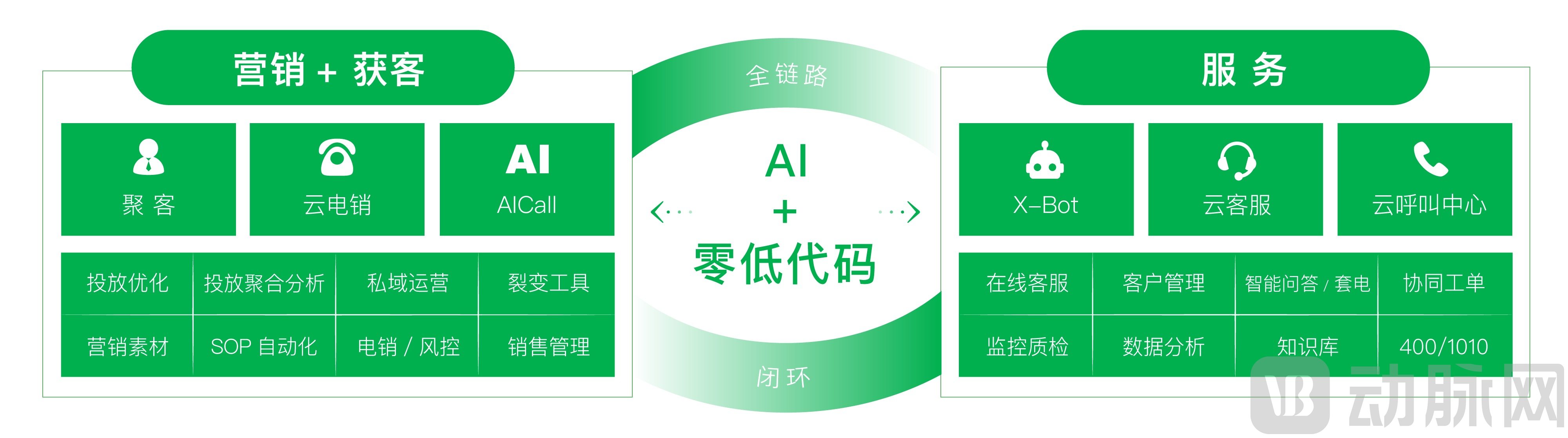
On one hand, “customer acquisition” can be broadly divided into three key steps.First, integrate omnichannel traffic.“7Moor Juke” integrates public-domain advertising channels to enable enterprises to precisely optimize their ad performance. By leveraging marketing tools to acquire users within private-domain traffic pools and tracking user journeys to clearly identify the source of each user, companies can further refine their marketing strategies and attract more genuine, high-quality users.
Next is to establish demand-driven operational services (private domain operations).Through “7Moor Juke,” users can be managed with tiered tagging, enabling automated marketing operations via WeChat groups and WeCom. This approach precisely identifies user interests and suitable products, establishing a comprehensive operational system that transforms users from inactive to highly engaged, thereby enhancing the precision of user acquisition and conversion.
Finally, growth fission.“7Moor Juke” offers viral marketing tools within the WeChat ecosystem, enabling video-based viral dissemination through promotional campaigns, posters, and coupons. This rapidly re-engages existing customers and high-potential prospects to drive viral growth and expansion.
On the other hand, there is “activating users,” which refers to enhancing user stickiness and promoting consumer spending.7Moor establishes a comprehensive service system covering pre-sales consultation, in-sales follow-up, and after-sales support through intelligent systems and innovative solutions, thereby improving agent efficiency and service quality, enhancing user experience, and driving paid conversion.
Overall, 7Moor provides the medical aesthetics industry with a full-chain solution spanning marketing and customer acquisition, service operations, and growth-driven viral expansion. This is specifically reflected in establishing a virtuous cycle for enterprise-wide user lifecycle management, implementing tiered and segmented tag-based user management, and enabling precise marketing through customizable Standard Operating Procedures (SOPs) to enhance user engagement.
On the other hand, 7Moor effectively helps the medical aesthetics industry address challenges such as low operational efficiency, high customer acquisition costs, and limited viral growth. By focusing on its two core business pillars—customer acquisition and customer engagement—the company enables businesses to capture more commercial opportunities and improve user conversion rates.
Beyond Aesthetic Medicine, Ronglian Holds Greater Potential in the Healthcare Sector
As a company with a publicly listed parent, Ronglian 7Moor is clearly well-prepared to expand its client base and enter the medical aesthetics industry.On one hand, it targets the enormous market demand.According to data from iResearch,In 2023, the number of medical aesthetics consumers in China will grow to 25.483 million., there remains significant room for user growth. For the medical aesthetics industry, professional transformation, precision services, and customized services will become the most effective ways to sustain operations and share in the industry’s dividends in the future.
On the other hand, there is the company’s existing “moat” within the industry.As a pioneer in providing end-to-end marketing and service solutions for enterprises, 7Moor holds significant advantages across multiple dimensions, including technology, talent, services, and resources. The core team members possess profound insights and unique perspectives on the industry, and their expertise in innovating service models and optimizing enterprise operations will serve as a continuous driving force for business growth.
Looking ahead, 7Moor also has its own strategic considerations. On one hand, starting from short-term objectives, it will primarilyFocus on Creating “Star Cases”, gradually building influence in the medical aesthetics industry; on the other hand, it is anchored in a long-term strategy, continuously enhancing its solution capabilities by refining its own products,Expand the boundaries of business scenarios to a broader scope, building on its foundation in the medical aesthetics industry, it is expanding into broader healthcare sectors with strong demands for user growth, striving to create a comprehensive ecosystem of marketing and service products covering the healthcare industry.
The goals are clearly defined, but their actual realization requires strengthening and supplementation across multiple stages. Mr. Chen Guang told VCBeat, “For Ronglian 7Moor,What is most urgently needed now is the continuous influx of industry talent."This holds significant importance for 7Moor’s continuous deepening of its industry expertise and external expansion. Since each industry has distinct characteristics, a standardized approach cannot be universally applied. Instead, industry-specific solutions must be implemented in line with the unique features of each sector. Only in this way can the needs of enterprise users be truly addressed—a principle that 7Moor has consistently upheld."
Amid the sustained hype surrounding the medical aesthetics sector, any company with even a tangential connection to the industry may experience rapid growth in the short term. However, such fervor may be merely superficial. Only enterprises that truly delve into industry needs and pain points, while systematically building solutions, are likely to successfully navigate this wave and achieve sustainable success. 7Moor possesses such potential.