Bohrium Science Navigator Chemistry Edition Officially Launches, Transforming Chemical Search from 'Needle in a Haystack' to 'Precision Guidance'

DP Technology
Simulation R&D Platform Developer
On March 27, 2026, under the spotlight of the 2026 Zhongguancun Forum Annual Meeting, a "revolution" targeting the underlying logic of chemical research officially erupted. The Beijing Academy of Artificial Intelligence for Science (AISI) and DP Technology jointly released "Bohr·Science Navigation Chemistry Edition."
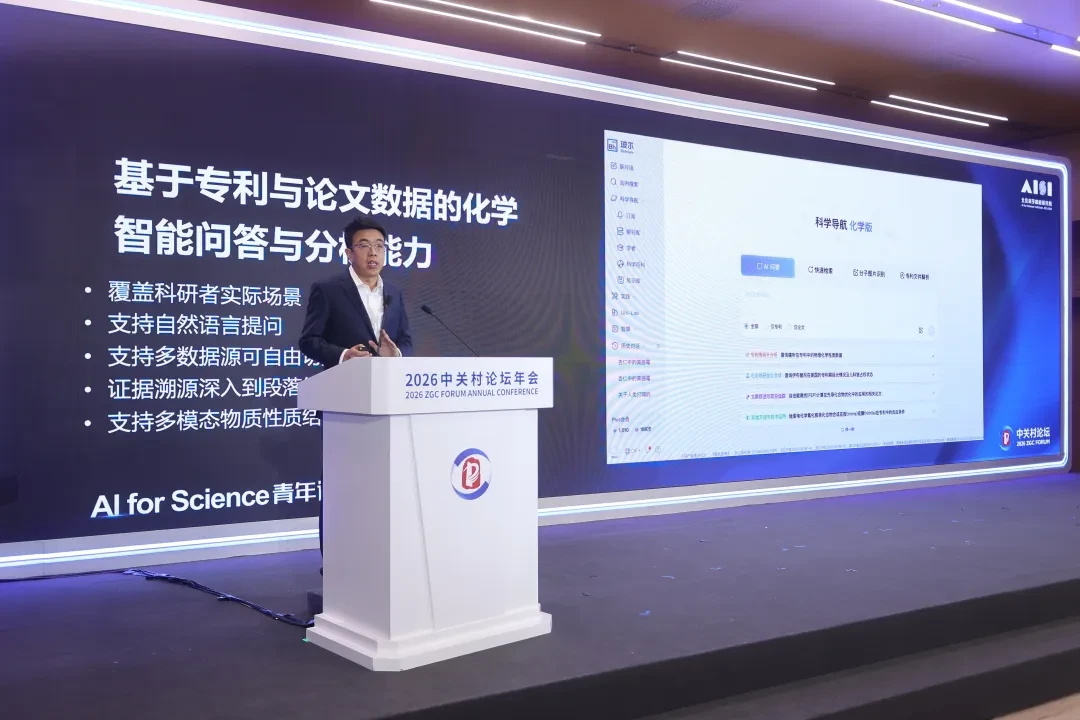
This is not a simple literature search box, but a "chemical brain" that can understand human language, recognize molecules, and even help you reason. It marks the transition of the research paradigm from the tedious "literature retrieval" to the efficient "solving scientific problems."

Pain Points:
When "Searching Literature" Is Dead,
What does scientific research require?
Before launching this product, the team conducted an in-depth analysis of the behaviors of nearly one million scientific research users. An increasingly clear fact is that the needs of chemistry-related researchers are no longer limited to "finding a few relevant articles" but rather focus on quickly obtaining verifiable, comparable, and actionable answers around specific scientific questions.
For scientific researchers in the field of chemistry, the most direct pain point is not the insufficient number of references, but:
Structural Search:Molecular formula, structural formula, CAS, alias, Chinese nomenclature, and Markush expressions are difficult to be accurately understood by traditional keyword searches;
Evidence Dispersion:Papers, patents, dissertations, and Chinese materials are scattered across different systems, making it difficult to find complete key data;
Difficult Conditions:Core experimental conditions such as catalysts, substrate scope, solvents, temperature, time, yield, and selectivity lack structured organization and can only be compared manually article by article.
Results Are Hard to Trace Back:Many search or AI tools provide conclusions but fail to accurately locate the charts, paragraphs, and experimental details in the original literature, making it difficult for researchers to trust them;
Cannot be directly used for the next decision:There is still a huge gap between information acquisition, route design, condition optimization, patent avoidance, and experimental progress.
The "literature search" of the old days essentially still required researchers to manually sift through, piece together, and evaluate massive amounts of data. What the new era truly demands is directly organizing answers around scientific questions: what are the molecules/structures, how are reaction conditions determined, where is the evidence chain between substance-property-application, and can the related conclusions be verified against the original text.
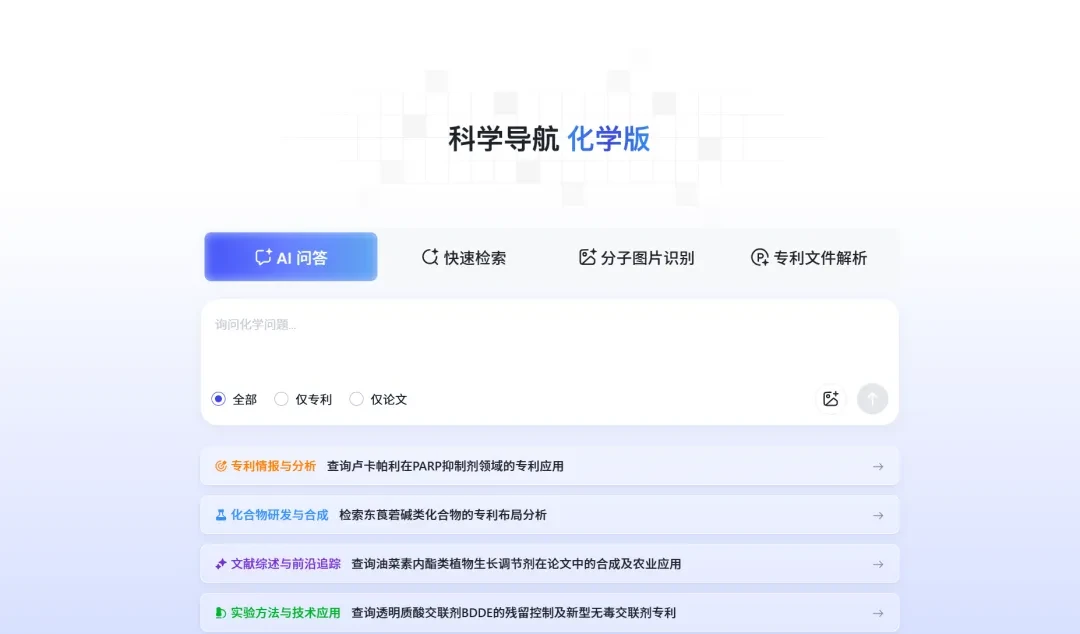
Bohr Scientific Navigation Chemistry Edition can directly provide you with the answer and lay the evidence right before your eyes.

Hardcore Strength:
This is not just a search,
"Chemical Knowledge Infrastructure"
The "groundbreaking" significance of Bohr·Science Navigation Chemistry Edition lies in its access to a vast amount of chemical literature and patents, as well as the construction of an infrastructure tailored to chemical research problems: it can understand chemical language, identify substances and reaction objects, link experimental conditions with primary evidence, and organize this information into a searchable, comparable, and traceable knowledge network.
1. Data Foundation: Not a simple accumulation of data, but the construction of a computable chemical knowledge space
As of March 23, 2026, the platform has formed a relatively complete chemical data foundation:
53,071,613+ Substance Data:Covering over 53 million substances, with the number still growing continuously;
56,929,799+ Reaction Data:Nearly 57 million reaction data entries, supporting systematic retrieval and correlation analysis from substances to reaction pathways and reaction conditions;
1,485,258+ Chemistry-related Patents:Provides patent data capabilities in chemical scenarios, with significant advantages in mixed Chinese-English retrieval and the utilization of Chinese patents.

This is a continuously evolving knowledge base, unlike traditional databases that rely on fixed update cycles. It can continuously parse the latest papers and patents, keeping the knowledge base in a state of dynamic evolution.
2、Accuracy: Reject "hallucinations," only talk about evidence
In scientific research scenarios, what is truly unacceptable is not "responding slowly," but rather "responding as if correct, yet without any basis."
Bohr Scientific Navigation Chemistry Edition aims to address precisely this issue: ensuring that every conclusion is based on traceable and verifiable evidence as much as possible.
Evidence Traceability:Can delve into the original text at the paragraph and detail level, with verifiable sources for each result;
Structure Recognition:Accuracy exceeds 98%. Whether it's hand-drawn structures, images, or textual descriptions, they can all be accurately identified and support export in professional formats such as SMILES, SDF, and SVG.

Scene Revolution:
Bohr vs Traditional Tools
Dimensionality Reduction Attack
Next, we will look at how Bohr Scientific Navigation Chemistry Edition reshapes the chemical research workflow from three key scenarios.
Scene 1: What should you do when faced with a blurry molecular diagram?
Traditional Process:First, rely on visual identification, then manually deduce the structure, draw the molecular formula, and search in the database; if the identification is inaccurate, one can only repeatedly modify and search again.
Bohr Experience:Upload Image -> AI Recognition -> Direct Results.
Video: Upload Molecular Graph Retrieval
Manifestation of Capability:Supports molecular image recognition with a structural recognition accuracy rate exceeding 98%. The system can automatically complete chemical structure and name recognition and provides API calling capabilities. Whether the uploaded images are in JPG, JPEG, or PNG format, they can be quickly parsed and restored into structural formulas.
Scene 2: The boss asks you to look up “Atropine" patent barriers, how do you respond?
Traditional Process:Log in to the patent database -> Enter the English name -> Download dozens of PDFs -> Manually screen each one -> Unable to find key data.
BohrExperience:Natural Language Query -> Precise Response.
Video: Atropine Patent Search
Manifestation of Capability:By inputting "Patent Layout Analysis of Atropine-like Compounds," the system can automatically extract key information from a vast number of patents and generate a visual evidence chain, eliminating the need for users to manually sift through lengthy patent texts.
Scene Three: Before conducting the experiment, how to determine "Paclitaxel (Taxol)TheSynthetic Route?
Traditional Process:Searching through reviews, tracking references, flipping through original papers, and then meticulously organizing information on catalytic conditions, solvents, pH, temperature, etc., took a lot of time, only to possibly discover conflicting data in the end.
BohrExperience:Multimodal information is directly integrated and presented, with key results that can be quickly understood and directly reused.。
Video: A Reasonable Synthetic Route for Paclitaxel (Taxol)
Manifestation of Ability:Users only need to pose complex scientific research questions such as "Please design a reasonable synthetic route for Taxol/paclitaxel based on existing patents and research papers, explain the key steps and challenges, and recommend related substances." The system can automatically integrate critical information scattered across different papers and patents—such as catalytic conditions, solvents, pH, and temperature—presenting it in a structured format and forming an auditable and traceable evidence chain linking "substance-property-application."

Technical Barriers:
Why is it able to "understand chemistry"?
Behind Bohr·Science Navigation Chemistry Edition is a complex system of patent classification and scientific data annotation platform. It not only performs information retrieval but also understands the value behind chemical information.
1. Patent Grading and Classification System: Not All Patents Are Worth Reviewing
Faced with a vast number of patents, the real key is not to find more results, but to determine which ones are more valuable. Bohr has established a specialized hierarchical classification system that looks not only at textual content, but also at chemical structures, reaction information, and technical value.
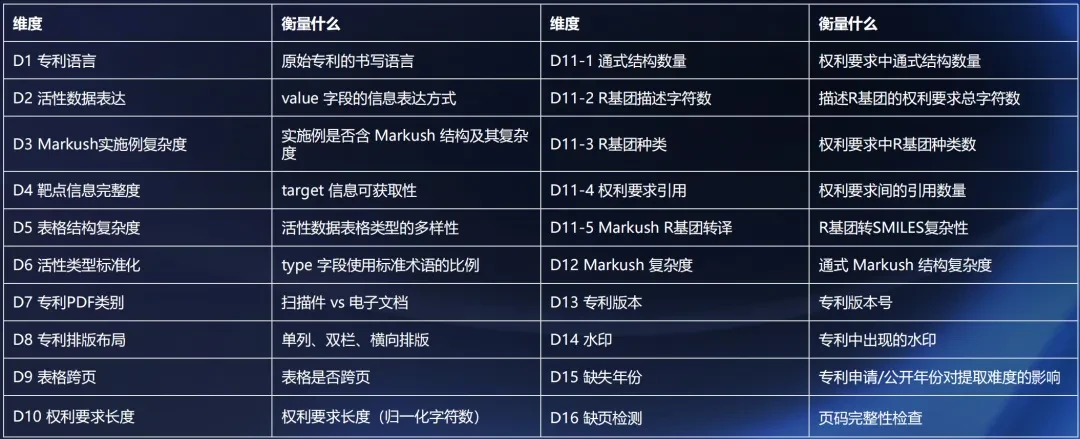
Figure: Measurement Dimensions
This system can help users quickly extract high-value information, freeing up time from ineffective searches of low-value patents.
Video: Multiple Screening Dimensions, Precisely Locking Information
2. Corpus Processing and Assetization: Bringing Private Data to Life
It not only connects to massive public-domain data but also has the ability to process private data. With the help of a patented document analysis tool, the team's private data can be automatically parsed, structured, and integrated with public-domain literature for comprehensive analysis. This means that you can hand over your experimental data to AI, not just "store it," but truly use it to discover patterns, validate hypotheses, and even uncover new research opportunities.
Video: Upload Patent Documents for Parsing

Ecological Co-construction:
Bohr has changed
Habits of 4 Million Scientists
A broad and solid user base is the most powerful manifestation of ecosystem co-construction. This is a true portrayal of Bohr Scientific Navigation:
User Scale:Has gained the trust of nearly 4 million research users worldwide.
Coverage:62% of 985 universities, 45% of 211 universities, and 40% of Double First Class universities have been settled in.
Activity:Serving over 30 million scientific Q&A throughout the year, now serving more than 200,000 scientific questions daily.
From Peking University, Shanghai Jiao Tong University to the Institute of Chemistry, Chinese Academy of Sciences, from Shenzhen International Science and Technology Information Center to Sinopec Dalian Petrochemical Research Institute, this ecosystem is rapidly developing.
"The release of 'Bohr·Science Navigation Chemistry Edition' is not only a software update but also a perfect implementation of the AI for Science concept."
It liberates researchers from tedious "manual searches" and becomes a "super external brain" for every researcher, allowing scientists to return to the essence of science — thinking and creating. On this platform, you no longer need to be a skilled "database searcher"; you just need to be a curious "scientist."
Now, this "chemical brain," which boasts 53 million substances, 57 million reactions, and handles 200,000 questions daily, is in place. The future is here. Are you ready?
Product Entry
Official Website:www.bohrium.com
Chemical Version Direct:bohrium.com/chem-sn
Client: Supports Windows, macOS (M1/M2), Linux, Android, iOS, and browser plugins.
About DP Technology