

PVmed Secures Nearly RMB 100 Million Series A Funding to Advance Intelligent Surgical Solutions
PVmed
AI-Assisted Diagnosis Service Provider
VCBeat (WeChat ID: Vcbeat) has learned that Guangzhou PVmed Technology Co., Ltd. (hereinafter referred to as “PVmed”), a provider of AI-enabled integrated solutions for precision medicine, has completed its Series A financing round.
This financing round, amounting to nearly RMB 100 million, was led by existing shareholder Guangzhou Xenon Chentu Equity Investment Co., Ltd. (hereinafter referred to as “Xenon Chentu”) and strategic investor Philips (China) Investment Co., Ltd. (hereinafter referred to as “Philips”), with participation from Hangzhou Gaolue Investment Management Co., Ltd. (hereinafter referred to as “Gaolue Capital”). Maibo Capital served as the financial advisor for this round. The proceeds will be used to accelerate the commercialization of the company’s intelligent radiotherapy products, support R&D of new products for intelligent surgical planning, and further enhance its nationwide sales network.
PVmed, established in May 2017, is a benchmark enterprise for intellectual property commercialization at Sun Yat-sen University and a leading domestic provider of comprehensive AI-enabled precision medicine solutions. The company has achieved international leadership in multiple technologies within the field of AI-assisted diagnosis and treatment of tumors based on medical imaging. It offers comprehensive AI-assisted diagnostic and therapeutic solutions covering multiple diseases and multimodal data. All its products are independently developed and have been deployed in clinical practice at top-tier hospitals across more than twenty provinces and municipalities in China. Furthermore, PVmed has become a business partner to numerous publicly listed companies, establishing itself as a company with strong R&D capabilities in the field of medical artificial intelligence.
The founding team of PVmed boasts extensive industry experience and strong academic credentials. Lu Yao, Chairman of the Board, graduated from the Department of Mathematics at the University of Science and Technology of China and holds dual Ph.D. degrees from the Academy of Mathematics and Systems Science, Chinese Academy of Sciences, and Syracuse University in the United States. In academia, Professor Lu serves as a Professor at the School of Computer Science and Engineering, Sun Yat-sen University, and Director of the Institute of Data Science. He is also a Principal Investigator (PI) at the State Key Laboratory of Oncology in South China, having led nearly ten national and provincial-level major research projects.
He possesses 15 years of experience in medical imaging and artificial intelligence research, as well as product development. During his doctoral studies, Lu Yao studied medical imaging at the State University of New York Upstate Medical University; he subsequently conducted medical imaging research at the University of Michigan Medical School under the supervision of Professor Heang-Ping Chan, an international authority in the field of computer-aided diagnosis.
Shen Shuo, CEO, graduated from the Department of Mathematics at the University of Science and Technology of China and later earned his Ph.D. from Purdue University. He previously served as Chief Engineer of the National Public Service Platform for IoT Identifier Management, Director of the Internet of Things Laboratory at the Computer Network Information Center of the Chinese Academy of Sciences, and Director of the Laboratory at the China Internet Network Information Center. He also co-founded a medical big data services company.
Managing Partner Chenyang Xu is an IEEE Fellow. He graduated from the Department of Computer Science at the University of Science and Technology of China and later earned his Ph.D. from Johns Hopkins University. He previously served as a Postdoctoral Fellow at the Johns Hopkins Center for Imaging Science and the Center for Computer-Integrated Surgical Systems and Technology. He currently serves on the Advisory Board of the Department of Biomedical Engineering at Johns Hopkins University.
Prior to founding PVmed, Chenyang Xu served as Chief Technology Officer and General Manager of the Siemens Silicon Valley Innovation Center; Co-Founding Director of the Medical Imaging Application R&D Center at Siemens China Research Institute; and Co-Founder, Director Manager, and Technical Lead of the Medical Interventional Imaging Laboratory at Siemens Corporate Research in the United States. From 2001 to 2009, he collaborated with Johnson & Johnson to lead the invention of CARTOMERGE, the world’s first commercial 3D cardiac image-guided mapping system, along with the development of multiple related products. This system represents a landmark innovation in the interventional medicine market for the treatment of atrial fibrillation.
Dr. Jun Wei, Chief Scientist, holds a Ph.D. from the Graduate School of Biological Systems and Applied Sciences at Tokyo University of Agriculture and Technology. He previously served as a researcher at the Medical School of the University of Michigan, Ann Arbor, and was a member of the expert panel for the NIH Breast Cancer Research Fund. Dr. Wei has led and participated in multiple NIH R01 grants, securing over $20 million in research funding. He has published more than 150 academic papers and holds two U.S. patents for intelligent diagnosis of breast cancer.
The co-founders have published SCI-indexed papers with a cumulative impact factor exceeding 500 and more than 40,000 citations. Therefore, PVmed possesses strong R&D capabilities, with all core technologies independently developed and featuring full-stack medical artificial intelligence technology. Currently, PVmed holds over 50 invention patents and more than 20 software copyrights, and has published over 50 academic papers.
Currently, PVmed’s product portfolio primarily comprises three core business segments: integrated intelligent radiotherapy solutions, integrated intelligent imaging solutions, and integrated intelligent surgical solutions. The company’s services have expanded to over 20 provinces and municipalities across China, as well as select international markets, serving an average of 30,000 patients per month.
·PV-iRT (Baishi Zhizhun), an intelligent comprehensive radiotherapy solution, employs proprietary deep learning technology and is built on an imaging cloud platform. By deeply integrating with the entire radiotherapy workflow, it leverages AI and web-based imaging technologies to provide effective assistance throughout the process. The product primarily comprises the PV-iCurve Intelligent Radiotherapy Contouring System and the PV-iDose Intelligent Dose Analysis System, offering a one-stop service for contouring, image fusion, and dosimetry. It supports precise contouring across multiple scenarios, compatible with both non-contrast and contrast-enhanced CT scans, and features self-learning modeling capabilities to deliver personalized contouring styles.
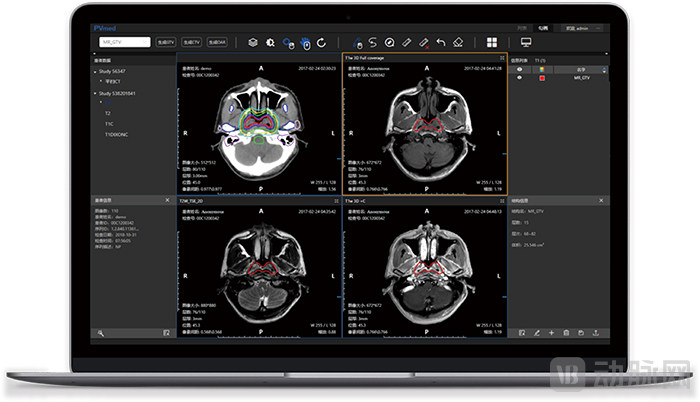
PV-iRT (Intelligent Radiotherapy Comprehensive Solution) (Image provided by PVmed)
Leveraging its fully independent R&D capabilities and industry-leading technologies, the PVmed team won the Gold Award in the Artificial Intelligence Category of the “Intel Cup” National Parallel Application Challenge, the Innovation Achievement Award, and the Gold Award at the Hong Kong Station of the GMIC 2017 G-Startup Worldwide Global Entrepreneurship and Innovation Competition in 2017. In 2019, during the inaugural AI-Assisted Target Delineation Competition specially established by the Chinese Society for Therapeutic Radiology and Oncology (CSTRO), the PVmed team secured championships in two out of four categories, standing as the only corporate team to receive awards. In August 2020, the “Nasopharyngeal Carcinoma Radiotherapy Target Delineation System” was listed among the Top 50 Cases of “Medical & Health AI.” In October 2020, the radiotherapy contouring software obtained the National Class III Medical Device Registration Certificate. Currently, this system has been extensively validated and adopted by major cancer centers both domestically and internationally, receiving widespread acclaim.
·PV-iCS (Intelligent Imaging Comprehensive Solution) is an intelligent computer-aided diagnosis system that enables automatic detection, localization, and intelligent quantitative analysis of small pulmonary nodules. It features precise 3D rendering of organs and lesions, multi-planar reconstruction, and follow-up management, helping physicians accurately localize lesions, effectively reduce missed diagnoses, and ensure diagnostic reliability.
·PV-iSA (PVmed Intelligent Surgical Assistance), an integrated solution for intelligent surgery, combines assisted diagnosis and treatment. It includes PV-iCAS for preoperative planning, PV-iSNS for intraoperative guidance, and PV-iRAS for postoperative rehabilitation, thereby achieving full-process coverage of pulmonary surgical procedures and enhancing surgical safety.
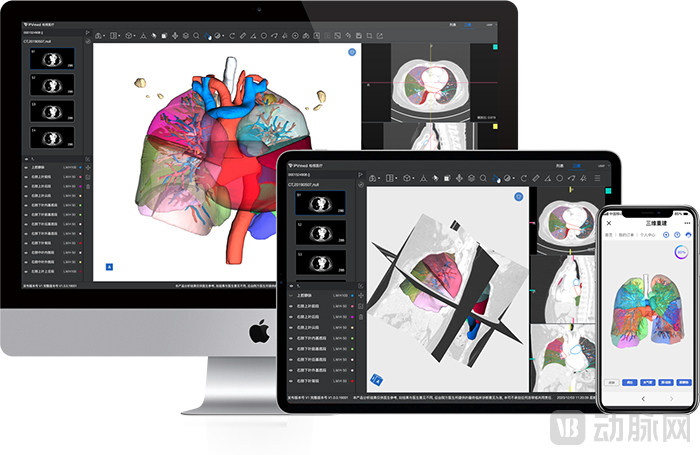
PV-iSA (PVmed Intelligent Surgical Assistance: Comprehensive Solution for Intelligent Surgery) (Image provided by PVmed)
Currently, the PV-iCAS Intelligent Preoperative Surgical Planning System has been deployed in leading hospitals across more than a dozen provinces and municipalities. It enables automated detection, localization, and intelligent quantitative analysis of pulmonary diseases in CT images, while providing intelligent and precise 3D organ visualization and simulation planning tools for thoracic and abdominal surgeries. This enhances the safety of clinical treatment practices and advances precision surgery to new heights.
The funding will also be used to develop subsequent intraoperative guidance protocols and postoperative rehabilitation programs.
Compared with chemotherapy and surgical treatment, radiotherapy is characterized by a broad range of indications, definitive efficacy, reliable techniques, minimal invasiveness, and relative cost-effectiveness. Therefore, the use of radiotherapy for malignant tumors is being promoted worldwide. Currently, the application rate of cancer radiotherapy in European and American countries has reached 60–70%, whereas this proportion remains below 30% in China, indicating substantial room for improvement in tumor treatment modalities.
According to the data from the “Survey on the Basic Status of Radiotherapy Personnel and Equipment in Mainland China in 2019,” the total number of beds in radiotherapy units in mainland China was 97,836 in 2019 (including some beds in oncology departments), with an annual treatment volume of 1,259,602 patient visits. Compared with the 2015 survey results (102,171 beds and 919,339 patients treated annually), the number of beds decreased by 4.2%, while the number of patient visits increased by 37.0%.
However, the scarcity of specialized medical technologists has significantly hindered the rapid growth in demand. Radiotherapy requires target volume delineation, yet the expansion of experts capable of performing this task with precision is constrained by rigorous training requirements and prolonged cultivation cycles. During the treatment process, target volume delineation and the formulation of radiotherapy plans are the most time-consuming tasks, and the current number of radiological technologists falls far short of meeting the demands of the radiotherapy market.
Taking nasopharyngeal carcinoma as an example, radiotherapy is a treatment modality capable of achieving a complete cure. For a single patient with nasopharyngeal carcinoma, the number of CT or MR images requiring delineation can reach as high as 300 to 400. Physicians with standard qualifications typically require 4–6 hours to delineate organs at risk (OARs), gross tumor volume (GTV), and clinical target volume (CTV). Even top-tier experts need at least 2–3 hours to complete the full target volume delineation for one patient.
As an industry-leading medical AI company, PVmed has accumulated years of technical expertise in the application of artificial intelligence to radiation therapy. The company is internationally recognized for its leadership in automatic target delineation for nasopharyngeal carcinoma, reducing the time required to contour GTV, CTV, and OARs from 3–6 hours to under one minute. Radiation oncologists need only spend a short amount of time adjusting and confirming the contours after the system completes its automatic delineation. Furthermore, PVmed offers comprehensive target delineation solutions for all major radiotherapy-sensitive cancers throughout the body, establishing an intelligent, standardized, and automated one-click workflow for background target reconstruction in radiation oncology departments.
Due to its superior product performance, PVmed has gained the favor of Philips, a leading global healthcare company. Its automatic delineation system for clinical target volumes in nasopharyngeal carcinoma radiotherapy has been integrated into Philips’ ISD (Philips Nebula Discovery Platform). Building on this strong collaborative foundation, and after nearly a year of thorough due diligence and decision-making, Philips has decided to lead the current financing round, further accelerating the domestic and international commercialization partnership between the two parties and expediting the clinical implementation of their products.
Leveraging Philips’ platform and technological empowerment, PVmed will accelerate the development of artificial intelligence (AI) products and technological iterations in the field of radiation therapy. By achieving seamless end-to-end integration with Philips’ image guidance equipment and the Pinnacle Evo treatment planning system, PVmed will expedite the deployment of comprehensive solutions spanning the entire workflow—from image guidance to automatic delineation of radiation therapy targets and fully automated treatment planning. Furthermore, PVmed will engage in in-depth collaboration and technical breakthroughs with Philips in areas such as MRI-based automatic target delineation, intelligent plan optimization within smart adaptive radiotherapy workflows, and dose evaluation, thereby strengthening PVmed’s leadership position and core competitiveness in the AI-driven radiation therapy sector.
Meanwhile, PVmed will collaborate with Philips and partner with multiple medical institutions to establish disease-specific databases for radiotherapy-sensitive tumors. Leveraging PVmed’s full-stack artificial intelligence technology framework, the initiative will integrate multimodal, multidimensional heterogeneous data—including clinical, imaging, pathological, and genomic data—to address bottlenecks such as high noise, small sample sizes, and missing modalities. This effort will further enhance key technologies like self-learning and federated learning, ultimately creating a comprehensive, high-precision, and highly generalizable solution for precision oncology diagnosis and treatment.
Shen Shuo, CEO of PVmedIn this regard, it is stated that the strategic partnership between PVmed and Philips signifies that new-generation image analysis technologies, such as artificial intelligence, have established new service capabilities within the healthcare sector. This development empowers the future of intelligent and precision medicine and holds broad prospects. Intelligent diagnosis and treatment of tumors have been verified as a highly commercially valuable segment in the healthcare industry.
After four years of dedicated efforts and continuous improvements in product R&D, quality control, and channel partnerships, PVmed has gradually established alignment and stable collaborations with multiple top-tier international medical equipment providers. Its professional and trustworthy brand image has gained recognition within the industry.
In the future, PVmed will leverage the product portfolios and distribution channels of Philips and all its partners to rapidly expand its presence across multiple product segments in China and globally. This strategy will drive its transition from a domestic player to a global enterprise, while evolving from providing standalone radiotherapy services to offering comprehensive oncology diagnosis and treatment solutions.
PVmed’s other major business, intelligent surgical procedures, also holds promising prospects. According to Frost & Sullivan’s analysis, in 2020, approximately 2.23 million patients in China were diagnosed with major types of thoracic and abdominal cancers, accounting for 50% of the prevalence rate of all cancer types.
As the concept of intelligent surgery has only recently emerged, only 29,900 thoracic and abdominal surgeries were supported by intelligent surgical planning in 2020. This figure is expected to grow rapidly, reaching 141,600 cases by 2025, resulting in a compound annual growth rate (CAGR) of 34.9% from 2020 to 2025. By 2030, it is projected that 639,200 thoracic and abdominal surgeries per year will adopt intelligent surgical planning.
Wei Xiaolin, Director of Xie Nuo Chen TuChenot Capital stated that it had already participated in PVmed’s financing round as early as 2018. Over the past three years, Chenot Capital has been pleased to witness significant progress across PVmed’s various business lines, particularly in product maturity, technological depth, and forward-looking strategic layout. This additional investment by Chenot Capital underscores its firm support for the PVmed team, represented by Chairman Professor Lu Yao and CEO Dr. Shen Shuo. Furthermore, with extensive investments in the healthcare sector, Chenot Capital plans to strengthen resource synergy among its portfolio companies to drive greater growth.
Chen Shengyu, Vice President of Philips Greater China and General Manager of the Precision Diagnosis Business GroupStatement: We are delighted to participate in PVmed’s financing round, further strengthening our commercial collaboration with PVmed. Philips is a leader in diagnostic imaging, image-guided therapy, patient monitoring, health informatics, and consumer health and home care. Oncology is one of our key focus areas, where we offer integrated radiation oncology solutions covering the entire continuum from diagnosis to treatment.
Guided by the principles of “open innovation” and “platform thinking,” Philips maintains close collaboration with the local ecosystem to drive co-innovation, aiming to tightly integrate global innovative technologies with local clinical needs. The partnership with PVmed will further enhance the precision, speed, and efficiency of integrated radiotherapy systems, benefiting a broad population of cancer patients and creating value for healthcare systems.
PVmed is a globally leading technology enterprise in the field of AI-enabled oncology treatment. After four years of diligent development, its products have been widely adopted by nearly 100 top-tier hospitals in China, and it has established in-depth collaborations with multiple leading medical device manufacturers, achieving significant breakthroughs in commercialization. In the future, PVmed will leverage the channels of Philips and other partners to accelerate its commercialization process, deepen its product portfolio layout in China and globally, and provide comprehensive intelligent diagnostic and therapeutic products and services for oncology.
Li Jixiang, Founding Managing Partner of Gaolue CapitalStatement: To address the issues of relatively uneven distribution and low efficiency of medical resources, the “AI + Healthcare” sector has been progressively validated as a viable pathway. We are pleased to observe that PVmed has systematically and rapidly refined and commercialized its product portfolio within the “AI + Radiotherapy” niche. We are also optimistic about PVmed’s ability to continuously expand its product matrix under the leadership of its founders, Professor Lu Yao and Dr. Shen Shuo.
Xie Nuo Chen Tu
Xenon Chentu is a private equity fund management company under the Xenon Investment Group, specializing in primary market equity investments. It focuses on sectors such as new energy, semiconductors, new materials, and healthcare. Adhering to the philosophy of industry research-driven investment, the firm constructs its portfolio by evaluating dimensions including industry prosperity, breakthrough players in niche segments, and growth stages. Since its establishment, it has invested in companies such as CATL, Ronbay Technology, ArcSoft, Sinofuse Electric, Quechen Silicon Chemical, Hiuv New Materials, Tinavi Medical Technologies, Aoluxin, PVmed, Cambricon, Jiangsu Nenghua, Basic Semiconductor, and SMIC Shaoxing. By accompanying outstanding enterprises in their shared growth, Xenon Chentu enables its clients to share in the dividends arising from the development of China’s multi-tiered capital markets and the nation’s economic progress.
Philips
Royal Philips is a leading health technology company dedicated to improving people’s health and well-being and enabling better outcomes across the health continuum—from healthy living and prevention, to diagnosis, treatment, and home care. Leveraging advanced technology, rich clinical experience, and deep consumer insights, Philips continuously introduces integrated innovative solutions. The company holds leadership positions in diagnostic imaging, image-guided therapy, patient monitoring, health informatics, and consumer health and home care. Headquartered in the Netherlands, Philips reported annual sales of €19.5 billion in 2020, employs approximately 80,000 people worldwide, and provides sales and services in more than 100 countries and regions.
GaoLue Capital
Gaolue Capital is an emerging investment firm specializing in healthcare and next-generation information technology. Adopting a research-driven strategy, the company emphasizes deep industry expertise, carefully selecting high-quality projects with strong growth potential for investment, and is committed to providing clients with comprehensive financial services throughout their entire lifecycle.
Maibo Capital
MedBio Capital is a boutique investment bank specializing in the life sciences and healthcare sectors, dedicated to becoming the capital and strategic partner of top-tier scientists and entrepreneurs. Its core team has deep expertise in the medical industry, covering key stages from R&D and clinical development to market commercialization, and possesses composite backgrounds in investment, investment banking, and consulting. Team members have collectively facilitated over RMB 10 billion in financing and have served more than ten leading publicly listed healthcare companies.