Medical Device Weekly Highlights (Mar 23–29, 2026): IPO Filings, Strategic M&A, and Regulatory Advances

Wallaby Medical
Developer and Producer of Therapeutic Products in the Neurointervention Field

Enlight Medical
Innovative Medical Device Development and Manufacturer

Betterway Medtech
Developer of Cardiovascular Medical Devices

AccuMedical
Innovative Neurointerventional Devices and Related Access Devices Developer
01
Wallaby Medical Completes Strategic Financing
Recently, Wallaby Medical, a neurovascular medical technology company, completed a major equity financing and debt restructuring round, led by Yunfeng Capital and Hillhouse Investment, with participation from Enlight Medical. The specific amount of financing was not disclosed, and no financial advisor was mentioned. The funds will be used to optimize the capital structure and advance global growth strategies. On the same day, Wallaby Medical and Enlight Medical officially announced their strategic merger. Founded in 2016, Wallaby Medical focuses on neurovascular interventional devices and has a founding team that combines Eastern and Western expertise. After the integration, it boasts a highly competitive product portfolio, with over 200 global patents, a sales network spanning more than 60 countries and regions, and currently holds dozens of patents and administrative licenses, building a technological barrier and intellectual property moat.
02
Wallaby Medical Completes Multi-Million Yuan Angel Round
Recently, Wallaby Medical announced the completion of an angel round of financing worth tens of millions of yuan. This round of financing was exclusively strategically invested by the Intellectual Property Fund under Shanghai Science and Technology Investment Corporation. The funds raised will be mainly used for the research and development iteration, clinical registration application, benchmark market expansion, and continuous innovation of cutting-edge technologies of two core products: the intelligent precision neural circuit multi-target regulation robot system and the AI system for calculating magnetic resonance imaging targets. This will help the company accelerate its leading position in the fields of neurorehabilitation and brain-computer interfaces. Since its establishment in 2022, Wallaby Medical has been deeply engaged in the interdisciplinary fields of brain science, intelligent neural regulation, and neurorehabilitation. It focuses on personalized, precise, and intelligent diagnosis, treatment, and rehabilitation of functional disorders caused by brain diseases. The company is committed to building a full-chain innovation system from basic research, technology development, clinical transformation to industrial implementation. The core team of the company gathers top experts in the fields of brain science, neurorehabilitation, medical imaging, artificial intelligence, medical robotics, and clinical medicine, forming an innovative ecosystem that integrates multidisciplinary crossover and deep integration of industry, academia, and research.
03
Betterway Medtech Completes Nearly 100 Million YuanSeries B Financing
Recently, Shenzhen Baitewei Medical Technology Co., Ltd. (Betterway Medtech) announced the completion of a nearly RMB 100 million Series B financing round, led by Tasly Capital with participation from Qinzhi Capital. WinX Capital served as the exclusive financial advisor. The proceeds from this round will mainly be used for new product development, production base construction, and market expansion, accelerating the company’s innovative product portfolio in the fields of peripheral vascular intervention and heart failure. In the field of peripheral vascular intervention, Betterway Medtech has formed a full product matrix covering "debulking + thrombectomy + access." Multiple devices have achieved breakthroughs in China and have been successfully approved for marketing. At the same time, more innovative products have entered the clinical application and registration stages, establishing a full-cycle, sustainable product development and market launch system.
04
AccuMedical Shanghai Stock Exchange STAR MarketIPO Application Accepted, Aiming to Raise 1.1 Billion Yuan
On March 24, AccuMedical's IPO on the STAR Market of the Shanghai Stock Exchange was accepted, sponsored by CITIC Securities, with a planned fundraising of 1.1 billion yuan. The company is a high-tech enterprise specializing in innovative neurointerventional medical devices, with ten Class III medical devices approved in China, and some products approved overseas or submitted for registration. In the hemorrhagic field, the market share of the Lattice® series of flow diverter stents has rapidly increased, with cumulative implants exceeding 11,000 sets; the in-development product Coincide® liquid embolic system is expected to fill the treatment gap in China. In the ischemic and access fields, dual technical pathways have been established to cover the entire surgical process. Flow diverter stents are an important source of income for the company, contributing over 95% of revenue since 2023. Financially, from 2022 to the first three quarters of 2025, the company's revenue increased from 900,900 yuan to 188 million yuan, and net profit increased from -103 million yuan to 36.3889 million yuan.
05
Nanjing Pharmaceutical Invests in Medical Device Company
On March 21, Nanjing Pharmaceutical announced that its controlled Nanyao Medical Device Investment Company (completed registration on February 13, with the business license registered under the name Nanjing Pharmaceutical Group Jiangfeng Equity Investment Fund Co., Ltd.) had made new progress. The fund has a registered capital of 200 million yuan, with Nanjing Pharmaceutical holding 59.9%. It will make a special investment in Jiangfeng Biotechnology at a valuation not exceeding 750 million yuan to acquire approximately 22.5% of its equity. Jiangfeng Biotechnology has been deeply rooted in the digital pathology industry for over a decade, with five major business segments and significant advantages in areas such as digital scanners, maintaining the top market share in China for many years. As a state-owned enterprise, Nanjing Pharmaceutical boasts a strong distribution network, providing channel support to broaden Jiangfeng Biotechnology's market reach. In recent years, leading pharmaceutical distributors have been expanding into the medical device sector. Nanjing Pharmaceutical is building an integrated supply chain based on digitalization and other foundations. In 2023, it also established investment partnerships with multiple enterprises, investing in several medical device-related projects with synergies to its own operations.
06
Sciex ScientificIPO Application Accepted
On March 24, Saikesaisi's IPO on the SSE STAR Market was accepted, sponsored by Everbright Securities, with a planned fundraising of 6.35 billion yuan. The company focuses on the research, development, production, and sales of absorbable implantable medical devices for use inside the body. Its main products include absorbable dural closure medical glue (the first innovative product in China, with a market share of approximately 91%), absorbable vascular closure medical glue (the only domestically produced product, with a market share of about 70%, achieving import substitution), composite microporous polysaccharide hemostatic powder (with a market share of 27.67% in the absorbable hemostatic micro-powder category, ranking first in the niche industry), and surgical anti-adhesion solution (with a market share of 20.53%, ranking second in the industry). As of the end of the reporting period, the company has 25 medical device products, with several key R&D pipelines progressing smoothly; 3 projects are in the registration review stage, 3 are in the clinical trial stage, and 7 are in the process research and registration testing stage. In terms of finance, the company's revenue for the years 2023 to 2025 is 3.79 billion yuan, 3.31 billion yuan, and 3.38 billion yuan respectively, with net profits of approximately 1.53 billion yuan, 1.61 billion yuan, and 1.68 billion yuan respectively.
07
APOLLO Dream® Sirolimus-Eluting Targeted Stent System Receives FDA Breakthrough Device DesignationDevice Recognition
Recently, the APOLLO Dream® Sirolimus-Eluting Balloon Expandable Stent System, independently developed by MicroPort NeuroTech, received FDA Breakthrough Device Designation. It has become the first balloon-expandable, rapid-exchange drug-eluting stent in the neurointervention field to receive this designation. Specifically designed for patients with symptomatic intracranial atherosclerotic stenosis, the system integrates targeted drug-eluting technology with an optimized stent mechanical structure, enabling precise control of drug release dosage while reducing the risks of postoperative restenosis and late thrombosis. This designation marks international recognition of the system's technological innovation and potential clinical value in treating intracranial atherosclerotic stenosis, accelerating its clinical development and evaluation process. It is expected to fill unmet market needs overseas, benefiting patients worldwide and laying the foundation for the group’s globalization strategy. Moving forward, the group will continue to advance its global clinical research and registration processes.
08
Peking Union Medical College Hospital"Internal Reagent" Approved for Marketing
Recently, the in vitro diagnostic reagent independently developed by Peking Union Medical College Hospital —— the Fraxinus excelsior pollen allergen-specific IgE antibody detection kit for hospital record filing and registration for market launch —— has been approved for marketing. Shuimu Jiheng provided full-process support services for it. This kit can accurately test for Fraxinus excelsior pollen allergy. Peking Union Medical College Hospital has nearly 70 years of research history on pollen allergy. Data shows that Fraxinus pollen accounts for 14% of the total spring pollen, with an IgE antibody positive detection rate as high as 47.7%. Previously, there was a long-term gap in precise diagnosis. The Beijing Drug Administration included it in the key cultivation project of the "Spring Rain Action," completing registration conversion in five months. Innovative review and approval mechanisms promoted the efficient market launch of the product. The kit uses blood tests and can test 96 people at once. It has been included in medical insurance, with a testing fee of about 90 yuan, and will be widely used in hospitals across China in the future.
09
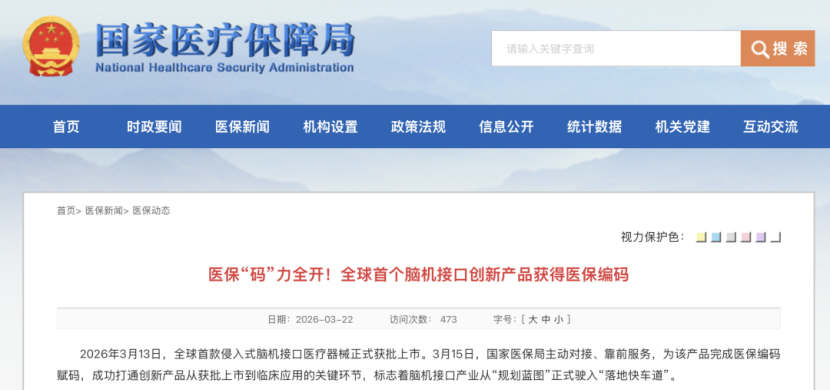
World's First Brain-Computer Interface Innovation Product Receives Medical Insurance Coding
On March 22, the National Healthcare Security Administration announced that the world's first invasive brain-computer interface medical device was approved for marketing on March 13 and received a medical insurance code assignment on March 15. This breakthrough打通s the key link from approval to clinical application, marking that the brain-computer interface industry has entered the "fast track for implementation." The product is the implantable brain-computer interface hand motor function compensation system developed by Boyitong, targeting patients aged 18 to 60 with quadriplegia caused by cervical spinal cord injury. By implanting a minimally invasive device the size of a coin to collect and decode brain electrical signals, patients can independently operate the system at home one month after surgery. It provides a "Chinese solution" for spinal cord injury repair and demonstrates significant advantages in trauma control. Additionally, similar products from Stepped Medical and Brain Technology have entered the clinical trial stage, while Elon Musk's Neuralink abroad has also initiated human clinical trials and achieved certain results.
10
Wallaby Medical to Establish Shanghai Clinical and Product Engineering Center
Recently, Xinfazhan Company, a subsidiary of Shanghai Waigaoqiao Group, signed a contract with leading brain-computer interface company Canopy Technology. The latter will establish a Shanghai Clinical and Product Engineering Center to promote the transition of brain-computer interface technology from laboratory to clinical application in the Yangtze River Delta region. Canopy Technology focuses on non-invasive brain-computer interface technology and achieves non-invasive deep brain stimulation through time-domain interference technology, opening up new pathways for the treatment of neuropsychiatric diseases. Its founding team has been deeply engaged in the field of deep brain stimulation for many years, accumulating a large amount of data, building technological barriers, possessing a multi-dimensional patent system, and demonstrating broad application prospects. Currently, Canopy Technology’s products have submitted an application for Breakthrough Therapy Designation to the U.S. FDA and received a formal response, as well as securing nearly 100 million yuan in A+ round financing. After this signing, Canopy Technology will establish a clinical center relying on Shanghai's clinical resources and utilize Yangtze River Delta resources to build a product R&D and engineering center.
11
Three Major Life Health Projects in Daxing Area of Lin Kong Zone Land Simultaneously
Recently, during the 6th Global Investment Partners Conference of the 2026 Beijing Daxing International Airport Aerotropolis (Daxing), three major life and health projects were simultaneously launched. The International Regenerative Medicine Industrial Park focuses on cutting-edge areas such as cell and gene therapy to create a green innovation hub. The Grena High-end Medical Device Logistics Project establishes a healthcare industry hub, while Xinyi Zhipu advances the R&D and clinical transformation of ultrasound AI to enhance the smart healthcare industry chain. Each project contributes from different sectors, strongly supporting the construction of a regional life and health industry cluster and promoting international industrial expansion. Currently, the Daxing area of the Aerotropolis has initially formed an industrial development pattern with "core track leadership and supporting facilities," covering cutting-edge fields like cell and gene therapy, artificial intelligence + healthcare, and deploying multiple core industry platforms such as high-end medical logistics and advanced medical equipment. The trend of collaborative industrial development is becoming increasingly evident.
12
Wondfo Strength"New Launch", Featuring Three New Products at CACLP
It was reported that the 23rd China International Medical Laboratory Diagnostics and Blood Transfusion Instrument Reagent Expo (CACLP) was held in Xiamen from March 21 to 23. During the conference, Wondfo Biotech unveiled three new products: LA-6400, LA-2000, and FC-6100, comprehensively showcasing its rich innovative achievements and multi-scenario solutions in the in vitro diagnostics field. The new product launch event was packed with attendees, drawing significant attention as numerous industry experts and partners gathered to exchange ideas. Addressing the industry pain points of limited laboratory space in outpatient and emergency departments and constrained budgets for medium and small-sized hospitals, Wondfo Biotech introduced the LA-6400 Integrated Sample Processing System. With a compact size of just 0.9 square meters, this system features a highly integrated design, enabling efficient operation by one or two people through centralized single-screen control. It significantly reduces spatial and labor costs, transforming from a split setup to an integrated solution and simplifying complex processes, making the LA-6400 a standout highlight at the event.
13
Mindray Medical, Major Moves in the U.S. Market
On March 18, Mindray Medical announced its entry into the U.S. ventilator market by launching two critical care ventilators, the SV900 and SV700, to compete with giants such as GE Healthcare and Philips. This move represents a validation of Mindray's systematic capabilities, shifting its overseas strategy from "emerging market expansion" to "developed market penetration," and from "price competition" to "product and system competition," emphasizing a "critical care product portfolio." The core selling points of the SV900 and SV700 are their "multi-functional integration," combining invasive ventilation, non-invasive ventilation, and high-flow oxygen therapy, enhancing clinical workflow efficiency while reducing hospital procurement and maintenance costs. However, the U.S. market has high entry barriers, and Mindray faces challenges in channels and service systems, brand and clinical trust, as well as procurement and bundled capabilities. Entering the U.S. ventilator market is essentially a test of its global operational capabilities.

14
April Execution of the Mega Medical Consumables Alliance Centralized Procurement
Recently, the procurement of traditional Chinese medicine (TCM) needles by a coalition covering 26 provinces in China will be implemented on April 15. The procurement demand exceeds 2.5 billion units, covering more than 70% of the TCM service consumption market. The TCM medical device industry has an annual compound growth rate of 14.8%, with TCM needles accounting for over 30% of the market scale, surpassing 10 billion yuan in 2024. Although specific price reductions have not been disclosed this round, following previous TCM needle procurements, prices are expected to drop significantly. The Notice clarifies the medical insurance payment standards for selected products while ensuring the interests of non-selected products with flexible adjustment mechanisms. In recent years, the scope of consumables procurement has continued to expand, with high-value consumables receiving more attention. However, low-value consumables procurement is also accelerating, such as Liaoning leading a 24-province coalition last year to initiate large-scale procurement for five types of consumables like sutures and syringes. Additionally, the model of prefecture-level cities leading province-wide procurement of general consumables is expanding, with related procurements already conducted in Fujian, Gansu, and other regions.
15
CMDE Releases ""Guiding Principles for Registration Review of X-ray Blood Irradiation Devices"
Recently, the Center for Medical Device Evaluation of the National Medical Products Administration released the Guiding Principles for Registration Review of X-ray Blood Irradiation Equipment on its website. The Guiding Principles aim to guide registration applicants in preparing and drafting registration application materials for X-ray blood irradiation equipment, while also providing reference for technical review departments during the examination of registration application materials. The X-ray blood irradiation equipment referred to in the Guiding Principles are medical devices that utilize an X-ray source to irradiate blood samples such as bagged whole blood, red blood cells, and platelets. Equipment using other radiation sources for blood sample irradiation, such as gamma-ray sources, may also refer to these principles.
16
Heilongjiang Releases the "Implementation Rules for Reward Policies to Support New Drug and High-End Medical Device R&D Innovation in Heilongjiang Province," etc.Details of the Implementation of 5 Policies
Recently, the Heilongjiang Provincial Department of Industry and Information Technology and the Heilongjiang Provincial Department of Finance jointly released five policy implementation rules, including: "Detailed Implementation Rules of Heilongjiang Province's Policy on Rewards for Supporting New Drug and High-End Medical Device R&D Innovation," "Detailed Implementation Rules of Heilongjiang Province's Policy on Rewards for Supporting the Transformation and Application of New Drugs and High-End Medical Devices," "Detailed Implementation Rules of Heilongjiang Province's Policy on Rewards for Supporting Secondary Development of Major Traditional Chinese Medicine Varieties," "Detailed Implementation Rules of Heilongjiang Province's Policy on Rewards for Supporting Centralized Bulk Procurement of Pharmaceuticals and Medical Devices," and "Detailed Implementation Rules of Heilongjiang Province's Policy on Rewards for Supporting the Promotion of Pilot Platform Services in Biomanufacturing." The aim is to accelerate the high-quality development of Heilongjiang’s biopharmaceutical and biomanufacturing industries, as well as to expedite the R&D innovation and transformation application of high value-added innovative products.
17
NMPA Releases Guidelines for the Transformation of Clinical Innovation Achievements in Medical DevicesNotice of "Spring Rain Action"
Recently, the National Medical Products Administration (NMPA) announced the launch of the "Spring Rain Initiative" to promote the clinical innovation and transformation of medical device achievements, deciding to implement the three-year "Spring Rain Initiative" across China. The initiative aims to advance source innovation in medical devices guided by clinical value, focusing on the integration of medicine and engineering to facilitate the transformation of clinical innovation achievements. The overall requirement is to implement relevant opinions by establishing a mechanism for "collection and screening—matching—mentoring and cultivation—transformation implementation," building an innovative ecosystem, streamlining transformation pathways, fostering the market entry of landmark products that integrate medicine and engineering, and meeting clinical needs. Tasks include collecting and screening high-quality projects, with each provincial bureau establishing collection channels and formulating screening plans to identify projects with clinical application value, innovation, and feasibility for transformation; matching medical device companies for registration research, with each provincial bureau establishing a matching mechanism to promote two-way selection between medical and engineering fields, following up on project progress, and implementing dynamic management and exit mechanisms.
18
NMPA ReleasesThree Important IVD Standards
Recently, the National Medical Products Administration (NMPA) released several IVD industry standards, introducing updated and more detailed requirements for the clinical trial management of IVD reagents and the establishment of enterprise reference materials. These new standards primarily focus on the standardized management of clinical trials and the setup of product quality control materials. For IVD companies preparing for product registration applications, it is crucial to thoroughly understand and implement these standards. The IVD industry standards include "Requirements for the Management of Biological Samples in Clinical Trials of In Vitro Diagnostic Reagents," "Requirements for Setting Enterprise Reference Materials for Qualitative Diagnostic Test Systems," and "General Quality Requirements for Clinical Trials of In Vitro Diagnostic Reagents." The implementation date for all three standards is March 1, 2027.
19
Suzhou Release"10+10" Key Industry List
Recently, the 2026 Suzhou Business Conference was held in Suzhou. As a significant event marking the starting point of the "15th Five-Year Plan," the conference released the "List of Key Emerging and Future Industries in Suzhou" and the "Suzhou Action Plan for Building a First-Class Business Environment (2026)." The ten key emerging industries include: biomedicine and high-end medical devices, artificial intelligence, semiconductors and integrated circuits, nanomaterials, high-end instrumentation and intelligent testing equipment, embodied intelligent robots and integrated machine tool equipment, photonics and light manufacturing, smart connected new energy vehicles, advanced photovoltaics and new energy storage, and low-altitude economy. The ten key future industries include: commercial aerospace, bio-manufacturing, cell and gene technology, 6G equipment and applications, quantum technology, embodied intelligence, hydrogen energy and next-generation nuclear energy equipment, brain-computer intelligence, frontier new materials, and atomic-level manufacturing.
20
Hainan Provincial Drug Administration Releases "Hainan Province Medical Device Enterprise Risk Self-Inspection Work Guidelines"
Recently, the Hainan Provincial Drug Administration issued the "Hainan Province Medical Device Enterprise Risk Self-Inspection Work Guidelines" aimed at providing precise guidance and standardized services to enhance enterprises' compliance management levels, and to build a safety defense line for the high-quality development of the medical device industry in the Hainan Free Trade Port. The "Guidelines" are based on the actual development of the medical device industry in the Hainan Free Trade Port, systematically arranging around seven aspects, covering the entire chain, with a focus on key links such as the quality management system, clarifying the requirements for risk closed-loop management, and providing enterprises with a clear path and practical operational guidance for self-inspection. In addition, the "Guidelines" highlight five major principles, clearly defining the self-inspection responsibilities of different entities, detailing the triggering scenarios, time limits, and work processes for annual and special inspections, guiding enterprises to proactively identify risks and make timely corrections, promoting quality management towards "active prevention and control" and "pre-event prevention."
21
The Medical Device Administration Law has been incorporatedKey Legislative Projects for 2026
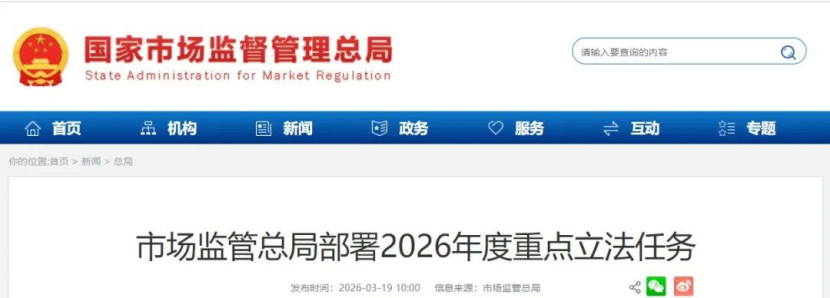
Recently, the State Administration for Market Regulation released the "Deployment of Key Legislative Tasks for 2026".The Medical Device Administration Law has been included in the key legislative projects for 2026. Previously, the State Administration for Market Regulation clearly stated that it would promote the formulation and revision of regulations such as the Food Safety Law and the Medical Device Administration Law. In September 2023, the Medical Device Administration Law was included in the legislative plan, and in 2024, the National Medical Products Administration completed the "Draft Submission of the Medical Device Administration Law." Now, the State Administration for Market Regulation has officially assigned the relevant legislative tasks. The "Draft for Public Comment of the Medical Device Administration Law" consists of eleven chapters and 190 articles, covering all aspects of medical device research, production, operation, use, and more.
22
Two Brain-Computer Interface Medical Device Guidelines Open for Public Comment
Recently, the Medical Device Standards Management Center of the National Medical Products Administration, at the request of the National Medical Products Administration, organized the drafting of two draft guidelines for public comment related to brain-computer interface medical devices. These are the "Guiding Principles for the Classification of Medical Device Products Using Brain-Computer Interface Technology (Draft for Public Comment)" and the "Guiding Principles for the General Naming of Medical Devices Using Brain-Computer Interface Technology (Draft for Public Comment)." These two guiding principles aim to standardize medical devices using brain-computer interface technology and are currently open for public comment to further improve relevant standards and promote the scientific, rational application and development of brain-computer interface technology in the field of medical devices.
23
Shandong Drug Administration Innovates in Carrying Out Medical Device Vigilance Pilot and Registrant Adverse Event Monitoring Inspection Work
Recently, the Shandong Provincial Drug Administration issued the "2026 Provincial Medical Device Vigilance Pilot and Registrant Adverse Event Monitoring Inspection Plan," making comprehensive arrangements for the inspection of medical device vigilance pilots and registrant adverse event monitoring. The "Inspection Plan" specifies the scope, content, responsibilities, timeline, and other aspects of inspections for adverse events and vigilance pilots of medical devices across the province. It identifies 47 medical device vigilance pilot registrants as key inspection targets and requires all relevant units to fulfill their functions, coordinate with annual inspection and sampling plans, and collaboratively advance the implementation of inspection tasks.。
24
New Regulations in the Medical Aesthetics Device Industry
According to the announcement "Further Clarification of Relevant Requirements for Radio Frequency Treatment Device Products" (No. 84 of 2024) issued by the National Medical Products Administration (NMPA), radio frequency beauty devices must obtain a Class III medical device certification. The NMPA announcement clearly states that, starting from April 1, 2026, the production, import, and sale of radio frequency treatment devices and radio frequency skin treatment devices without legally obtained medical device registration certificates will be prohibited. These products were originally scheduled to be regulated as Class III medical devices starting from April 1, 2024, but due to various factors, the implementation of the new regulations has been postponed until now. Under the enforcement of the new regulations, the radio frequency beauty device market is facing entirely new challenges. Meanwhile, the home-use beauty device market is also undergoing changes. Previously experiencing rapid growth, it is now being accompanied by increased regulatory scrutiny to ensure compliance. Obtaining Class III medical device certification requires significant financial investment and lengthy clinical trials, and more than 90% of small and medium-sized brands, as well as generic brands, may face elimination.
Note: The information in this article is compiled based on online news.
Recent Highlights
Recommended Articles Collection
Enterprise Information
2025 Major Events ▏Zhongguancun Shuimu Medical|Shuimu Jingchuang|Chengdu Shuimu|Shuimu Jiheng|Shuimu Jinsheng|Shuimu Jingzhi

END