

From Price Differential to Outcome Differential: The Restructuring of Healthcare Value System Behind Tianjin's 'Four Clouds' Platform
Editor’s Note: This article is reprinted from Health News. AuthorGuo Xiaowei, republished by VCBeat with authorization.
At the recently held 2021 National Conference on Promoting Experience in Deepening Healthcare Reform, the “Top Ten New Initiatives for Advancing Healthcare Reform and Serving Public Health” for 2020 were prominently announced. As a barometer of hotspot policies and typical experiences in healthcare reform, this list encompasses cutting-edge practices strongly promoted at the national level. Notably, topping this year’s list is a healthcare reform model led by digital health: Tianjin’s “Innovative Creation of the ‘Four Clouds’ Platform to Advance the Construction of Grassroots Digital Health Communities.” This represents a bold attempt by a provincial-level administrative region to systematically leverage digitalization to drive healthcare reform. The concept of “inclusive, shared, and equitable” care advocated by the “Tianjin Grassroots Digital Health Community” is guiding the introspection and restructuring of values within China’s healthcare system.
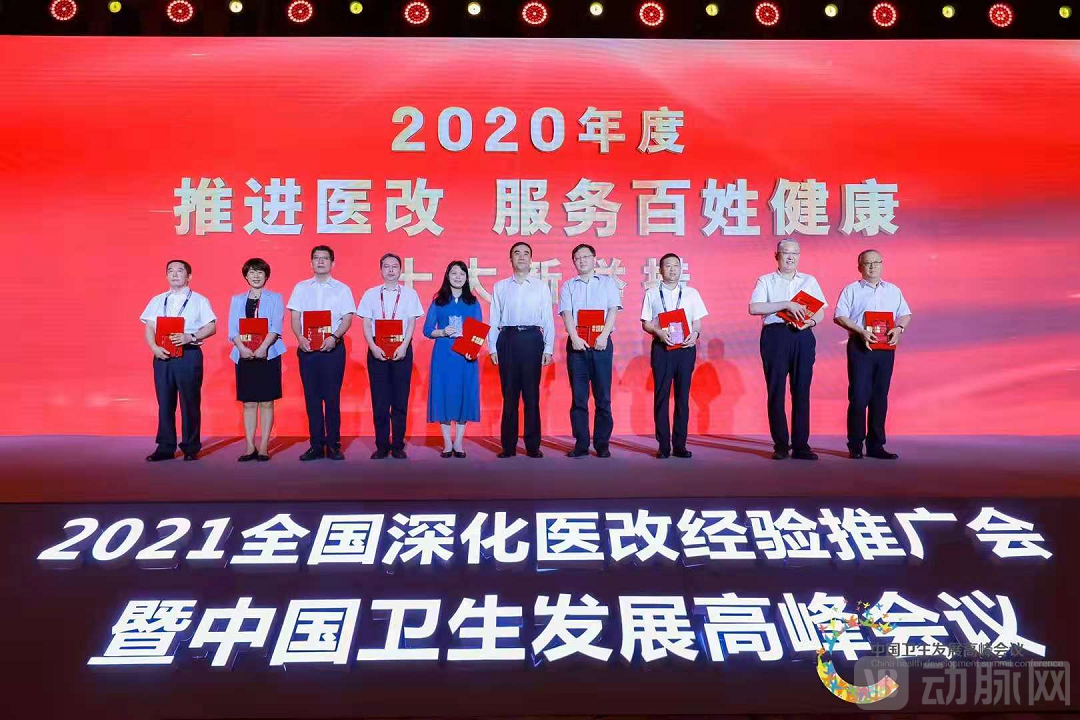
Tianjin’s Primary Care Digital Health Consortium Selected as One of the “Top 10 New Measures to Advance Healthcare Reform and Serve Public Health”
As China entered the 14th Five-Year Plan period, how could it leverage the momentum of deepening healthcare reform to further improve the medical and health service system and provide comprehensive, full-lifecycle health services to the people? The “Tianjin Primary Care Digital Health Consortium” offers a promising solution.
1Leveraging Digital Technologies to Drive the Upgrade of Medical Consortia
The tiered diagnosis and treatment system is a foundational, long-term, and systematic framework underpinning China’s healthcare service system, service delivery models, and patient care order. In September 2015, the General Office of the State Council issued the Guiding Opinions on Promoting the Development of the Tiered Diagnosis and Treatment System, which defined the objectives and tasks for building this system: initial consultation at primary care facilities, two-way referral, differentiated management of acute and chronic conditions, and coordination between upper- and lower-level healthcare institutions. It also emphasized strengthening primary care as the focal point for improving the tiered diagnosis and treatment service system.
As a key lever for advancing tiered diagnosis and treatment, the development of medical consortiums has increasingly become a centerpiece of healthcare reform, undergoing an evolution from “loose-knit” to “closely integrated” models in recent years.
In April 2017, the General Office of the State Council issued the Guiding Opinions on Promoting the Construction and Development of Medical Consortia, proposing that all government-run primary healthcare institutions should participate in medical consortia by 2020. During this period, various forms of exploration emerged continuously, including urban medical groups, county-level medical communities, specialty alliances, and telemedicine collaboration networks, marking what can be termed the 1.0 stage of medical consortium development.
In May 2019, the "Notice on Promoting the Construction of Close-knit County-level Medical and Health Communities" was released, requiring the establishment of a new type of county-level medical and health service system with clear objectives, well-defined rights and responsibilities, and collaborative division of labor, gradually forming a community characterized by integrated services, shared responsibilities, aligned interests, and unified management. The construction of medical alliances has ushered in the 2.0 era of "close-knit medical communities."
Currently, China is vigorously promoting the healthcare reform experience of Sanming to deepen nationwide healthcare reforms. After undergoing Phase 1.0, characterized by "rectifying chaos and curbing waste," and Phase 2.0, focused on "establishing regulations and instituting systems," Sanming has now entered Phase 3.0: the establishment of "Health Stewardship Organizations." This phase is dedicated to shifting the focus from "disease-centered care" to "health-centered care," thereby providing clear direction for the development of medical consortia.
Against this backdrop, various regions have been exploring resource integration models tailored to their unique characteristics, based on public health needs and the local distribution of medical resources. The Tianjin Municipal Health Commission has vigorously promoted the integration of “Internet + Healthcare” into grassroots and community settings, empowering primary healthcare institutions with digital tools to provide residents with quick and convenient medical and health services. To this end, the city introduced WeDoctor, China’s largest digital healthcare platform, and proposed the concept of a “Grassroots Digital Health Community.” This initiative aims to address imbalances in the allocation of healthcare resources through a digital platform, enhance the efficiency of medical care, pharmaceuticals, and health insurance, and establish a health maintenance system that covers the entire life cycle and full spectrum of health for residents, thereby tangibly improving public health indicators. In line with local conditions, Tianjin has launched version 3.0 of its Medical Consortium.
Notably, as the founder of China’s first internet hospital, WeDoctor has engaged in years of exploration and practice in the field of digital healthcare reform. On one hand, WeDoctor has leveraged digital technologies to establish digital connectivity among the supply side, demand side, and payers, continuously improving its digital “infrastructure.” On the other hand, through systematic and continuous innovative practices in multiple regions—including Jia County in Henan Province, and Jinan and Tai’an in Shandong Province—WeDoctor has developed digital health profiles for residents. These efforts have helped alleviate pressure on tertiary hospitals, enhanced the capabilities of primary care institutions, and improved the efficiency of medical insurance, thereby accumulating substantial experience in promoting tiered diagnosis and treatment through digitalization.
2From “Price Differential” to “Efficacy Differential”: Guiding Value Reconstruction
In January 2020, the Tianjin Municipal People’s Government and WeDoctor Group signed the Strategic Cooperation Agreement on Digital Health, making Tianjin the first provincial-level administrative region in China to comprehensively launch digital health initiatives. Under the leadership of the Tianjin Municipal Health Commission, Tianjin WeDoctor General Hospital (Tianjin WeDoctor Internet Hospital) took the lead in collaborating with 267 primary healthcare institutions across the city to establish the Tianjin Primary Care Digital Health Consortium. This initiative implemented the “Cloud Management,” “Cloud Services,” “Cloud Pharmacy,” and “Cloud Diagnostics” platforms. Leveraging these “Four Clouds” to digitally empower primary care, the consortium provides residents with comprehensive medical and health maintenance services covering the entire process of pre-diagnosis, during-diagnosis, and post-diagnosis care.
The “Cloud Management” platform promotes the vertical integration and convergence of various medical services within grassroots digital health communities; the “Cloud Services” platform provides residents with multi-form, multi-level, and diversified integrated traditional Chinese and Western medicine nursing and health management services; the “Cloud Pharmacy” platform enhances the capacity for grassroots drug supply assurance; and the “Cloud Examination” platform facilitates the establishment of a service model featuring “grassroots examination and superior-level diagnosis,” enabling mutual transmission and recognition of examination and test results as well as the sharing of high-quality medical resources.
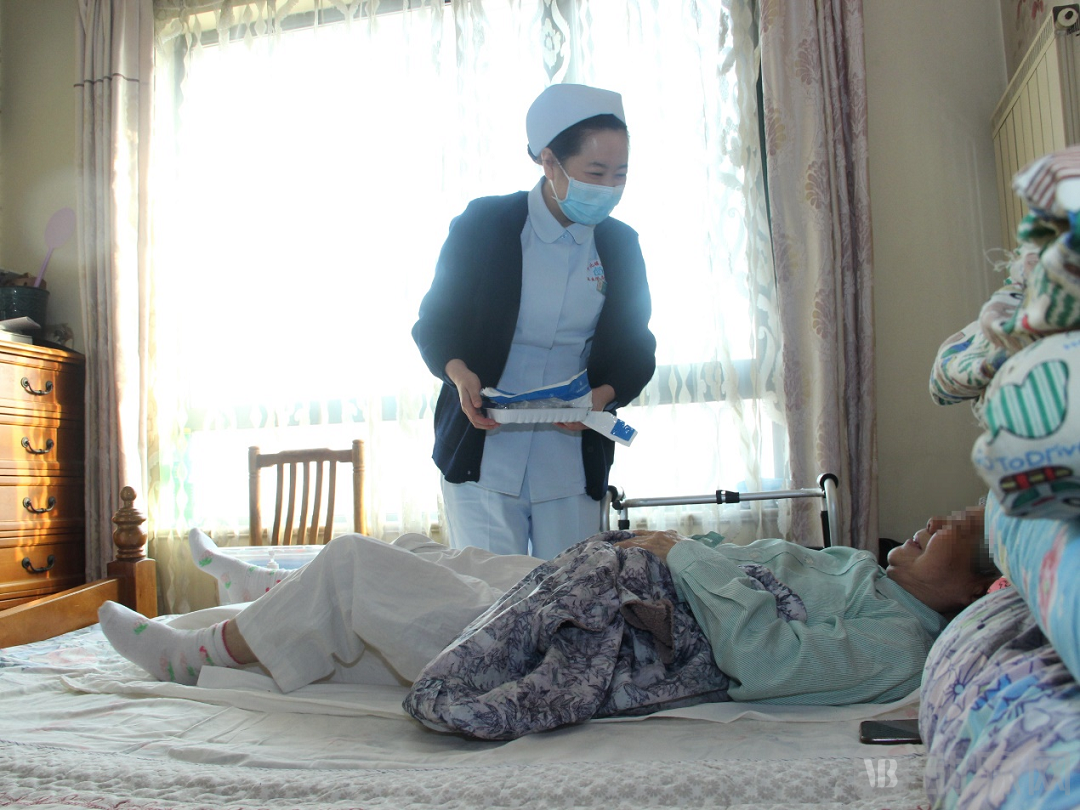
“Cloud Services” Platform Launches Home-Based Medical Services
The digital platform, underpinned by the “Four Clouds,” has driven transformations that go beyond mere efficiency gains from technology; it has fundamentally advanced reforms in institutional mechanisms. Within Tianjin’s grassroots Digital Health Community, digital technologies have been leveraged to empower the existing healthcare system. By revitalizing local medical resources, an efficient, health-centered health maintenance system has been established, tangibly improving residents’ health indicators. Notably, the Health Community has used chronic disease management as an entry point to explore payment models such as “global bundled payments” and “capitated bundled payments” under medical insurance. Based on assessments of healthcare and health management quality, an incentive and constraint mechanism of “retaining surpluses and covering no deficits” has been implemented. This has enabled medical insurance payers to cover health outcomes at predetermined costs, thereby establishing a novel framework for health accountability.
The comprehensive improvements in accessibility, affordability, and effectiveness of medical services driven by the Digital Healthcare Community have begun to emerge. Taking Tianjin Huanghe Hospital, a member institution of the Healthcare Community, as an example, statistical analysis of management outcomes for diabetic patients who were registered and enrolled between February and June 2021 revealed a 14% increase in the rate of glycated hemoglobin (HbA1c) target attainment, while the standardized management rate exceeded the local average by 15%. According to the UK Prospective Diabetes Study (UKPDS), each 1% reduction in HbA1c levels is associated with a 21% decrease in the risk of any diabetes-related endpoint events.
While boosting “productivity,” the Digital Health Community has also transformed “production relations,” shifting from a “price-differential model” to an “efficiency-differential model.” The former is disease-centered, operates on a fee-for-service basis, and delivers fragmented care; patient data is scattered across healthcare institutions in silos, and healthcare providers are primarily incentivized by price differentials in the supply chain for pharmaceuticals and medical consumables. In contrast, the latter is health-centered, adopts diagnosis-related group (DRG) or capitation payment models, and enables healthcare providers to deliver integrated online-offline services across the entire life course, guided by comprehensive digital health profiles of patients. Incentives are derived from the “efficiency differential” generated by improved patient health outcomes and reduced medical expenditures. Under the national strategic shift from a disease-centered to a health-centered approach, Tianjin’s exploratory practices may well represent the future trend of digital healthcare reform.
3Tianjin Finds the Digital “Key” to Unlock Healthcare Reform
After 12 years of exploring a new round of healthcare reforms, China’s medical and health sector has once again reached a critical juncture. With per capita GDP historically surpassing the $10,000 mark and the population aged 60 and above exceeding 260 million, China is witnessing an unprecedented surge in health demands. Meanwhile, as the Chinese economy transitions from high-speed growth to high-quality development, the rapid escalation of healthcare spending has become unsustainable. At present, further improving the tiered diagnosis and treatment system to provide residents with high-quality health services at lower costs is an essential component of healthcare reform.
In June 2020, the 14th meeting of the Central Commission for Comprehensively Deepening Reforms pointed out: “Attach great importance to the application of next-generation information technology in the healthcare sector, and reshape healthcare management and service models.” In recent years, the state has successively issued important documents such as the Guiding Opinions on Promoting the Development of “Internet + Healthcare,” the Notice on Deeply Carrying Out Convenience and Benefit Activities for “Internet + Healthcare,” and the Guiding Opinions on Improving Pricing and Medical Insurance Payment Policies for “Internet +” Medical Services. These measures support and encourage new service models such as “Internet + Healthcare,” integrating digital healthcare into the top-level design of China’s healthcare reform.
Leveraging digital technologies to build a health-centric healthcare system for the entire population may well become the key to unlocking the next phase of healthcare reform. The “Tianjin Experience” of grassroots digital health consortia offers a practical model. In Tianjin, internet hospitals have taken the lead in establishing grassroots digital health consortia that empower primary care through digitalization, promote the rational allocation of medical resources, and advance tiered diagnosis and treatment. On this basis, these consortia enhance the integration and operational efficiency of medical services, pharmaceuticals, and medical insurance (“the three-medical linkage”), establish standardized digital chronic disease management systems with health as the core objective, reform payment mechanisms, and implement health accountability systems, thereby facilitating a shift from a “disease-centered” to a “health-centered” approach. In this process, the role of internet healthcare is no longer confined to extending hospital services online; rather, it has become a crucial lever for integrating and coordinating medical resources within the system, as well as a key enabler for breaking down temporal and spatial barriers in healthcare delivery and putting people first to strengthen the foundation of public health.

Patients Access Healthcare Services Online via Mobile Phones
In this regard, Fang Laiying, Vice President of the Chinese Hospital Association, commented that the grassroots digital health consortium represents a new exploration adapted to the trends of healthcare reform. It is no longer limited to prescribing and delivering medications for follow-up visits, nor is it merely a model breakthrough involving the migration of offline services to online platforms. Instead, it provides medical care and health management for patients with chronic diseases through online-offline synergy, achieving a “dual improvement” in both the efficiency of healthcare resource utilization and the convenience and effectiveness of patient health services.
Meanwhile, Tianjin’s innovative digital healthcare reforms also reflect an increasingly tight relationship of empowerment, synergy, and symbiosis between digital health platforms and the public healthcare system. As the lead organization for Tianjin’s Digital Health Community, WeDoctor has also been deeply involved in the Sanming healthcare reform, closely aligning with the national top-level design of healthcare reform and exploring implementation pathways through digitalization.
Zhan Jifu, the “architect” of the Sanming healthcare reform, has fully affirmed WeDoctor’s practices in Tianjin. In an interview with the media, he stated, “The Digital Health Community currently under construction in Tianjin is led by internet hospitals to establish a close-knit medical consortium, creating a ‘health responsibility system’ centered on family doctor contracts and focused on chronic disease management. This is, in effect, the goal of Sanming Healthcare Reform 3.0. The related practical experience has strong demonstrative effects, and its results are worthy of attention.”
In the strategic framework of tiered diagnosis and treatment, “strengthening primary care” is a crucial component: only by continuously enhancing the service capacity of primary healthcare institutions, earning public trust in their diagnostic and treatment services, and resolving the majority of health issues at the primary level, can we revitalize primary healthcare resources and fundamentally alleviate the difficulties and high costs associated with accessing medical care. How can this goal be achieved? Many regions are advancing pilot reform initiatives tailored to their local contexts.
“Great importance must be attached to the application of next-generation information technology in the healthcare and pharmaceutical sectors, so as to reshape management and service models, optimize resource allocation, and enhance service efficiency.” This statement, made at the 14th meeting of the Central Committee for Comprehensively Deepening Reforms, has pointed out the thinking and direction for deepening healthcare reform. Tianjin’s practices represent beneficial explorations carried out in this very direction.
Tianjin has leveraged digital technologies to create “Four Clouds,” effectively promoting interconnectivity between primary care hospitals and large tertiary hospitals by establishing a grassroots digital health consortium. This initiative has enhanced the diagnostic and treatment capabilities of family doctors and improved the overall quality of care at the primary level, enabling residents to access services that encompass “prevention of disease, diagnosis when ill, treatment for minor ailments, referral for serious conditions, and management of chronic diseases” within their local communities. These efforts are accelerating the transition from a “disease-centered” approach to a “people’s health-centered” model.
Guo Yipeng, Director of the Primary Health Care Division of the Tianjin Municipal Health Commission, stated in a media interview that Tianjin is empowering primary healthcare institutions and family doctors through digital and information technologies, building high-quality primary healthcare facilities at residents’ doorsteps, and encouraging patients with common and chronic diseases to seek care at the primary level.
Thus, it is evident that the core of the upgrade to Tianjin’s Medical Consortium lies in value reshaping driven by technological empowerment: empowering primary healthcare institutions to enable the downward radiation of high-quality medical resources from tertiary hospitals; empowering family doctors with rapid access to residents’ health records to facilitate more effective health management; and empowering industry governance by establishing positive incentive mechanisms to support the coordinated reform of medical care, health insurance, and pharmaceutical supply (the “Three-Medical Linkage”). As a digital healthcare enterprise, WeDoctor has closely aligned its business expansion strategy with the mainstream values of healthcare reform, achieving its own growth while contributing to healthcare system reform and meeting public needs.
The replacement of horse-drawn carriages by trains may appear to be merely an advancement in transportation. However, with the advent of the “Train Era,” people’s lifestyles and economic development models have undergone a fundamental rupture from those of the “Horse-Drawn Carriage Era.” The establishment of Tianjin’s “Four Clouds” model has given us a tangible sense that advances in digital technology are reshaping medical care processes, transforming health management models, improving the flow efficiency of medical resources, and enhancing the matching of medical supply and demand. What surprises will these changes ultimately bring? Let us wait and see.