

ColinBri Empowers Multiple Hospitals to Excel in China's Latest Public Hospital Performance Assessment ('National Exam')
Recently, the National Health Commission issued the "Notice on Launching the 2021 Performance Assessment of Secondary and Tertiary Public Hospitals," to further implement and deepen healthcare reform, establish a modern hospital management system, and continuously advance the national performance assessment of public hospitals. Consequently,China’s Tier II and Tier III Public Hospitals Face a New Round of Performance “Major Exams”
Performance appraisal of public hospitals is not only a national mechanism for monitoring various aspects, including medical quality and operational management, but also exerts tangible impacts on hospital operations. How to leverage performance appraisal as a “baton” to drive high-quality development has become a focal concern for public hospitals today.
Latest “National Exam” Rankings Released, Focusing on Performance Achievements in the Performance Appraisal of Tertiary Public Hospitals
On March 30, 2021, the National Health Commission of China announced the results of the national monitoring indicators for the performance evaluation of tertiary public hospitals in 2019. Among the 2,413 tertiary public hospitals evaluated nationwide, many achieved outstanding results after implementing Clinbrary’s high-quality data platform. ThroughBig Data Platform and Intelligent Application Products Provided by Colibri, the hospital obtained accurate and reliable data support for more than 50 quantitative assessment indicators, thereby successfully passing the evaluation!
Among them, West China Hospital of Sichuan University and Ruijin Hospital affiliated with Shanghai Jiao Tong University School of Medicine both received an A++ rating in the assessment.Shanghai Integrated Traditional Chinese and Western Medicine Hospital Affiliated to Shanghai University of Traditional Chinese MedicineAchieved an A+ performance rating and secured second place in the performance assessment of integrated traditional Chinese and Western medicine hospitals. This second-place ranking fully demonstrates recognition of the hospital’s excellence in hospital management, medical service quality and efficiency, and performance management.Chengdu Fifth People's HospitalAchieving a Grade A rating, Chengdu Fifth People’s Hospital ranked 176th nationwide with a total score of 726.3 in the “National Examination” rankings, an improvement of 49 positions compared to 2018, and securing the top spot among municipal-level hospitals in Chengdu.

New Healthcare Reform Drives High-Quality Development of Performance Management in Public Hospitals
In the operation of modern hospitals, the performance appraisal system suffers from issues such as unclear strategic direction, an excessive focus on economic benefits in assessment methods, a lack of scientific rigor and standardization in assessment criteria, and weak performance management awareness among leadership. These problems severely undermine the overall effectiveness of hospital performance appraisals, operational efficiency, and sustainable development.
Since the launch of the new healthcare reform, performance management and assessment in public hospitals have been promoted as a key component. Following the issuance of the "13th Five-Year Plan for Healthcare Reform," clear directives were established to improve and institutionalize hospital performance evaluation systems, creating a hospital assessment mechanism centered on quality and guided by public welfare. Subsequently, the State Council and the National Health Commission successively released the "Guiding Opinions on Strengthening Performance Assessment of Tertiary Public Hospitals" and the "Notice on Launching the 2019 National Performance Assessment for Tertiary Public Hospitals," initiating nationwide performance assessments for tertiary public hospitals across China.For the first time, a comprehensive evaluation was conducted on 2,398 hospitals across China using the same indicator system and data platform.In 2020, building on the experience gained from performance evaluations of tertiary public hospitals, China officially launched performance evaluations for secondary public hospitals nationwide. Performance assessments for both secondary and tertiary public hospitals have gradually become a routine practice.
The implementation of the national performance assessment for public hospitals, on one hand, promotes the transition of tertiary public hospitals from scale-expansion-oriented development to quality-and-efficiency-oriented development; on the other hand, it shifts the management model from extensive administrative management to comprehensive performance management, thereby making performance evaluation more scientific, comprehensive, precise, and fair. This facilitates improvements in efficiency and quality, ensuring the effective implementation of comprehensive reform policies for public hospitals. In short,Facilitating the transition of hospitals from a phase of rapid growth to one of high-quality development.
How Hospital Administrators Should Respond to the National Assessment of Performance Evaluation
According to the "Opinions on Strengthening Performance Appraisal of Tertiary Public Hospitals" issued by the General Office of the State Council, the performance appraisal of tertiary public hospitals is conducted on an annual basis, with the data reference period covering January to December of the previous year. The process is specifically divided into three levels: hospital self-examination and self-evaluation, provincial-level annual assessment, and national monitoring and analysis.
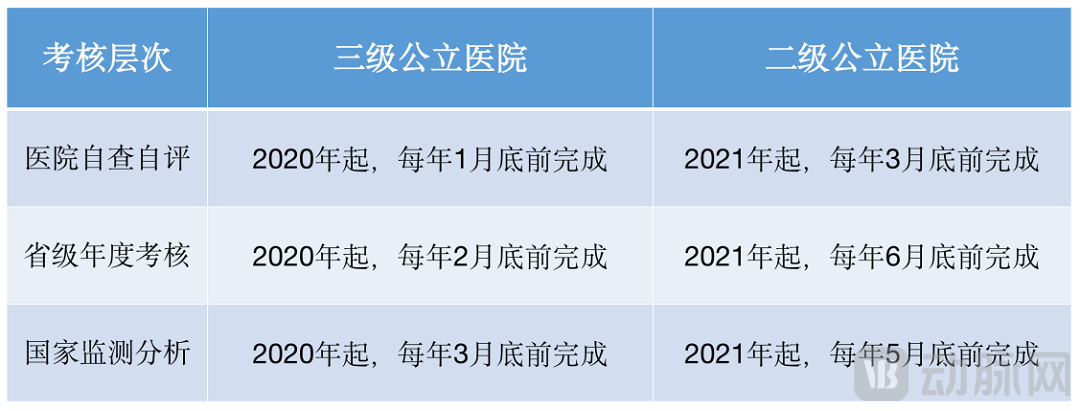
According to the "Operational Manual for National Performance Appraisal of Tertiary Public Hospitals (2020)" issued by the National Health Commission, the performance appraisal indicator system for tertiary public hospitals is divided into three levels: (1) Level 1 indicators include four dimensions: medical quality, operational efficiency, sustainable development, and satisfaction evaluation; (2) Each Level 1 indicator is subdivided into 2 to 4 Level 2 indicators, totaling 14 aspects; (3) There are 55+1 Level 3 indicators, with the addition of one new Level 3 indicator—the proportion of revenue from key monitored high-value medical consumables. Among these, there are 51 quantitative indicators and 5 qualitative indicators. (There are 26 national monitoring indicators and 30 monitoring indicators for local health administrative departments.)
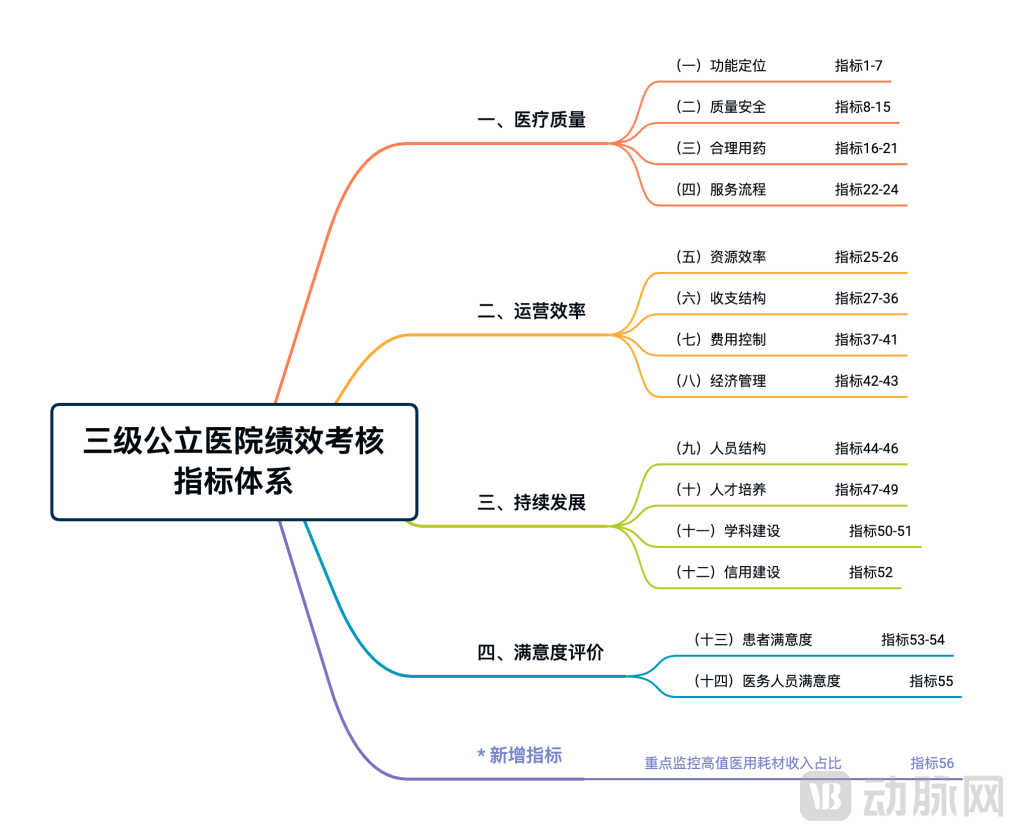
Performance Appraisal Indicator System for Tertiary Public Hospitals
Furthermore, the performance appraisal indicator system has a maximum score of 1,000 points. It primarily relies on quantitative indicators and direct data collection. The Analytic Hierarchy Process (AHP) is used to calculate the weights of indicators at various levels, with respective proportions of 4:3:2:1. Meanwhile, all indicators have clearly defined calculation methods and data sources.
The Performance Appraisal System for Tertiary Public Hospitals, from“Quality, Efficiency, Development, and Satisfaction”“The four dimensions chart the course and pathway for the high-quality development of public hospitals. Meanwhile, the National Performance Evaluation—commonly referred to as the ‘National Exam’—underscores the state’s effective guidance and substantive requirements for tertiary public hospitals.”
Collinbrew’s Digital and Intelligent Solutions: Precisely Empowering Hospitals to Enhance Quality and Efficiency
As a leading medical big data enterprise in China, Colibri has rapidly responded to the national performance assessment policy requirements for tertiary public hospitals and independently developedHospital Performance Appraisal System, covering all indicators included in the national performance evaluation for hospitals.
The ColinBri National Level-3 Public Hospital Performance Evaluation System relies on the hospital’s big data platform and advanced, mature technologies, throughFour Major Functional Modules: Hospital Quality Analysis, Operational Management Analysis, Sustainable Development Analysis, and Satisfaction Evaluation Analysis, tracks and analyzes hospital performance appraisal activities, systematically presents statistical data on performance appraisal results, and automatically integrates, analyzes, and aggregates indicator data. This significantly reduces the workload associated with hospital data reporting, substantially improving the efficiency and accuracy of performance appraisal data submission. It provides critical support for tertiary public hospitals in accurately and efficiently completing their annual performance appraisals, helping hospitals achieve simultaneous improvements in refined management and performance outcomes.
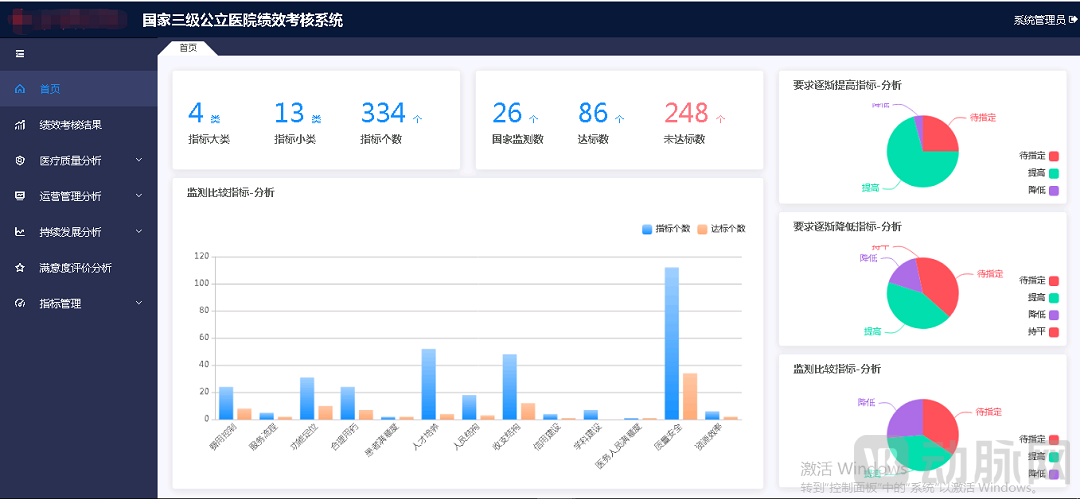
ColinBury - National Tertiary Public Hospital Performance Evaluation System
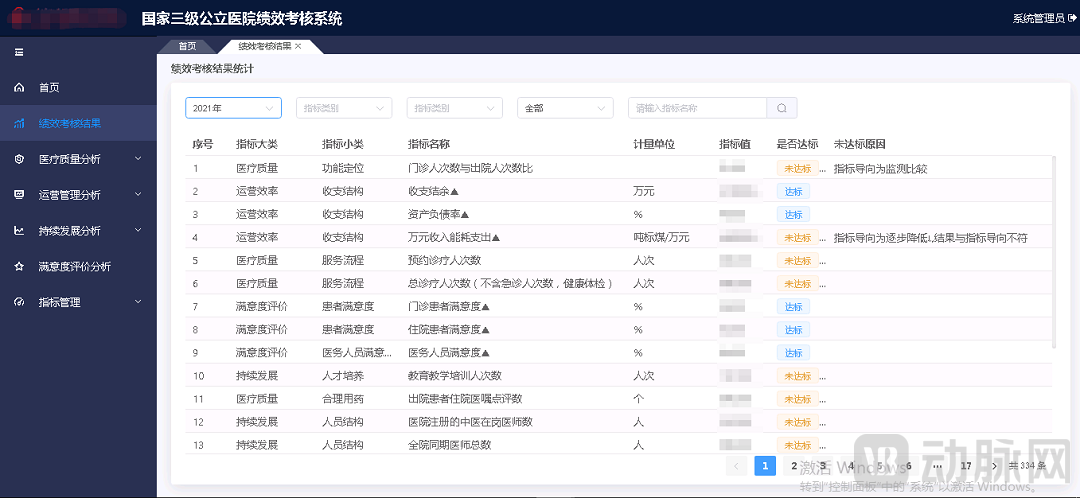
ColinBri - National Performance Evaluation System for Public Hospitals (Grade III) - Performance Evaluation Results
Meanwhile, Collinbri has also integrated the performance evaluation indicators for public hospitals with their strategic objectives, functional positioning, and disciplinary development, independently developing a series ofInnovative Medical Products and Solutions, covering the four aspects of medical quality, operational efficiency, sustainable development, and satisfaction evaluation within the performance assessment indicator system for national tertiary public hospitals, thereby providing comprehensive support for the performance appraisal of public hospitals and facilitating the effective implementation of comprehensive hospital reform policies.
"Medical Quality Monitoring and Management Software," independently developed by Kelin Buri in 2014, effectively integrates practices such as "continuous monitoring, data analysis, strategy formulation, and plan implementation" into the daily operations of hospitals. The system is designed in accordance with relevant detailed regulations, including the "Quality Management and Control Indicator System for Tertiary General Hospitals" issued by the National Health Commission, while also referencing international Joint Commission International (JCI) accreditation standards. By leveraging modern information technology, the system comprehensively, accurately, timely, and objectively monitors key quality indicators related to hospital operations, patient financial burden, work efficiency, and healthcare-associated infections, and throughPreventive Control, Defect Logging, Corrective Feedback, and Statistical Analysis, standardize medical service practices, strengthen the management of medical quality, and promote the development of hospital medical safety.
Operational efficiency reflects the level of refined management in hospitals and is key to achieving scientific hospital management. Focusing on hospital operational management, Collinbrai aggregates, integrates, mines, analyzes, and visualizes business data from various hospital application systems to build an Operational Data Repository (ODR). The data domains cover human resources, supplies, costs, pharmacy, and more, encompassing business systems such as HIS, HR, supply chain, and equipment management, thereby achieving full integration of business management and operational management.
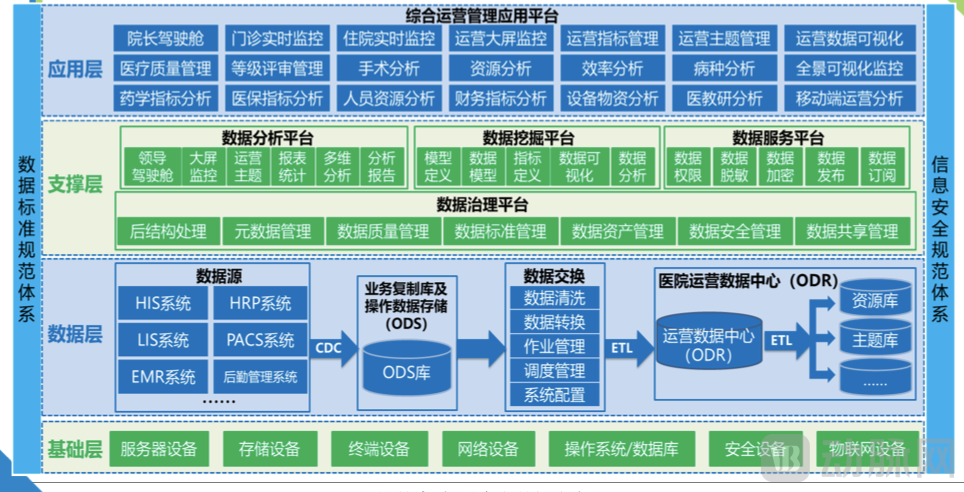
Overall Architecture of the Big Data Platform for Operations
Building on this, ColinBri developedOperational management, operational management APP, performance management and other applications, accelerate the transformation of hospital management models and operational methods to achieve scientific, standardized, and refined hospital management.
Collinbri enhances research management by introducing informatization and process automation, integrating research workflows—including project application, ethical review, project process management, outcome management, and funding management—to establish an integrated clinical research platform, providing significant support for improving hospitals’ research capabilities and management standards.
Hospital satisfaction comprises both patient satisfaction and healthcare staff satisfaction. The ColinBri 360-degree view software for healthcare professionals provides a comprehensive display of hospital staff information, enabling managers to access data on employee qualifications and skills, medical quality, research and teaching activities, career trajectories, and medical ethics within a unified interface. This facilitates a comprehensive and objective evaluation of employee performance and supports centralized management of physicians’ technical profiles and procedural privileges.
Conclusion
Performance-based assessment in public hospitals is a crucial measure for advancing healthcare reform policies, enhancing the governance capabilities of public hospitals, and guiding their high-quality development. Public hospitals should adhere to the fundamental principle of public welfare, continuously improve basic management and informatization management levels, and effectively leverage the “guiding role” of performance assessments to truly achieve high-quality development. Kelinbrui will continue to leverage its strengths in the big data platform sector, integrating the latest policy requirements and innovative technologies to provide comprehensive support for performance assessment in public hospitals, thereby contributing to the high-quality development of smart hospitals.