

Deepwise Medical Showcases China's AI Strength with 18 High-Impact Research Papers Accepted at MICCAI 2021 and CVPR 2021

DeepWise
Developer of Artificial Intelligence Medical Imaging Diagnosis System
Recently, the acceptance results for papers at the 24th International Conference on Medical Image Computing and Computer-Assisted Intervention (hereinafter referred to as MICCAI 2021) were announced, and the 2021 IEEE/CVF Conference on Computer Vision and Pattern Recognition (hereinafter referred to as CVPR 2021) concluded.DeepWise had a total of 18 papers, representing its latest scientific research achievements, accepted by these two conferences., which demonstrates DeepWise’s continuous innovation in AI algorithms and signifies that China’s medical AI industry, represented by DeepWise, has taken a global lead.
The annual MICCAI is a premier comprehensive academic conference spanning the fields of Medical Image Computing (MIC) and Computer-Assisted Intervention (CAI), widely recognized for its top-tier international influence and academic authority. This “Olympics” of medical technology attracts numerous biomedical researchers, engineers, and clinicians specializing in medical image computing and computer-assisted intervention. Papers accepted at MICCAI often represent the highest level of academic excellence in the field.
MICCAI 2021, scheduled to be held in late September and early October, received a total of 1,631 submissions, with 533 papers ultimately accepted. Among these, DeepWise delivered strong performance, having eight papers accepted.

CVPR is an annual academic conference organized by the IEEE. Among various academic conferences, CVPR is recognized as a top-tier international conference in computer vision, focusing primarily on computer vision and pattern recognition technologies. With significant influence and high rankings, it is one of the three premier conferences in the field of computer vision.
In recent years, the rapid development of computer vision has led to fierce competition for paper acceptance at CVPR. For CVPR 2021, only 1,663 out of 7,015 valid submissions were accepted, resulting in an acceptance rate of just 23.7%. Among these, DeepWise had 10 research outcomes, produced in collaboration with The University of Hong Kong, Peking University, Xiamen University, Sun Yat-sen University, and The Chinese University of Hong Kong, accepted by CVPR 2021. This signifies that DeepWise has reached an internationally advanced level in the field of computer vision research.

Among the 18 papers published by DeepWise, three are representative, having achieved innovative breakthroughs in the classification of benign and malignant pulmonary nodules on CT, the classification of benign and malignant lesions on mammography, and the segmentation and detection of early acute cerebral infarction, reaching a world-leading level.
CT Lung Nodule Benign-Malignant Classification
The paper titled “CA-Net: Leveraging Contextual Features for Lung Cancer Prediction,” accepted by MICCAI 2021, represents the achievements of DeepWise in collaboration with Peking University in the classification of benign and malignant pulmonary nodules for the early diagnosis of lung cancer.
Currently, the incidence of lung cancer remains high. As AI-assisted screening software for pulmonary nodules from various companies successively obtains Class III medical device certification from the National Medical Products Administration (NMPA), the classification of pulmonary nodules into benign and malignant categories has become a critical area to address. DeepWise has accumulated substantial expertise in this field. Traditionally, classification has primarily focused on nodule-specific features, such as shape and margins. Recently, there has been growing interest in leveraging contextual features to provide supplementary information. Clinically, contextual features refer to the structural characteristics surrounding the nodule; combining these with nodule-specific features can enhance the differentiation between benign and malignant lesions.
“DeepWise’s latest advancement takes a contextual approach, examining not only the morphology of the nodule itself but also its spatial relationships with surrounding tissues. For instance, whether blood vessels converge around the nodule, or whether the nodule is located near the pleura and has caused pleural retraction—these are all features highly indicative of benign versus malignant nature,” said Yu Yizhou, Chief Scientist at DeepWise, in an interview with VCBeat.
DeepWise has proposed the Context Attention Network (CA-Net), which innovatively introduces a feature fusion module capable of adaptively adjusting the weights of contextual features within and between nodules. This approach simultaneously extracts nodule-specific and contextual features and effectively fuses them to differentiate between benign and malignant lesions. By analyzing the structures surrounding the nodules, this method enhances the accuracy of malignancy assessment and achieved leading performance on the Data Science Bowl 2017 dataset.
Benign and Malignant Classification of Mammographic Images
“DAE-GCN: Identifying Disease-Related Features for Disease Prediction,” a research achievement resulting from the collaboration between DeepWise and Peking University, has been accepted by MACCAI 2021. Breast cancer ranks first among malignant tumors in Chinese women. Learning image representations that are truly disease-related is crucial for enhancing the reliability, interpretability, and generalization capability of cancer diagnosis models. Yizhou Yu stated, “Features extracted from mammograms include both those relevant to benign or malignant conditions and those irrelevant. We designed a feature disentanglement method based on graph convolutional networks to separately decompose relevant and irrelevant features. By integrating feature disentanglement with graph convolutional networks, we developed a novel algorithm to achieve classification of benign and malignant cases.”
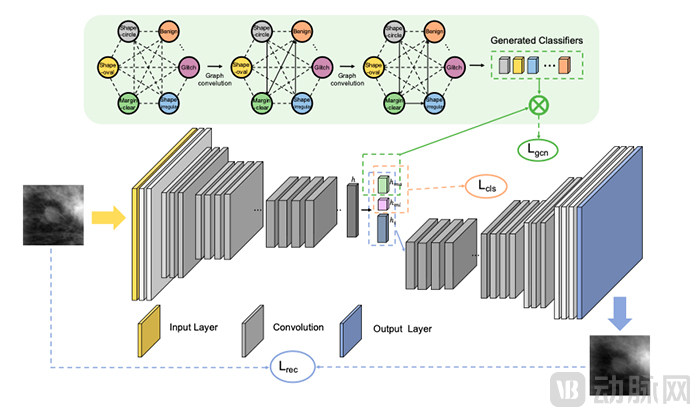
Overall Architecture of DAE-GCN (Image from the paper)
DeepWise proposed a Decoupled Autoencoder with Graph Convolutional Networks (DAE-GCN) in its paper, implementing a GCN-guided decoupling mechanism within an autoencoder-based framework. The task of classifying benign and malignant lesions in mammography was trained and validated on approximately 2,000 cases. The results demonstrated that this model achieved higher AUC scores compared to current internationally leading models, fully validating the effectiveness of the algorithm.
Segmentation and Detection of Early Acute Cerebral Infarction
MICCAI 2021 also included the paper titled “Symmetry-Enhanced Attention Network for Acute Ischemic Infarct Segmentation with Non-Contrast CT Images.” This represents a research achievement by DeepWise in collaboration with the Eastern Theater General Hospital in the segmentation and detection of early acute cerebral infarction.
Although cranial magnetic resonance imaging (MRI) can diagnose early acute cerebral infarction with relatively high accuracy, it is costly and time-consuming. Furthermore, the multi-day waiting periods often required for such examinations in Chinese hospitals may delay optimal treatment timing. Computed tomography (CT) scans are rapid and relatively cost-effective; however, because the changes in lesion density on CT images are subtle, it is difficult to distinguish them from normal tissue. Therefore, CT is only suitable for general stroke screening.
To improve the accuracy of diagnosing early acute cerebral infarction on CT scans, this paper proposes a symmetry-enhanced segmentation method for early acute cerebral infarction lesions. Experimental results demonstrate that this method achieves superior performance in the segmentation and detection of early acute cerebral infarction compared with existing algorithms.
Yu Yizhou explained, “We incorporated an attention mechanism into our deep learning framework based on symmetry modeling and designed a new algorithm. Its current performance surpasses that of all existing algorithms using CT for the detection of early-stage cerebral infarction.”
In addition, five other papers accepted by MICCAI 2021 cover the following topics: generation techniques for pseudo-healthy images corresponding to lesion images; joint optimization methods for MRI data acquisition and image reconstruction; brain lesion segmentation algorithms that combine prior information with deep neural networks; data augmentation methods for enriching lesion segmentation datasets; and lesion inpainting techniques under a self-supervised learning paradigm to improve the accuracy of multi-class lesion segmentation. These papers have achieved new technical breakthroughs in leveraging AI to enhance the performance of medical image analysis, accelerate imaging speed, and improve the precision of lesion segmentation.
Among the papers accepted by CVPR, three focus on fundamental research in transfer learning, proposing novel domain adaptation algorithms for three core image understanding tasks: image classification, object detection, and semantic segmentation. Furthermore, CVPR papers related to specific medical application scenarios have proposed innovative solutions for early prediction of peripapillary atrophy (PPA) in fundus photographs, time-series disease prediction, and automated assessment of surgical procedure completion using operative videos.
In addition to making substantial investments in scientific research, DeepWise places great emphasis on the translation of research achievements, integrating the findings from its academic publications into its products. In 2020, DeepWise’s AI product for pulmonary nodule detection obtained a Class III medical device registration certificate from the National Medical Products Administration (NMPA) through the innovative approval pathway. Recently, DeepWise also unveiled its “One-Stop AI Solution for the Nervous System” at the China Medical Equipment Fair (CMEF), launching a CTP-assisted diagnostic feature.
Yu Yizhou stated that as a key R&D department of DeepWise, the DeepWise Research Institute is an institute where product development and research are closely integrated. “We are responsible for the core algorithm development of our products. Much of our research stems from issues identified during product development; once the research is completed, the findings are immediately applied to the products. This type of technology accounts for the majority of our work.”
Meanwhile, the DeepWise Research Institute also conducts forward-looking research based on future product roadmaps. “We have various types of hardware equipment for medical imaging. AI models trained on images from a specific scanner model may perform poorly on other hardware. The foundational research on transfer learning that we published at CVPR could be applied to our products in the future, enhancing their robustness and ensuring consistent performance across different hardware devices,” added Yu Yizhou.
Since its inception, DeepWise has prioritized innovative scientific research. As of the end of July 2021, DeepWise had filed for or obtained authorization for nearly 300 software copyrights and patents, boasting a diverse product portfolio and maintaining a leading position in China’s AI medical imaging industry. Meanwhile, the cumulative impact factor of academic papers published by DeepWise in collaboration with research teams from major universities and renowned domestic medical institutions in various academic journals has exceeded 500.Only in 2021, four National Natural Science Foundation projects were selected.。
DeepWise is at the international forefront, particularly in the diagnosis of mammography, intracranial aneurysms, and pulmonary lesions.
Taking mammography as an example, DeepWise has published multiple papers at top AI academic conferences and in leading journals, demonstrating a high level of technical expertise.
At the end of 2020, DeepWise published a paper in Nature Communications on the detection of intracranial aneurysms using artificial intelligence deep learning. As the first paper in this field to be published in an international journal of this caliber, representing the highest standard in the industry.
Leveraging its long-standing expertise in pulmonary disease diagnosis, DeepWise has achieved world-leading capabilities in the detection and diagnosis of lung lesions. In the 2019 Alibaba Tianchi Digital Human Competition, which focused on the detection and diagnosis of pulmonary diseases, DeepWise secured first place among 1,635 teams worldwide.
This is also a microcosm of the rise of China’s AI medical imaging industry, represented by DeepWise. With technological advancements, China’s AI medical imaging sector has assumed a significantly important position on the global stage. Yu Yizhou believes that the development of China’s AI medical imaging industry has made rapid progress in recent years. “Currently, there is an imbalance between medical resources and the patient population in China. Therefore, high-tech solutions, including AI technology, are needed to improve the efficiency of healthcare institutions,” he stated. Strong demand provides a more solid foundation for product implementation.
In terms of commercialization, DeepWise is also at the forefront of the industry. As of the end of July 2021, the National Medical Products Administration (NMPA) had approved 17 Class III medical device certificates for imaging products. Among these, DeepWise holds two Class III imaging certificates: the “CT Imaging Software for Auxiliary Detection of Pulmonary Nodules” and the “CT Imaging Software for Auxiliary Triage and Assessment of Pneumonia.” Notably, DeepWise’s AI solution for pneumonia was already widely deployed in Hubei Province during the epidemic, contributing to pandemic control efforts. Recently, DeepWise provided its AI-assisted diagnostic system for pneumonia to support technological anti-epidemic measures at the Tangshan Campus of Nanjing Second Hospital, a designated facility for treating COVID-19 patients in Nanjing.
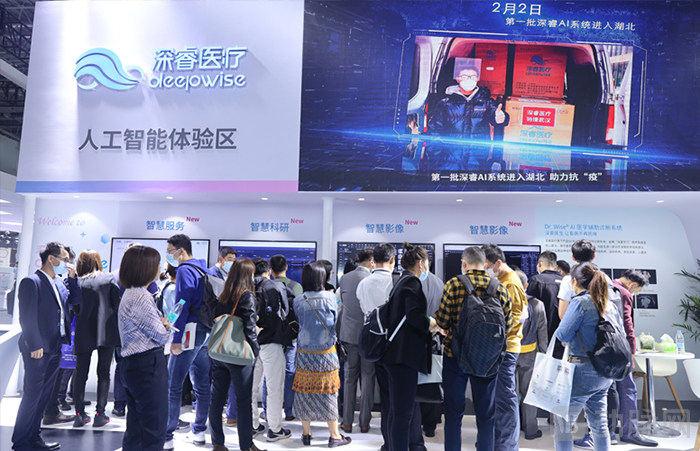
Through the continuous efforts of its R&D team, DeepWise’s products are being consistently enhanced and optimized, empowering clinicians to rapidly and accurately detect lesions while improving capabilities for qualitative and quantitative lesion analysis.
At the end of the interview, Yu Yizhou also highlighted the challenges facing medical AI, suggesting that by confronting these challenges head-on, breakthroughs may be achieved in the future.
“The challenge of integrating the vast amount of domain knowledge and medical data in the healthcare sector, which are often incompatible with mainstream deep learning approaches, to develop superior decision-making models. AI technologies that respect domain expertise will become a powerful force in empowering healthcare through artificial intelligence.”
Meanwhile, he emphasized that it is DeepWise’s mission to translate scientific research achievements into clinical practice. Upholding a spirit of innovation, DeepWise will continue to explore and advance in the field of medical artificial intelligence, deeply tap into innovative AI applications, accelerate the transformation of cutting-edge AI theoretical outcomes, and join forces with technological partners to foster the robust growth of the AI healthcare industry.