

Chinese and International Pioneers Join Forces: Acotec Scientific Debuts on HKEX After a Decade-Long Journey
Acotec
Manufacturer of Endovascular Interventional Products
The vascular intervention sector has been quite active recently. Following HeartCare Medical last week, another company has officially made its “debut” on the secondary market.
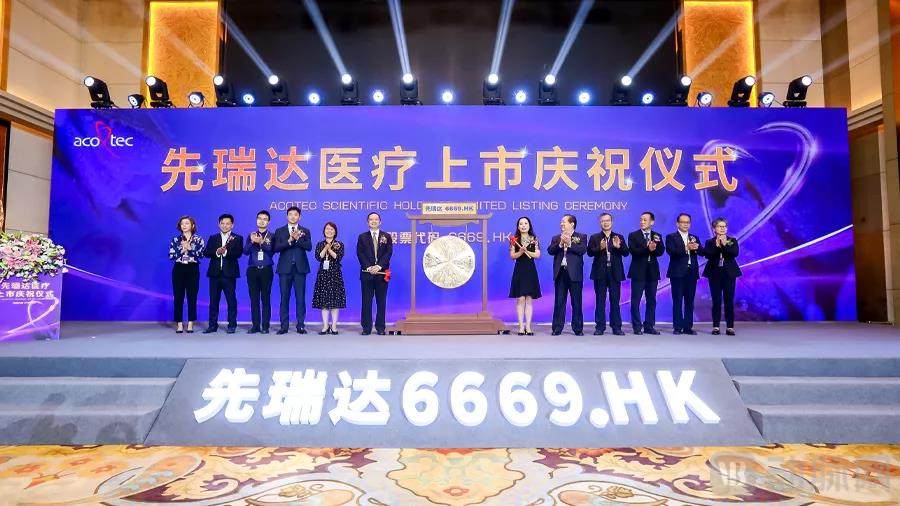
Today, Acotec Medical Holdings Limited (“Acotec”) officially listed on the Hong Kong Stock Exchange under the stock code “6669.HK,” with Morgan Stanley and CICC serving as joint sponsors. The IPO price for Acotec was set at HK$23.80 per share, raising HK$1.63 billion.
Acotec is an innovative interventional medical device company that primarily provides patients with implant-free interventional treatment solutions for vascular diseases, including a portfolio of vascular interventional products developed across four core technology platforms: drug-coated technologies, polymer materials, radiofrequency ablation, and thrombus aspiration.
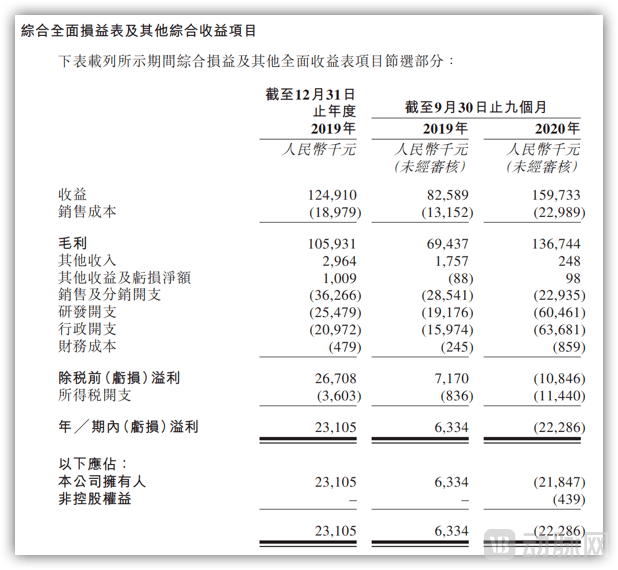
In terms of drug-coated balloon (DCB) products applied to the treatment of superficial femoral artery (SFA) and popliteal artery (PPA) lesions, acotec held a market share of approximately 86.9% in 2020, gradually emerging as the market leader for SFA/PPA DCBs in China. According to the prospectus,Acotec generated nearly RMB 194 million in revenue in 2020, with a gross margin exceeding 80%. In the first quarter of 2021, its year-on-year revenue surged by 1.7 times, as its products gradually entered the harvest period.
Standing at a New Starting Point: What Are acotec’s Plans After Its IPO?
"If you can't become a giant in the healthcare industry, then become the absolute leader in a niche sector."
The path to an initial public offering (IPO) has always been arduous and challenging.
Acotec, established in January 2008 and located in the Beijing Economic-Technological Development Area, is a wholly foreign-owned medical device manufacturer integrating research and development, production, and sales of intravascular catheter series products. The company primarily designs and manufactures intravascular catheter series products, which are widely used in interventional therapy for vascular diseases.
Three years later, acotec welcomed a new “leader,” as Li Jing and Silvio Rudolf Schaffner officially acquired the company in 2011.
The addition of two “industry leaders” has not only injected new vitality into acotec, but more importantly, has defined its future development strategy.
Both Li Jing and Schaffner are from Invatec, a highly competitive overseas giant in the peripheral vascular field. As early as 2009, Invatec commercially launched the world’s first drug-coated balloon product, demonstrating profound expertise in the balloon catheter domain.
Invatec has also left a significant mark in China. In its early years, Invatec invited international professors to China to perform live surgical demonstrations, thereby promoting standardized endovascular treatment for lower extremity arterial disease. Furthermore, a group of Chinese vascular surgeons undertook short-term fellowship training in Leipzig through Invatec; the vast majority of them have now become key leaders in the field of vascular surgery in China.
As the head of Invatec’s Greater China region at the time, Li Jing recognized the opportunities in China’s peripheral intervention market early on.
In the past, the potential of the peripheral intervention market was often overlooked. In reality, with the vigorous development of vascular surgery in China, the entire peripheral intervention market has begun to take off rapidly in recent years.According to relevant research reports by Frost & Sullivan, the market size of peripheral vascular interventional medical devices in China was RMB 3.01 billion in 2017, and is projected to increase to RMB 30 billion by 2030.
To seize this opportunity, after acquiring Acotec, Li Jing and Schaffner jointly targeted the peripheral intervention sector—a niche area with limited attention at the time—and built the drug-coated balloon (DCB) market from the ground up.
With its unique strategic vision, Acotec was the first to reap the benefits of the rapid growth in peripheral interventions. According to the prospectus, Acotec’s revenue reached RMB 120 million in 2019, with a net profit of RMB 23.1 million; in 2020, its revenue rose to RMB 190 million, representing a year-on-year increase of 58.3%. Based on 2020 revenue, Acotec held a market share of approximately 86.9%, unquestionably establishing itself as the leader in the field of peripheral vascular interventions.
Solving the “Chokehold” Challenge: One Breakthrough Technology Dominates the Peripheral Vascular Field
Li Jing’s unconventional move to enter the peripheral drug-coated balloon market was not a whim, but rather a decision based on thorough market considerations.
First, from a technical perspective, drug-coated balloon technology can provide a breakthrough solution to the challenges of difficult recanalization in lower extremity vascular lesions and high rates of restenosis following existing interventions. Specifically, drug-coated balloons are coated with antiproliferative agents that are delivered to the local vessel wall at the lesion site during balloon inflation, thereby inhibiting smooth muscle cell proliferation and preventing vascular restenosis.
On the other hand, from the perspective of commercialization and monetization potential, drug-coated balloons have three major indications driving sustained growth: above-the-knee lesions, below-the-knee lesions, and hemodialysis access.
Yet behind the glossy facade lie significant challenges. Due to long-term reliance on imported raw materials, the research and development of balloon catheters in China faces a “chokehold” dilemma; any disruption in the supply of upstream raw materials could stall R&D and production processes at medical institutions.
To overcome this “chokehold” technology, acotec acquired Weitai Medical and established a Polymer Materials Center in Shenzhen to support innovation in its balloon catheter products. By building its own polymer materials R&D center, the company has broken its reliance on the previous single-mode approach of “imported raw materials + domestic manufacturing,” enabling faster product iteration.
As of now, acotec has had two drug-coated balloon (DCB) products approved for market launch.In 2016, Acotec launched China’s first peripheral drug-coated balloon (DCB) product, AcoArt Orchid® & Dhalia™, approximately four years ahead of the second comparable product. Based on 2020 revenue, Acotec’s first peripheral DCB product held a market share of approximately 86.9%, ranking first in the domestic market.
Acotec’s second drug-coated balloon (DCB) product, AcoArt Tulip™ & Litos™, was designated as a “Breakthrough Device” by the U.S. Food and Drug Administration (FDA) in 2019 and received marketing approval from the National Medical Products Administration (NMPA) in December 2020. It is the world’s first and only DCB product for below-the-knee (BTK) treatment to gain regulatory approval based on results from multicenter randomized controlled clinical trials.
The launch of innovative products has allowed acotec to reap substantial market benefits. According to the prospectus, in the second year following the commercial launch of AcoArt Orchid® & Dhalia™, the usage volume of peripheral drug-coated balloons (DCBs) reached 8,000 units, rising to 15,000 units in 2019, with a compound annual growth rate (CAGR) of 36.9% from 2017 to 2019.In terms of hospital coverage, acotec’s DCB products have reached more than 800 vascular intervention centers and over 90% of hospitals capable of performing peripheral vascular interventions in China.
With as many as 24 products in the pipeline, how much growth potential remains for acotec?
According to the prospectus, Acotec incurred a loss of RMB 44.29 million in 2020. This is not unusual, as operating losses and widening deficits are common challenges for innovative medical device companies. Acotec is not alone in this regard; HeartCare Medical, which went public last week, faced a similar situation. According to its prospectus, HeartCare Medical reported a net loss of RMB 216 million in 2020, representing a year-on-year increase of 186.34%.
The primary cause of the loss lies in product research and development.As an innovative medical device company, acotec is still in the ramp-up phase, dedicating substantial energy and financial resources to product research and development. According to its prospectus, acotec’s R&D expenditures amounted to RMB 25.5 million and RMB 83.5 million in 2019 and 2020, respectively.
As of now, in addition to its two core products already on the market, acotec has 24 candidate pipelines under development, primarily focused on three major technology platforms: radiofrequency ablation, thrombus aspiration, and polymer materials.
First is radiofrequency ablation technology.Currently, only three radiofrequency ablation catheter products have been approved in China for the treatment of varicose veins (VV), and Acotec is one of the two companies conducting clinical trials in China for investigational radiofrequency ablation catheters intended for the treatment of VV.
From the perspective of application scenarios, radiofrequency ablation technology is widely used in interventional procedures and applied in various clinical treatments. Beyond acotec’s core strength in the peripheral vascular field, radiofrequency ablation is primarily used to treat varicose veins, with emerging radiofrequency ablation therapies increasingly replacing traditional stripping surgery.
Next is the thrombus aspiration technique.Currently, all ten domestically approved peripheral PMT catheters are from foreign companies. Acotec’s peripheral aspiration system, which is currently under development, is poised to become the first domestically produced peripheral aspiration system to gain approval in China.
Acotec is one of the very few companies in China capable of manufacturing both aspiration pumps and aspiration catheters. Internal R&D testing has demonstrated that the company’s aspiration catheters exhibit excellent performance in terms of aspiration force and kink resistance. Acotec has completed the development of its thrombectomy aspiration products and is currently submitting them for registration with the National Medical Products Administration (NMPA).
Finally, polymer material technology.The value of the polymer material technology platform not only enables acotec to rapidly iterate its drug-coated balloons, but also allows for strategic expansion into the market for basic catheters, guidewires, and other consumables in peripheral interventions. Access products such as catheters and guidewires are fundamental to every interventional procedure; although their unit price is low, their high usage volume makes them a significant component of the peripheral arterial intervention market.
Centralized Procurement May Become a “Stumbling Block”: How Can Acotec Break Through the Turmoil?
In the medical device industry, centralized procurement is an unavoidable topic.
In response to this market trend, acotec has already taken proactive measures.In its prospectus, acotec stated that although the centralized procurement program currently applies only to coronary drug-eluting stent (DES) products and does not directly affect the pricing of its own products, it remains uncertain whether the scope of future centralized procurement policies will be expanded to cover the Company’s existing and pipeline products (upon commercialization).
This means that in its future operations, acotec needs to build a richer product pipeline to avoid overreliance on a few core products.
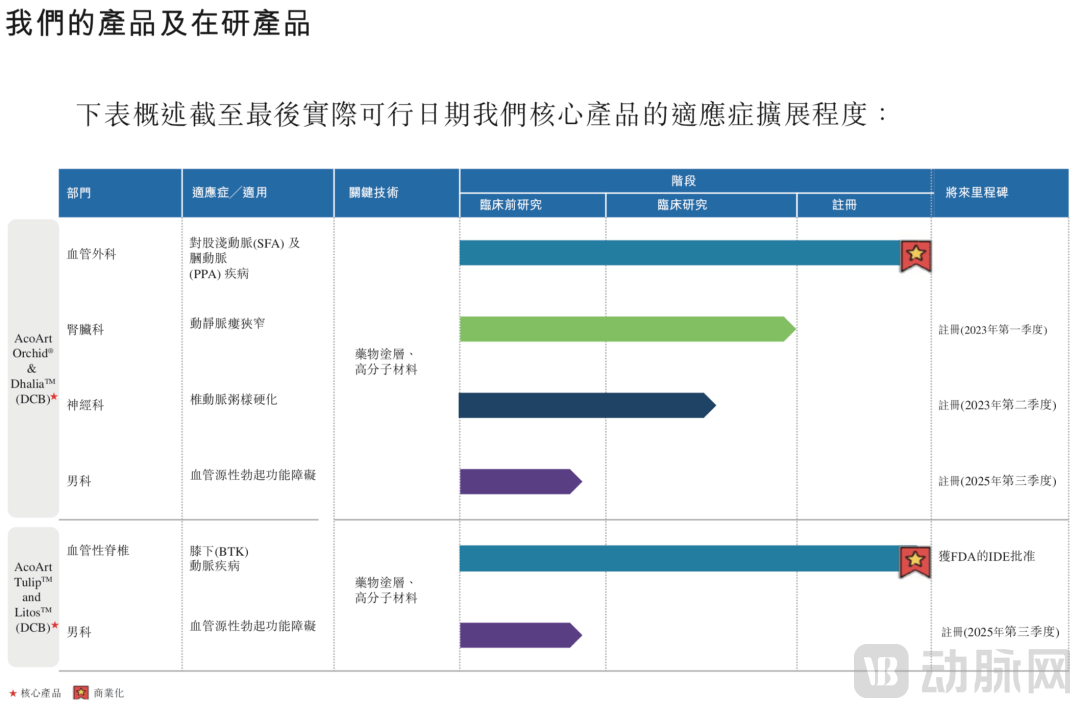
From this perspective, acotec is already building a comprehensive product pipeline.As of February 1, 2021, the Company had 24 products under development at various stages. Among these, nine products were undergoing or planned for research and development and clinical trials, and four products had initiated clinical trials in China, including the radiofrequency ablation system, the peripheral triple-wire balloon catheter, AcoArt Camellia™, and AcoArt Daisy™.
It is reported that the company plans to complete the relevant clinical trials by the end of 2022 or early 2023. Funding will be provided for the ongoing and planned research and development of the remaining 15 products in its pipeline, all of which have been exempted from the requirement for clinical trials in China in accordance with applicable laws and regulations.
While future market competition is bound to be fierce, acotec—with core products that hold further explosive potential and continuous investment in its pipeline—is certainly a company worth watching.