

Shuyi InfoTech Secures Nearly RMB 100 Million in Series C Funding to Expand Core Technological Leadership of Its NMPA-Approved Digital Therapeutic 'Shukang'
VCBeat (WeChat ID: vcbeat) has learned that Chengdu Shangyi Information Technology Co., Ltd. (hereinafter referred to as “Shangyi Information Technology”), the developer of Shukang—one of the first digital therapeutics approved by China’s National Medical Products Administration (NMPA)—has recently completed a Series C financing round of nearly RMB 100 million.
It is reported that this round of financing was jointly invested by Deyi Capital, Nanjing Fengzheng Yingtai, and Chongqing Huasen Pharmaceutical. The funds will be used to further expand Shukang’s leading advantage in its core technologies. What particularly attracted investors in this round was the substantial volume of clinical research and data already completed by RECOVERY PLUS (Chengdu Shangyi Information Technology Co., Ltd.), as well as its successful business model and experience in the U.S. market.
With the Shukang app becoming one of the first “digital therapeutic” products approved by the NMPA last November, Shukang and its developer, Chengdu Shangyi Information Technology (RECOVERY PLUS), have gradually come into the public eye and attracted increasing attention.
Shukang centers on remote intelligent assessment of cardiopulmonary, musculoskeletal, and nutritional status, combining wearable devices with scientifically formulated prepackaged medical foods. Prescribed by physicians, it enables patients to easily adhere to the regimen at home, significantly reducing the implementation cost of personalized exercise and nutritional interventions—down to one-tenth that of traditional outpatient-based care—and thereby lowering incidence, hospitalization, and readmission rates.
Lei Zhen, CEO of RECOVERY PLUS, told VCBeat that “digital therapeutics” started relatively late in China, and to this day, many people—including some industry experts—remain unclear about the distinctions between “digital therapeutics,” “digital health care,” and “digital health.”
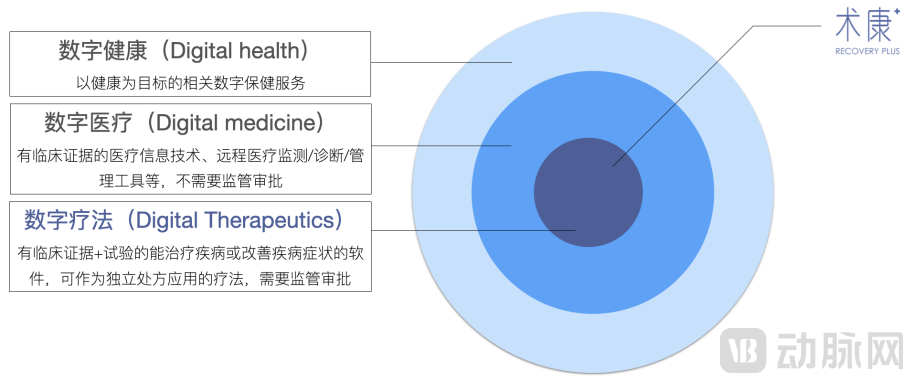
As stated in VCBeat’s 2021 White Paper on China’s First Digital Therapeutics, the three dimensions target different stakeholders. Digital health primarily targets consumers, focusing more on functions such as health tracking and social interaction. Digital medicine mainly focuses on physicians and healthcare institutions, comprising technologies, platforms, or products with an evidence-based foundation that are applicable to clinical workflows, including digital diagnostics, digital biomarkers, and remote monitoring solutions. In contrast, digital therapeutics specifically serve patients, with core functionalities driven by software to provide interventions for the prevention, management, and treatment of specific diseases.
To date, among known digital therapeutics products in China, Shukang is a product with independently demonstrated therapeutic efficacy. It is reported that over the years, Shukang has conducted 16 clinical studies on remote exercise rehabilitation and nutrition-related interventions in collaboration with more than 30 Grade A tertiary hospitals across China, including the Chinese PLA General Hospital and West China Hospital of Sichuan University. These studies covered remote home-based rehabilitation treatments for conditions such as type 2 diabetes, post-percutaneous coronary intervention (PCI) care, post-COVID-19 recovery, and knee osteoarthritis, involving more than 3,000 patients.
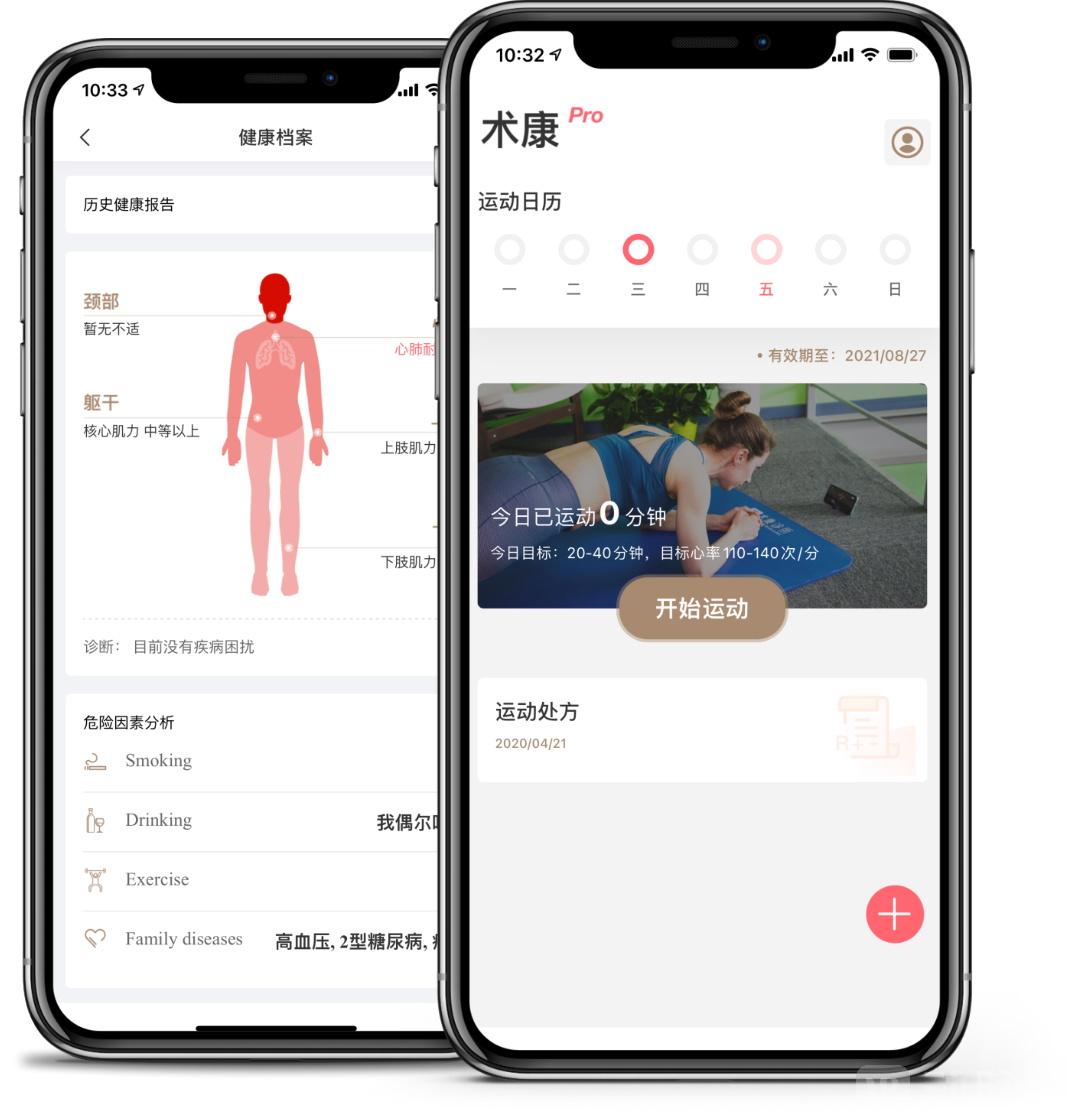
Shukang APP
Notably, in the study “Efficacy of Exercise Rehabilitation Under Remote Monitoring for Discharged Patients with Novel Coronavirus Pneumonia,” led by Professor Li Jian’an, a pioneer in rehabilitation medicine in China, RECOVERY PLUS (Shangyi Information Technology) and Changfeng Pharmaceutical served as key project participants. As the sole rehabilitation software used in the project, Shukang achieved clinical research results that exceeded expectations.
Meanwhile, Professor Li Jian’an’s team recently published the article “A telerehabilitation programme in post-discharge COVID-19 patients (TERECO): a randomised controlled trial” in THORAX, a high-impact journal with an impact factor of 10.139, sharing their research findings with the global community.
Furthermore, under the “China-Africa Pairing Hospital Cooperation Mechanism Project” advocated by the Chinese government, Professor Li Jian’an’s team will once again collaborate with RECOVERY PLUS and Changfeng Pharmaceutical to apply exercise rehabilitation under Shukang remote monitoring for the prognostic rehabilitation of discharged COVID-19 patients in Egypt. Currently, Jiangsu Province People’s Hospital, Ain Shams University Hospital in Egypt, Changfeng Pharmaceutical, and Chengdu RECOVERY PLUS have signed a four-party cooperation agreement, and the project is scheduled to officially launch this September.
In the field of nutritional science, the exclusively patented R+ Shukang Intelligent Nutritionist has completed multiple clinical studies and is currently applying for Class II medical device certification. It provides effective nutritional solutions for patients through risk screening, nutritional assessment, and nutritional therapy. When combined with medically formulated foods and dietary products developed by the Shukang Nutritional Science Team, it effectively addresses gastrointestinal intolerance in patients and significantly improves the current status of clinical malnutrition. Medically formulated foods are also a key area of focus for Huasen Pharmaceutical, one of the investors, and both parties are engaging in deep cooperation in this field.
Meanwhile, Shukang has successfully entered the U.S. market, with its home-based remote intelligent rehabilitation features officially adopted by American rehabilitation centers. This has not only enabled a six-member rehabilitation team to expand their patient caseload from 200 to 3,000, but also rapidly reduced the 30-day readmission rate for heart failure patients from 17.8% to 2.1%.
Last year, during the outbreak of the pandemic, Shukang was utilized to enhance cardiorespiratory endurance in the prognosis of patients with COVID-19. After six weeks of remote home-based rehabilitation therapy with Shukang, the patients’ average distance in the 6-minute walk test reached 588.4 meters, approaching the healthy benchmark of 624 meters for their age group, representing an average improvement of 15%.
To date, Shukang has been utilized for the rehabilitation of patients at major U.S. healthcare institutions such as Baylor Medical Center and HCA. It has entered into a cooperation agreement with BlueCross, one of the largest health insurance companies in the United States. Shukang has been included in the list of insurance-covered treatments and is currently being implemented.