

Denali Therapeutics: Overcoming the Blood-Brain Barrier to Address Unmet Needs in Neurodegenerative Diseases

Denali Therapeutics
Biopharmaceutical Manufacturer
Following the encouraging results from its Phase I/Ib study of the small-molecule LRRK2 inhibitor DNL151/BIIB122 for Parkinson’s disease, announced in May this year, U.S. biopharmaceutical company Denali Therapeutics has recently shared further good news.
The company recently announced positive results from its Phase 1/2 clinical trial of DNL310, an investigational enzyme replacement therapy for patients with Mucopolysaccharidosis Type II (MPS II, also known as Hunter syndrome). DNL310 (also known as ETV:IDS) is a recombinant iduronate-2-sulfatase (IDS enzyme) engineered to cross the blood-brain barrier and replace IDS enzyme function. The IDS enzyme breaks down heparan sulfate and dermatan sulfate in lysosomes, thereby maintaining intracellular homeostasis. In MPS II, genetic defects in the IDS gene lead to deficient or inactive IDS enzyme, resulting in the inability to degrade toxic metabolites and causing abnormalities in the skeleton, heart, respiratory system, and brain.
Denali's latest results show:DNL310 not only rapidly and effectively reduces the levels of disease-associated biomarkers in the brain, but also shows preliminary signs of improving patients' clinical symptoms.Based on this positive outcome, Denali plans to initiate a pivotal Phase 2/3 clinical trial in the first half of next year.
This latest encouraging development has undoubtedly further heightened expectations for the novel therapies being developed by Denali.
Denali Therapeutics Inc., founded in 2015 and headquartered in San Francisco, USA, is a company focused on developing drug molecules capable of crossing the blood-brain barrier, with the aim of discovering and developing therapies for patients with neurodegenerative diseases. The company is also backed by Flagship Pioneering, a top-tier U.S. venture capital firm.
Neurodegenerative diseases, characterized primarily by the substantial loss of specific neurons, are a class of progressive, severely disabling, and potentially fatal complex disorders. They can be categorized into acute and chronic neurodegenerative diseases. The former mainly includes stroke and brain injury, while the latter primarily encompasses amyotrophic lateral sclerosis (ALS), Huntington’s disease (HD), Parkinson’s disease (PD), and Alzheimer’s disease (AD).
With the deepening of population aging, neurodegenerative diseases have become a serious medical issue in modern society. However, due to the complex pathogenesis of these diseases, their mechanisms remain poorly understood. A major bottleneck in the treatment of neurodegenerative diseases is the presence of the blood-brain barrier (BBB), which hinders the effective delivery of drugs to the brain, making it difficult for many therapeutics to enter the brain and exert their pharmacological effects.
Every coin has two sides. The blood-brain barrier (BBB), composed of endothelial cells with tight junctions, exists to maintain the brain’s microenvironment and protect it from harmful substances and pathogens in the bloodstream. However, it is precisely the presence of this dense “protective” layer thatThe blood-brain barrier (BBB) prevents most drugs from reaching therapeutic concentrations in the brain; for most therapeutic antibodies, brain concentrations are only 0.1% of those in the blood, posing a significant challenge to drug development for central nervous system disorders.
Denali Therapeutics’ vision is to develop drug molecules with blood-brain barrier permeability, thereby addressing the bottleneck challenge that hinders the treatment of brain diseases.
Denali Therapeutics’ Transport Vehicle (TV) platform is a proprietary technology capable of effectively delivering intravenously administered therapeutic biologics—such as antibodies, enzymes, proteins, and oligonucleotides—across the blood-brain barrier.
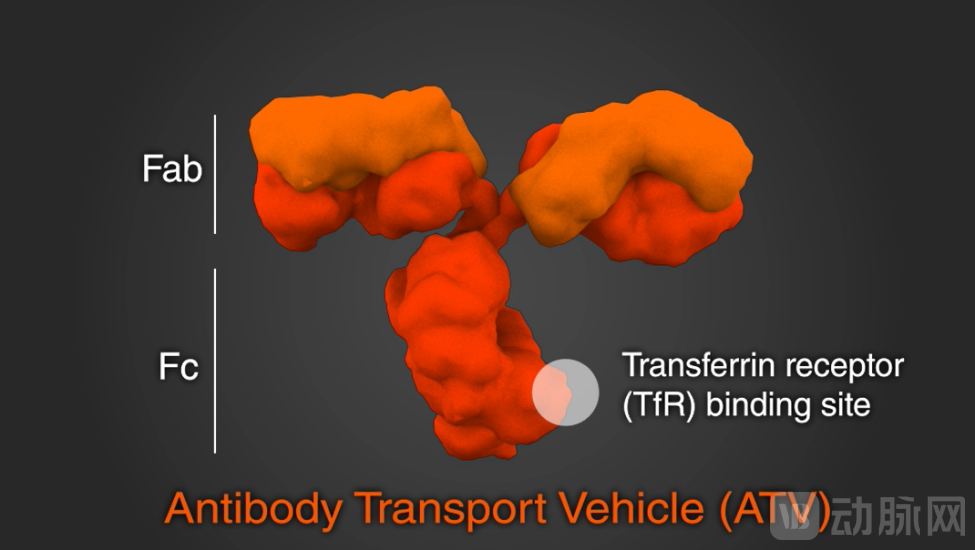
TV technology is based on an engineered Fc fragment that binds to specific native transport receptors (such as the transferrin receptor) on the blood-brain barrier (BBB) and is delivered to the brain via receptor-mediated transcytosis.
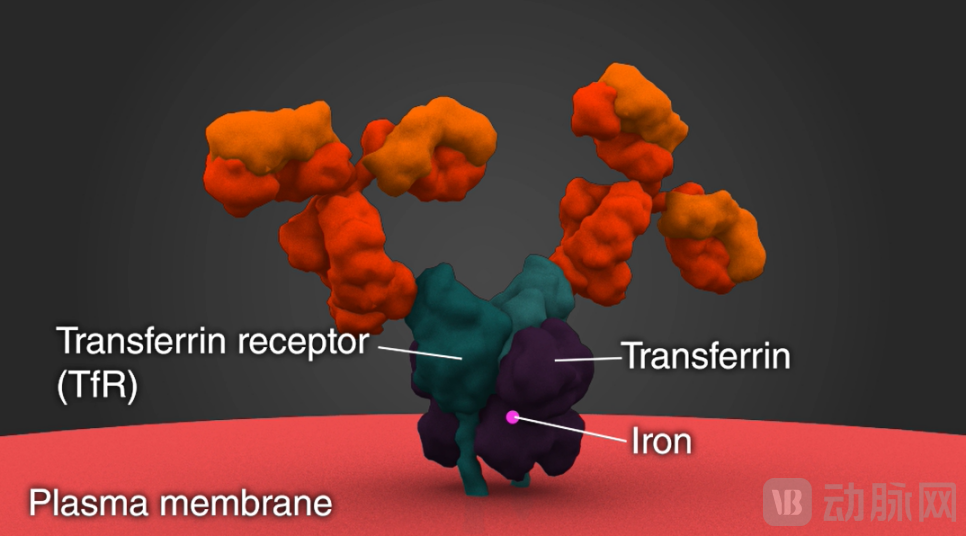
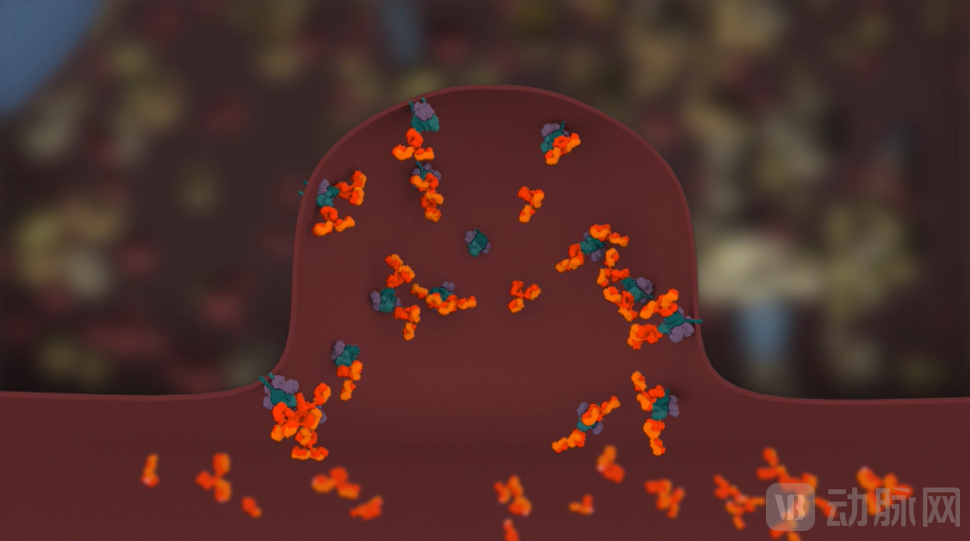
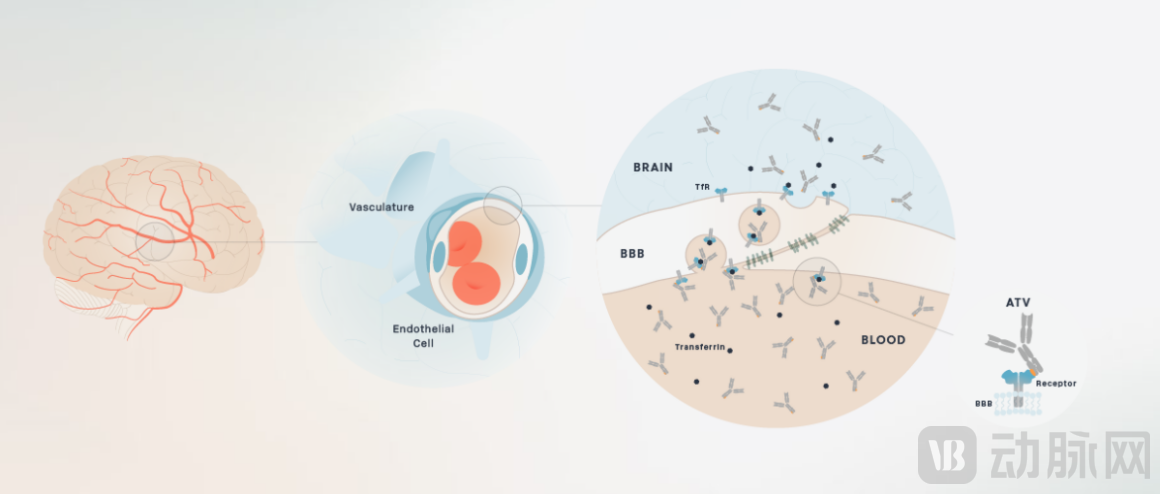
Biological macromolecular drugs designed using TV technology can cross the blood-brain barrier.
(Image source: Denali Therapeutics official website)
The Denali study demonstrated that, in animal models, antibodies and enzymes engineered using the TV technology achieved 10- to 30-fold higher brain exposure than comparable molecules not utilizing this technology. The enhanced drug exposure and widespread distribution within the brain may thereby improve therapeutic efficacy. The TV technology was designed and manufactured by Denali through its collaboration with F-star.
Denali has selected four specific pathways related to effectors of neurodegenerative disease pathology for drug development:
– Neurodegeneration-associated genes (genes that cause neurodegenerative diseases when mutated)
– Impaired intercellular material transport
– Glial Cell Dysfunction
– Axonal Functional Degeneration
Currently, Denali has established a pipeline of more than 20 product candidates targeting pathways involved in lysosomal function, glial biology, and cellular homeostasis. Among these, five products have entered clinical development: DNL151, DNL310, DNL788, DNL343, and DNL758.
Lysosome-Targeted R&D Pipeline
Lysosomes are intracellular organelles that degrade harmful or unnecessary biological macromolecules within cells, such as proteins, nucleic acids, and polysaccharides. When lysosomal dysfunction occurs, these harmful or unnecessary biological macromolecules cannot be degraded in a timely manner, leading to homeostatic imbalance and subsequent disease development. Currently, lysosomal dysfunction is considered to be associated with neurodegenerative diseases such as Alzheimer’s disease and Parkinson’s disease. Proteins related to lysosomal function include LRRK2 and alpha-synuclein (α-Syn).
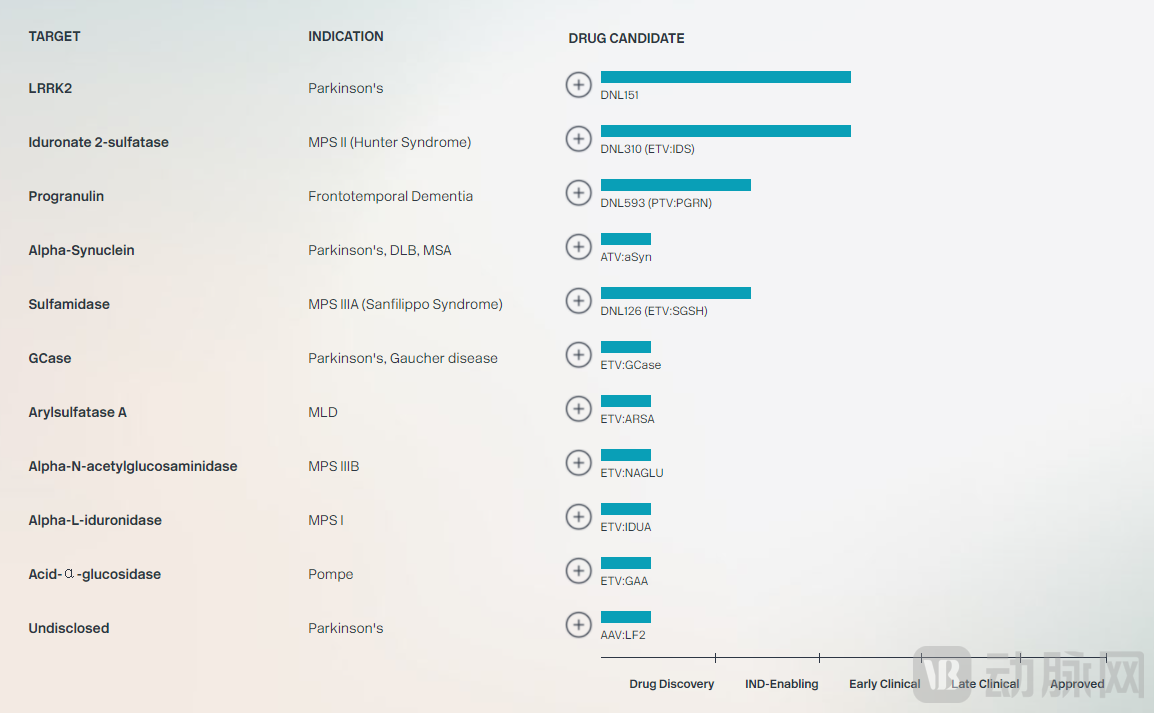
In the field of lysosomal function, Denali has laid out 11 product pipelines.. The drug with the most rapid progress based on TV technology is DNL310, which targets Mucopolysaccharidosis Type II (MPS II, also known as Hunter syndrome).Dr. Ryan Watts, CEO of Denali Therapeutics, stated that DNL310 is the company’s flagship program developed using its Blood-Brain Barrier (BBB) Transport Vehicle platform and a quintessential representation of Denali’s core scientific strategy. As this drug has already been introduced at the beginning of the article, it will not be discussed further here.
DNL151: Another Product Targeting Lysosomal Function Entering the Clinical Stage, and it is also Denali's star drug. DNL151 is a small-molecule leucine-rich repeat kinase 2 (LRRK2) inhibitor, and its Phase I/Ib clinical trial results for the treatment of Parkinson's disease were announced this May.
Clinical results from Phase I/Ib studies in healthy volunteers and patients with Parkinson’s disease demonstrated that DNL151 significantly engaged the LRRK2 target and downstream biological signaling pathways. Furthermore, it reduced urinary levels of bis(monoacylglycero)phosphate (BMP), a lysosomal lipid and biomarker of lysosomal function, in a dose-dependent manner, providing peripheral evidence that DNL151 improves lysosomal function. Denali’s Phase I/Ib data support DNL151 as a potential first-in-class oral therapy that may slow disease progression in Parkinson’s disease.
R&D Pipeline in the Field of Glial Cells
The human brain contains several types of glial cells. These cells perform various functions in the brain, including supporting neuronal health, pruning neuronal synapses, and conducting immune surveillance and immune responses. Studies have shown that neurodegenerative diseases, exemplified by Alzheimer’s disease, are considered to be associated with dysregulation of the immune system in the patient’s brain.
Microglia are immune cells in the central nervous system.Genes represented by TREM2 play a crucial role in regulating the immune function of microglia.Carole Ho, the Company’s Chief Medical Officer (CMO), stated in a public announcement: “Glial cell dysfunction acts as an accelerator of neurodegeneration. Advancing RIPK1 inhibitors into clinical trials represents a critical component of Denali’s strategy to identify novel therapeutic mechanisms for ALS and AD.”
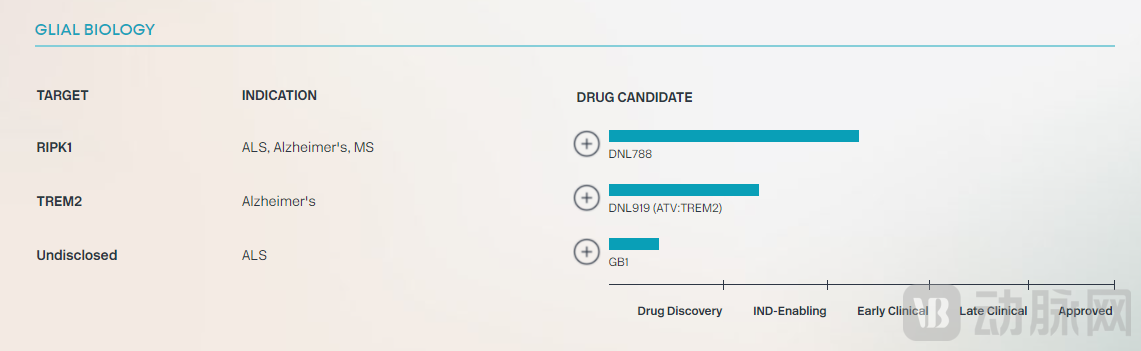
In the field of glial cells, Denali has laid out three product pipelines, among which the products that have entered the clinical stage include DNL788.A small-molecule RIPK1 inhibitor for the treatment of Alzheimer’s disease, amyotrophic lateral sclerosis (ALS), and multiple sclerosis (MS). RIPK1 is a key signaling protein in the tumor necrosis factor receptor pathway and serves as a regulator of inflammation and apoptosis. In the brain, RIPK1 influences the functional decline of glial cells by modulating inflammatory signaling pathways, holding promise for the treatment of Alzheimer’s disease, ALS, and MS.
Cellular Homeostasis R&D Pipeline
Many neurodegenerative genes directly alter cellular homeostasis in the brain. In other words, defects in protein, RNA, or metabolic homeostasis can lead to neuronal death and nervous system dysfunction. When the homeostasis of proteins or RNA is disrupted in the human body, it can result in the death of nerve cells or dysregulation of the nervous system. For example, the accumulation of amyloid β-protein in the human brain has long been considered a cause of degeneration and functional loss of neural cells. Therefore, therapies that correct cellular homeostatic defects have the potential to halt neurodegeneration.
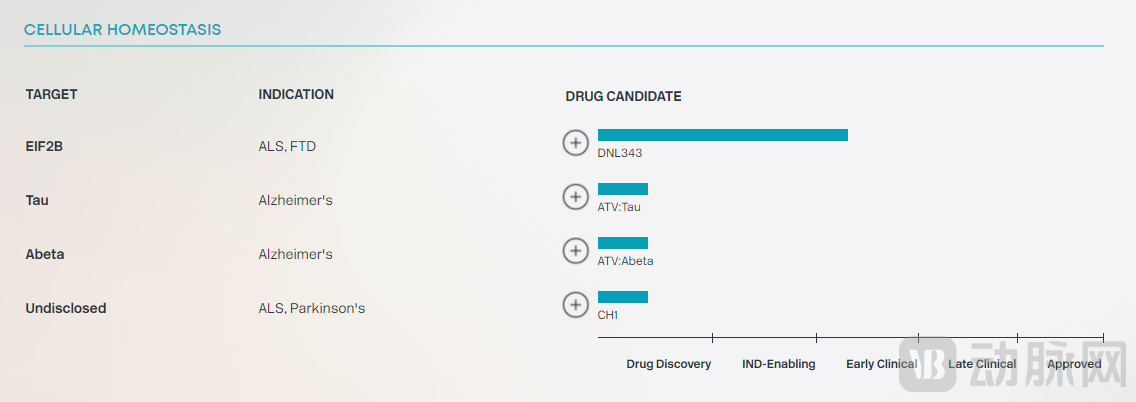
In the area of cellular homeostasis, Denali has established four product pipelines, with DNL343 among those that have entered the clinical stage.EIF2B is a key regulator of the cellular stress response, and modulating EIF2B activity has been proven effective in the treatment of many neurodegenerative diseases. DNL343 is a small-molecule drug designed to restore normal EIF2B function by recovering protein translation and RNA metabolism, thereby reducing cellular homeostasis disruptions associated with these diseases.
Other Routes
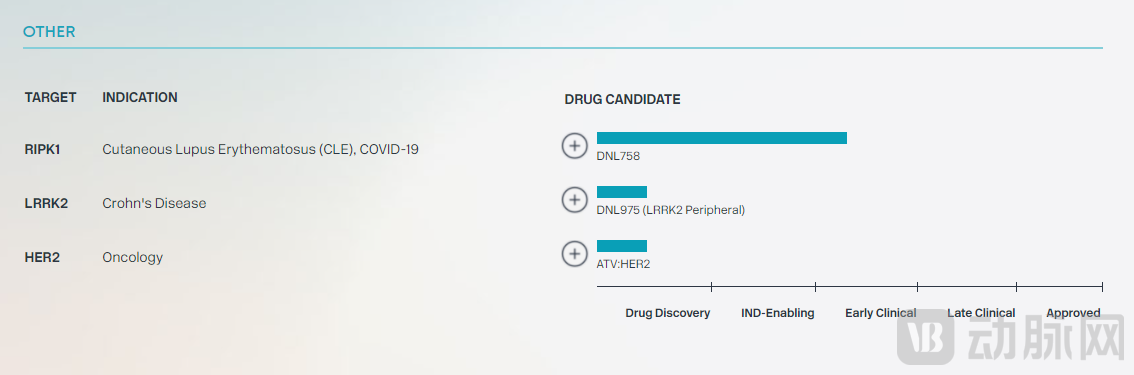
In other avenues, products that have already entered the clinical stage also include the small-molecule drug DNL758,The primary indications under development include cutaneous lupus erythematosus (CLE) and COVID-19. As previously mentioned, RIPK1 is a key signaling protein in the tumor necrosis factor receptor pathway and serves as a regulator of inflammation and apoptosis. DNL758 is also a small-molecule RIPK1 inhibitor, primarily intended for the treatment of human autoimmune diseases such as rheumatoid arthritis and cutaneous lupus erythematosus.
A noteworthy aspect of Denali’s core team is that the majority of its members hail from Genentech, a subsidiary of Roche. All three co-founders of Denali have extensive prior tenure at Genentech.

Denali’s Three Founders: From left to right, Ryan Watts, Alex Schuth, and Marc Tessier-Lavigne
(Image source: Denali Therapeutics official website)
Co-Founder & CEO Dr. Ryan WattsHe is the former Director of Neuroscience at Genentech. During his tenure, he led the company’s re-entry into the neuroscience field. The Watts laboratory focuses on drug discovery for cancer and Alzheimer’s disease, with an emphasis on understanding mechanisms of neurodegeneration guided by human genetics, as well as research on drug delivery across the blood-brain barrier.
Currently, Ryan Watts is primarily responsible for the overall strategic execution of the company. Under his leadership, Denali has advanced multiple drug candidates for the treatment of Parkinson’s disease, Alzheimer’s disease, and ALS into clinical trials.
Co-Founder & COO Dr. Alex SchuthHe previously served as Head of Technology Innovation and Diagnostics at Genentech. Prior to joining Genentech, Dr. Alex also worked in the Investment Banking Group of Merrill Lynch in London, where his responsibilities primarily focused on equity capital markets transactions. Currently, Alex Schuth is primarily responsible for portfolio management, corporate development, and legal affairs at Denali.
Since 2015, Dr. Alex has led the Denali team in building and advancing a broad portfolio of therapeutic candidates from discovery through clinical development, and has established more than 30 collaborations with academic and industry partners to accelerate the discovery and development of drugs for neurodegenerative diseases.
Co-Founder & Board Member Dr. Marc Tessier-LavigneIn 2003, he joined Genentech as Executive Vice President of Research and Chief Scientific Officer, overseeing more than 1,400 scientists in disease research and drug discovery for cancer, immune disorders, infectious diseases, and neurodegenerative diseases. In 2011, Dr. Tessier-Lavigne became President of Rockefeller University, a prominent biomedical research university in New York City, USA.
The three scientist founders possess exceptional business acumen and are all leading figures in the field of neuroscience. Within just over a year of co-founding Denali, the company secured nearly $350 million in financing from prominent investment firms, including Baillie Gifford, F-Prime Capital Partners, Arch Venture Partners, Flagship Pioneering, and the Alaska Permanent Fund.
Denali’s TV technology platform has garnered strong interest from major biopharmaceutical companies, with three blockbuster deals totaling over $1 billion in the past three years.
The collaboration with Takeda marks Denali’s first partnership agreement with a major pharmaceutical company, covering two preclinical Alzheimer’s disease candidates developed using ATV technology, with total milestone payments reaching $1.1 billion.
Biogen and Denali Therapeutics are jointly developing and commercializing DNL151, a small-molecule LRRK2 inhibitor primarily indicated for the treatment of Parkinson’s disease. Additionally, Biogen has secured the option to join two of Denali’s R&D programs, as well as first-negotiation rights for two additional programs, with total potential milestone payments amounting to up to $3 billion.
Sanofi collaborates with Denali to develop multiple small-molecule RIPK1 inhibitors for the treatment of a range of neurological and systemic inflammatory diseases, with total milestone payments amounting to $1.2 billion.
Beyond its blockbuster deals, Denali has built a global collaboration network, forging close strategic partnerships with more than 20 partners from academia, industry, and patient advocacy organizations.
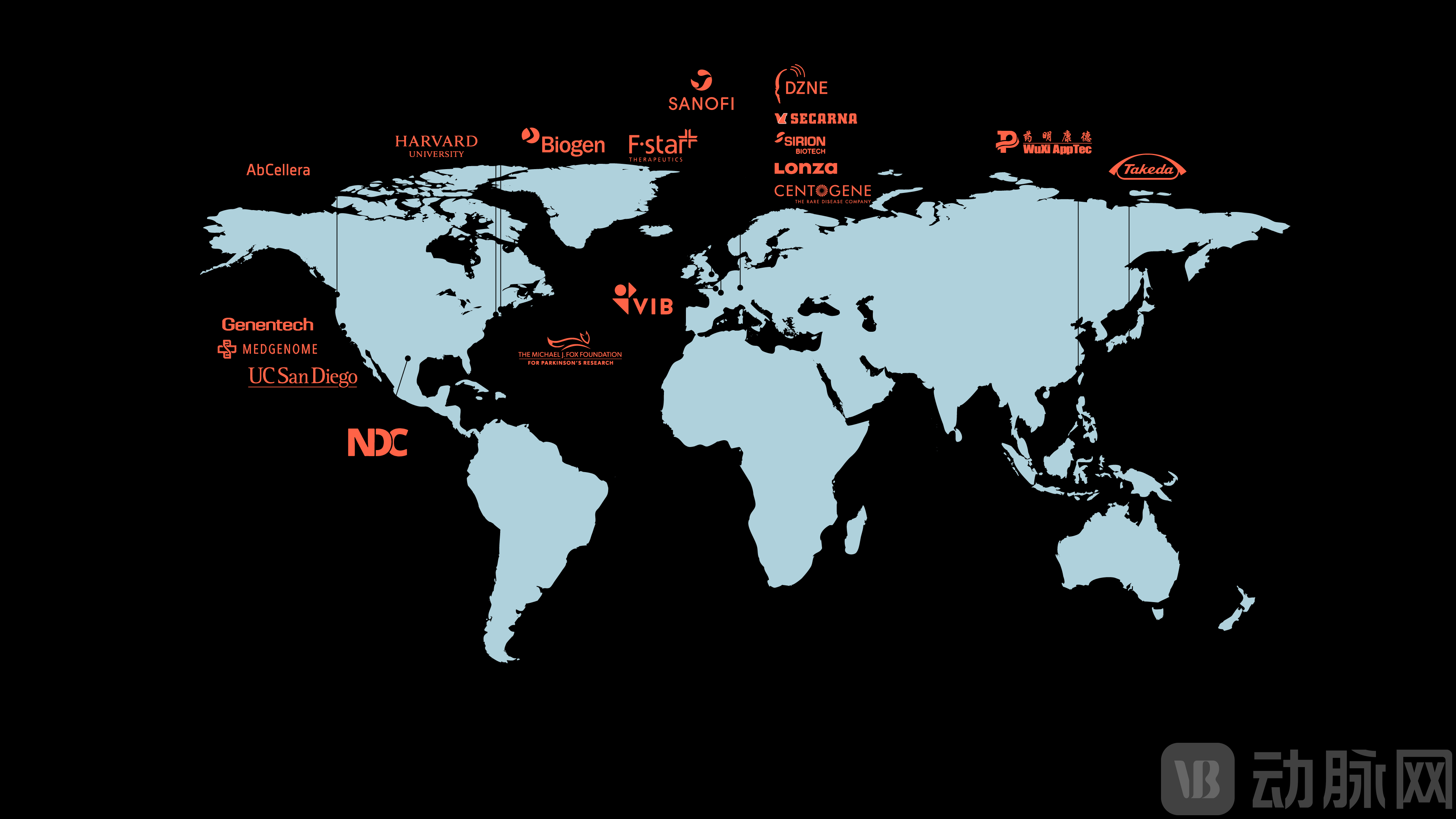
Denali Therapeutics’ Global Collaboration Network Distribution (Source: Denali Therapeutics Official Website)
In the “Mission and Vision” section of Denali’s prospectus, the founding team stated that conquering neurodegenerative diseases is akin to scaling the highest peak for Denali—hence the company’s name, Denali.[Editor’s Note: Denali, also known as Mount McKinley, is located near the central part of the Alaska Range in south-central Alaska, United States. As the highest peak in North America, it has an elevation of 6,193 meters.]

Image source: Denali Therapeutics Prospectus
For a long time, humans struggled to conquer the highest peaks. But when the time was right, bold mountaineers succeeded, thanks to technological advancements and a better understanding and assessment of conditions. Denali believes that neurodegenerative diseases today face a similar situation.
Taking Alzheimer’s disease, a neurodegenerative disorder, as an example, it represents a formidable challenge in the field of new drug development. Over the past 15 years, countless promising new molecular entities have failed in pivotal clinical trials. Among these were high-profile candidates such as Eli Lilly’s Solanezumab and Roche’s Crenezumab, where billions of dollars and decades of effort ultimately came to naught.In the past two years, the number of failed cases in the Alzheimer’s disease (AD) field has continued to rise:
In September 2019, Biogen/Eisai announced the discontinuation of another one of their Alzheimer’s disease (AD) drugs, Elenbecestat;
In February 2020, Roche’s other novel Alzheimer’s disease drug, gantenerumab, also announced the failure of its clinical trials;
In December 2020, vTv Therapeutics announced that Azeliragon had failed to meet the endpoints of its Phase II/III clinical trials and halted the drug’s development.
In January 2021, Phase II/III clinical trials showed that Biohaven’s troriluzole did not demonstrate a significant effect on therapeutic efficacy in patients with mild-to-moderate Alzheimer’s disease (AD);
In February 2021, Cortexyme’s COR388 was subjected to partial clinical hold by the FDA due to hepatotoxicity concerns.
Denali Therapeutics is one of the bold challengers tackling neurodegenerative diseases, driven by its mission to courageously ascend to the summit of its own Denali.
Reference Links:
1、https://www.denalitherapeutics.com/
2、https://mp.weixin.qq.com/s/_72_EmkH05X11spCYe0gSQ
3、https://www.crunchbase.com/organization/denali-therapeutics
4、https://www.sohu.com/a/418819537_120725181