

Reynold Lemkins China: Partnering with Enterprises in Digital Health and Innovative Drug Development
How Hot Is the Digital Health Sector, Exactly?
This issue can perhaps be illustrated using data from the capital markets:
Since 2018, global financing in the digital health sector has shown an overall upward trend. This trend became even more pronounced in 2020, with a total of 692 financing deals amounting to RMB 133.5 billion. The digital health sector has become the second most favored area for capital investment, trailing only biomedicine.
In 2021, investor enthusiasm for the digital health sector showed no signs of waning. According to incomplete statistics from VCBeat Orange,In the first half of 2021 alone, there were 465 financing events in the digital health sector, with total funding reaching RMB 111.03 billion—a figure nearly equivalent to the full-year financing amount for the digital health sector in 2020.
Capital’s bets on the digital health sector undoubtedly underscore its substantial industrial value and opportunities.
Amid the backdrop of increasingly refined regulatory policies, a gradually maturing industrial chain ecosystem, and rising health consumption awareness among residents, the digital health sector has shown strong growth momentum. Furthermore, the fluctuations brought about by the pandemic have further spurred increased capital investment in digital health and related fields.
Reynold Lemkins China is also one of the institutions choosing to increase investment in fields such as digital health.Upon recognizing the trend that “digitalization is further empowering the entire healthcare value chain, and the internet healthcare and pharmaceutical e-commerce industries are entering a phase of rapid development,” Ruikai Group, with its global investment perspective, formally entered the Chinese market in the second half of 2020 by establishing Ruikai China. This move accelerated its strategic layout in China’s healthcare and wellness sector, with investments already made in the IPOs and secondary market offerings of leading companies such as JD Health and Yidu Tech.
Value Managers Are Naturally Suited to Becoming Corporate Shareholders
Prior to formally entering China’s greater health market and establishing Rikai China, Rikai Group had already been closely monitoring the Asian market.
“We previously opened an office in Singapore and began to engage in some projects involving Chinese enterprises, although transactions were not yet frequent. In the second half of 2020, Ruikai Group officially established a representative office in China, began to focus on strategic layout in the Chinese market, and built a localized team.” Mr. Liu Haoran, Executive Director of Ruikai Group and Head of its China Region, pointed out in an interview with VCBeat that this decision was made “because Ruikai Group recognized the development opportunities in China’s healthcare market.”
Following the development strategy of Rui Kai Group, Rui Kai China’s domestic business layout is fully aligned with the group’s overall operations. Liu Haoran stated,“RuiKai China positions itself as a private equity investment firm focused on mature-stage and secondary market investments, as well as a corporate value management advisor. This dual role creates a synergistic relationship that will further leverage RuiKai Group’s advantages in capital empowerment.”
On one hand, Ruikai China serves as a corporate strategy and financial advisor, playing the role of a value manager.“Value management primarily revolves around capital operations in the primary-secondary market and the secondary market. Its purpose is to assist enterprises in transitioning from the primary-secondary market to the secondary market, guiding them from the mid-to-late stages of private equity financing toward an IPO on the secondary market, and achieving relatively healthy, long-term value growth within the constantly fluctuating, real-time, and open capital game environment of the secondary market.”
Relatively speaking, this requires institutions with more extensive experience in the secondary market to serve as a bridge between industrial and capital players, naturally bridging their cognitive gaps. By leveraging their own capital appeal and resource allocation capabilities, these institutions can achieve cross-industry resource integration. Value managers need to help companies control the pace of transition from the primary to the secondary market, coordinate the demands of various stakeholders, and avoid potential issues that may arise during the process.
On the other hand, Ruikai Group is also pursuing a diversified investment strategy on a global scale.Leveraging its backing by the Group, Rui Kai China will tap into the Group’s global resources to help domestic companies connect with international resources after investing in them, thereby better promoting the development of its portfolio companies.
“Value managers are naturally suited to become company shareholders. After investing in a company, we can also provide value management as a value-added service,” said Liu Haoran.
To better facilitate investment and value management for enterprises, Ruikai China is also committed to building its own investment research team.
Currently, the China team of Ruikai comprises over 20 members and operates through a multi-location collaborative model. Its core team is based in Beijing, with professionals hailing from top-tier financial institutions and law firms such as Morgan Stanley and King & Wood Mallesons. This team is primarily responsible for deal sourcing, transaction structuring, and execution. The Investor Relations (IR) team in Hong Kong focuses mainly on maintaining relationships with limited partners (LPs). In the United States, Ruikai has established a healthcare investment research team, whose members come from companies such as Gilead, IQVIA, and CRISPR Therapeutics, providing research and analytical support for domestic deal sourcing.
Investment in the healthcare sector accounts for 60%–70% of total investment.
RuiKai China’s primary investment sectors include healthcare and pharmaceuticals, TMT, technology, and new consumerism.
Liu Haoran pointed out,Last year, Ruikai China leaned more toward investing in sectors such as TMT and new consumption, but this year it has elevated healthcare and pharmaceuticals to a higher priority.—Such changes are driven more by their recognition of the differences between domestic and international social environments, policy reforms in China’s healthcare sector, and the opportunities emerging in the medical and pharmaceutical industries amid the post-pandemic capital boom.
Since officially entering the Chinese market last year, RuiKai China has been active in the healthcare sector.
Zhang Jingnan, founder of Sinopharm Medical Supply Chain, pointed out in an interview with VCBeat, “The injection of capital not only provides stronger support for the rapid advancement of various business segments but also helps optimize the company’s structure and governance, while fostering synergistic collaboration with strategic investors., jointly driving the continuous advancement of the enterprise and the entire field of critical care surgery.” Zhang Jingnan’s company, Sinopharm Medical Supply Chain, has engaged Reynold Lemkins China (Ruikai China), which possesses extensive experience in international capital markets, as its financial advisor to collaborate closely on corporate restructuring, capital and strategic planning, and investment introduction. Many similar collaborations exist.
In the healthcare and pharmaceutical sector,Ruikai China stated that they are focusing more on three areas:
First, innovative drugs,including small-molecule drugs, biologics, cell therapies, and gene technologies;
Second, healthcare IT companies.Against the backdrop of macro-policy shifts such as the separation of prescribing from dispensing, RuiKai China believes that healthcare IT companies will play a significant role in vertical healthcare sectors, including the integration of digitalization across medical care, pharmaceuticals, and insurance.
Third, artificial intelligence companies in the healthcare sector.including companies in AI-driven pharmaceutical R&D and AI-assisted diagnosis.
Liu Haoran expressed with full confidence,“A cohort of Chinese companies may emerge to serve the global healthcare industry, rather than being confined to serving China’s domestic healthcare sector.”Anticipating these trends has also led RuiKai China to increase its research and investment in various sub-sectors of the healthcare industry, with the aim that “healthcare investments will account for 60–70% of our total portfolio in the future.”
Liu Haoran, a graduate of MIT and the University of Hong Kong, was named to the 2020 Forbes China 30 Under 30 list and previously worked in the investment banking divisions of Goldman Sachs Group and Haitong International.He has participated in completing numerous Hong Kong and U.S. IPO projects for Chinese TMT companies, including Meituan, JD.com, and Maoyan, with total financing transaction amounts exceeding $20 billion.
His prior professional experience has given him a clear understanding of the qualities and conditions essential for a company’s long-term development, while also highlighting the importance of international resources. In particular, access to long-cycle family capital and sovereign capital proves crucial, as “healthcare is an industry that requires long-term, counter-cyclical investment.”
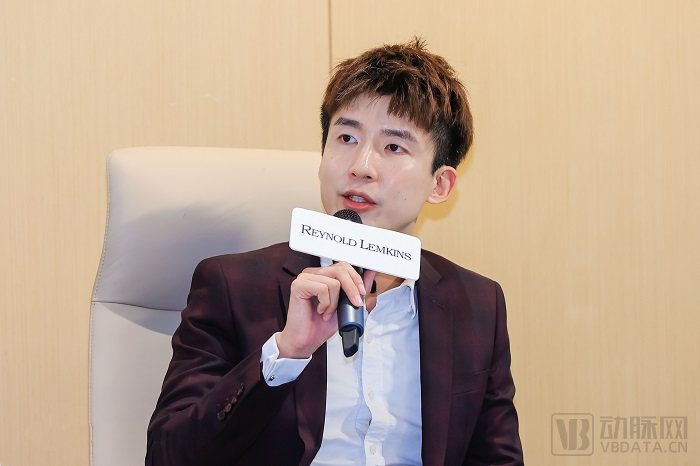
Liu Haoran, Executive Director and Head of China Region at Rui Kai Group
During the project screening process, Liu Haoran and his team at RuiKai China also have their own value preferences.“Whether the company possesses scientific research capabilities, whether it has strong commercialization practices and market capabilities, and whether its specific niche sector offers significant market development opportunities and growth potential”, these are all important factors they consider when evaluating and measuring projects.
He emphasized that a company’s long-term sustainability hinges on its scientific research capabilities. On the other hand, it is essential to align with current market demands and assess whether product pricing is acceptable to payers. Against the backdrop of evolving domestic policies in China, innovative enterprises may face heightened competitive pressures; he also noted that R&D investment requires careful long-term planning.
Building a “Industry-Academia-Research” Think Tank for Healthcare
In the process of participating in corporate investment and value management, RuiKai China is also attempting to further shift its investment stage earlier—From IPO and pre-IPO stages to the project growth phase.To better achieve this goal, while deeply investing in China’s healthcare sector, Ruikai China also plans to establish an industry-academia-research platform to facilitate the commercialization of academic research outcomes and accelerate the robust growth of China’s healthcare industry.
This decision was made because RuiKai China observed that there is a vast amount of underutilized laboratory research outcomes, patents, and other intellectual property at domestic universities and research institutions, representing significant potential.RuiKai China has chosen to establish an open industry-academia-research think tank, which better assists university researchers and scientists in screening commercially viable technology patents, helping bring scientists’ patents from the laboratory to society, thereby promoting the development of innovative business models.Furthermore, the expert think tank for industry-academia-research collaboration also serves, to some extent, as a strategic advisory body for Ruike China in uncovering the insights behind projects.
To better build an industry-academia-research think tank,Recai China is currently establishing collaborations with major universities, such as the University of Hong Kong, Nankai University, and Peking University. Additionally, Recai China is also engaging in partnerships with overseas laboratories., such as partnering with the world-renowned Memorial Sloan Kettering Cancer Center in the United States to help implement some of its projects in China.
In China, Ruikai China has co-hosted forums in the healthcare sector with the Beijing Municipal Health Commission, the Beijing Association for Trade in Services, and The University of Hong Kong this year to strengthen exchanges and cooperation among all parties. Meanwhile, it will jointly host a sub-forum on the healthcare industry and investment with AstraZeneca (China) at the China International Fair for Trade in Services in early September.
With its relatively mature industrial network, Ruikai China is better positioned to facilitate the connection between laboratory projects and the industrial sector. Leveraging the Group’s financial strength and overseas resources, Ruikai China will further deepen the integration of corporate resources in the later stages, fostering synergistic development within the industrial ecosystem.
By connecting top scientists, entrepreneurs, policymakers, universities, research institutions, traditional and innovative enterprises, and investment firms within the industry, Ruikai China accumulates high-end industrial resources. While building a robust pipeline of first-hand project reserves, Ruikai China continuously promotes the technological translation of academic and scientific research achievements, thereby accelerating the development of China’s healthcare sector. This will also be the key direction for Ruikai China’s future strategic expansion.