

Computational Medicine White Paper Released: Data and Computing Are Accelerating the Transformation of Medicine
With the rapid accumulation of data and the accelerated iteration of methodologies, the future paradigm of medicine will shift toward Computational Medicine (CM), which is driven primarily by data and computational approaches. Leveraging computational models and high-performance computing technologies, this new medical paradigm seeks to understand life processes and disease mechanisms with high fidelity to reality. It will enhance capabilities in disease prediction, clinical diagnosis and treatment, and health maintenance, thereby enabling personalized decision-making. This transformation has the potential to fundamentally reshape the entire medical landscape, ranging from individual patient care to policy formulation.
Recently, the Zhejiang Digital Medical and Health Technology Research Institute, Zhejiang Shuren University, and VCBeat jointly released the white paper titled “Computational Medicine: A New Paradigm for Medical Development in the Era of Digital Intelligence.” The white paper posits that computational medicine is accelerating the transformation of the entire medical field.
For ease of reading, this article has been abridged from the white paper without altering its original meaning.To download the original white paper, please scan the QR code at the end of the article.
Medical practice has always been characterized by considerable uncertainty. To address this uncertainty in clinical decision-making, traditional medicine typically relied on professional judgment derived from accumulated experience, which later evolved into a systematic evaluation of research through the framework of evidence-based medicine (EBM). However, as EBM primarily relies on population-level evidence, it often fails to adequately account for individual variability.
With the continuous emergence of new testing methods and tools, such as gene sequencing, diagnostic and laboratory equipment, and wearable devices, it has become possible to acquire health and disease data at various scales for individuals. This has also led to an exponential growth in healthcare-related data. Meanwhile, big data provides physicians and clinical researchers with more comprehensive and granular dimensions to understand the onset and progression of diseases, significantly expanding the depth and breadth of medical research.
Processing these complex datasets has far exceeded the capabilities of individual practitioners, creating an urgent need for novel approaches and tools to help physicians discern patterns from multidimensional, three-dimensional, and integrated data, thereby enabling more precise disease prediction, prevention, diagnosis, and treatment. Consequently, computational medicine, centered on data and computational methodologies, has emerged and is rapidly evolving. This trend signals a paradigm shift in the future development of medicine.
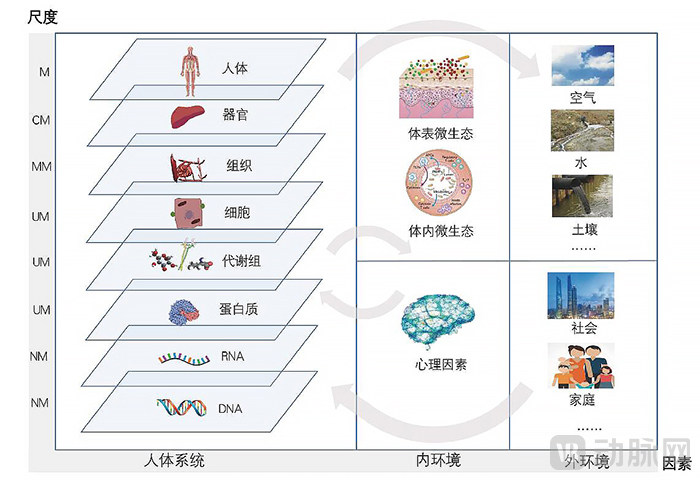
“Human” System: Data Dimensional Scales
As early as the 1980s, research into the application of computational technologies in the field of medicine had already begun. By 1994, at the inaugural Conference on Computational Medicine, Public Health, and Biotechnology held in Austin, United States, computational medicine had started to emerge as a significant frontier in medical research. Nevertheless, it remained a highly niche area of study at the time, with only a small fraction of biomedical scientists employing computational methods for mathematical modeling.
In October 2012, Raimond L. Winslow, Professor of Biomedical Engineering at Johns Hopkins University in the United States, published a review article titled “Computational Medicine: Translating Models to Clinical Care” in Science Translational Medicine. In the article, he pointed out that computational medicine had moved from theory to practice. Winslow is thus widely recognized as the founder of the emerging field of computational medicine.
In recent years, with the rapid accumulation of data and the continuous maturation of big data processing and mining methods, artificial intelligence approaches, represented by deep learning, have achieved remarkable accomplishments in fields such as image recognition and natural language processing. These innovations in data and technology have also propelled computational medicine into a new cycle of rapid development.
So, what is computational medicine? Definitions of this concept vary slightly in detail among different experts and institutions. For example, the interpretations offered by New York University and Johns Hopkins University represent two distinct emphases in their definitions.
New York University describes computational medicine from the perspective of the relationship between computational technology and medicine as “the use of data-driven analytics to uncover the structure, function, and evolution of complex dynamic biological systems.” The Institute for Computational Medicine at Johns Hopkins University places greater emphasis on the value of computational technologies to medicine: “Computational medicine is an interdisciplinary field at the intersection of computer science and medicine, where computational methods are developed to understand human disease. Mathematics, informatics, and computational models are applied to provide insights into the mechanisms, diagnosis, and treatment of diseases, ultimately improving patient care.”
As an emerging discipline, computational medicine centers on applying mathematics and computational science to elucidate the mechanisms of human diseases, thereby providing novel insights for medical services and enhancing the quality of disease diagnosis and treatment. Broadly speaking, all aspects of medical research that leverage computers and computational models to support healthcare delivery fall within the scope of computational medicine.
Another discipline closely related to computational medicine is Computational Biology. According to the definition by the U.S. National Institutes of Health, computational biology refers to the discipline that develops and applies data analysis and theoretical methods, mathematical modeling, and computer simulation techniques for the study of biological, behavioral, and social group systems.
It is not difficult to observe that computational medicine and computational biology share certain overlaps, such as in the field of computational genomics. Relatively speaking, computational biology, as a branch of biology, belongs to basic science and primarily provides foundational support for medical research; whereas computational medicine leans more toward applied science, focusing on research related to human health and disease.
The research focus of computational medicine has roughly undergone three stages of evolution: the stage of human body simulation and computational modeling, the stage of gene big data-driven applications in computational medicine, and the stage of artificial intelligence-based computational medicine and its applications. Along with the development of modern medicine toward both microscopic and macroscopic levels, the scope of computational medicine has gradually expanded to include fields such as computational genomics, medical informatics, computational neurogenetics modeling, computational neuroscience, human body modeling, digital humans, and precision medicine.

The Connotation of Computational Medicine as Expounded by Tan Guangming, Director of the High-Performance Computer Research Center at the Institute of Computing Technology, Chinese Academy of Sciences
As a highly challenging interdisciplinary field, computational medicine requires the integration of knowledge from computer science, mathematics, statistics, biochemistry, chemical engineering, biomedical engineering, biophysics, molecular biology, genetics, ecology, anatomy, and other disciplines.

Theoretical Foundations of Computational Medical Research
Computational medicine involves the use of modern mathematical tools to construct mathematical models of biological entities, thereby imposing high demands on mathematical proficiency, particularly in dynamical systems and probability theory. Calculus and linear algebra serve as the foundational pillars for both dynamical systems and probability. Other essential prerequisite knowledge includes fundamentals in biology, medicine, computer science, and engineering.
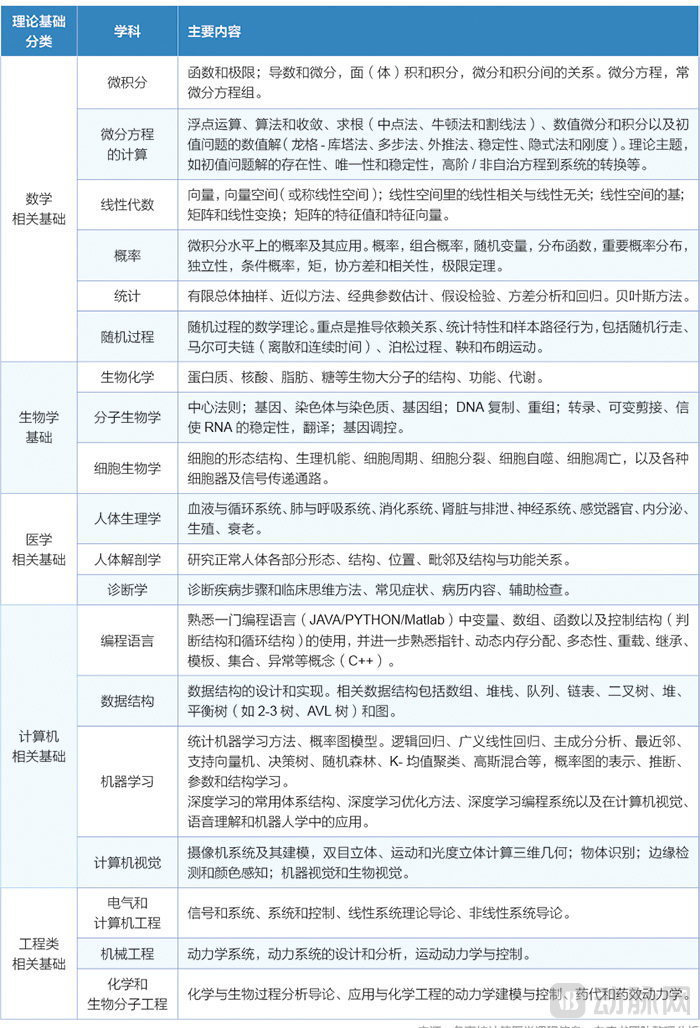
# Core Disciplines and Foundational Knowledge in Computational Medicine
The white paper conducted a search in the ZhiLing Global Research Project Database and identified a total of 3,417 projects from the past decade whose titles or keywords contained terms related to computational medicine, followed by an analysis of these projects.
Global research funding in computational medicine has fluctuated significantly over the past decade. Notably, in 2019, both total global R&D expenditure and average per-project R&D investment in computational medicine reached their highest levels on record.
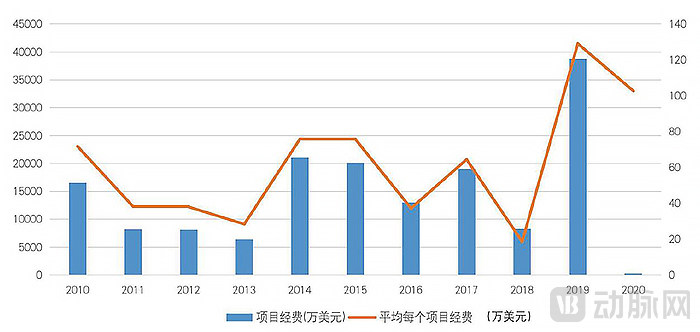
Global Investment in Computational Medicine Research Over the Past Decade
In terms of country distribution, the top three countries with the highest R&D expenditure were the United States, Belgium, and the United Kingdom, while the countries with the highest average project R&D expenditure were Belgium, Slovakia, and Australia.
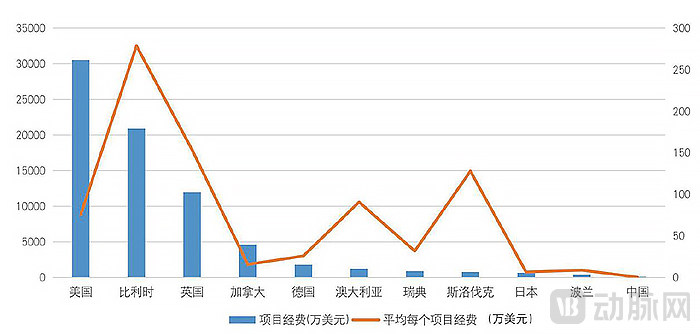
Medical R&D Investment by Country
The start dates of the top 10 projects by R&D expenditure are primarily concentrated within the last five years, with key investments directed toward areas such as research center construction, infrastructure development, talent cultivation, and personalized therapy.
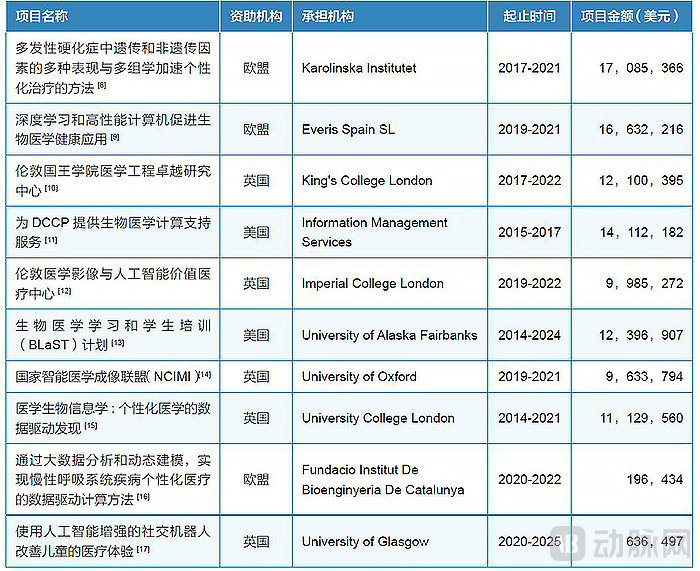
Top 10 Global R&D Investment Projects in Computational Medicine Over the Past Decade
To examine the overall development, key research areas, and evolutionary trends of computational medicine, this white paper also analyzed a sample of 5,257 publications indexed in the Web of Science Core Collection under the topic “computational medicine” from 1900 to the present.
Based on the publication dates, the relevant literature spans from 1980 to 2021. Since the turn of the century, global interest in computational medicine research has continued to rise, with a rapid increase around 2010, showing an accelerating trend. The research trends in China and the United States are basically consistent with the global trend.
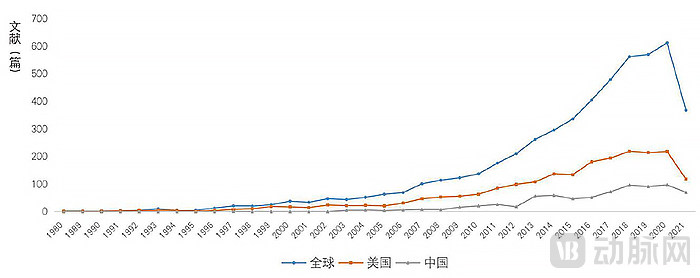
Comparison of the Temporal Distribution of Publications in Computational Medicine Research, 1990–2021
The top three countries by publication volume are the United States (2,154 articles), China (761 articles), and the United Kingdom (499 articles). Based solely on publication volume, China still lags behind the United States in terms of research attention.
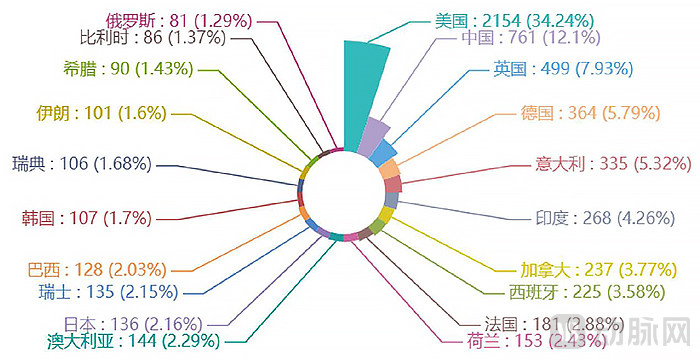
Distribution of Countries by Publication Volume in Computational Medicine
Among the top ten institutions by publication volume, nine are based in the United States, primarily comprising universities such as Johns Hopkins University, Harvard Medical School, and Stanford University. This indicates that the U.S. has established influential research centers in the field of computational medicine. Although only one Chinese institution—the Chinese Academy of Sciences—ranked among the top ten, its second-place position, closely trailing the leader, demonstrates significant potential for development.
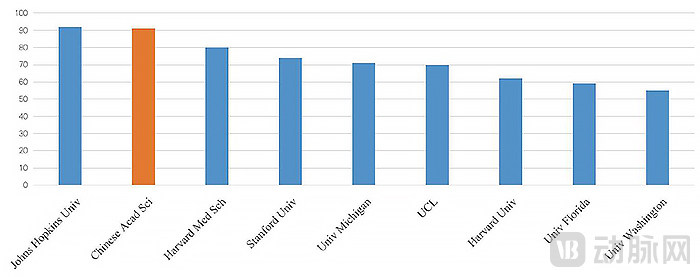
Number of Publications by the Top Ten Institutions in Computational Medicine
The top 10 journals by publication volume published a total of 832 articles on computational medicine (15.83%). Among them, Medical Physics ranked first with 385 articles (7.32%), while Briefings in Bioinformatics, which has the highest impact factor, ranked sixth in terms of publication volume.
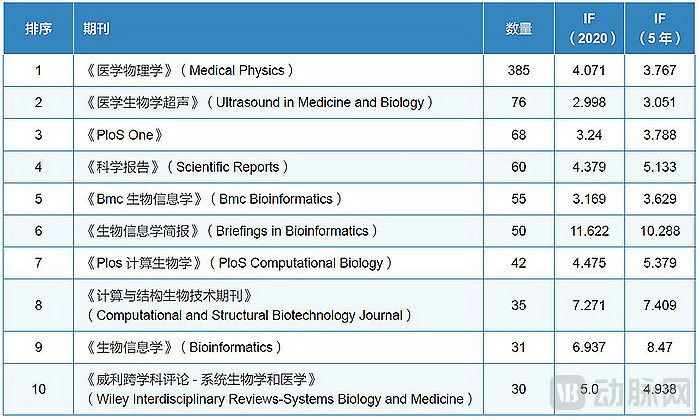
Overview of the Top 10 Journals by Publication Volume in the Field of Computational Medicine
Computational medicine, as an interdisciplinary field at the intersection of medicine, engineering, and computer science, represents a shared area of cross-disciplinary research. Bibliometric analysis by subject category indicates that computational medicine is closely related to radiology, nuclear medicine, and medical imaging; biochemistry and molecular biology; mathematics and computational biology; computer science and interdisciplinary applications; pharmacology and pharmacy; biomedical engineering; biochemical research methodology; general engineering; electrical and electronic engineering; multidisciplinary sciences; and computer science and artificial intelligence.
An analysis of the keyword statistics from the literature reveals that the top ten keywords in the medical field are: model, cancer, expression, prediction, simulation, identification, systems biology, precision medicine, system, and algorithm.
Research focus varies by country. China and the United States cover a broad spectrum of research areas, with relevant literature available for various research keywords.
In terms of specific comparisons, the top three research keywords in China are drug discovery, precision medicine, and prediction, while those in the United States are precision medicine, model, and machine learning.
In terms of the number of publications on research keywords, China lags significantly behind the United States in five areas: model construction and simulation in computational healthcare technologies, as well as precision medicine and personalized medicine within the research and application of machine learning.
An analysis of the evolution of research hotspots across various countries over the past two decades reveals that computational medicine is shifting from foundational research, such as theories and models, toward applied research.
Prior to 2009, research topics across various countries were highly diverse, with a relatively concentrated focus on “method” and “model.” These topics emerged as research hotspots in Japan (2002–2009) and the United States (2006–2009), respectively.
Since 2010, research hotspots in computational medicine across various countries have shown increasing overlap. Among these, “cancer” emerged as a research hotspot in the field of computational medicine in multiple countries between 2014 and 2017; “expression” successively became a key research focus in South Korea, the United Kingdom, and China; and from 2018 to 2021, “precision medicine” became a research hotspot in the field of computational medicine in the United States.
By performing keyword clustering on the aforementioned 5,257 relevant publications from 1980 to 2021, ten distinct clusters in computational medicine were identified. The top three clusters are “Precision Medicine,” “Machine Learning,” and “Computational Research.” “Computational Research,” which encompasses drug discovery activities such as virtual screening and target identification, represents a recent research direction, with an average publication year of 2013.
These clustering results can be primarily divided into three categories: the first category comprises research related to computational modeling, ranging from early radiological modeling to hemodynamic modeling, Monte Carlo simulations, and studies on radiation and disease. Among these, the most prominent keywords are "model," "simulation," and "system."
The second category comprises research related to computational omics, primarily including studies on gene sequences, non-coding RNAs, and genomics applications, with expansion into precision medicine and drug screening. Its key nodes include cancer, databases, and gene expression.
The third category comprises AI-related research, including the fields of machine learning and precision computed tomography applications.
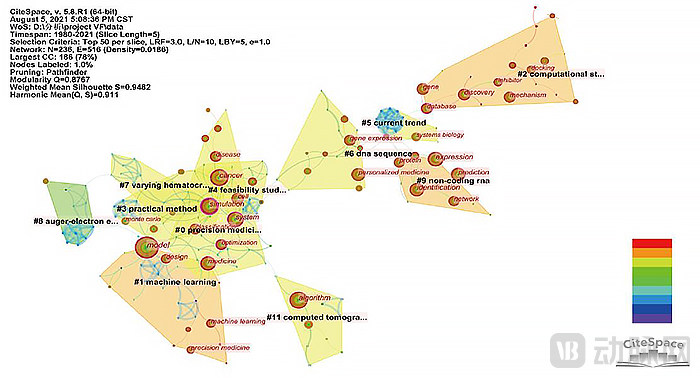
Keyword Clustering Map in the Field of Computational Medicine, 2010–2021
The machine learning subfield spans from 1990 to 2021, representing the longest time span among all clusters, which reflects the sustained application of machine learning technologies in computational medicine. Around 2010, computational models became a research hotspot in this field; from 2010 to 2013, the high co-occurrence of computational models and big data indicated a surge in research interest in developing data-driven computational healthcare models. After 2016, research hotspots in machine learning within computational medicine concentrated on precision medicine. Most recently, the focus has shifted primarily to deep learning.
Currently, academic institutions specializing in computational medicine primarily categorize research in this field into the following two types:
From a medical perspective, computational medicine can be categorized into computational physiology, computational anatomy, computational pathology, and other subfields. This classification approach is additive in nature, meaning that corresponding computational science disciplines can be established for each existing branch of medical research.
Classifications from the perspectives of basic research and clinical application involve independent investigation of common fundamental issues, primarily focusing on technical aspects such as algorithm development and mathematical modeling. Clinical applications are similar to methodological classifications from a medical perspective but are slightly less granular.
This article integrates two dimensions and, following a chronological sequence, categorizes the research scope of computational medicine into the following four areas:

Core Research Areas of Computational Medicine
Computational Medicine Basic Research Centered on Model Construction
Computational medicine, with model construction at its core, is primarily divided into two major categories: computational anatomy—mathematical modeling of the human body—and computational physiological medicine—quantitative analysis of system mechanism models.
Computational Anatomy - Mathematical Modeling of the Human Body
The precise identification of anatomical differences between healthy and diseased individuals constrains the advancement of medical care. Understanding the evolution and disparities between these two structural states requires integrating human anatomy with computational technologies and mathematical theoretical methods, giving rise to the field of computational anatomy.
Computational anatomy involves techniques such as image processing, digital set processing, and mathematical modeling, accelerating the development of anatomy by digitizing human anatomical structures. It conducts comparative analyses of morphology and function between individual and population-level anatomical data, enabling disease diagnosis, treatment evaluation, and prognosis assessment from an anatomical perspective, thereby serving as a foundational component for subsequent diagnostic and therapeutic interventions.
The “Visible Human Project,” proposed in the 1980s, is a typical example of computational anatomy. The primary focus of the Visible Human Project is to convert two-dimensional cross-sectional slice images of the human body into digital data representing anatomical structures through computerized processing. Using three-dimensional reconstruction techniques, these data can further generate more intuitive three-dimensional models of human anatomical structures.
In 1986, the U.S. National Library of Medicine (NLM) launched the Visible Human Project (VHP), creating publicly available, comprehensive, and detailed 3D anatomical image data of the human body based on MRI, CT, and anatomical images.
After years of data acquisition, the Visible Human Project male and female datasets were released in 1994 and 1995, respectively. As of July 2019, the U.S. National Library of Medicine (NLM) had granted access licenses for approximately 4,000 datasets to 66 countries and regions. Since 2019, the VHP datasets have been made fully open-access, allowing direct use without the need for a license.
These datasets are primarily used as references for human anatomy research, as public-domain data for testing medical imaging algorithms, and as testbeds and models for building web-accessible image libraries. They are widely applied in education, diagnosis, treatment planning, virtual reality, art, mathematics, and industry.
The first Chinese Visible Human (CVH) project was completed by the Third Military Medical University (now the Army Medical University) over a three-year period. The research team completed data acquisition for the first male dataset in August 2002 and finished computer-based 3D visualization research in October of the same year. In February 2003, China completed data acquisition and research for the first digital visible Chinese female human.
Currently, under the leadership of Professor Zhang Shaoxiang, the Institute of Digital Medicine at Army Medical University has acquired eight complete whole-body digital human datasets, as well as organ-specific datasets for the heart, liver, brain, and knee joint. The institute has also constructed segmentation datasets and three-dimensional reconstruction models of whole-body organs for both male and female subjects. These datasets will be utilized for both basic and applied research.
Computational Physiology and Medicine: Quantitative Analysis of System Mechanism Models
Computational physiology and medicine typically model the human body as a single complex system through multi-level modeling, personalize these models using patient data, and apply them to improve disease diagnosis and treatment. Currently, computational models are usually developed from data obtained in animal models of disease and then specialized using limited human datasets.
Based on different methodologies, computational physiology features two major research directions in modeling approaches: mechanical modeling and mechanistic network models. Multiscale modeling methods can be applied to the diagnosis, treatment, and disease prediction of conditions such as cancer, diabetes, and cardiovascular and neurological disorders. Representative examples in computational physiology include SimVascular, an open-source software for cardiovascular simulation, and HumMod, a comprehensive Windows-based human physiology model developed by the University of Mississippi Medical Center.
Computational Genomics Research Driven by Massive Genomics Data
Genomics is a discipline that primarily employs data-driven approaches as its core research methodology. The processing of large-scale genomics data inherently requires the use of computational technologies. Consequently, machine learning methods and traditional statistical methods have been widely applied in genomics.
The Human Genome Project (HGP) was officially launched in 1990, with the aim of determining the nucleotide sequence of the 3 billion base pairs contained in human chromosomes (haploid), thereby mapping the human genome. Through global collaboration, a draft of the human genome was released in 2001, covering approximately 94% of the human genome.
However, neither humans nor machines can directly interpret the vast data of the human genome. To decode the human genome, computational genomics has emerged. Early research in computational genomics focused on applying mathematical and statistical algorithms to annotate and understand genes. Furthermore, computational genomics has expanded from gene annotation to fields such as epigenomics and transcriptomics, aiming to elucidate the complex biological processes of the human body, an organism composed of diverse cell types.
The emergence of omics measurement methods, such as genomics, epigenomics, and transcriptomics, has led to a surge in omics data, further posing challenges to omics data processing methodologies. Following pioneering research in 2015 that demonstrated the applicability of deep neural networks to DNA sequence data, the use of deep neural networks for processing omics data has become a prevailing trend.
Research on AI-Based Computational Healthcare Applications
Artificial Intelligence (AI) applications in the medical field represent one of the most rapidly advancing areas within computational medicine in recent years. AI is widely utilized to assist in disease diagnosis, enhance medical image quality, reduce ionizing radiation exposure, provide precise medical recommendations, and lower healthcare costs, thereby significantly driving progress and innovation in healthcare delivery models.
Medical data, particularly medical imaging data—such as the vast amounts of information generated by X-ray, computed tomography (CT), magnetic resonance imaging (MRI), and molecular imaging with positron emission tomography (PET)—provide valuable research and clinical data for the development of AI systems that rely on large-scale big data.
Since 2012, the rapid rise of deep convolutional neural network technology has driven breakthrough advancements in AI. Broadly speaking, the applications of AI in biomedicine can be categorized into three areas: computer-aided diagnosis, personalized patient treatment, and the improvement of human well-being.
Taking oncology, the most extensively studied field in computational medicine, as an example, artificial intelligence technologies can be applied in clinical oncology for cancer risk prediction, screening, diagnosis, and treatment. The complexity of algorithms is typically determined by the volume, heterogeneity, and dimensionality of such data, with different types of data being emphasized across various stages.
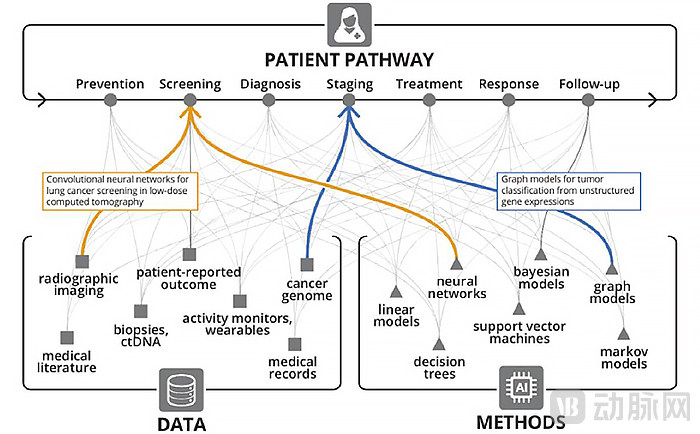
AI-Driven Computational Oncology Research Pathways
In more classic applications, numerous studies have been published on the use of deep learning techniques for segmenting brain tumors or secondary lesions in diagnostic neuroradiology. Another highly significant application of deep learning in oncology lies in predicting toxicity, treatment response, and prognosis, thereby providing clinicians with valuable decision-support systems.
Computational Medicine Research for Precision Medicine
Precision medicine is a medical concept and model centered on personalized healthcare. Its core principle is patient-centricity, leveraging cutting-edge technologies such as genomics and bioinformatics to precisely identify the underlying causes of disease onset and progression, define therapeutic targets, and deliver individualized, precise treatment.
Precision Surgical Design in Rhinology: An Application of Precision MedicineA research team at Sun Yat-sen University has leveraged computer-based refined modeling of the nasal cavity and paranasal sinuses for precision surgical design. By employing computational medical modeling and computational fluid dynamics (CFD) techniques, three-dimensional visualization of patients’ lesions can be achieved. This enables physicians to thoroughly analyze the patient’s condition, simulate surgical procedures, and predict postoperative outcomes, thereby identifying the optimal surgical approach. Ultimately, this facilitates the formulation of a surgical plan that maximizes lesion resection while preserving nasal physiological function to the greatest extent possible.
In the treatment of malignant tumors using precision medicine approaches, computational medicine methods also play a crucial role. By inputting patients' genotypic data into computational models that predict the efficacy of anticancer drugs, these models can output the patient's sensitivity to single or multiple drugs, thereby helping physicians select the most suitable therapeutic agents for individual cancer patients and achieving precision oncology care.
To address the challenges posed by the paradigm shift toward computational medicine and to further advance research in this field, universities and research institutions worldwide have established dedicated entities focused on computational medicine. For instance, the University of California, Los Angeles (UCLA) renamed its former Department of Biomathematics to the Department of Computational Medicine several years ago. Other prestigious institutions, including Johns Hopkins University, Stanford University, and the University of Oxford, have also introduced related academic programs. At these universities and research institutes, computational medicine exists either as an independent department or as a division within an existing department.
In China, apart from Shandong University’s graduate program, which has adopted the title “Computational Medicine,” no other universities have established dedicated departments or majors explicitly named Computational Medicine. Research in computational medicine remains primarily housed within disciplines such as Biomedical Engineering and Medical Informatics. Notably, the recently emerging field of Intelligent Medical Engineering, which focuses on AI-driven medical research, can be regarded as a subdiscipline of computational medicine.
Johns Hopkins University is currently the leading institution in this field. Its Institute for Computational Medicine, affiliated with the Department of Biomedical Engineering, primarily aims to develop quantitative computational models related to human diseases and enable their personalized application to improve disease diagnosis and treatment.
The Institute of Computational Medicine has developed a systematic undergraduate curriculum in computational medicine. The program extensively covers specialized content in computer science, applied mathematics, and engineering. The overall curriculum design aligns with the interdisciplinary nature of computational medicine, which integrates medicine, engineering, and information technology, placing strong emphasis on building a solid foundation in mathematics, informatics, and engineering during the training process.
It is worth noting that computational medicine at Johns Hopkins University is merely one research focus within its Department of Biomedical Engineering, primarily concentrating on model construction across various medical fields. Meanwhile, related topics such as machine learning, cloud computing, genomics, and medical image information processing are addressed in other research directions within the same department.
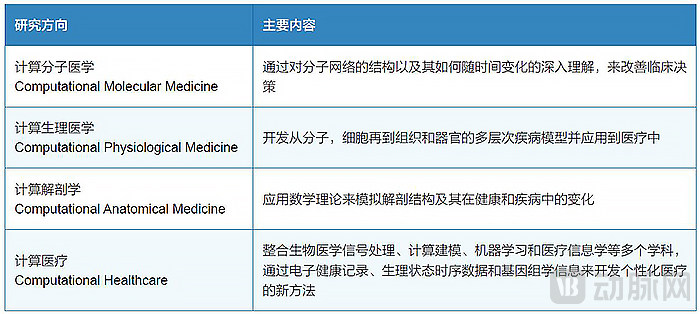
# Research Focus of the Johns Hopkins Institute for Computational Medicine
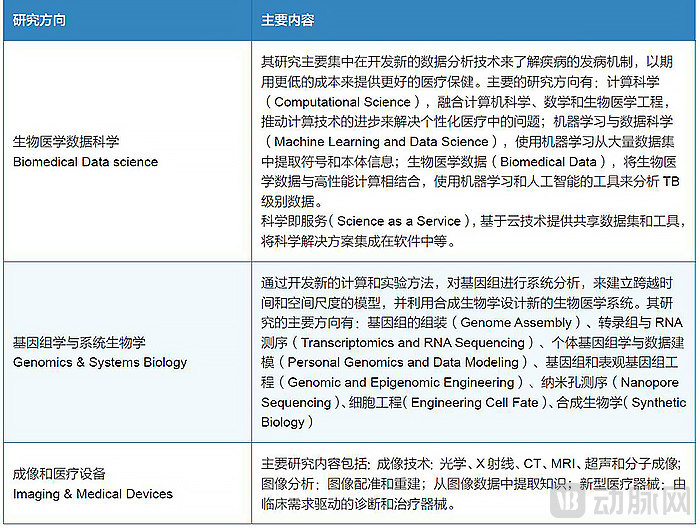
Other Research Directions in Biomedical Engineering Departments at Johns Hopkins
As a Professor of Biomedical Engineering at Johns Hopkins University, Raimond L. Winslow is also widely recognized as the founder of the emerging field of computational medicine. This field employs innovative computational models of molecular biology, physiology, and disease anatomy to understand, diagnose, and treat diseases, thereby improving patient care. His interest in understanding heart disease from the perspective of quantitative models has led to the development of computational medicine as a discipline.
In terms of research direction, he developed experiment-based computational models and applied them to gain in-depth insights into the molecular basis of arrhythmias. One of the many achievements of his research team was pioneering the use of Diffusion Tensor Magnetic Resonance Imaging (DTMRI) to reconstruct the geometric and fiber architecture of the ventricles. Currently, DTMRI has become the standard method for measuring cardiac fiber architecture with high spatial resolution.
Although various universities have named their newly established departments or launched majors under the title of “Computational Medicine,” their research content and focal points differ. Overall, the current discipline development in Computational Medicine at higher education institutions mainly encompasses three directions:
First, develop computational tools based on biological background knowledge to elucidate the molecular mechanisms of diseases, thereby aiding in disease diagnosis, treatment, and new drug development. Second, leverage machine learning methods to accelerate disease diagnosis and treatment amidst the rapid accumulation of healthcare-related data. Third, perform mathematical modeling of the human body or biological systems.
The development of computational medicine holds promise for achieving a quantitative understanding of health and disease, thereby driving a paradigm shift in medical advancement. However, it remains on the margins compared to mainstream academic disciplines. Existing models still provide inadequate simulations of real-world scenarios, and it remains challenging to identify tools that can define the link between the virtual and empirical worlds, particularly in validating the efficacy of computer simulation models.
Continuous advancements in genomics, medical imaging, diagnostic technologies, and translational medicine, coupled with the deep integration of artificial intelligence and the ongoing improvement of shared services, common platforms, and public infrastructure, will create new possibilities for developing diagnostic tools and novel therapies for cancer, genetic disorders, and infectious diseases. As a key integrative approach, computational medicine will enable the creation of human “digital twins,” facilitating precise health maintenance and bringing personalized medicine into reality.

Scan the QR code to download "Computational Medicine: A New Paradigm for Medical Development in the Era of Digital Intelligence"
The copyright of this white paper belongs to the Zhejiang Digital Medical and Health Technology Research Institute and is protected by law. For any reprinting, citation, or other use of the text or viewpoints contained in this white paper, please indicate “Source: Zhejiang Digital Medical and Health Technology Research Institute.” Any violation of this statement will result in legal liability in accordance with the law.