

Mearn Skin Leverages a Three-Tier Medical Service Ecosystem Inspired by Aier Eye Hospital to Capture the Skin Health Market
Under the influence of new trends in medical aesthetics, consumers in China are gradually becoming more aware of aesthetic treatments. The rising purchasing power of younger demographics and the middle class has further driven up demand in the medical aesthetics market.
According to Dongguan Securities’ special report on the medical aesthetics industry, China’s medical aesthetics market size reached RMB 176.9 billion in 2019, a year-on-year increase of 22.2%. The compound annual growth rate (CAGR) from 2014 to 2019 was 29.81%, and the market size is projected to reach RMB 311.5 billion by 2023.
The medical aesthetics industry continues to evolve, bringing about new landscape shifts. In the past one to two years, a large number of institutions have emerged by focusing on the dermatology sector. “MINE Skin,” which entered the market in 2015 and has since quietly strengthened its core capabilities, is among the early explorers in this field.
Regarding the rationale for entering the skin health and wellness market, Wang Jiaqi, Chairman of Huabang Medical Aesthetics and Founder of MINE Skin, stated that the decision to enter this market was primarily driven by two key factors:
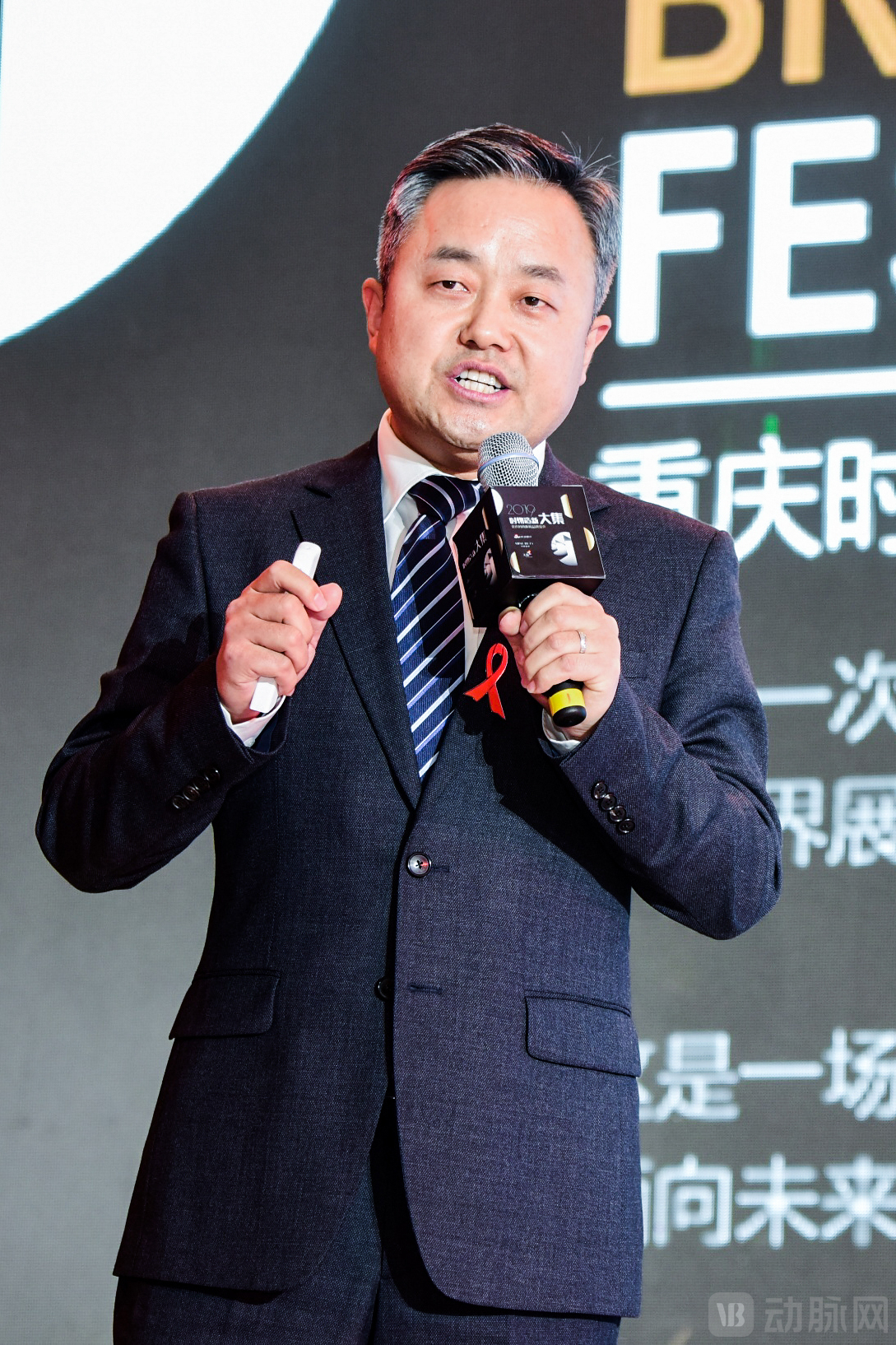
Wang Jiaqi, Founder of MINE Skin (Photo provided by MINE Skin)
On the one hand, new social trends are quietly emerging.
With China’s economic development and the improvement of people’s living standards, their pursuit of a better life is undergoing significant changes, with a growing emphasis on health and beauty, thereby stimulating the rise of the “appearance economy.” Meanwhile,Users’ skincare needs are also undergoing a shift, gradually evolving from the past focus on treating diseases such as “furuncles, sores, carbuncles, blisters, and warts” to beauty-enhancing and anti-aging concerns like “acne, sensitivity, hyperpigmentation, hair issues, and aging.”
On the other hand, Huabang Pharmaceutical, a subsidiary of Huabang Health (an investor in MINE Skin), was founded in 1992 and has been dedicated to the research and development, production, and sales of dermatological pharmaceuticals. It was listed on the Shenzhen Stock Exchange in 2004.
Over the two decades since its public listing, Huabang Pharmaceutical has remained focused on dermatology, gradually emerging as a leading enterprise in dermatological pharmaceuticals and accumulating substantial resources within the dermatology industry.
As China’s healthcare reform policies have gradually entered deeper waters since 2014, initiatives in the pharmaceutical sector such as “consistency evaluation” and “volume-based procurement” have continuously prompted pharmaceutical companies to seek new growth drivers. Therefore,Under the incubation of Huabang Health, MINE Skin was born in 2015.
““The impetus for establishing MINE Skin was to serve as Huabang Health’s ‘second growth curve’ in the dermatology industry, achieving optimal industrial synergy,” said Wang Jiaqi. “This was the original intention behind the founding of MINE Skin.”
While seeking a second growth curve in the field of skin health, MINE Skin is also helping more patients realize their wish for “healthy skin and a better life.” Furthermore, with the introduction of national policies supporting privately run medical institutions, multi-site practice by physicians, and entrepreneurship, MINE Skin aims to fulfill its mission as a platform facilitating dermatologists’ multi-site practice and entrepreneurial ventures, thereby assisting them in better realizing their professional value.
“Unless you’re driven to the brink of desperation, never start a business,” Wang Jiaqi once joked with VCBeat.
This remark can be regarded as self-deprecation, or as a footnote to the arduous journey of entrepreneurship.
As the founder of MINE BUTY Skin, Wang Jiaqi established his connection with dermatology at an early stage.
With a background in clinical medicine, his 20-year tenure at Huapont Pharmaceutical has provided him with extensive experience across various roles, including dermatology drug R&D, production, sales, marketing, government affairs, investment and M&A, and general management.
Ultimately, based on industry observations and trend forecasts, Wang Jiaqi decided to establish MINE Skin, a brand dedicated to comprehensive skin health that integrates medical care, education, and research.
“When MINE BUTY Skin was established, the domestic medical aesthetics industry was predominantly dominated by plastic surgery, with dermatology largely serving as a ‘traffic-driving’ department; most people considered dermatology to lack economic value,” introduced Wang Jiaqi. However, positioned in the broader field of skin health and specializing vertically in dermatology, MINE BUTY Skin determined from the outset that it would “not engage in plastic surgery, but instead target the markets of skincare, health, beauty, and anti-aging.”
It was precisely this choice that once led to MINE BUTY Skin being regarded as an “outcast” in the industry.
“It’s hard to imagine a specialized hospital offering medical aesthetic services that does not provide plastic surgery.” This is a remark Wang Jiaqi has heard many times.
But Wang Jiaqi had thought it through clearly,“Entrepreneurs must have a clear understanding of their origins, future direction, and core competitive advantages. MINE Skin’s foundation is built on over two decades of accumulated expertise in the dermatology industry. Therefore, its business strategy should focus on dermatology to achieve differentiated operations. As such, MINE Skin positions itself within the specialized, in-depth field of dermatology, rather than the broader medical aesthetics sector.”
Having decided what to do, Wang Jiaqi now faced the urgent and primary question of how to do it.
Leveraging 20 years of experience accumulated at Huabang Pharmaceutical, Wang Jiaqi has charted a clear development path for MINE Beauty Skin.
Backed by the publicly listed company Huabang Health, MINE Skin enjoys significant advantages in industry resources, brand endorsement, and financing channels. Centered on its positioning in the broader skin health sector—providing one-stop solutions for skincare, treatment, aesthetics, and anti-aging—MINE Skin has established three major service ecosystems: the online “MINE Doctor” Internet Hospital, the offline “MINE Skin” chain of medical aesthetic clinics, and the community-based “MIXIAOEN Smart Skincare” chain. This structure creates a tiered diagnosis and treatment service ecosystem that integrates online and offline channels as well as central and community-level care.
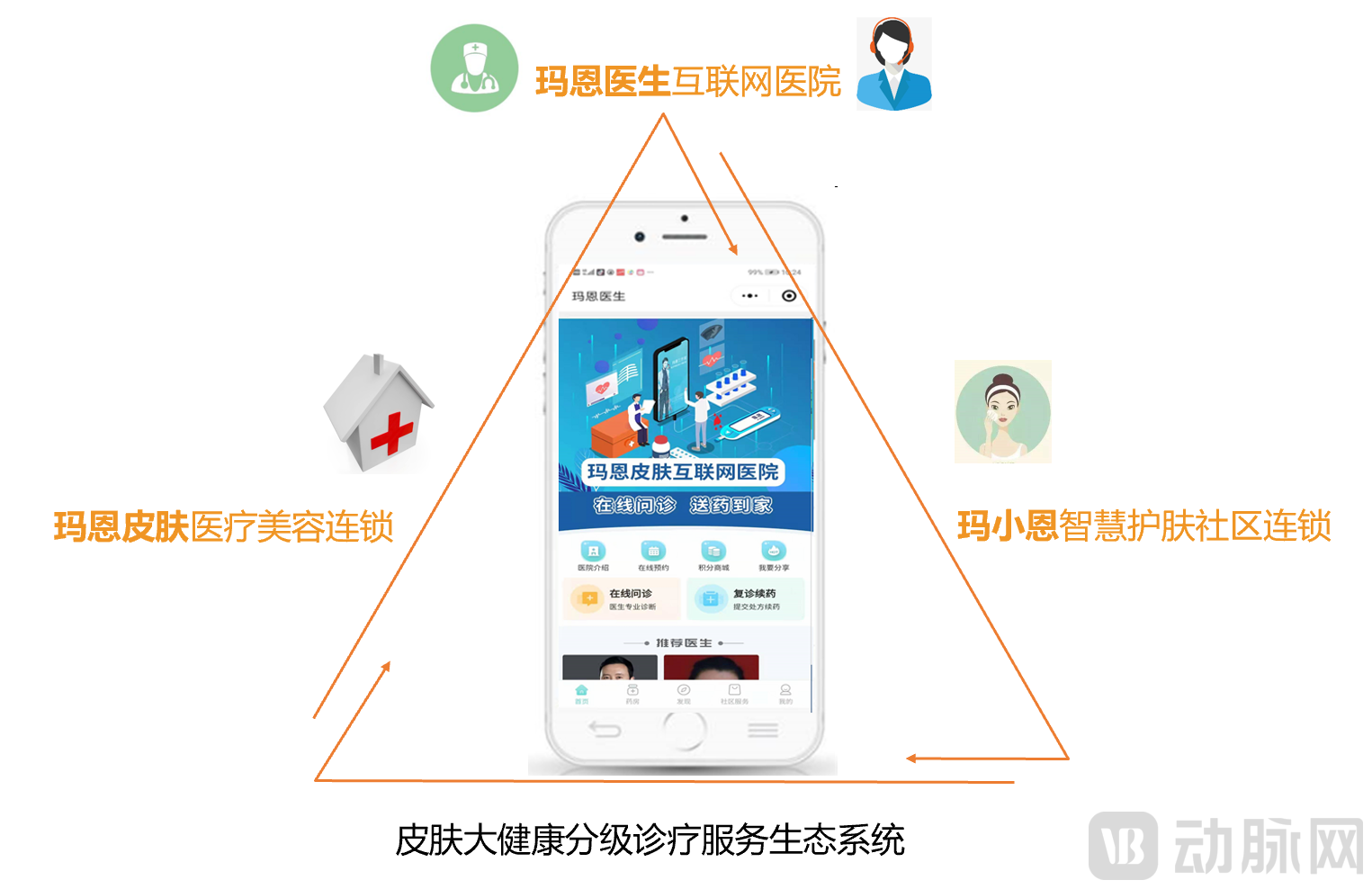
Schematic Diagram of the MINE Skin Tiered Diagnosis and Treatment Service Ecosystem (Image courtesy of MINE Skin)
The choice of a chain development model is, in fact, the result of in-depth research and reflection on the industry.
“Innovation and iteration in medical technology cannot proceed as rapidly as in the fast-moving consumer goods industry, while the rapid rise in labor costs prevents healthcare institutions from adopting a cost-leadership competitive strategy. Therefore, branding and chain expansion have become a prevailing trend. Chain operations can enhance brand competitiveness, increase brand premium capabilities, reduce customer acquisition costs, and lower institutional marketing expenses, ultimately enabling success in fierce market competition,” emphasized Wang Jiaqi. “Aier Eye Hospital serves as our role model.”
This is not merely praise for Aier Eye Hospital, but also a testament to MINE Skin’s determination to learn from and “draw inspiration from” Aier Eye Hospital’s development model.
According to Wang Jiaqi,Similar to Aier Eye Hospital’s initial adoption of a partnership mechanism, MINE Skin also employs a model in which the headquarters first invests to establish standardized operational benchmarks for its clinics; it then introduces investors in key cities to incubate chain branches based on these standards, and repurchases the branches once their operations have matured, repeating this cycle continuously.
According to VCBeat,Currently, MINE BUTY Skin has completed its model and standardization framework, with nearly 30 chain branches currently in the incubation phase.
However, establishing a standardized institutional operating model proves far more difficult than anticipated.
“Although dermatology already has relatively mature clinical pathways and diagnostic and treatment standards compared to surgery, making it easier to standardize and replicate in chain operations,” said Wang Jiaqi.
Even so, the standardized achievements of MINE Skin’s chain institutions—including its brand system, medical system, technical solutions, operational framework, and service system—were hard-won. “This replicable model system is the most valuable asset of MINE Skin, refined over more than five years.”
Wang Jiaqi stated, “Currently, all matters are progressing step by step according to plan, and we are engaging with key partners—including investors, physicians, and operational teams—at each branch clinic on an individual basis. For MINE Skin, the remaining task is to ‘befriend time,’ focusing on team consolidation, technological iteration, and structural optimization.”
According to VCBeat, as of now, MINE Skin’s online internet hospital has onboarded more than 3,000 dermatologists across China, while its offline medical aesthetics chain has signed nearly 100 full-time physicians.
According to Wang Jiaqi, MINE SKIN’s short-term goal is to complete the layout of 30 MINE SKIN medical beauty clinics in key cities.
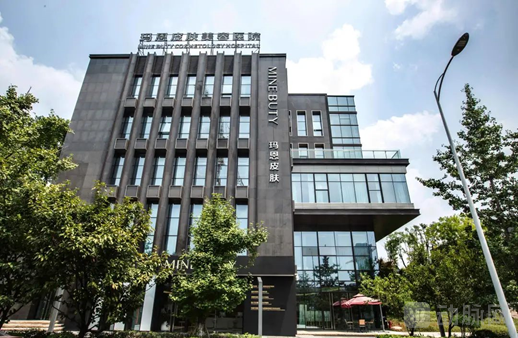
MINE Skin Medical Aesthetics Chain Chongqing General Hospital (Image provided by MINE Skin)
ChinaThe phase plan is to complete the construction of the chronic disease management system for patients at Dr. Ma En’s Internet Hospital, gradually establishing digital models for chronic disease management by specific conditions (such as psoriasis and chronic eczema), and ultimately leveraging advances in big data and AI technology to help doctors and patients improve treatment outcomes and enhance the efficiency of medical resource utilization;
The long-term goal is to establish a chain of 3,000 offline Ma Xiao’en Smart Skincare Community stores, ultimately achieving a closed-loop ecosystem for comprehensive skin health chain services.
Wang Jiaqi stated that MINE Skin, as an entrepreneurial platform, aims to “attract a large number of passionate entrepreneurs, including physicians, operations specialists, marketing professionals, and management talent.”
When discussing industry development trends, Wang Jiaqi believes that,“While the mid- and downstream segments of the industry chain are indeed facing certain challenges, pain points often present opportunities; from a long-term perspective, now may well be the right time to enter the market.”
Furthermore, Wang Jiaqi added, “Consumer spending in the skin health market is undergoing an upgrade, yet the penetration rate of the dermatological aesthetics market remains very low. The skincare market is growing at a double-digit rate, and the overall skin health industry is highly fragmented. These factors collectively indicate that now is an opportune time to enter the market.”
“In the future, MINE BUTY will pursue a more stable development model,” summarized Wang Jiaqi,“Medical aesthetics is, at its core, a healthcare service industry, characterized by high operational costs and high consumable expenses. Currently, the market is in a phase of unregulated, rapid expansion, with substantial marketing expenditures, which has placed mid- and downstream players in a developmental predicament. Therefore, only by strengthening internal capabilities can institutions with technological or brand advantages emerge as market leaders, ultimately adhering to the principle that ‘the last one standing wins.’”