

Fosun Xingmai's Integrated Digital Pathology Solution: Enabling Full Coverage from Grassroots to Top-Tier Hospitals

FUSUN AITROX
Developer of Intelligent Medical Imaging Devices
Pathological diagnosis is the “gold standard” of medical diagnosis and the cornerstone for physicians to deliver appropriate treatment to patients. Currently, pathological diagnosis in China faces several pain points, including uneven distribution of pathological resources, a shortage of pathologists, and relatively backward and inconsistent diagnostic technical capabilities. However, with the further penetration of AI technology into the field of medical diagnosis, the growing demand at the primary care level for more efficient and accurate diagnoses, and policy support for price increases in pathological services, digital pathology has emerged as a new breakthrough in the field of pathological diagnosis.
How Hot Is Digital Pathology? A Glimpse Through Market SizeAccording to a report from the 2020 World Congress of Pathology, the global pathology market is projected to grow from $30.3 billion in 2019 to $44.4 billion in 2024, representing a compound annual growth rate (CAGR) of 6.1% from 2019 to 2024. Grand View Research estimates that the global digital pathology market was valued at $767.6 million in 2019 and is expected to expand at a CAGR of 11.8% through 2027.
Faced with such substantial demand and a vast market, many innovative enterprises are actively exploring and strategizing their presence. FUSUN AITROX stands out as one of the most dynamic players in this space. As Fosun’s first independently incubated artificial intelligence enterprise, FUSUN AITROX is a high-tech company specializing in medical AI. Its current product portfolio primarily encompasses three core lines: medical imaging, pathology, and healthcare information systems.
At the “AI-Enabled, Lingjing Sees the Subtle” Digital Pathology Summit held on August 28, 2021, FUSUN AITROX unveiled “Xingmai Jingling,” China’s first multifunctional analysis system capable of simultaneously performing microscopic scanning, intelligent analysis, and digital image microscopy management. This marked a new technological leap in the field of pathological screening.
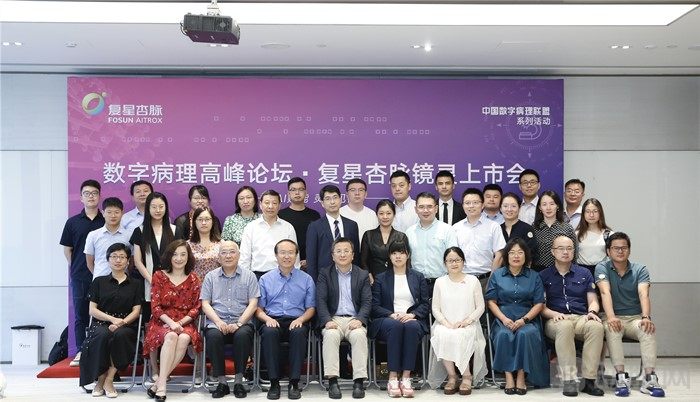
(First row, from left to right: Gao Li, Changhai Hospital; Yuan Fei, Ruijin Hospital North Campus; Yin Yulei, Huadong Hospital; Zhang Xin, Zhongshan Hospital; Wang Jian, Fudan University Shanghai Cancer Center; He Chuan, FUSUN AITROX; Hou Yingyong, Zhongshan Hospital; Liu Zhiyan, Shanghai Sixth People's Hospital; Bai Zhian, Ruijin Hospital; Fang Jinwu, Huadong Information and Communication Research Institute)
Wang Jian, Director of the Department of Pathology at Fudan University Shanghai Cancer Center and Head of the Bone and Soft Tissue Group under the Pathology Branch of the Chinese Medical Association, stated in his opening remarks that Fudan University Shanghai Cancer Center and FUSUN AITROX have engaged in close collaboration in certain areas, achieving remarkable results. He emphasized that digital pathology represents a major future trend. Given the urgent need for the practical implementation of digital pathology and AI technologies, he noted that FUSUN AITROX’s current development and research efforts in digital pathology hold significant practical value. He expressed hope that “Aitrox Jingling” would genuinely assist pathology departments by continuously developing high-quality products to serve clinical pathological practice. Furthermore, Professor Wang expressed his aspiration for Fudan University Shanghai Cancer Center to establish a deep partnership with FUSUN AITROX, applying mature AI systems and technologies to clinical settings. By expanding from pilot applications to broader implementation, this collaboration aims to better support clinical pathological diagnosis and truly build a digitalized and intelligent pathology department.
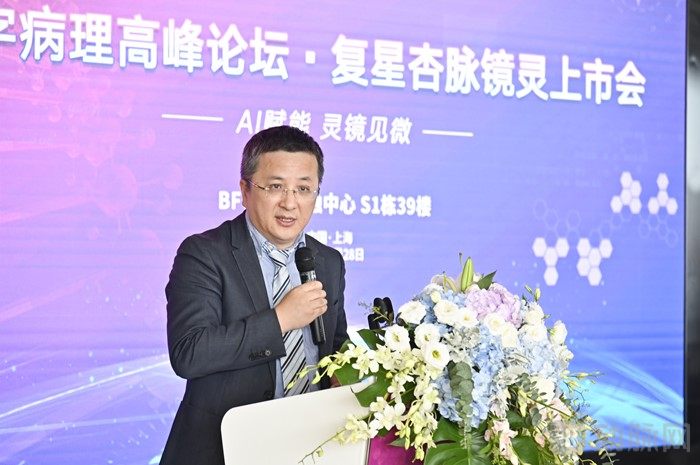
Wang Jian, Director of the Department of Pathology at Fudan University Shanghai Cancer Center and Head of the Bone and Soft Tissue Group under the Chinese Society of Pathology
Liu Dongge, Director of the Department of Pathology at Beijing Hospital and President-Elect of the Pathology Branch of the Chinese Medical Association, stated in his address that artificial intelligence has become an indispensable tool for standardized quality control across numerous departments, ranging from digital imaging centers to digital operating rooms, and from image screening to preoperative planning. Digital pathology, integrated with artificial intelligence, possesses inherent advantages. The deployment of AI in digital pathology has already commenced, with many pilot studies yielding encouraging preliminary results. We have observed the successful approval of multiple national-level research projects on pathological AI, the increasing implementation of industry-academia-research collaborations, and a regulatory consensus on the registration and approval of related products. We look forward to the imminent issuance of the first Class III medical device registration certificate for pathological AI.
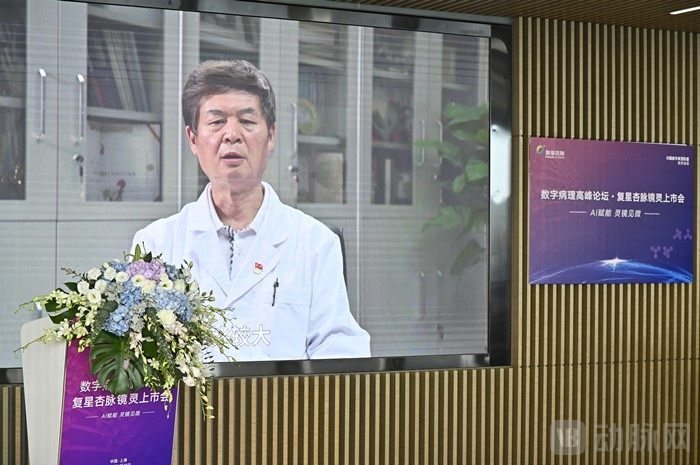
Liu Dongge, Director of the Department of Pathology at Beijing Hospital and President-Elect of the Pathology Branch of the Chinese Medical Association
Against this backdrop, FUSUN AITROX pioneered the industry’s first integrated hardware and software system for pathology departments. This system not only includes digital microscope image scanners and image management systems suitable for hospitals at all levels, but also leverages a single-disease approach, bringing together China’s top pathologists and the world’s leading R&D teams to develop AI-powered products built on a digital foundation.
As an enterprise long committed to the advancement of pathology and dedicated to establishing a strong presence in this field, FUSUN AITROX issued an initiative at the summit to all pathology experts and industry peers: to jointly establish the China Digital Pathology Alliance. This alliance aims to build a high-quality digital pathology platform that closely integrates scientific research, deeply engages with the industry, and leverages diverse resources, thereby promoting the digitalization and informatization of China’s pathology sector from academic research to industrial application, and contributing to the country’s early-mover advantage in this domain.
The summit also invited industry vendors such as Siemens, Roche, Leica, AstraZeneca, Hologic, Hengdao Pathology, and Shanghai Pharma Medical Devices to jointly conduct an in-depth discussion on the current status, pain points, and future development of “AI + Pathology” in healthcare.
In recent years, research teams both in China and abroad have successfully achieved diagnostic recognition for multiple diseases in the field of medical imaging through “AI + pathology,” with some achieving accuracy rates exceeding 90%.* (Clinical Validation Research Data)At this stage, pathological AI is transitioning from data accumulation to algorithm refinement, serving as part of a comprehensive digital pathology solution to enhance the efficiency of whole-slide imaging. Based on a macro-level understanding of China’s current digital pathology industry, VCBeat believes that digital pathology has become a significant development trend in the field of pathological diagnosis.
As a leading enterprise in China’s digital pathology industry, FUSUN AITROX is committed to providing the most comprehensive and mature products to clinical practice. Since its establishment, FUSUN AITROX has consistently prioritized technological R&D and reserves as a key means to enhance its core competitiveness, thereby establishing significant technical barriers. All its products and technologies are independently developed and possess full independent intellectual property rights. The company’s technological advancement, scale of business expansion, and exemplary development quality have been widely recognized and affirmed by both customers and the industry. Notably, FUSUN AITROX has achieved complete autonomous control not only in software but also in hardware, addressing potential “chokehold” challenges in China’s digital pathology sector, enabling the domestic substitution of digital pathology diagnostic equipment, and laying a solid foundation for the rapid development of digital pathology in China.
It is understood that FUSUN AITROX currently holds over 100 patents domestically and internationally. In terms of research achievements, FUSUN AITROX has also attained remarkable results, publishing 16 research findings in top-tier conference journals with a cumulative impact factor of over 60. The company has successfully completed 10 major projects at the ministerial level, including collaborative research initiatives with key departments of leading Grade-A tertiary hospitals, funded by entities such as the National Natural Science Foundation of China, the Municipal Commission of Economy and Information Technology, and the Municipal Science and Technology Commission.
In its strategic layout for digital pathology services, FUSUN AITROX leverages AI-driven medical technology to proactively transcend the limitations of the AI healthcare industry’s current capabilities. It is currently the only enterprise that has comprehensively developed an integrated intelligent digital pathology solution by combining hardware and software to address the application needs of pathology digitalization and intelligence. Its product portfolio includes three mature AI-assisted diagnostic solutions: the “AITROX Lens” digital microscopic image analysis system, the Medical Image Information System (MIIS) for digital pathology, and AI-powered auxiliary analysis tools. The company has partnered with dozens of medical institutions across China, positioning it in the industry’s first tier. Both the AITROX Lens and MIIS systems have obtained Class II medical device registration certificates.
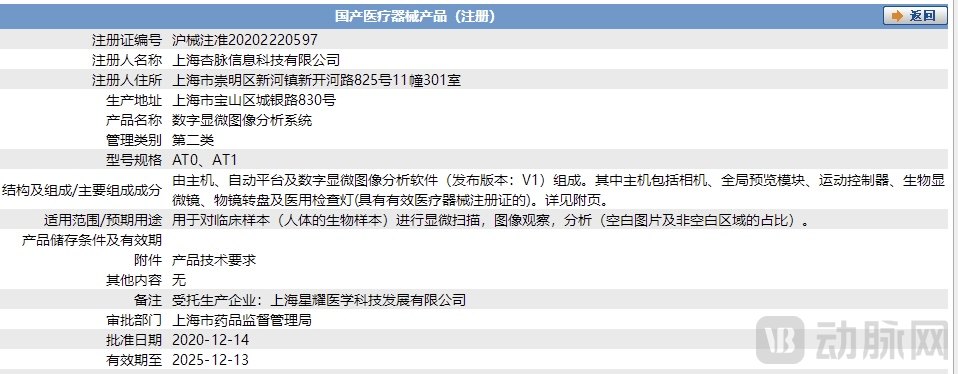
In the field of pathology, AI technology has created new possibilities and value for disease diagnosis.
Aitrox Jingling Empowers Pathologists to “See Faster, See More Accurately”
Addressing the application needs of digital and intelligent pathology, FUSUN AITROX has independently developed “AITROX PathoMind,” China’s first multifunctional analysis system capable of simultaneously performing microscopic scanning, intelligent analysis, and digital image microscopy management. This system establishes a one-stop pathological service workflow encompassing “image scanning, diagnostic analysis, and report generation.” Comprising fully automated microscope hardware and artificial intelligence analysis software, AITROX PathoMind has accumulated over 20 related patents and achieved seven publications in top-tier conferences and journals. It ranks first in the number of patents in the field of pathology AI and has been successfully included in the Shanghai Artificial Intelligence Innovative Products Catalog.
Through fully automated hardware scanning, Aitrox Jingling can scan traditional physical glass slides and convert them into digital images, which are then analyzed by deep learning-based artificial intelligence models. Subsequently, AI technology intelligently analyzes lesion images and generates structured reports with a single click, providing rapid, efficient, and accurate diagnostic assistance to primary care physicians.
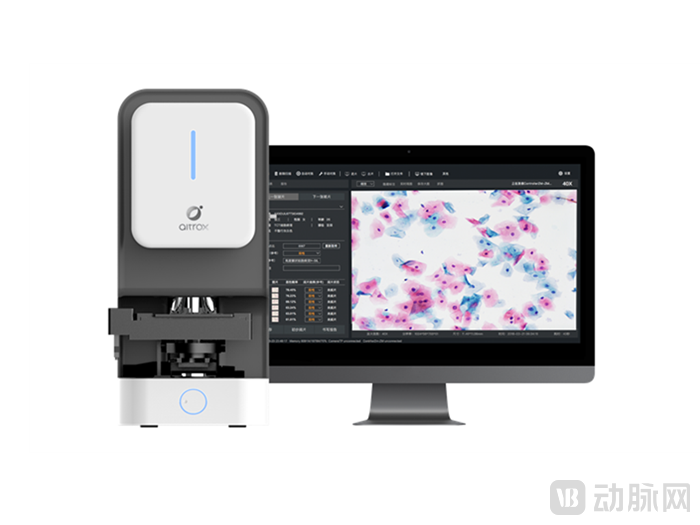
In terms of accuracy, the intelligent analysis algorithm integrated into Aitrox Jingling can precisely localize pathological regions and intelligently differentiate between benign and malignant lesions. It covers a wide range of applications, including cervical cytology, immunohistochemistry, and Rapid On-Site Evaluation (ROSE), achieving a sensitivity of over 90%.(Clinical Validation Research Data), significantly reducing the probability of misdiagnosis and missed diagnosis by physicians, improving the accuracy of image interpretation, and yielding more precise pathological report results.
In terms of efficiency, Aitrox’s digital microscopic scanning system achieves comprehensive coverage of clinical specimens under both bright-field and dark-field illumination, enabling continuous, fully automated, and stable operation for 1,000 hours to deliver high-speed scanning and panoramic imaging. The system completes the entire workflow within two minutes, ensuring accuracy while significantly reducing pathologists’ slide review time through its simultaneous scanning-and-viewing capability. Compared with traditional slide review methods, and empowered by AI, a single unit can scan 600–1,200 slides per day, achieving “zero-fragment” scanning.
Digital Pathology Image Management System Enables Intelligent Management of Digital Pathology Samples
In the management of digital pathology image information, FUSUN AITROX’s independently developed Medical Image Information System (MIIS) is an intelligent digital pathology sample management platform that integrates “digital pathology + AI.” It facilitates the comprehensive digital transformation of pathology departments, meeting needs in slide digitization management, digital pathology diagnosis, quality control management, and scientific research and teaching.
For pathologists, the MIIS system provides integrated scanning workstations that automatically interface with digital microscopy image management systems, enabling digital slide management, data design, and digital slide viewing, thereby alleviating the workload of pathologists. For clinicians, the MIIS system supports slide annotation for research and educational training purposes, while linking patient information for on-demand access, thus enhancing clinical diagnostic and treatment capabilities. In terms of hospital quality control and departmental management, the MIIS system is equipped with functions such as intelligent data analysis, intelligent review and evaluation, and diagnostic performance benchmarking, which optimize the quality and standardization of pathological diagnosis processes and improve traceability and reproducibility.
To promote tiered diagnosis and treatment, FUSUN AITROX has actively developed a digital, cloud-based, and intelligent remote pathology diagnosis platform based on the digital intelligence service capabilities of MIIS. This platform is designed for medical consortia and healthcare institutions at all levels within a region, enabling interconnectivity, data sharing, and business collaboration among hospitals and between hospitals and regional centers. It also provides digital pathology diagnosis and reporting, as well as workflow management for access permissions, serving as a digital pathology diagnosis management solution for interactions between main and branch hospitals, medical consortia, and remote facilities. In 2019, FUSUN AITROX’s Medical Pathology Cloud Platform received the Trusted Cloud Certification jointly awarded by the China Academy of Information and Communications Technology (CAICT) and the Internet Healthcare Industry Alliance.
Meanwhile, as an intelligent medical platform, MIIS also enables AI-powered diagnosis and treatment and builds a smart research platform, supporting clinical research needs across all scopes, including within the department, between departments and clinical settings, across hospital campuses, and across regions.
In a collaborative research study with a hospital in Shanghai on the application of AI in cervical cytopathological diagnosis, the unique capabilities of Aitrox Jingling were fully demonstrated. The study results indicated that introducing artificial intelligence technology into cervical screening helps reduce the time required for single-slide screening, significantly improves the efficiency of cervical cell screening, enhances the consistency and stability of screening results as well as their concordance with biopsy findings, and also increases the positive detection rate while reducing the risk of missed diagnoses.
Beyond its application in cervical cytopathology, FUSUN AITROX’s AI products are also widely utilized in fields such as ROSE (Rapid On-Site Evaluation) for bronchoscopic biopsies, PD-L1 immunohistochemistry for lung cancer, and HER2 immunohistochemistry for breast cancer. These solutions help physicians enhance the efficiency and accuracy of cancer screening, while reducing both missed diagnosis rates and screening costs.
Smear Scanning Completed in 60 Seconds: AITROX Bronchoscopic ROSE Implemented in Multiple Hospitals
Having been deployed and applied in Grade A tertiary hospitals across Beijing, Shanghai, Jiangsu, Sichuan, and other regions, the FUSUN AITROX ROSE Intelligent Analysis System has proven its reliability. In terms of efficiency, the system can complete the scanning of an entire ROSE smear within 60 seconds, automatically analyze the scanned images, and display the identified cell categories. In terms of accuracy, the system achieves a sensitivity of 90%* in the interpretation of infected samples.(Clinical Validation Research Data), specificity 95%*(Clinical Validation Research Data)Above; AI-based tumor positivity detection accuracy ≥90%*(Clinical Validation Research Data), and provides positive classification results to assist in improving biopsy accuracy. It is compatible with various preparation methods, including H&E staining, Pap staining, TCT, LCT, and centrifugation, among which the precision and high sensitivity of TCT are ≥95%*(Clinical Validation Research Data)。
FUSUN AITROX employs AI-assisted TCT screening for cervical cancer, enabling rapid localization and classification of abnormal cells, intelligent diagnostic analysis, and automated report generation. It facilitates high-volume, end-to-end automated intelligent screening, significantly enhancing the cervical cancer screening capacity of primary healthcare institutions. Primarily serving China’s “Two-Cancer Screening” program for women, it reduces pathologists’ workload by at least 60%, increases sample processing capacity, alleviates the challenges of high demand for universal cervical cancer screening coupled with a severe shortage of pathologists, and improves screening efficiency.
Successful Development of AI-Assisted Diagnosis for PD-L1 Immunohistochemistry, Promoting the Advancement of Precision Medicine
In the application of PD-L1 immunohistochemistry for lung cancer, the PD-L1 immunohistochemistry AI-assisted system, co-developed by FUSUN AITROX and Fudan University Shanghai Cancer Center, can intelligently identify tumor regions and other cell types to assist manual interpretation and analysis, significantly reducing the workload of pathologists. It is reported that FUSUN AITROX will leverage intelligent PD-L1 detection as an entry point to drive innovation in clinical research and service capabilities for precision medicine in Shanghai, including companion diagnostics, immunotherapy, and tumor diagnosis.
In accordance with the "Healthy China 2030" Planning Outline, national policies encourage the decentralization of high-quality medical resources and promote the development of medical artificial intelligence (AI). By leveraging AI exploration and learning, the expertise of top-tier physicians can be extended to primary care settings and households nationwide, enabling the general public to access diagnostic outcomes equivalent to those provided by the best hospitals and doctors across China at their doorstep.
To this end, FUSUN AITROX has launched an industry-academia-research MDT Physician Group solution and implemented a program to deploy physicians to grassroots-level institutions. It provides specialized and branded diagnostic and treatment services for remote consultations and individual health management, while collaborating with partners both within and outside its ecosystem to offer modular AI imaging tools and expert diagnostic recommendations.
FUSUN AITROX strives to build and showcase an innovative ecosystem in China’s digital pathology sector, fostering robust interaction and exchange across industries. By implementing a comprehensive layout across the entire industry chain, it drives extensive collaborations with pharmaceutical companies, third-party medical service providers, Fosun Diagnostics, and other enterprises both within and outside the Fosun ecosystem. These efforts facilitate the commercial implementation of the “AI+X” model and comprehensively advance the development of China’s digital pathology innovation ecosystem. To date, FUSUN AITROX’s full product portfolio has accumulated reserves of over 40 AI disease models and established partnerships with more than 500 hospitals nationwide.
In the future, FUSUN AITROX will remain committed to conducting in-depth research centered on clinical scenario needs. By independently developing AI algorithms, it will empower multi-disease, multi-scenario medical diagnostic and analytical tools, truly realizing the visionary goal of “AI creating healthy lives for one billion families worldwide.”
With the advent of whole-slide imaging and the subsequent introduction of AI-assisted diagnosis, AI-based digital pathology technologies are flourishing worldwide. Despite shortcomings in regulation, reimbursement, and deployment, healthcare professionals in the fields of pathology and oncology are showing growing interest in the development and use of these technologies. Challenges are inevitable, but digital pathology has become an unstoppable trend. In recent years, healthcare institutions around the world have been digitizing, or are in the process of digitizing, their entire pathology workflows.
Unlike other industries, the healthcare sector is not one where faster is always better. It demands unwavering patience, a genuine commitment to meeting clinicians’ needs, and, above all, meticulous humanistic care for patients. As practitioners and pioneers in digital pathology, we must understand and gain deep insights into the real-world needs of pathological diagnosis, dedicating our patience and energy to building our products and services. In this process, time may well be the best answer and the strongest barrier to entry.