

BioTec Pharma's Innovative Wound Dressing Breaks Import Monopoly in China’s Advanced Medical Dressing Market
The Human Struggle Against Wounds: An Unending Battle from Ancient Times to the Present
In the process of human adaptation to nature, daily labor and hunting activities frequently resulted in trauma. In response, people employed methods such as applying pressure to wounds and using medicinal dressings to achieve hemostasis, thereby gradually giving rise to the medical discipline of surgical treatment.
With advances in cognition and technology, wound dressings have gradually evolved in both form and function. In 1867, Joseph Lister drew upon the principles of “heat sterilization” to establish the theory of aseptic surgery and pioneered the use of sterile gauze in wound care. Meanwhile, the “dry and breathable” paradigm, exemplified by cotton gauze products, became the mainstream approach at the time.
To provide an optimal environment for wound healing, minimize scarring, and enhance patient comfort, novel medical dressings based on the “moist wound healing theory” have gradually come into public view. These advanced dressings integrate multidisciplinary knowledge from biology, physiology, surgery, nursing, and nutrition. Furthermore, they incorporate patients’ practical physical and clinical requirements into material selection and design configuration. As a result, they offer significant advantages in accelerating wound repair, reducing wound infections, improving cure rates, shortening the course of treatment, and alleviating patient suffering.
At present, the R&D of China's novel medical dressing market is still in its infancy. Most novel medical dressings used in clinical practice are imported brands; although they demonstrate favorable efficacy, their high prices have hindered widespread market adoption, thereby creating development opportunities for the domestic novel medical dressing industry.
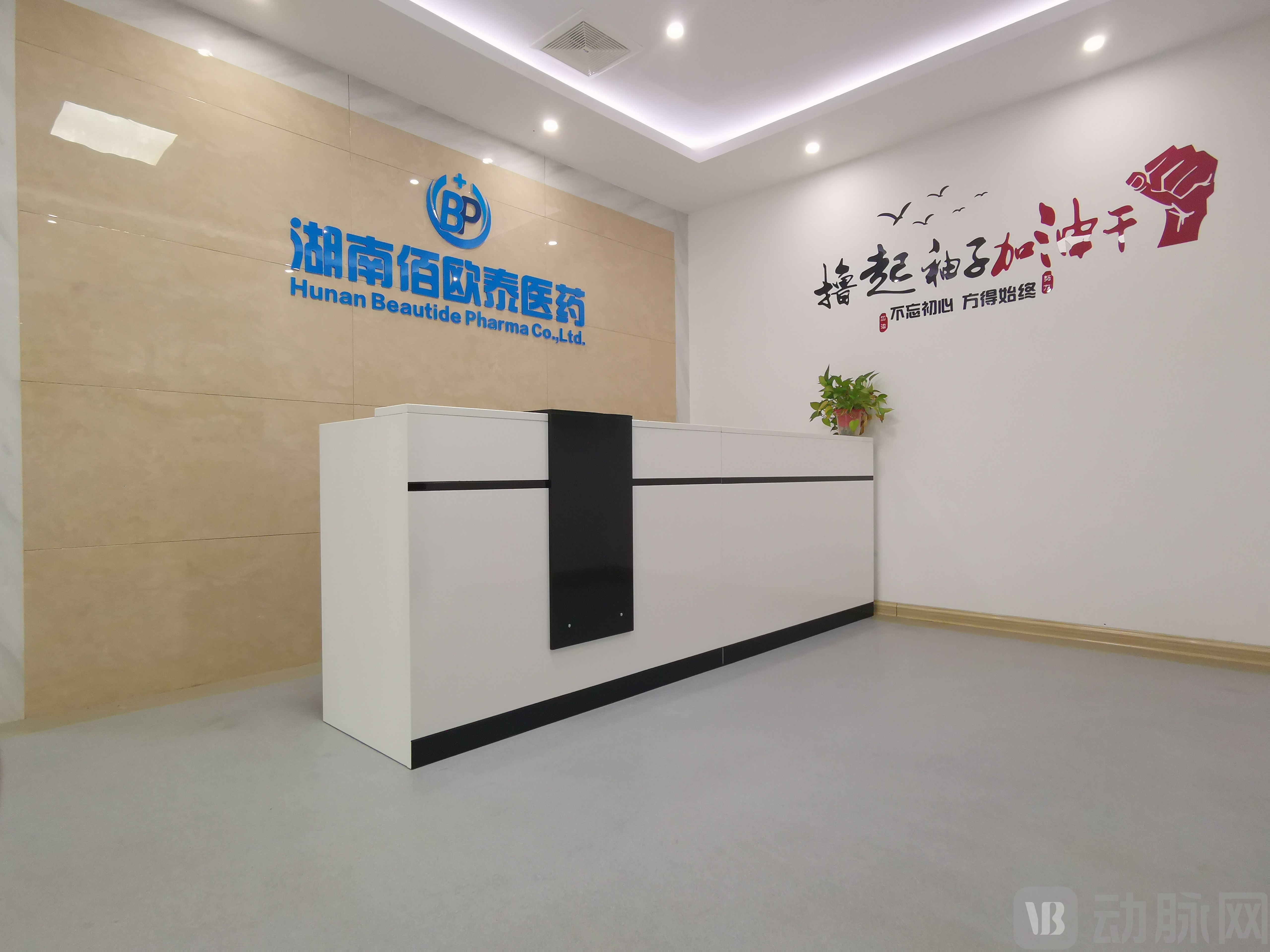
At the “2021 ‘Maker Guangdong’ Biopharmaceutical SME Innovation and Entrepreneurship Competition” recently hosted by Guangdong Medical Valley, Hunan Baioutai Pharmaceutical Co., Ltd. (hereinafter referred to as “Baioutai”) delivered an outstanding performance with its innovative project, “Innovative Anti-Infective and Wound-Healing Promoting Medical Dressings,” competing alongside numerous other projects.
Tapping into the Emerging Market for Novel Medical Dressings
According to statistical data, tens of millions of people in China suffer skin wounds each year due to accidental injuries and surgeries. The number of burn and scald treatments, trauma care procedures, and surgical operations performed annually in the country exceeds ten million, with total expenditures reaching approximately RMB 100 billion. Among these costs, medical dressings account for more than 3%.
Compared with traditional dressings, new medical dressings offer advantages such as significantly shortening wound healing time, reducing the amount of dressing required, and decreasing nursing time. Currently, in the domestic market, traditional medical dressings still dominate due to the higher price of new medical dressings. However, traditional medical dressings have relatively low technical barriers, with numerous domestic manufacturers, obvious product homogenization, and low added value. Therefore, developing high-end new medical dressing products with independent intellectual property rights has become a development direction for some innovative enterprises.
Against this backdrop, Baioutai has developed a novel medical wound dressing with anti-infective and healing-promoting properties for acute infected wounds—such as burns, scalds, extensive trauma, and surgical incisions—as well as chronic, refractory infected wounds, including diabetic foot ulcers, venous leg ulcers, arterial leg ulcers, and chronic radiation injuries. This dressing not only demonstrates significant efficacy in routine wound care but is also suitable for complex wounds characterized by infection and moderate to heavy exudate.
In clinical wound management, it is common practice to apply a layer of antimicrobial agents to the wound surface, followed by coverage with absorbent cotton pads or gauze pads. While this approach helps protect the wound, minimize contamination, and facilitate timely drainage of exudate, the dressings also absorb a portion of the medication along with the exudate, thereby reducing therapeutic efficacy. In contrast, the novel medical dressing developed by Baioutai features high-capacity, vertical, and directional absorption that locks in exudate, thus enhancing the utilization rate of drugs applied to the dressing.
Furthermore, this novel medical dressing demonstrates high efficacy in disrupting biofilms, thereby effectively inhibiting bacterial infections. Relevant data indicate that over 65% of hospital-acquired infections are caused by bacterial biofilms. These biofilms can form on the surfaces of various objects and exhibit strong resistance to the penetration of disinfectants and antibiotics. Once formed on wound surfaces, they significantly increase the difficulty of treating wound infections. Consequently, biofilm disruption has become one of the key research directions for advanced medical dressings at present.
Overall, Baioutai’s novel medical dressings not only deliver broad wound applicability, anti-infective properties, and enhanced healing promotion, but also offer significantly lower costs and greater affordability compared with imported novel medical dressings currently used in clinical practice.
Core Team: Bringing Together Multidisciplinary Experts to Ensure Product Implementation
In terms of R&D, the development of novel medical dressings requires a multidisciplinary approach that integrates chemical, physical, and material science considerations. Baioutai’s success in product development is clearly attributable to the support of its core team. It is reported that members of Baioutai’s core team have participated in multiple new drug development projects, with launched drugs generating tens of billions in revenue for their respective pharmaceutical companies.
The technical advisory team comprises multiple experts from institutions such as the American Association for the Advancement of Science (AAAS), the Chinese Academy of Engineering, and UT Southwestern Medical Center, providing robust technical support for product research and development.
After years of research and development by its core team, Baioutai has successfully developed several novel wound dressings suitable for various applications, including wound care, antimicrobial treatment, and even aesthetic medicine. Moving forward, Baioutai will actively advance the regulatory registration and approval processes for its existing products, while simultaneously establishing production lines to expand manufacturing capacity, thereby laying a solid foundation for subsequent market commercialization.
Although traditional medical dressings still account for the majority of the market share in China, the market for novel medical dressings has been growing rapidly in recent years. In major markets such as the United States and Europe, novel medical dressings already represent approximately 80% of usage. Given China’s large population base and substantial clinical demand, there is ample room for the future development of novel medical dressings in the country.
It is understood that Bio-Eta has already launched its financing plan to ensure the smooth progress of multiple projects and the commercialization of its products.
About the 2021 Maker Guangdong · Biomedicine Themed Competition
The 2021 “Maker Guangdong” Biopharmaceutical SME Innovation and Entrepreneurship Competition was guided by the Department of Industry and Information Technology of Guangdong Province, the Department of Finance of Guangdong Province, and the People’s Government of Dongguan City, and hosted by Guangdong Medical Valley. Since undertaking the competition, it has focused on the biopharmaceutical sector, identifying high-quality projects related to COVID-19 prevention and control as well as health protection. To date, nearly 200 projects have been identified, with many recommended projects winning major awards in the provincial finals. Guangdong Medical Valley was honored as the “Best Organizing Unit of 2020.”
Guangdong Medical Valley, established in 2014, is a new healthcare industrial cluster service provider under the Zhongchuang Group. It focuses on investment and incubation platforms for the biopharmaceutical and medical device industries. With a presence in Guangzhou, Zhuhai, and other locations, it has completed and is currently constructing industrial parks with a total area of approximately 530,000 square meters. Recognized as a National-Level Science and Technology Business Incubator, a Key Construction Project of Guangdong Province, and a Demonstration Park of Guangzhou City, Guangdong Medical Valley adheres to the philosophy that “industrial clusters are the most critical driver for innovative development in the healthcare industry.” It persists in an integrated development model combining healthcare incubation, equity investment in healthcare projects, and comprehensive supporting services for the healthcare industry. Deeply rooted in the Greater Bay Area, it is committed to building a world-class international healthcare innovation center.