

Junshi Biosciences Reflects on Eight Years of Growth in Wujiang Amid Toripalimab's U.S. BLA Submission
Junshi Biosciences
Innovative Drug Developer
On September 1, the rolling submission of the first marketing application for toripalimab in the United States was completed, positioning it to potentially become the first immune checkpoint inhibitor approved for the treatment of nasopharyngeal carcinoma in the U.S. This also marks the first domestically produced anti-PD-1 monoclonal antibody from China to have a marketing application submitted overseas.
Toripalimab, independently developed by the domestic innovative pharmaceutical company Junshi Biosciences, was previously launched in China as the first domestically produced anti-PD-1 monoclonal antibody. Its first approved indication was for melanoma, directly competing with pembrolizumab from the globally renowned pharmaceutical company Merck & Co. Currently, more than 30 clinical trials covering over 15 indications have been conducted in China, the United States, and other countries.
According to financial data,Toripalimab generated RMB 1.003 billion in revenue for Junshi Biosciences in 2020., while becoming the company’s most lucrative product, it has also indirectly validated Junshi Biosciences’ core capabilities in R&D, manufacturing, and other areas, thereby advancing the company’s sustainable development to some extent.
It is worth mentioning that the first batchToripalimabProduced at the Wujiang production base.According to the 2021 semi-annual report, the Wujiang production base has a fermentation capacity of 4,500 liters, and it is primarily relied upon for the commercial production of Junshi Biosciences’ products and the manufacturing of clinical trial drugs.
However, the bond between Junshi Biosciences and Wujiang extends far beyond this.
The Full Story Behind Junshi Biosciences’ Establishment in Wujiang
In December 2012, Junshi Biosciences was founded in a laboratory of less than 300 square meters in Shanghai Zhangjiang Pharma Valley. One year later, the company had expanded to dozens of employees, and its business stage had progressed from pure R&D to industrialization layout.To accelerate its corporate development, Junshi Biosciences entered the Wujiang Economic and Technological Development Zone in 2013, investing to establish Junmeng Biopharma and Zhonghe Biopharma. Among them, Junmeng Biopharma serves as the R&D center, while Zhonghe Biopharma operates as the production base.
The reason Junshi Biosciences chose to establish its presence in Wujiang at the very beginning was that it recognized the immense potential of this region in the field of biopharmaceuticals.
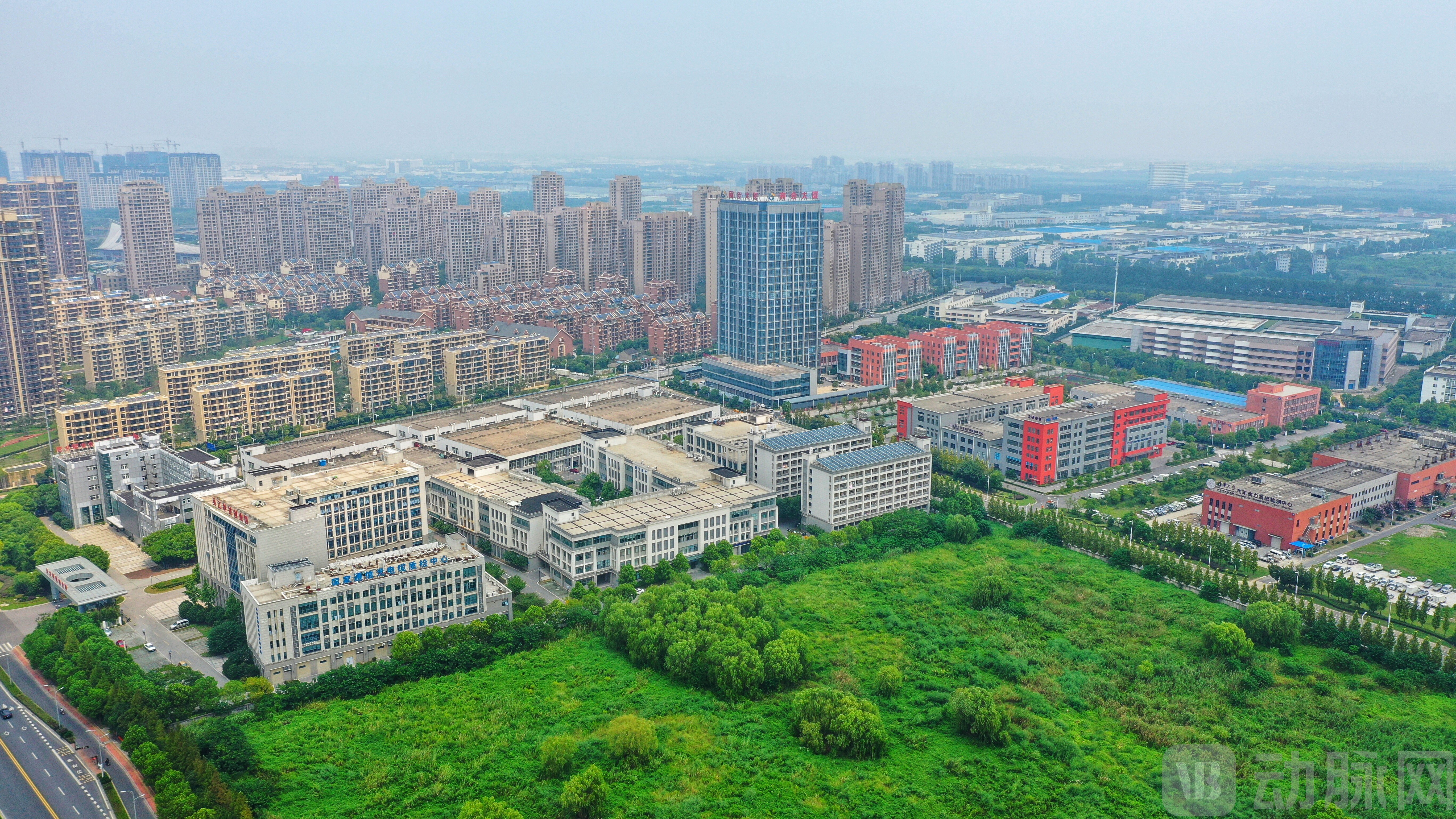
First, in terms of policy.In 2014, the Wujiang Economic and Technological Development Zone formulated a plan for the development of the biopharmaceutical industry during the “13th Five-Year Plan” period. The plan clarified the overall approach of relying on industrial clusters, building upon existing biopharmaceutical enterprises in the Science and Innovation Park, and promoting the integration of industry with urban development as well as production with sales. It identified specific sub-sectors and key areas within the biopharmaceutical industry, and established an ecological cluster for the biopharmaceutical sector along with its development strategies.
Secondly, in terms of geographical location.Wujiang serves as Jiangsu’s “southern gateway,” bordered by Shanghai to the east, Lake Taihu to the west, Hangzhou to the south, and the main urban area of Suzhou to the north, placing it squarely within the core urban zone. From Wujiang, it takes just 10 minutes to reach Suzhou’s main urban area, 40 minutes to arrive at the Beijing–Shanghai High-Speed Railway station and Shanghai Hongqiao International Airport, and 90 minutes to reach West Lake in Hangzhou. This convenient transportation network has significantly propelled industrial development and the evolution of spatial patterns.
Then, in terms of industrial foundation and revenue environment.Wujiang is a typical representative of the “Southern Jiangsu Model” and a national leader in the private economy. To date, Wujiang is home to more than 80,000 private enterprises, having formed four dominant industrial clusters: silk textiles, electronic information, optical cables and fibers, and equipment manufacturing. A first-class business environment and a well-developed industrial chain have opened up greater opportunities for the biopharmaceutical industry.
Finally, in terms of innovation capability and talent depth.Wujiang boasts strong innovation vitality, having ranked first among county-level cities on Forbes’ list of China’s Most Innovative Cities for three consecutive years. To date, Wujiang has accumulated four national-level technology business incubators, ten national-level enterprise technology centers, five national-level mass innovation spaces, 111 provincial-level enterprise technology centers, 65 provincial-level engineering technology research centers, and 16 provincial-level mass innovation spaces.
In terms of talent pipeline development, Wujiang has implemented reforms for the differentiated allocation of talent policies and continuously advanced the “dual recruitment and dual attraction” initiative. The total talent pool in the district has exceeded 330,000, including over 28,100 high-level professionals. Among them, there are 64 national-level talents, five provincial “Mass Entrepreneurship and Innovation Teams,” 72 provincial “Mass Entrepreneurship and Innovation Talents,” 110 municipal “Gusu Leading Talents in Innovation and Entrepreneurship,” and 472 district-level “Science and Technology Leading Talents.”
For Junshi Biosciences, Wujiang’s favorable policy environment, unique locational advantages, robust industrial foundation, strong innovation capabilities, and business-friendly ecosystem that respects and prioritizes commerce have undoubtedly provided powerful support for its growth, enabling the company to achieve rapid development in a short period and swiftly secure a advantageous position in the market.
What Chemical Reactions Have Occurred Between Junshi Biosciences and Wujiang Over the Past Eight Years?
Innovation is the foundation of biopharmaceutical enterprises. Only by continuously striving for innovation can companies sustain their vitality and advance to higher levels.
Junshi Biosciences recognized this from the outset and, in its second year of establishment, decided to build a R&D center and production base in Wujiang, specifically dedicated to helping the Group accelerate the translation of innovative achievements from the “laboratory” to the “public.”
However, innovation is no easy feat, especially for newly established enterprises. Transforming an initial scientific concept into laboratory results, then translating that technology into mature commercial products and achieving industrial-scale implementation involves multiple critical stages and requires a continuous infusion of resources.
To accelerate the rapid development of Junmeng Biopharma,Wujiang has tailored a series of preferential policies for Junmeng Biotechnology, including support for 50 mu of construction land and assistance with talent program applications. These measures have not only helped resolve the company’s needs for R&D and experimental facility construction but also provided comprehensive talent-related services for its employees., effectively bridging its talent gap and enhancing its self-sustaining development capabilities.
Currently, the number of employees at Junmeng Biotechnology in the Wujiang Economic and Technological Development Zone has expanded from an initial 20 to nearly 300. Among them, more than 200 are R&D personnel, with over 50% holding master’s or doctoral degrees, and some staff members possess overseas study and work experience. It is reported that Junmeng Biotechnology has cumulatively assisted more than 60 employees in applying for and obtaining certification under various talent programs, including the Jiangsu Province “Mass Entrepreneurship and Innovation Talent Program,” the Suzhou City “Gusu Leading Talent Program for Innovation and Entrepreneurship,” and the Wujiang District “Science and Technology Leading Talent Program,” “Key Industry Urgently Needed Talent Program,” and “Top Graduates from Prestigious Universities Talent Program.” Additionally, the company has helped more than 50 individuals from outside Wujiang settle down in the region.
The continuously growing talent pool has undoubtedly created more possibilities for Junmeng Biopharma. According to publicly available information,Over the past eight years, Junmeng Biosciences has undertaken the research and development of 28 investigational drugs within the company’s disclosed pipeline of 44 products, covering therapeutic areas including malignant tumors, chronic metabolic diseases, autoimmune diseases, neurological disorders, and infectious diseases., suitable for multiple indications with unmet medical needs,Of these, two products have been commercialized, nine have entered clinical trials in China or the United States, and seventeen are in the preclinical stage.
In terms of specific products, in addition to the aforementioned first domestically produced PD-1 monoclonal antibody, Tuoyi, JS002, developed by Junshi Biosciences, has received approval for its clinical trial application as the first domestically produced anti-PCSK9 monoclonal antibody. JS004 has entered clinical trials simultaneously in China and the United States as the world’s first anti-BTLA monoclonal antibody for cancer treatment. At the onset of the pandemic in 2020, Junshi Biosciences participated in the development of JS016 (etesevimab), a neutralizing antibody against COVID-19, completing preclinical work such as antibody expression and toxicology studies within an extremely short timeframe. As the first neutralizing antibody against COVID-19 to enter clinical trials in China and the second globally, it has currently received emergency use authorization in more than 12 countries and regions, including the United States and Italy.
It is clear that Junmeng Biosciences, as the R&D center of Junshi Biosciences, has provided tremendous impetus to its development over the past eight years since its establishment. However, it should not be overlooked that Junmeng Biosciences’ current R&D achievements are inseparable from the comprehensive support provided by Wujiang in terms of policies, talent, and ancillary services.
Looking Ahead: How Can Junshi Biosciences Integrate Closely with Wujiang’s Biopharmaceutical Industry?
In a sense, Junshi Biosciences and Wujiang are mutually complementary.
On the one hand, it is about the starting point.In the second year after Junshi Biosciences established its presence in Wujiang, the district intensified its efforts on industrial policy, clearly identifying specific segments and key areas within the biopharmaceutical industry, and establishing an ecological cluster for the biopharmaceutical sector along with its development strategy.
On the other hand, the years of Junshi Biosciences’ rapid growth have also witnessed the surge of Wujiang’s biopharmaceutical industry.To date, more than 100 biopharmaceutical and general health-related enterprises have settled in Wujiang District. These companies are primarily engaged in biopharmaceuticals, medical devices, traditional Chinese medicine decoction pieces, new drug R&D, and pharmaceutical intermediates. Among them, 21 have been included in Suzhou’s database of leading industries above designated size. In 2020, these enterprises achieved an output value of approximately RMB 4 billion, becoming a vital link in Wujiang’s economic industrial chain.
But this is not the end; Junshi Biosciences and Wujiang still hold greater possibilities for the future.
For Wujiang, the biopharmaceutical industry has become a key growth driver. In the future, Wujiang will actively align with Suzhou’s “1+N” development framework for the biopharmaceutical sector—characterized by one core and multiple poles—strengthen research on the industrial chain, and focus on advancing three key initiatives to propel industry growth: cultivating a portfolio of high-quality achievements with independent intellectual property rights that meet international standards; attracting external enterprises that possess core technologies and wield global influence; and nurturing local companies with outstanding innovation capabilities and strong competitiveness in their areas of expertise. Building on these efforts, Wujiang aims to gradually establish a new hallmark for its biopharmaceutical industry.
Among these strategic plans, each is closely related to Junshi Biosciences. In terms of cultivating key enterprises, Junmeng Bio, a subsidiary of Junshi Biosciences, as a typical representative of the biopharmaceutical industry in Wujiang, will naturally attract more market attention in the future.
Junmeng Biosciences, entrusted with a “major responsibility,” has clearly made its preparations and formulated a detailed strategic plan for the future. Specifically,Junmeng Bio will further increase its key investments in talent and projects, striving to rapidly and efficiently develop new drugs urgently needed for clinical use. Meanwhile, it will strengthen mutually beneficial cooperation with other upstream and downstream biopharmaceutical enterprises in Wujiang, promoting the coordinated development of the industrial cluster and contributing to the construction and optimization of Wujiang’s biopharmaceutical industry ecosystem.
Undoubtedly, the formation of a high-quality industrial cluster is inseparable from core enterprises; likewise, the journey of these core enterprises from incubation to maturity naturally relies on the efforts contributed by the industrial cluster. For Wujiang and Junshi Biosciences, their relationship is not merely one of tenant and location, but rather resembles that of “partners.” Through continuous adaptation and optimization, they have been solving various challenges step by step, jointly driving their mutual development.
Currently, the Yangtze River Delta region is the primary hub for antibody drug-related enterprises in China. As a demonstration zone for the integrated development of the Yangtze River Delta, Wujiang will undoubtedly prioritize the growth of its biopharmaceutical industry. As a pioneer in the research, development, and manufacturing of antibody drugs, Junshi Biosciences will actively build a comprehensive biopharmaceutical industry chain. This strategic direction aligns perfectly with Wujiang’s objectives, further expanding the future potential for both parties.