Can Gamified Digital Therapeutics Show Tencent and NetEase a New Path Forward?

Games Can Be “Opium” or “Elixir.” Can Three Gamified Digital Therapeutics Companies Chart a Clear Course for Gaming Firms “Lost in Confusion”?
—Mu Zhe Says

Therapy Companies Are Rising Globally. In the field of central nervous system (CNS) disorders—ranging from Parkinson’s disease and Alzheimer’s disease in the elderly, to depression and anxiety in adults, and autism and attention-deficit/hyperactivity disorder (ADHD) in children—a cohort of representative healthtech companies has emerged. Grounded in theoretical frameworks such as cognitive behavioral therapy (CBT), applied behavior analysis (ABA), and positive psychology, these companies leverage digital and gamification capabilities to reach broader populations.
Will “gamification” capability become a standard feature for such digital therapeutics companies? We may draw some insights from the three cases presented in this article.
Beats Medical – Digital Therapeutics for Parkinson’s Disease
Beats Medical was founded in 2012 by Ciara Clancy, who originally worked as a physiotherapist specializing in Parkinson’s disease rehabilitation. On one occasion, a patient with Parkinson’s arrived 20 minutes late for a rehabilitation session; in reality, the patient had experienced “freezing of gait” right at their doorstep. In addition to tremors, the primary symptoms of Parkinson’s disease include rigidity and bradykinesia (slowness of movement).
This gave rise to Ciara’s idea: Why must Parkinson’s disease patients go to the hospital for “metronome therapy”? Can’t they train at home using their smartphones?
Metronome Therapy is an evidence-based training and assessment tool that generates rhythmic sounds or counts through computer-programmed software or mechanical metronomes (such as musical instruments). Clinical research and practice have demonstrated its efficacy in improving cognition, attention, memory, speech, executive function, comprehension, as well as motor and sensory skills.
The principle is that when the "internal signals" in the brains of Parkinson's patients are impaired, external auditory stimuli can be transmitted back to the brain to facilitate motor responses.
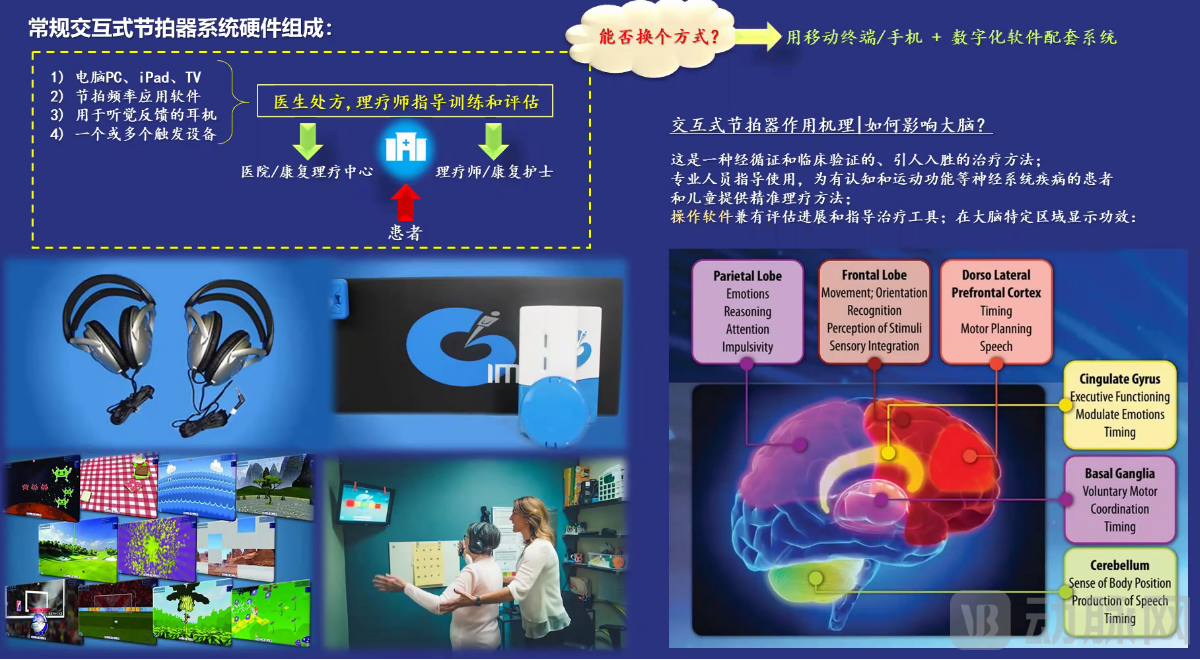 Source: Beats Medical
Metronome therapy, a commonly prescribed clinical treatment for the "freezing of gait" in Parkinson’s disease—characterized by reduced step count and slowed walking speed—has been digitally transformed by Beats Medical. This approach includes performing limb movements or stepping in time with the rhythm (e.g., “Step, Step, Step”), speaking or vocalizing according to a set tempo, tapping in response to cues, and utilizing gesture-based interactions integrated with smart hardware.
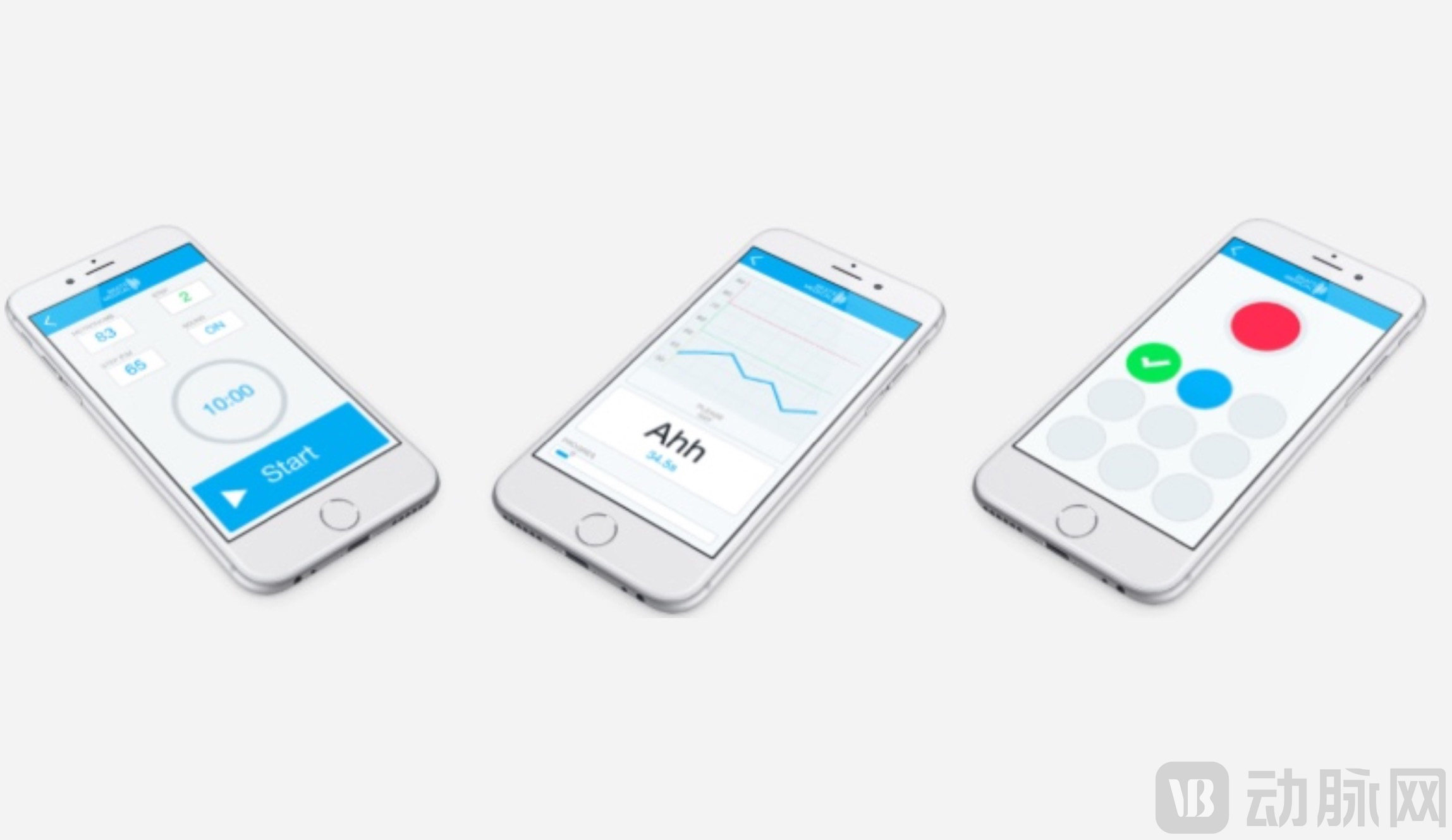
Source: Beats Medical
At its core, digitalization addresses the method of treatment delivery without altering the inherent logic and therapeutic approaches of evidence-based medicine. This seemingly simple shift lightens the traditionally resource-intensive offline services, enabling them to reach over ten times more patients through a widely accessible mobile metronome app.
Happify – Digital Therapeutics for Depression
Tomer Ben-Kiki and Ofer Leidner, the founders of Happify, were previously the founders of Oberon, a well-known gaming company. While many may not be familiar with Oberon itself, its development of Spider Solitaire—a classic Windows game—means that nearly everyone has played it.
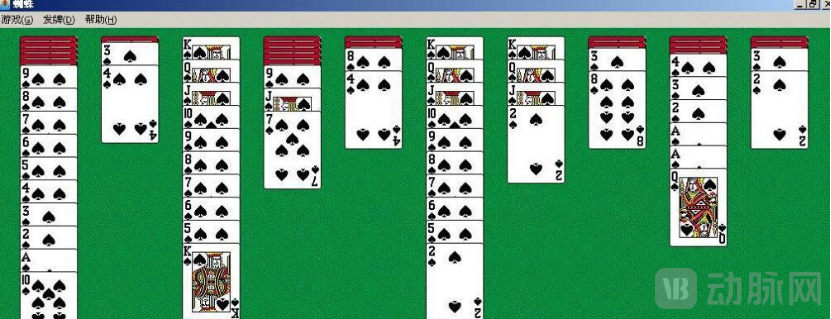 Source: Oberon
After cashing out from their gaming company, the two founders had been contemplating how to leverage games to improve people’s health. They subsequently encountered an opportunity to “treat depression through gaming.” Central to their product is the concept of “gamification.” The product enhances well-being and reduces anxiety and depression through the following six aspects.

Example 1: Expressing gratitude to important individuals involves enabling users to record their daily mood, the people and events they wish to thank, and the reasons for their gratitude in a journal-entry format.

Example 2: To dispel pessimistic thoughts, engage in a simple balloon game. Some balloons display positive words (e.g., comfort, joy, unity) and should be retained, while others bear negative words (e.g., stress, anxiety) and need to be popped by clicking.

Example 3: Happy Message in a Bottle is a method for designating a friend or family member as the recipient of joy by creating and scheduling a specific plan, such as spending time playing with one’s daughter on a certain day of the week, documenting this plan, and following through with its execution.

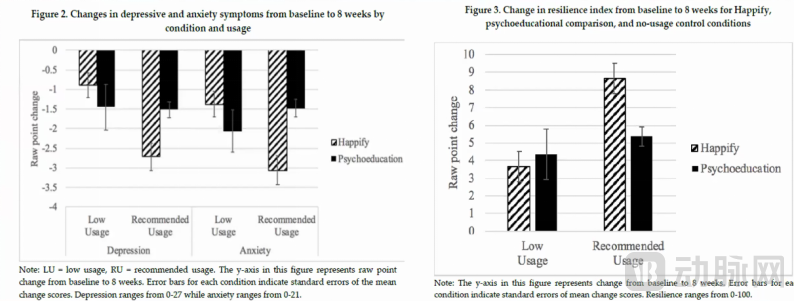
Each task clearly demonstrates its underlying principles, empowering you to “clearly understand” how to enhance your well-being and steer clear of anxiety and depression.The company’s theoretical foundation is rooted in positive psychology, cognitive behavioral therapy, and mindfulness, drawing on decades of accumulated scientific knowledge and clinical practice experience.. The company has also published relevant papers demonstrating that computer- and mobile-based interventions can alleviate anxiety and depression.
Assessment using the PHQ-9 (for depression) and GAD-7 (for anxiety) scales reveals that the therapeutic effect of the intervention reaches a turning point within four weeks. The goal is to consolidate these changes into personal habits, thereby achieving sustained long-term benefits, rather than relying on an approach where effects are present only during active intervention and absent once it is discontinued.
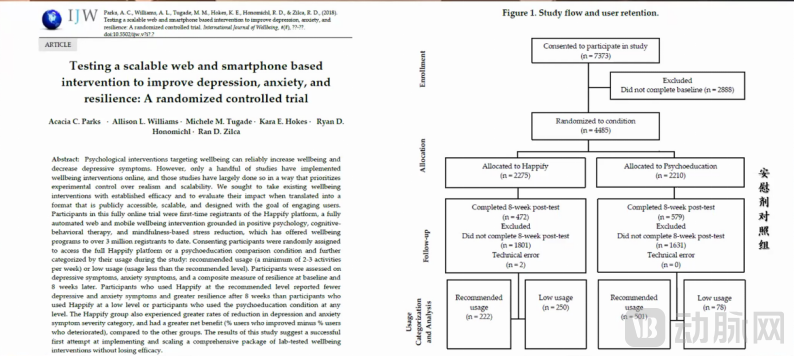 Source: Happify
Source: Happify
Akili – Digital Therapeutics for ADHD
Attention Deficit/Hyperactivity Disorder (ADHD) is a common chronic neurodevelopmental disorder that originates in childhood and can have effects extending into adulthood. Its primary characteristics are inattention and/or hyperactivity-impulsivity that are inconsistent with developmental level.
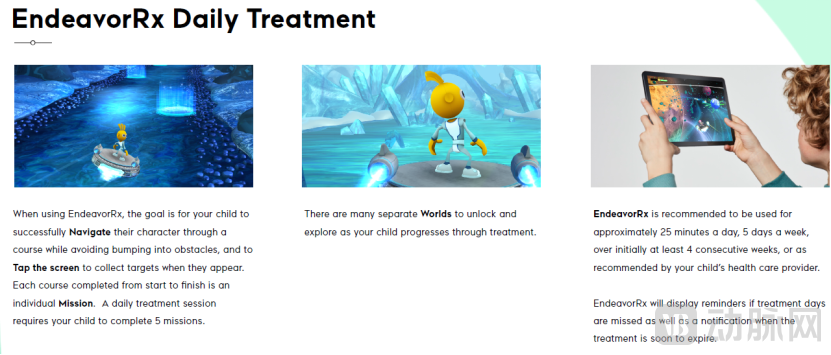
Akili’s game features a simple design with only three actions:
- Steer controls rowing direction
- Tap to Battle Monsters
- Steer and Tap: Row While Battling Monsters
However, in reality, the processes occurring every second, along with the choices made and stimuli received by the patient, stimulate the prefrontal cortex of the brain in a highly specific manner.
 Source: Akili
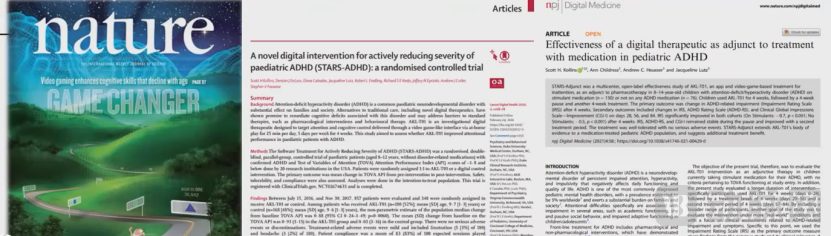
During the early-stage research and development and iterative processes of its games, the company simultaneously scans and monitors subjects’ brain regions to observe which game operations activate specific areas of the brain. In 2003, in Nature’s GAME CHANGER, the company published four to five peer-reviewed academic papers demonstrating the imaging effects of this game-based therapy on the frontal lobe within one month.
 ComeSource: Akili
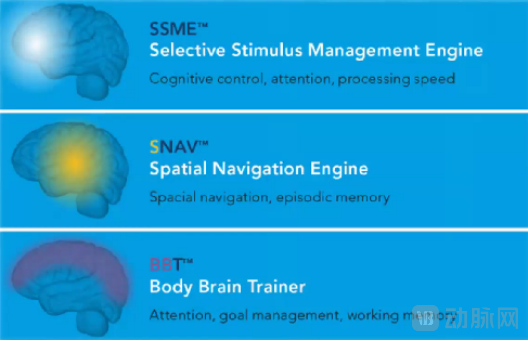
Game development is designed from three perspectives.
First, the Selective Stimulation Management Engine (SSME), which acts on the neural systems regulating attentional control, inhibition, and multitasking (prefrontal cortex); second, the Spatial Navigation Engine (SNAV), which acts on the regulation of spatial orientation, memory, and organizational planning (hippocampus); third, the Body and Brain Trainer (BBT), which acts on the regulation of attention, impulse control, working memory, and goal management (fronto-parieto-cerebellar regions).
Source: Akili
This is precisely what constitutes the so-called “active ingredient” of a digital therapeutic. Mu Zhe believes that the first two points correspond respectively to the game mechanics of “Tap” to defeat monsters and “Steer” to row a boat, while the third point involves completing different levels and collecting target items.
Simply put, this isDirectly induce physiological effects through gaming software, and these effects are predictable.. Furthermore, it establishes a quantifiable link between the stimulus and its effect.
Final Thoughts
Turning our attention back to China, there are abundant opportunities available, whether at tech giants such as Tencent and NetEase, or at startups like Bositeng (a digital therapeutics company specializing in dementia). Gamification serves as a delivery format, but evidence-based medical validation is a prerequisite for it to be recognized as a “therapy.”
However, what Mu Zhe seeks to explore is whether “gamification” should be regarded as a capability that needs to be developed. The answer is yes!
From the perspective of a drug’s social benefits, three aspects must be considered: first, its therapeutic efficacy for individual patients; second, the size of the population it covers; and third, whether its marginal cost can approach zero.
Digital therapeutics have garnered significant enthusiasm precisely because, while ensuring the primary benefit of therapeutic efficacy, they fully leverage the advantages of the internet to achieve the second and third benefits—universal coverage and near-zero cost—thereby realizing “health for all” rather than “health accessible only to the wealthy.”
“Gamification” is the attribute most aligned with the spirit of the internet, most capable of being spontaneously adopted and disseminated by users, and also an effective solution to the “adherence” problem that plagues pharmaceutical companies—namely, how to make patients “love taking their medication.”
From the perspective of drug innovation and R&D, efficacy, time, and data must be taken into account. Game software or any other form of task-oriented software demonstrates significant advantages over traditional drug development and clinical trials.:
- As users engage with the platform, they simultaneously contribute data for clinical trials, enabling the collection of clinical data in any required volume and over any necessary time span.
- Patients undergo "treatment" and "assessment" simultaneously; medication administration also serves as a diagnostic process, with diagnostic time slices precise to the second;
- Game companies (pharmaceutical manufacturers) adjust the difficulty (formulations) while receiving data; what previously took weeks or months can now be accomplished instantaneously.
It is inevitable for major internet companies to enter the “digital therapeutics” sector; it is only a matter of time. The only question to consider is whether to pursue in-house development in a vertical niche or to build an integrated service platform.
As payers, insurance companies were previously bullied by hospitals and pharmaceutical manufacturers during claims settlement; in the future, they may face bullying from major internet tech giants. When will insurers, struggling to survive in this narrow space, awaken and take proactive action?
Gamified Digital Therapeutics: Do “Pharmaceutical Profits” Plus “Gaming Company Valuations” Point to a “Clear Path” for the New Generation of Gaming Companies?
P.S. This analysis is based on publicly available information, reasonable assumptions, and business projections, and does not constitute any investment advice.