

Eight Major Policy Boosts Propel Nursing – The Hidden Healthcare Goldmine
“Three parts treatment, seven parts nursing.” Nursing is vital to patients’ immediate interests and their physical and mental well-being, and it also affects the quality of medical care delivery; its importance goes without saying. However, for a long time, nurses in China have had to confront an awkward reality: low levels of informatization in nursing care; an imbalanced ratio between healthcare providers and patients, leading to excessively high workloads and stress among nursing staff; occasional medical accidents; and strained doctor–patient relationships.
Many issues constitute “chokehold” problems that hinder the healthy development of the healthcare sector.
Where there are difficulties and pain points, there are “rich mines.” This “hidden track” in the marginal area harbors immense value.According to relevant officials from the National Health and Family Planning Commission,As of the end of 2018, China had over 4.1 million registered nurses, with approximately 2.74 nurses per 1,000 population. Although the number of nurses per 1,000 population in China has grown rapidly compared to the past, there is still a significant shortage to be addressed when compared to Japan’s standard of 17.27 nurses per 1,000 population.
Amid the rapid advancement of the Healthy China national strategy and the accelerating aging of China’s population, the need to fill gaps in the nursing sector has become urgent.But how should the nursing gap be filled?How Can Traditional Nursing Achieve a Qualitative Leap? ThisThese issues have long stood before us.
By breaking down the issue, it becomes evident that the essence of current smart nursing development is, in fact, the informatization of medical and nursing care.。
Since 2015, relevant policies targeting nursing care development have been successively introduced.A statistical review of policies issued from 2015 to 2020 reveals that approximately eight documents explicitly outlined mandatory national requirements for nursing care. Notably, the 2019 “Notice on Launching Pilot Programs for ‘Internet + Nursing Services’” directly integrated the direction of nursing reform and development into informatization and internet infrastructure initiatives.
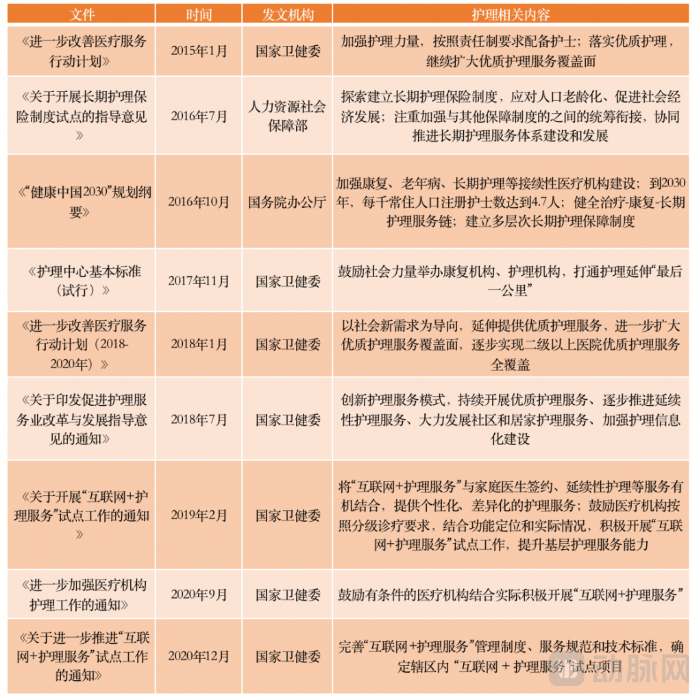
Selected Policies in the Nursing Field Since 2015
Policy documents from recent years indicate that nursing has become pivotal to improving healthcare services and addressing population aging, with the direction of nursing reforms gradually clarified and refined through ongoing exploration.
In 2015, the National Health Commission specified “strengthening nursing carethe overarching direction of “increasing quantity, implementing high-quality nursing care, and expanding the coverage of high-quality nursing services.” In 2016, the strategic direction and positioning gradually became clearer, with policies stating “establishing a long-term care insurance system and strengthening coordination and linkage with other social security systems” “by2“By 2030, the number of registered nurses per 1,000 permanent residents will reach 4.7,” and “improve the service chain of treatment-rehabilitation-long-term care,” clearly implementing the direction of reform.
2In 2017, it further integrated with major healthcare reform policies such as tiered diagnosis and treatment, proposing a plan to “bridge the ‘last mile’ of extended nursing care.” Amidst the wave of informatization, nursing care has become integrated with the Internet,Advanced under clearer guidanceReform. Amidst these reforms, nursing services have extended beyond hospital walls, becoming a key measure to address challenges such as the scarcity of medical resources and population aging.
In the future, as the coverage of regional smart healthcare ecosystems continues to expand, platforms will enable the integration of big data on resident health across both in-hospital and out-of-hospital care settings, yielding benefits across all aspects of healthcare. Big data analytics will not only foster advanced nursing research but also help hospitals establish efficient nursing standards.
It is evident that the multiple policies introduced in China are driving the smart nursing industry forward. More importantly,The intelligent development of the nursing sector has long become an indispensable component of hospital construction, driven by the introduction of smart hospital service ratings.National policies on healthcare informatization assessments have been increasing year by year, with nursing management ranking as the first item in the hospital smart management grading evaluation program.
For hospitals, nursing care is a relatively weak link in the smart hospital rating system. Increasing efforts to optimize and upgrade this area can not only help hospitals “earn points,”Still canIt can effectively improve nursing quality, achieving two goals with one effort.
Driven by policy, a large number of enterprises are strategically positioning themselves in the field of smart nursing. But how should companies accurately seize development opportunities in this emerging sector?VCBeat (WeChat ID: vcbeat) has conducted a detailed review of the development histories and other aspects of leading enterprises in the smart nursing market.
The value of smart nursing is gradually becoming clear under the boost of policies and demands. Suzhou Depin Medical Technology Co., Ltd. (hereinafter referred to as "Depin Medical") chose to enter the field ten years ago. As of now, its sales outlets have spread across 23 provinces and municipalities directly under the central government in China, including Nanjing Drum Tower Hospital, The First Affiliated Hospital of Soochow University, General Hospital of Eastern Theater Command, Zhongda Hospital Southeast University, Zhejiang Provincial People's Hospital, Shenzhen University Pinghu Hospital, Zhengzhou Children's Hospital, etc.Over 700 large hospitals,Among them, 80% of tertiary hospitals have established in-depth strategic partnerships, with over 15,000 solutions and product applications provided; the company’s average annual sales growth has consistently remained above 50%.
How Did Depin Medical Achieve Such Remarkable Results? An Examination of the Three Stages of Its Smart Nursing Construction Reveals That This Success Can Be Attributed to a Profound Understanding of Policy and Environmental Demands.
2010 to 2015 marked the first phase of development for Depin Medical. During this phase, Depin Medical focused on patients' healing spaces and basic nursing infrastructure, optimizing and upgrading these spaces based on the fundamental principles of physical and mental health, social health, and environmental health.
Suzhou Depin Medical’s “1.0 Basic Eco-Friendly Nursing System” comprehensive solution is designed from the perspective of nurses serving patients, meeting the customized, functional, and human-centered needs of nursing care. Its product lineup includes: medical eco-friendly nurse workstation series, medical eco-friendly medication preparation counters, medical eco-friendly dressing change tables, medical eco-friendly medical waste sorting and disposal stations, and medical eco-friendly nutritional meal preparation counters.
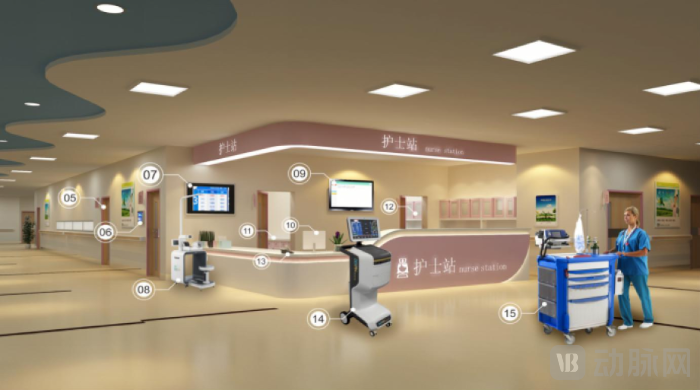
At this stage, Depin Medical adopts a human-centered approach to create healing spaces that are environmentally friendly, safe, and ergonomic. By starting with the physical environment, it improves conditions for both healthcare workers and patients, continuously optimizes care pathways, and further enhances staff efficiency and patient experience. This approach helps reduce cross-infection risks and addresses issues such as insufficient nurse-to-patient ratios, high nursing stress, and outdated care environments and facilities.
Since 2015, with the successive release of healthcare industry-related policies such as the “Guiding Opinions on Promoting and Planning the Application and Development of Health and Medical Big Data,” the strategic importance of informatization and new-generation information technologies has been highlighted, ushering in a period of intensive policy support for smart healthcare. Leveraging this favorable momentum, Suzhou Depin Medical Technology Co., Ltd. has built standardized, structured, informatized, and data-driven nursing processes based on big data, the Internet of Things (IoT), and artificial intelligence (AI), thereby entering the second stage of its corporate development—the era of smart nursing.

Depin Medical’s Smart Nursing System Comprehensive Solution encompasses: hospital-wide smart nursing ward construction, Clinical Nursing Clinical Decision Support System (NCDSS), Smart Nursing Management Information System, Smart Ward Visual Management System, Closed-Loop Management System, Vital Signs Acquisition System, SPD Ward Supply Management System, Healthcare Quality Continuous Quality Improvement (CQI) Control System, Bedside Patient Education System, Smart Outpatient System, and IoT-based Smart Nursing Ward Comprehensive Solution.
It is evident that at this stage, Suzhou Depin Medical Technology Co., Ltd. has moved beyond solutions that address nursing challenges solely through environmental improvements and has begun to implement informatization reforms in nursing processes.
This solution enables seamless integration between the Hospital Information System (HIS) and the Smart Nursing Software System. By leveraging platform-based empowerment, it effectively connects nurse stations with ward units, and utilizes information technology and the Internet of Things (IoT) to provide patients with more precise, safe, and high-quality medical nursing services.Optimize nursing workflows, reduce medical risks, and improve nurses' work efficiency. Break through the "pain points" and challenges of traditional nursing care, achieve information sharing and interoperability in medical nursing, let data do the running so that healthcare professionals can minimize legwork, return time to healthcare providers and patients, and fully enhance safety and clinical efficiency.
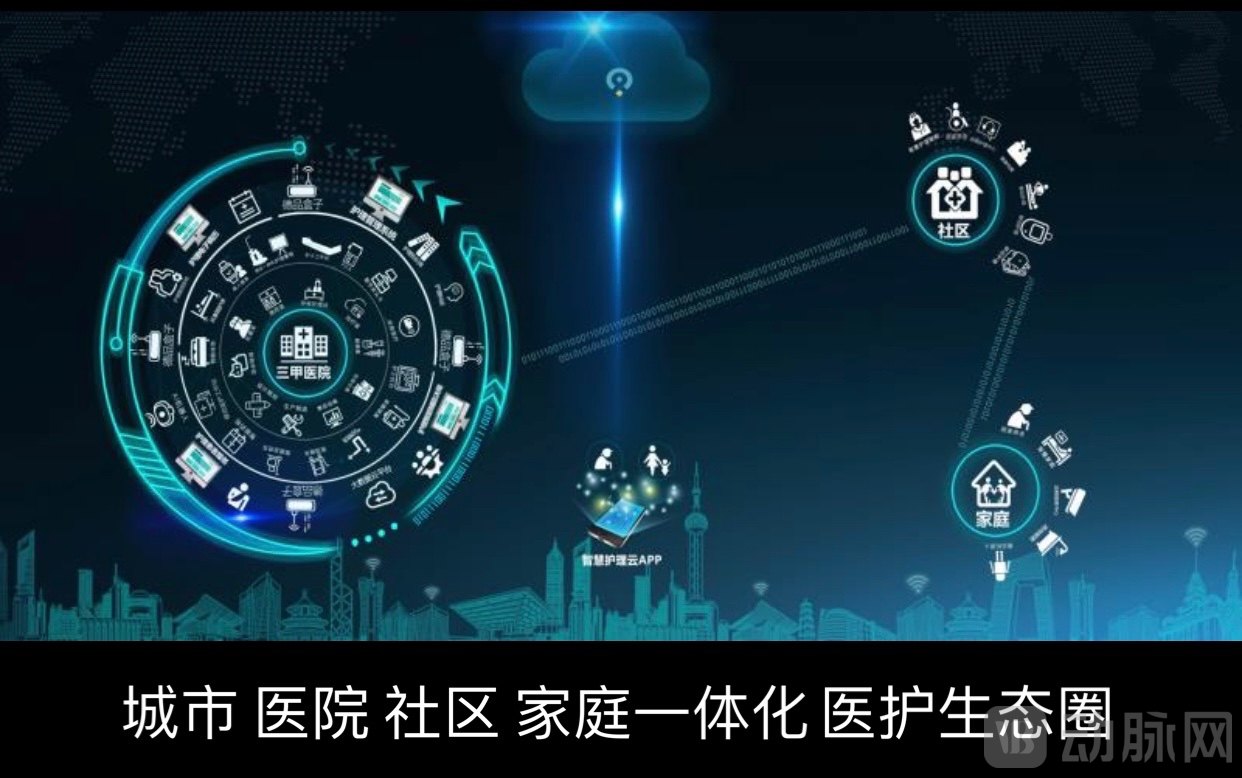
As the “tiered diagnosis and treatment” system and the “Healthy China 2030” initiative advance, Depin Medical has begun to lay out its third phase—an integrated Internet-plus extra-hospital extended care solution.Centered on health, extend nursing care from in-hospital settings to out-of-hospital home care, reaching down to families and individuals. This approach links and further expands the ecosystem among medical resources and institutions, fostering a virtuous cycle within a symbiotic framework. Ultimately, it aims to achieve the goals of ensuring patients receive desired care, enabling healthcare professionals to fully utilize their talents, and allowing medical institutions to maximize the use of their resources.
Currently, to address issues such as medical risks and doctor-patient conflicts, the platform is equipped with multiple functionalities, including real-time positioning, video intercom, one-touch emergency alarm, and full-process service recording.
CCTV Reports on Depin Medical’s “Internet + Nursing” Service Model
Suzhou Depin Medical has established general practice nursing institutions in more than ten cities, including Jiangsu Province, Guangzhou, Zhejiang Province, Beijing, and Shandong Province. It is expected to lay out 100 stations in 10 cities within one year (10 cities and 100 stations). It has reached cooperation with nearly 100 brand medical institutions, such as Jiangsu Province Hospital of Integrated Traditional Chinese and Western Medicine, Nanjing Brain Hospital, and Jiangsu Cancer Hospital. It has created a regional Internet + nursing service model with tertiary hospitals in the region as the core, community health service centers as the foundation, and nursing stations as a supplement.
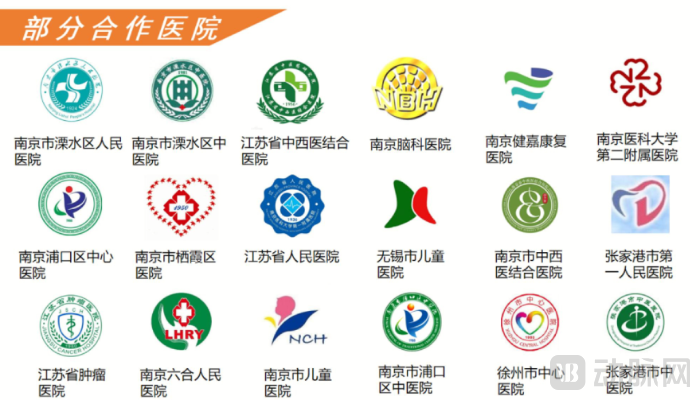
Affiliated Partner Hospitals
In simple terms, Suzhou Depin Medical Technology Co., Ltd. centers on the core concept of “technology-empowered nursing.” Guided by policy directives, it is developing an integrated smart nursing solution that bridges in-hospital and out-of-hospital care through a three-phase approach. This strategy optimizes nursing workflows, aligns with the strategic requirements of the “Healthy China 2030” initiative, facilitates the decentralization of high-quality medical resources, addresses long-standing pain points in traditional medical nursing, and resolves the “last mile” challenge in the development of healthcare services.
Why Was Depin Medical Able to Identify the Latent Value of This Sector Many Years Ago?VCBeat Exclusive Interview with Ge Qiuju, Founder of Depin Medical: Exploring the Strategic Vision Behind the Company
Ge Qiuju stated:“Years ago, Depin Medical’s decision to enter the seemingly ‘cold’ sector of smart nursing appeared somewhat risky. Choosing to transform and upgrade during a period of smooth sailing also faced considerable misunderstanding and skepticism. Yet risks are ever-present, making correct strategic decisions particularly crucial. For an enterprise to achieve enduring success, it must compete in the right arena, staying one step ahead in both technology and market presence. Despite the doubts, adhering to a pure and original intention is especially important. Twenty years ago, I spent nearly every day alongside healthcare professionals, deeply empathizing with their hardships. My sense of responsibility and professional acumen made me realize that this was a blue ocean full of vitality and hope.”
Subsequently, Ge Qiuju and her team conducted in-depth industry research and analysis. They found that with the advancement of national strategic initiatives and the continuous decentralization of medical resources, the era of healthcare informatization has arrived, confirming that they had correctly identified this emerging opportunity.
For Suzhou Depin Medical, smart nursing clinical informatization must bridge the "last 20 meters" to establish closed-loop management across all processes, thereby achieving the goals of identifying issues, implementing quality improvements, and enhancing nursing work efficiency.However, for smart nursing, it may still be necessary to go through three steps: the digitization of healthcare services, the interconnectivity between different medical information systems, and the discovery of value in medical big data.
Under strategic guidance, Depin Medical has currently filed over 160 patent applications, including 62 invention patents, and has obtained 101 software copyright registrations. The company entered the IPO tutoring phase in the first half of 2021 and aims to initiate its initial public offering (IPO) process in 2023.
Driven by Dual Forces of Demand and Policy, Smart Nursing Is Entering a Golden Age of Development.
The development model of Suzhou Depin Medical Technology Co., Ltd. offers certain references for the future development of smart nursing; however, determining the optimal trajectory for smart nursing still requires judgment based on policy directives and clinical needs.
Amid the technological wave of the artificial intelligence era, smart nursing will fully integrate hospital information and material flows, establishing a complete closed-loop system. This will liberate human resources, enable healthcare institutions to achieve higher operational efficiency, and deliver superior service experiences. This trend represents an inevitable path for the development of smart healthcare.
According to a report by Huaan Securities, China’s healthcare informatization industry is expected to maintain stable double-digit growth in the short term. Benchmarking this trend against the United States, China’s smart healthcare sector still holds more than tenfold potential for growth. Against this backdrop, the future development of smart nursing is promising.