

Dana Medicine Navigates the Emerging Blue Ocean: Specializing in Laboratory Diagnosis of Invasive Fungal Diseases
Invasive Fungal Disease is a common type of clinical infection, referring to an infectious disease in which fungi invade the human body, grow and reproduce in tissues, organs, or blood, leading to inflammatory responses and tissue damage.
In recent years, with the increasing number of patients suffering from hematologic disorders, malignant tumors, and organ transplants, as well as those requiring long-term use of broad-spectrum antibiotics, glucocorticoids, and immunosuppressants, the incidence of invasive fungal diseases (IFDs) has risen accordingly, gradually becoming a serious infectious disease. Particularly among immunocompromised patients, such as organ transplant recipients and individuals with malignant tumors, the incidence rate is as high as 20%-40%. In recent years, with the frequent emergence of public health incidents involving “superfungi” and other pathogens, market attention to invasive fungal diseases has climbed year by year, attracting companies like Dena Medical to deeply invest in this market.
Dana Medical is one of the few third-party independent medical laboratories in China specializing in the diagnosis of invasive fungal diseases, providing pathogenic microbiology testing services with a focus on invasive fungal disease diagnosis.Detectable items include conventional tests such as fungal smear, culture, identification, and drug susceptibility testing; immunoassays including combined serological testing; and molecular biology assays. These cover common and rare fungal detection, fungal resistance gene testing, and respiratory viral antigen and antibody detection.
Data shows that the market size for invasive fungal disease diagnostics in China exceeded RMB 5 billion in 2019, with a three-year compound annual growth rate (CAGR) of over 20%, reaching RMB 7 billion by 2021. Due to the high technical barriers in the research and development and manufacturing of diagnostic reagents for fungal diseases, as well as stringent regulatory requirements, few companies have entered this field. As a result, the fungal disease diagnostics sector remains an untapped blue-ocean market.
Accurate etiologic diagnosis of fungal diseases is of great significance for clinical diagnosis and treatment. Therefore, China has successively introduced multiple policies to support the enhancement of diagnostic and therapeutic capabilities for invasive fungal diseases. However, due to the atypical clinical manifestations and symptoms of invasive fungal diseases, which are easily masked by underlying conditions, clinical practice often faces challenges such as diagnostic difficulties and high rates of missed diagnoses. This leads to difficulties in early confirmation of invasive fungal diseases and persistently high mortality rates. In this context, it is crucial to provide precise, convenient, and highly efficient solutions for the early diagnosis of invasive fungal diseases.
Previously, the diagnosis of invasive fungal diseases mainly relied on direct microscopy, culture methods, imaging techniques, and histopathology. Each of these technologies has certain limitations, which restricts the clinical application of traditional methods in diagnosing invasive fungal diseases.
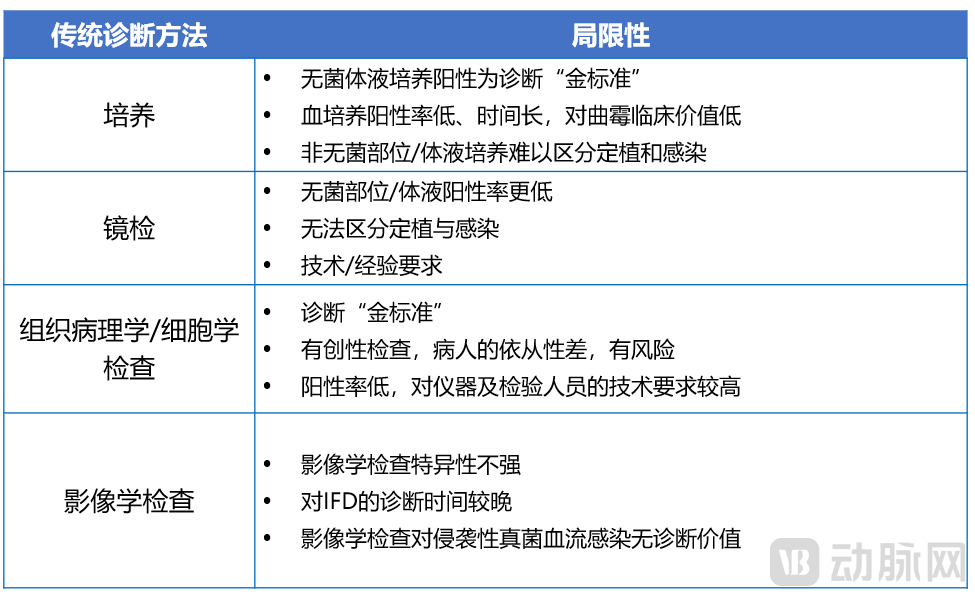
Conventional diagnostic techniques all have certain limitations.
Furthermore, emerging technologies such as metagenomic next-generation sequencing (mNGS) and matrix-assisted laser desorption/ionization time-of-flight mass spectrometry (MALDI-TOF MS) show promise in the diagnosis of invasive fungal diseases. However, due to their relatively short development history and immature clinical application, further advancement is required, and large-scale clinical implementation is not feasible in the near term.
Serology is one of the most effective methods for diagnosing invasive fungal diseases at the current stage.Serological testing has emerged as an important adjunct to traditional diagnostic methods for invasive fungal diseases, owing to its advantages such as ease of implementation, operational simplicity, and inter-laboratory result comparability.
Serological testing can be divided into antigen detection and antibody detection. Antigen detection includes the G test, GM test, GXM test, and Mn test, among others. Antibody detection refers to the measurement of genus-specific IgM and IgG antibodies. It should be noted thatVarious serological testing technologies are not interchangeable, each with its own advantages and disadvantages. Dana Bio has pioneered the 5G+ fungal combined testing solution.For different infection scenarios, the flexible combined application of G test, GM test, GXM test, Mn test, and IgG antibody detection helps physicians formulate rational treatment decisions, thereby reducing mortality and improving cure rates.
To further expand the clinical application value of combined serological testing, facilitate early, precise, and rapid diagnosis of invasive fungal diseases (IFD), and meet clinical diagnostic and therapeutic needs, Dana Biotech established the Dana Medical Third-Party Laboratory in 2020. Leveraging its leading advantages and comprehensive product portfolio in the IFD diagnostics sector, the laboratory provides clinicians with integrated laboratory diagnostic solutions for invasive fungal diseases.
Now,The market penetration rate for invasive fungal disease diagnostics in China remains low, and the diagnostic capabilities for invasive fungal diseases across hospitals at all levels are weak.A survey reveals that the proportion of Grade A tertiary hospitals in China with dedicated fungal work areas is low, with only 27% having established such independent zones and merely 31% equipped with dedicated biological safety cabinets for fungal testing. Furthermore, the adoption rate of non-culture diagnostic techniques in tertiary general hospitals remains low. Therefore, it is crucial to establish third-party independent medical laboratories specializing in invasive fungal disease testing services.
Dana Medical is an independent third-party medical laboratory specializing in the precision diagnosis of infectious diseases, with a focus on invasive fungal diseases., introducing cutting-edge diagnostic technologies for invasive fungal diseases and advanced laboratory management expertise,Build an innovative translational service platform for fungal detection.
Currently, Dana Medical boasts a high-caliber team of experts with years of experience and profound technical expertise in the fields of clinical infection and microbiological testing, achieving"Multi-platform, Multi-technology, Multi-project", has established three major disciplinary platforms: a molecular biology laboratory, an immunology laboratory, and a microbiology laboratory.Provides a comprehensive, integrated laboratory diagnostic solution for invasive fungal diseases.IncludingImmunological tests, such as combined serological assays, capable of detecting common invasive fungal pathogens such as Candida, Aspergillus, and Cryptococcus;Rare Fungal Detection, such as Talaromyces marneffei, Candida auris, Mucor, Histoplasma, and Pneumocystis jirovecii;Fungal Antifungal Resistance Gene Testing, such as detection of echinocandin resistance genes in Candida and azole resistance genes in Aspergillus.
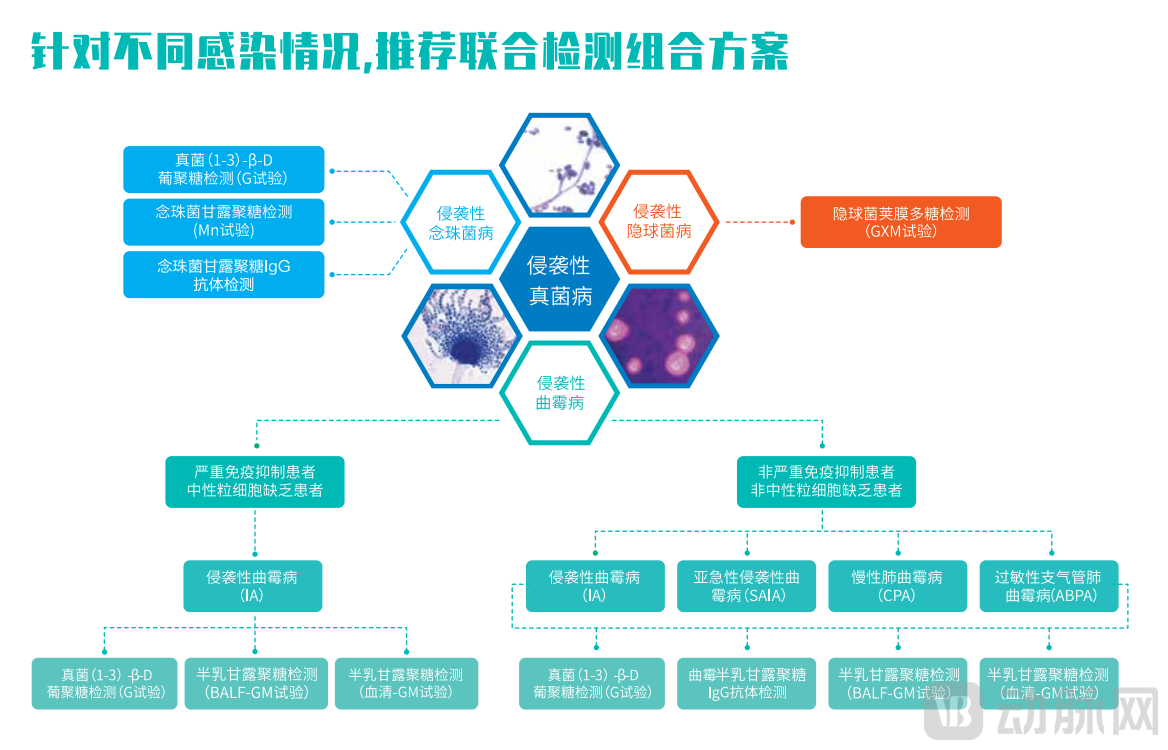
Dana Medical Early Rapid Combined Testing Protocol for Invasive Fungal Diseases
In addition to the diagnosis of invasive fungal diseases, Dana Med also covers other areas of infectious disease diagnostics, such as respiratory virus detection, atypical pathogen detection, enterovirus detection, Mycobacterium tuberculosis detection, inflammatory factor detection, carbapenem-resistant gene detection, and SARS-CoV-2 nucleic acid and antibody testing.
Moving forward, Dana Medical will continue to uphold its specialty in laboratory diagnosis of invasive fungal diseases, while continuously expanding its testing portfolio.Establishing a Standardized Laboratory for the Detection of Invasive Fungal Diseases in China,To provide comprehensive and precise diagnostic solutions for infectious diseases in clinical settings, thereby enhancing the diagnosis and treatment capabilities for invasive fungal diseases (IFDs) in China. We believe that as clinical practice and policy increasingly prioritize IFDs, and as diagnostic capabilities gradually extend to secondary hospitals, the market potential for invasive fungal diagnostics in China will be further unlocked, making the future of DynaMed highly promising.