

DeepBio Medical Launches Intelligent Breast Cancer Early Screening Solution to Address Sub-20% Early Detection Rate in China’s Primary Care Settings
In April 2020, Ms. Lei was found to have a breast architectural distortion measuring approximately 22x12 mm through automated breast volume ultrasound screening, which was ultimately diagnosed as breast cancer. Previously, her two-dimensional color Doppler ultrasound and mammography results had indicated cystic mammary hyperplasia.
In October 2020, Ms. Sun, a healthcare professional, was found to have a heterogeneous mass measuring approximately 26×7.5 mm via automated breast volume ultrasound (ABVS). The mass exhibited an irregular shape, and converging signs were observed in the coronal plane. It was classified as BI-RADS category 4B on ultrasound, and subsequent surgical pathology confirmed a diagnosis of breast cancer (invasive ductal carcinoma). Six months earlier, her ultrasound report had categorized a breast nodule as BI-RADS category 3, indicating a malignancy risk of less than 2%.
In August 2021, Ms. Wu, an ultrasound physician herself, underwent an automated breast volume ultrasound (ABVS) examination. An irregular nodule measuring approximately 8×6.2 mm was incidentally detected, with spiculation observed in the coronal plane. The ultrasound diagnosis was BI-RADS category 4B, and subsequent surgical pathology confirmed invasive ductal carcinoma of the breast. In contrast, her recent routine breast examination had only revealed small cysts.
All of the above individuals had a habit of undergoing regular medical checkups, yet high-risk lesions were not detected for various reasons. Fortunately, automated breast volume ultrasound (ABVS) enabled the timely detection of previously missed breast cancers, much to their relief.
According to the latest 2020 global cancer burden data released by the International Agency for Research on Cancer (IARC) of the World Health Organization (WHO), breast cancer has replaced lung cancer as the most commonly diagnosed cancer, with 2.26 million new cases.Becoming the world's leading cancer.
The early symptoms of breast cancer are often subtle, and its exact etiology remains unclear. As a secondary prevention measure, breast cancer screening is a crucial approach for detecting early-stage breast cancer, thereby reducing mortality rates and the incidence of advanced-stage disease. Therefore,"Early Detection, Early Diagnosis, and Early Treatment"is key to breast cancer prevention and control. According to the “Chinese Guidelines for Breast Cancer Screening in Women” released by the National Cancer Center in 2021, ultrasound is currently the preferred method for breast cancer screening in China.
However, as the current mainstream method for breast cancer screening, handheld ultrasound is heavily dependent on the operator’s expertise, leading to a certain rate of missed and misdiagnoses.It is imperative to upgrade and iterate breast ultrasound technology.
Through independent research and development, SoftProbe Medical Systems, Inc. has launchedThe First Domestically Produced Automated Breast Volume Ultrasound System, and in 2019Obtained the Registration Certificate for Innovative Medical Devices issued by the National Medical Products AdministrationIn 2020, Meinian Onehealth, the leading enterprise in China's private health checkup industry, introduced the automatically acquired volume breast ultrasound system independently developed by SoftProbe Medical Systems.
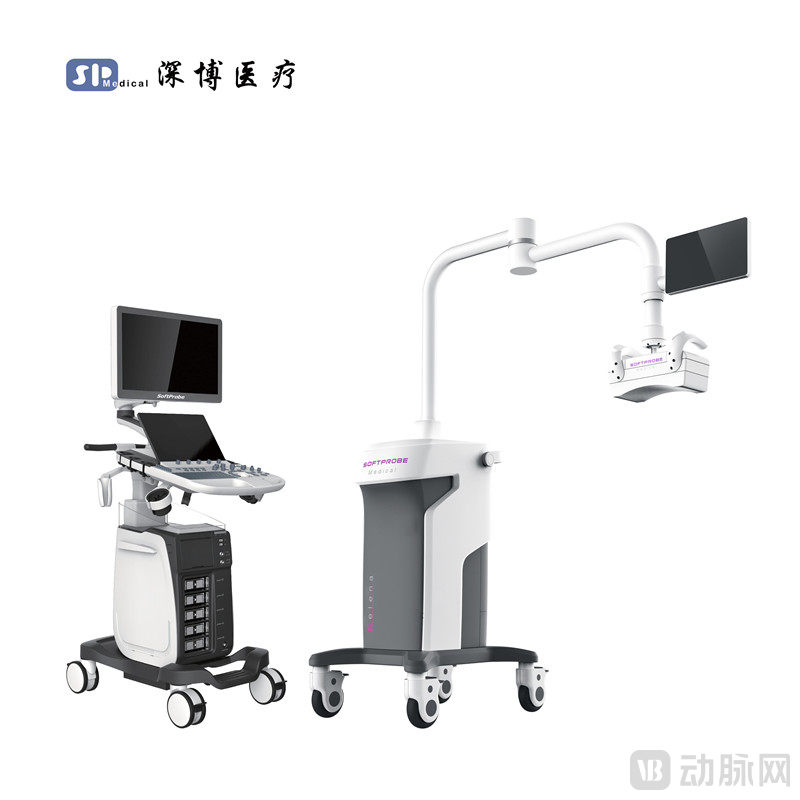
SoftProbe Medical Systems' Automated Breast Volume Ultrasound Device
Meinian Onehealth is committed to providing high-quality health checkup services, delivering the most advanced examination experience to its clients. According to relevant data, in 2018, Meinian Onehealth performed breast ultrasound examinations on approximately 5.8 million individuals, thereby providing breast cancer screening services to a large number of age-eligible women. Sun Tong, Vice President of Meinian Onehealth Group and General Manager of the Innovation Development Center, stated, “SoftProbe Medical’s automated breast volume ultrasound system offers superior cost-effectiveness. It achieves separation of scanning and diagnosis, innovatively employs an integrated flexible probe, ensures accurate lesion localization, allows long-term storage of raw images, and features AI-assisted diagnostic capabilities. These attributes significantly enhance both the accuracy and comfort of screening, making it an ideal device for breast cancer screening.”
According to Sun Tong, for over a year, SoftProbe Medical’s automated breast volume ultrasound has been deployed at scale across the health checkup centers of Meinian Onehealth in more than 20 cities nationwide, with cumulative examinations reaching thousands of cases.The positive detection rate (including nodules, masses, etc.) is close to 70%, and the major positive detection rate is close to 3%.
In addition to leveraging its partnership with Meinian Onehealth Healthcare to accelerate its expansion in urban areas, SoftProbe Medical is venturing into the rural primary-care breast cancer screening market, where pain points are more pronounced and demand is greater.
Tian Xudong, Founder and General Manager of SoftProbe Medical Systems, Inc., stated, “Common prosperity is the fundamental goal of building socialism with Chinese characteristics in the modern era. The nation has made tremendous efforts to eradicate extreme poverty; we must not allow inadequate breast cancer screening to cause people in grassroots communities to fall back into poverty due to late-stage diagnoses. Therefore, implementing breast cancer screening in rural grassroots areas is of great significance.”
Compared with the 80% early detection rate for breast cancer in European and American countries, China’s early detection rate remains below 20%. High-quality, effective breast cancer screening can facilitate the timely identification of early-stage breast cancer, thereby reducing mortality among breast cancer patients in China.
SoftProbe Medical’s goal is preciselyLeveraging automated breast volume ultrasound (ABVS) technology and AI-assisted diagnostic systems to create an innovative intelligent solution for early breast cancer screening,Guided by the goal of increasing early diagnosis rates for breast cancer, we are decentralizing screening services to primary care levels and promoting their widespread adoption in rural areas. This initiative aims to boost screening coverage and early detection rates in rural grassroots communities, reduce poverty relapse due to illness, and contribute to the realization of common prosperity.
SoftProbe Medical Systems, Inc. is a high-tech medical device company founded and led by national-level overseas high-end talents. Its core R&D team boasts nearly three decades of successful innovation experience in artificial intelligence for medical imaging in Silicon Valley, USA, with deep expertise in the R&D and commercialization of AI and volumetric imaging technologies for breast cancer screening. The company applies its leading ultrasound volumetric imaging technology and AI-assisted diagnostic algorithms to the early screening and diagnosis of breast cancer. Addressing the pain points in ultrasound-based breast cancer screening, it provides standardized, automated, and intelligent comprehensive solutions.
“The early diagnosis rate of breast cancer exceeds 60%”...remains a long way from the target.
Professor Bao Lingyun of the Hangzhou First People’s Hospital Affiliated to Zhejiang University School of Medicine has many years of clinical experience in breast ultrasound. Professor Bao stated, “As the primary method for breast cancer screening in China, ultrasound has been recognized by the World Health Organization’s expert group on cancer prevention and control as a successful model for disease prevention and control. Ultrasound offers the advantages of flexibility and cost-effectiveness; from a health economics perspective, it can address numerous issues encountered during large-scale screening. However, the existing pain points must not be overlooked.”
“Traditional handheld ultrasound relies on the physician’s experience and skill level, making it difficult to achieve standardization. Moreover, handheld ultrasound devices cannot fully preserve the raw image data acquired during scanning, which hinders traceability and effective quality control. Only standardized, homogeneous, and high-efficiency scanning that does not depend on the operator’s scanning and diagnostic expertise can address large-scale population screening. Achieving standardized ultrasound scanning and intelligent diagnosis has long been a persistent goal in clinical practice.”
Regarding SoftProbe Medical’s automated breast volume ultrasound system, Professor Bao Lingyun commented: “Automated breast volume ultrasound is primarily used for large-scale breast cancer screening, though it can also be applied in diagnostic settings. This technology overcomes certain limitations associated with traditional handheld ultrasound, offering distinct comparative advantages. The rapid scanning speed of SoftProbe’s product is well-suited for large-scale screening scenarios, and its design fully takes into account the physical characteristics of Asian populations.”The probe features a flexible structure., better aligns with human anatomical structures, provides a superior patient experience, and addresses the poor comfort associated with similar products during examinations.Since screening targets healthy populations, the examinee’s experience and compliance are of paramount importance.”
Furthermore, Professor Bao Lingyun stated, “AI technology is also an indispensable and important means to assist in improving the quality of primary-level screening.” The AI-assisted diagnostic system developed by SoftProbe Medical Systems, Inc.,Automatically identifies lesions, describes features, measures volume, assigns BI-RADS categories, and generates reports, thereby enhancing diagnostic accuracy for physicians while reducing their image interpretation workload., improve work efficiency, help increase the detection rate of breast cancer screening in China, and accelerate the popularization of "two-cancer" screening in grassroots areas.
According to SoftProbe Medical Systems, Inc.,Its AI-assisted diagnostic system has entered the multi-center clinical trial phase and is expected to obtain the NMPA Class III certification in the near future.At that time, SoftProbe Medical Systems, Inc. will officially establish a comprehensive solution to achieve standardized, automated, and intelligent screening and diagnosis of breast cancer, truly meeting the demands for large-scale population-based screening.
Conference Preview:
From September 16 to 19, 2021, SoftProbe Medical Systems, Inc. will participate in the 21st National Ultrasound Medicine Academic Conference of the Chinese Medical Association. At the conference, Professor Peng Yulan from West China Hospital of Sichuan University, Professor Bao Lingyun from Hangzhou First People’s Hospital affiliated with Zhejiang University School of Medicine, and Professor Chen Yaqing from Xinhua Hospital affiliated with Shanghai Jiao Tong University School of Medicine will jointly discuss the clinical value of automated breast volume ultrasound and AI-assisted diagnostic systems.