

Shanghai Turtle Technology Files IPO Prospectus Highlighting Its Innovative 'Sandwich-Structure' Glass-Based Microfluidic Chip for Digital PCR
How can cutting-edge chip research be integrated with life sciences? This was the question pondered by Professor Wu Dongping during his doctoral studies at the KTH Royal Institute of Technology in Sweden. Dr. Wu, who holds a Ph.D. in Science from the KTH Royal Institute of Technology and serves as a Distinguished Professor under the Shanghai Oriental Scholar Program, has long been engaged in research on micro- and nano-electronic devices, semiconductor biosensor chips, microfluidic biochips, and their applications. His research group pioneered the development of the Reference-Electrode-Less Solid-State Semiconductor Ion Sensor (RELESIS).
In 2009, after completing his R&D work on 60–30 nm generation memory devices in Germany, Professor Wu Dongping returned to China to serve as the Director of the Micro/Nano Fabrication and Device Laboratory at the Institute of Microelectronics, Fudan University, while also serving as a member of the Technical Program Committee for the European Solid-State Device Research Conference (ESSDERC). In 2015, when China’s “Precision Medicine” initiative was proposed, Professor Wu Dongping predicted that the deep integration of chip technology with life sciences would become a key component in the development of precision medicine. Specifically, he focused on gene-based precise detection as the entry point for this integration.
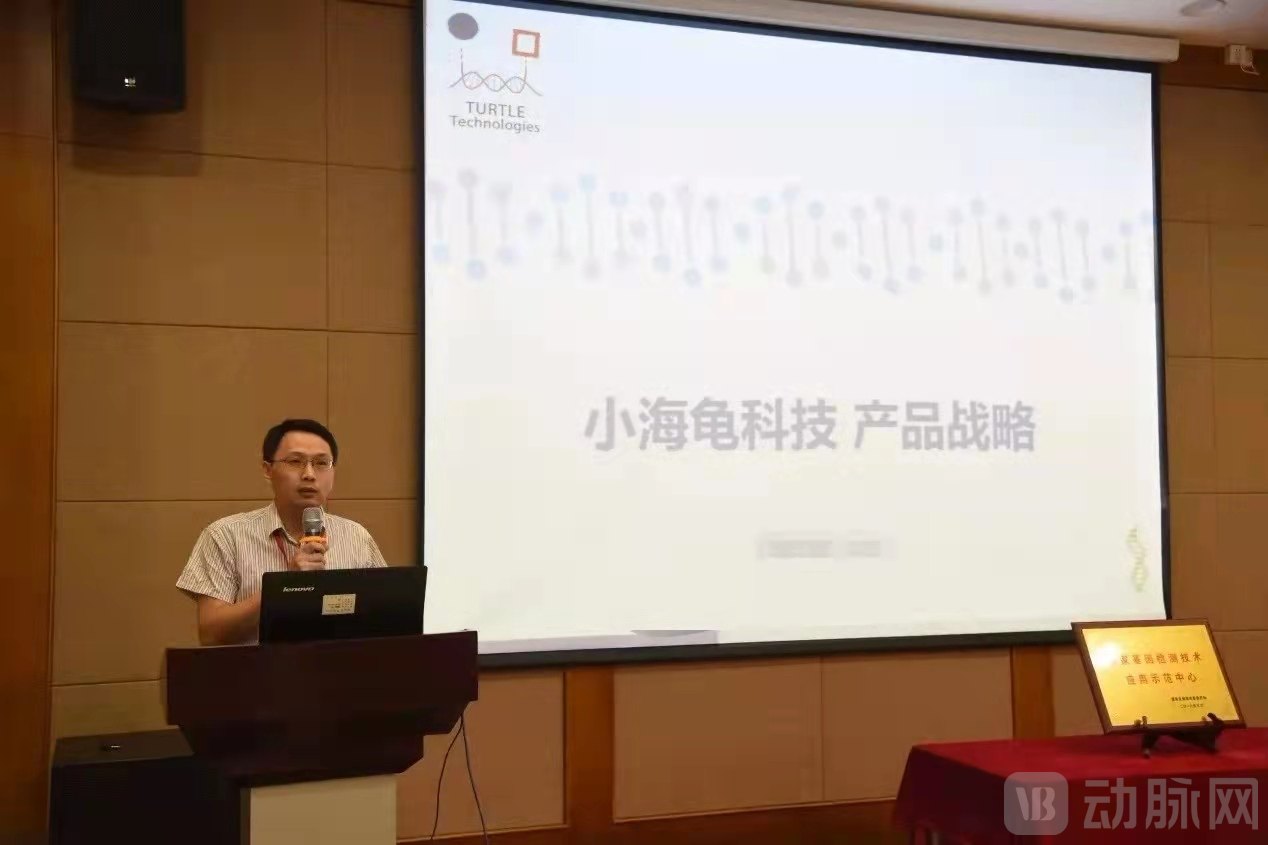
Professor Wu Dongping, Founder of Little Turtle Technology
“With the development of the healthcare industry, precision medicine will become an industrial trend, and precision diagnostics will emerge as a key growth driver,” said Professor Wu Dongping. “Therefore, as the core of precision diagnostics, technologies such as genetic testing, gene sequencing, and molecular diagnosis ultimately require the application of microelectronics or chip technology. This is where Shanghai Little Turtle Technology Co., Ltd. can enter the market.”
Shanghai Little Turtle Technology Co., Ltd. (hereinafter referred to as “Little Turtle Tech”) is a national high-tech enterprise established in 2015, dedicated to technological innovation in core genetic testing and leading the development of the precision medicine industry. Named after the sea turtle, one of the longest-living organisms on Earth, the company embodies its pursuit of “longevity,” the ultimate mission in the field of life sciences. With precision diagnosis as its starting point and precision health as its goal, Little Turtle Tech provides services covering the entire process of precision medicine practice and health management—from prevention, screening, and diagnosis to treatment and rehabilitation.
From the perspective of medical device sub-sectors, high-value consumables and IVD account for only 20% and 11%, respectively. There is still a significant gap compared to foreign markets, indicating room for growth and promising future prospects as a blue ocean market. It is estimated that the IVD market will reach RMB 105.4 billion in 2022, with both equipment and consumables showing considerable development potential.
Molecular diagnostics is the fastest-growing segment within the in vitro diagnostics (IVD) industry. Compared with biochemical and immunodiagnostics, molecular diagnostics offers advantages such as shorter turnaround times, higher sensitivity, and greater specificity. Driven by the demand for precision medicine and personalized therapy, it has become a key direction in clinical laboratory development. In recent years, the domestic molecular diagnostics market in China has maintained a high growth rate of nearly 30%. New demands in nucleic acid testing and biosafety are expected to drive further market expansion.
In the field of molecular diagnostics, PCR technology is currently a widely recognized cutting-edge technique in clinical applications. PCR, or Polymerase Chain Reaction, is a nucleic acid synthesis technology that leverages the principle of double-stranded DNA replication to amplify specific DNA fragments in vitro. This technology enables the rapid and massive amplification of target genes without relying on living organisms such as Escherichia coli or yeast; therefore, PCR technology is extensively applied in the field of molecular diagnostics.
As early as 1983, the first generation of PCR technology emerged, enabling qualitative analysis of samples. In 1992, the second generation, quantitative real-time PCR (qPCR), was introduced, allowing for relative quantification of detected samples. Subsequently, in 1999, digital PCR (dPCR) was developed. Its core principle involves partitioning individual DNA molecules into separate reaction chambers, followed by PCR amplification. Specific target sequences are detected using chemical reagents and dye-labeled probes. Statistical analysis is performed based on the proportion and number of reaction units exhibiting two types of signals, thereby achieving absolute quantification and single-molecule detection of samples.
Thus, the third-generation digital PCR (dPCR) detection process is primarily divided into three stages: “micro-reaction unit preparation,” “PCR amplification,” and “fluorescence signal analysis.” This approach offers higher sensitivity, greater precision, and requires smaller sample volumes. In terms of technical approaches, dPCR technologies are mainly categorized into “droplet-based” and “chip-based” systems, depending on the method used for micro-reaction unit preparation. Traditional chip-based dPCR exhibits limited competitiveness in clinical applications due to drawbacks such as complex operational procedures and high consumable costs.
Shanghai Little Turtle Technology Co., Ltd. has pioneered the use of glass-based microfluidic chips with a “sandwich structure,” driving consumable costs to an absolute minimum while achieving full automation in the fabrication of micro-reaction units. “Innovations at the chip level provide greater assurance for the accuracy of digital PCR test results from the source,” explained Professor Wu Dongping. “First, the fabrication of micro-reaction units is the core of digital PCR technology. Each micro-reaction unit carries independent biological information, and ensuring their stability and effectiveness during fabrication and amplification is the primary factor for accurate test results. Our chips physically partition sample droplets into nanoliter-scale microwells and separate them using solid oil, ensuring that the effective rate of micro-reaction units exceeds 95% in each test.”
“Secondly, amplification efficiency and uniformity in PCR amplification are critical to the signal-to-noise ratio of positive and negative signals and the homogeneity of test results. Glass substrates offer superior thermal conductivity compared to silicon-based and plastic chip materials, and droplets form a uniform monolayer on the chip surface, resulting in more homogeneous amplification than that achieved in centrifuge tubes. Meanwhile, the excellent light transmittance of transparent glass, combined with a black background, further enhances fluorescence signal readout during analysis. Throughout all stages of digital PCR reactions, glass-based chips demonstrate distinct advantages, some of which were not anticipated during our initial design but were gradually identified through practical testing and validation.”
The superior performance underscores a higher technological barrier. Mass-producing glass-based microfluidic chips is a highly challenging manufacturing endeavor, with no existing global production lines for reference. Professor Wu Dongping, founder of Shanghai Little Turtle Technology Co., Ltd., told VCBeat that since its establishment, the company has been overcoming various obstacles. From upstream raw material supply to assembly line processing techniques and production equipment, Shanghai Little Turtle Technology has persisted in independent research and development. It has now become the first and only company in China to achieve autonomous production of digital PCR microfluidic biochips.
Notably, Shengji Gene, a wholly-owned subsidiary of Little Turtle Technology, has established an intelligent, flexible biochip production line, as well as GMP-compliant production lines for high-end medical devices and molecular diagnostic reagents. The annual production capacity for digital PCR chips and biological reagents exceeds 3 million units.
Leveraging its in-house chip production line, Shanghai Little Turtle Technology Co., Ltd. launched its first-generation digital PCR instrument, “BioDigital·Hua,” as early as 2018, making it one of the earliest digital PCR products to hit the market in China. Building on the “BioDigital·Hua,” the company upgraded and iterated on key performance metrics such as automation and detection throughput, introducing the next-generation “BioDigital·Qing” product, which received medical device registration certification in April 2021.
“BioDigital·Qing” offers greater automation, comprehensively addressing many of the pain points associated with current digital PCR products. It enables fully automated droplet generation and high-throughput detection. With key consumables produced in-house, costs are controllable, minimizing per-run expenses and eliminating the need to batch samples. The system achieves an exceptionally high proportion of valid droplets, effectively covering a wide range of application scenarios.
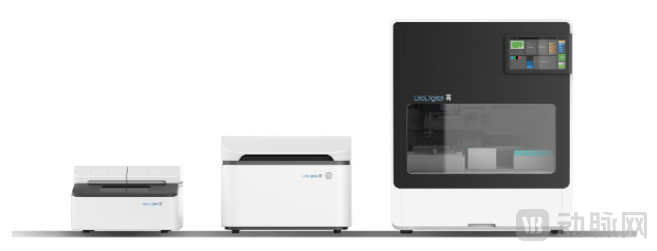
Digital PCR BioDigital·Qing
It is reported that the “BioDigital·Qing” assay requires an initial sample volume of only 26 μL, supports a throughput of 1–96 samples, generates more than 20,000 droplets, achieves a preparation time of less than 2 minutes per sample, maintains an effective droplet ratio exceeding 95%, and ensures droplet uniformity with a coefficient of variation (CV) below 1%. Furthermore, the equipment features an intuitive touchscreen interface.
In addition to “Hua” and “Qing,” Shanghai Little Turtle Technology Co., Ltd. will launch its third digital PCR product, “BioDigital·Yan,” achieving fully automated integration with a “sample-in, report-out” workflow. The names “Hua,” “Qing,” and “Yan” are derived from the legendary Chinese cultural ancestors: Fuxi (the Green Emperor), his mother Huaxu, and Shennong (the Yan Emperor).
In the future, as the demand for precision medicine increases, digital PCR (dPCR) is bound to become a prevailing trend. Whether it is companion diagnostics for tumors, clinical testing for infectious diseases, or assisted reproductive diagnostics based on eugenics and healthy childbirth, all these applications rely on the foundation of in vitro diagnostics (IVD). As the fastest-growing segment within the IVD field, molecular diagnostics presents immense market potential for dPCR equipment. Catering to diverse testing scenarios, Shanghai Little Turtle Technology Co., Ltd. has successively launched corresponding supporting test kits, including over 40 nucleic acid liquid biopsy kits developed jointly with partners.
Leveraging patented glass-based microfluidic chips and instrumentation, Shanghai Little Turtle Technology Co., Ltd. collaborates with distributors to mutually drive the development of a digital PCR ecosystem. The company has currently launched a new round of financing to accelerate the further promotion and application of its future products in both domestic and international markets.