

Why Is Healthcare Hard? A Review of AI Four Unicorns' Medical Strategies and Product Portfolios
Starting in the second half of 2020, AI unicorns successively entered the final sprint toward their initial public offerings (IPOs). However, the outcomes were mixed. On June 30, 2021, Yitu Technology, which had filed its IPO application earliest, voluntarily withdrew its listing application, falling short at the final hurdle. Less than a month later, on July 22, the Shanghai Stock Exchange approved Cloudwalk Technology’s IPO application. Thus, Cloudwalk, the last-established among the “AI Four Dragons,” became the first to secure an IPO.
As August arrived, two more heavyweight AI unicorns began their IPO sprints. Fourth Paradigm and SenseTime filed draft prospectuses with the Hong Kong Stock Exchange on August 13 and August 27, respectively.
Although not as highly valued as well-known AI unicorns, AI healthcare unicorns have their own pride—Keya Medical, Infervision, and Airdoc all filed for IPOs in 2021. Moreover, AI healthcare unicorns even seized the opportunity to strike back: in August, Deepwise Medical acquired Yitu Healthcare, a subsidiary of Yitu Technology.
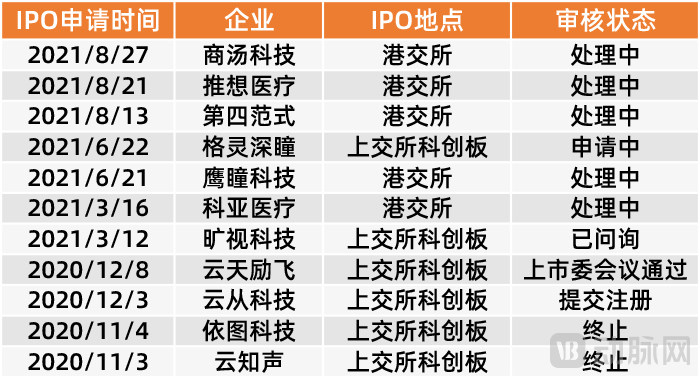
Current Status of AI Unicorns' IPOs
It must be acknowledged that AI unicorns, which have dominated other sectors, seem to have failed to replicate their success in the healthcare field. So, why is it difficult for AI unicorns to achieve significant breakthroughs in healthcare? Could the landscape change in the future? VCBeat (WeChat ID: VCBeat) attempts to uncover the reasons behind this.
An analysis of their respective prospectuses reveals that AI unicorns vary in their degree of involvement in the healthcare sector. Based on whether AI intervenes in core medical diagnostics as a medical device, these companies can be categorized into two groups: Yitu and Sensetime, which have entered the medical diagnostics field and obtained medical device certifications; and other AI unicorns that have entered areas such as natural language processing (NLP), AI speech recognition, AI knowledge graphs, or smart healthcare, without involving the core domain of medical diagnostics.
Compared with other unicorns, Yitu Technology and SenseTime entered the healthcare sector earlier and, through years of strategic planning, have penetrated into the core diagnostic domain of healthcare. They have also secured relevant regulatory approvals, making them direct competitors among medical AI unicorns.
Yitu Technology
As early as early November 2020, Yitu Technology submitted its IPO application, becoming the first among the “AI Four Dragons” to do so. Regarded as the natural candidate for the title of “the first AI stock,” Yitu Technology enjoyed immense prominence at the time. However, after several rounds of regulatory inquiries, Yitu Technology ultimately terminated its IPO in early July 2021.
The subsequent developments are well known: Yitu Healthcare, the medical division of Yitu Technology, was merged into Deepwise Medical. This marks the largest merger and acquisition event in the history of China’s AI medical imaging sector. The deal also signaled Yitu Technology’s strategic withdrawal from its healthcare business, after years of investment.
Yitu Technologies’ withdrawal from the healthcare sector does not indicate any deficiency in Yitu Medical’s product portfolio or technological capabilities. In fact, Yitu Technologies has harbored significant ambitions and expectations for the healthcare industry, even establishing a dedicated subsidiary, Yitu Medical. Regarding its healthcare strategy, Yitu Technologies has developed a comprehensive layout covering both “imaging and text.” Its business segments primarily focus on three key areas: intelligent clinical decision support solutions, intelligent healthcare big data solutions, and intelligent healthcare management solutions.
Intelligent Clinical Decision Support Solutions: AI-Assisted Imaging Diagnosis. With a focus on pulmonary nodules, Yitu Technology was the first to apply AI to medical imaging. In addition to AI products for pulmonary nodules and pneumonia, Yitu Healthcare has recently intensified its efforts in breast health and pediatrics.

Yitu Healthcare, a subsidiary of Yitu Technology, Approved for AI Medical Device Certification
Currently, Yitu Healthcare holds three NMPA medical device certificates. Notably, its AI-based software for auxiliary assessment of bone age using hand X-ray images in children, approved in March 2021, is the first medical device of its kind to receive approval and remains one of the few Class III AI medical devices certified by the NMPA to date.
The intelligent management solution is built upon NLP-based artificial intelligence. Yitu Healthcare has engaged in deep collaboration and exploration with numerous large hospitals in China in areas such as AI-powered pre-consultation, intelligent triage, and clinical decision support systems based on NLP technology. Furthermore, the company has leveraged this technology to establish an intelligent internet hospital platform, utilizing big data and informatization tools to enable intelligent pre-diagnosis, referral, and diagnostic assistance within regional healthcare networks, thereby advancing the evolution of diagnosis and treatment models.
Intelligent medical big data solutions leverage artificial intelligence technologies, such as knowledge graphs and text structuring, to intelligently identify, statistically analyze, and process complex medical text, speech, and imaging data. These solutions primarily include a clinical NGS analysis and interpretation system, an intelligent single-disease database, and a multi-omics intelligent research platform. Yitu Healthcare has also established China’s first AI-powered lung cancer disease-specific research repository, incorporating multi-dimensional indicators from clinical, imaging, and pathological data.
Sensetime
SenseTime began its foray into AI healthcare in 2018, when it unveiled its platform-level AI medical product, the “SenseCare Intelligent Diagnosis and Treatment Platform,” at the World Artificial Intelligence Conference held that year. However, SenseTime did not establish a separate business unit dedicated to medical AI; instead, it integrated this initiative into its Smart Life business segment.
This segment includes not only SenseCare, which targets the healthcare sector, but also the SenseME platform for IoT devices and the SenseMARS platform for virtual reality (VR) and augmented reality (AR). It is evident from the business overview section of the prospectus that these two platforms receive significantly more coverage than SenseCare.
Currently, SenseCare covers the diagnosis of 13 body parts and organs, including the heart, liver, lungs, stomach, intestines, and cervix, and provides 3D surgical planning and rehabilitation recommendations for medical professionals and patients. By urgently upgrading product functionalities during the COVID-19 pandemic, Sensetime’s products can now also enhance the efficiency and accuracy of COVID-19 diagnosis based on CT images.

Sensetime Approved for AI Medical Device Certification
The five modules of this system have obtained three NMPA certificates, namely “Liver CT Image Processing Software,” “Coronary Artery CT Image Processing Software,” and “Digital Pathology Image Processing Software.” Meanwhile, SenseCare-Lung Pro and SenseCare-Chest DR Pro, designed for lung and chest applications, have received EU medical device certification.
This has enabled SenseTime’s medical AI business to achieve commercialization; as of June 30, SenseTime had partnered with 16 Grade A tertiary hospitals. However, all three NMPA certificates obtained are Class II certifications. Furthermore, the liver CT and coronary artery CT products were not approved until August 2021, suggesting that their level of commercialization remains relatively limited.
According to publicly available information, apart from Yitu Technology and Sensetime, other AI unicorns—including Megvii, Cloudwalk, Fourth Paradigm, and Unisound—have not directly intervened in diagnosis through medical devices in their healthcare layouts. As such, they are not required to obtain approval from the National Medical Products Administration (NMPA) and remain largely at a peripheral stage overall.
Megvii
Megvii’s prospectus reveals that the company places particular emphasis on the integration of AI with the Internet of Things (IoT). In other words, its primary business model involves bundling AI software with IoT hardware devices, such as cameras or all-in-one facial recognition terminals, for joint distribution. Currently, its business scope mainly encompasses consumer IoT, city IoT, and supply chain IoT.
Strictly speaking, Megvii has not ventured into the medical business; however, its smart logistics solutions for the pharmaceutical industry within supply chain IoT are related to pharmaceutical logistics. This solution was developed in response to changes in pharmaceutical distribution driven by the “Two-Invoice System” for drug procurement. Pharmaceutical distribution operations must comply with the requirement that “goods and invoices move together” and ensure the accuracy of drug information.
Megvii’s solution has developed an AI-powered visual drug recognition system built upon traditional automated stereoscopic warehouses, conveyor and sorting systems, pick-to-light systems, and Warehouse Management Systems (WMS). This system meets the requirements of the “Two-Invoice System” for accurate identification and matching of delivery documents, pharmaceuticals, and medical devices, thereby achieving higher efficiency and precision. By leveraging Megvii’s “Hetu” smart logistics operating system, specifically designed for supply chain logistics networks, the solution enables full-process digitalization and intelligent management of automated pharmaceutical logistics operations, enhancing order processing capabilities and reducing circulation costs.
According to the prospectus, the solution is currently under development.
Furthermore, in response to the COVID-19 pandemic, Megvii has leveraged its expertise in visual recognition to develop an integrated AI-based intelligent temperature screening solution, addressing challenges in detection rate and accuracy caused by facial masks obscuring the forehead.
Cloudwalk Technology
Cloudwalk Technology’s core business segments primarily include smart finance, smart governance, smart mobility, and smart commerce, without direct involvement in core healthcare operations. Notably, its facial recognition products are widely deployed across major airports in China. In response to the COVID-19 pandemic, Cloudwalk also developed an automated algorithm for mask detection and temperature screening based on facial analysis.
Of course, Cloudwalk has previously attempted to enter the field of AI medical imaging. The prospectus reveals that in 2018, Cloudwalk Technology Co., Ltd. carried out a key technology research and application demonstration project for an intelligent deep-learning diagnostic platform for medical imaging. This project was part of Chongqing’s major thematic special projects in the industrial sector. Its research content encompassed three components: in-depth key technology research for medical imaging, R&D of an intelligent deep-learning platform for medical imaging, and application demonstration, along with the promotion and deployment of these technologies. However, since then, Cloudwalk Technology has not made any further moves in the area of AI medical imaging.
Cloudwalk Technology Co., Ltd. is also conducting corresponding explorations in AI speech recognition. Its speech technology has set multiple new international and domestic records in authoritative benchmarks for speech recognition, semantic error correction, and deep learning-based noise reduction within the year.
Meanwhile, Cloudwalk also explicitly stated in its prospectus that it will attempt to explore new industrial application areas such as smart healthcare in the future, so as to enrich its solutions and thereby help achieve profitability.
Public records show that on September 25, 2020, Cloudwalk Technology Co., Ltd. won the bid for the information infrastructure and intelligent management and control platform construction project at The First Affiliated Hospital of Sun Yat-sen University (Nansha) in Nansha District, Guangzhou. With a contract value of RMB 312 million, it was the largest single order publicly disclosed for an AI enterprise at that time.
The project’s most distinctive feature is the construction of a hospital aligned with the “human-machine collaboration” positioning. Cloudwalk Technology Co., Ltd. will build an AI smart hub for this project through its human-machine collaboration platform and Cloudwalk Super Brain, providing capabilities in human-computer interaction, integration, and co-creation, thereby enabling comprehensive solutions to cover various aspects such as patient care and hospital management.
Specifically, this smart hospital will integrate Cloudwalk’s human-machine collaboration capabilities into scenarios such as medical consultations, healthcare maintenance, security, and intelligent building management. For smart medical consultations, the solution will leverage OCR technology to automatically recognize medical records printed by devices, converting text and graphics into structured data to facilitate search, retrieval, analysis, and organization, thereby improving work efficiency.
In terms of medical care, the solution leverages AI technology to identify scenarios such as patients leaving their beds or wards without authorization, requiring accompaniment during movement, and experiencing falls. By integrating data from medical monitoring devices (e.g., body temperature, pulse) into Cloudwalk’s Super Brain and combining it with a medical knowledge base, the solution enables more detailed analysis of patients’ physical and sleep conditions, thereby facilitating a more objective assessment of patient status and providing effective alerts.
Furthermore, by leveraging Face ID and ReID technologies, the solution enables tracking of pedestrian trajectories across multiple camera views, generating dynamic trajectory data to identify target individuals. Additionally, it employs AI technologies such as facial recognition, OCR, speech recognition, voiceprint identification, and natural language processing to automatically record entire meetings and generate comprehensive textual meeting minutes.
Fourth Paradigm
The prospectus of Fourth Paradigm reveals that its key business directions include the finance, retail, energy, and manufacturing sectors, with no involvement in healthcare.
However, this does not mean that Fourth Paradigm lacks ambitions in the healthcare sector. As early as 2018, Fourth Paradigm collaborated with Shanghai Ruijin Hospital to launch a series of chronic disease management products. Five products, including RuiNing ZhiTang, RuiNing ZhiTang Professional Edition, RuiNing ZhiXin, an Intelligent Chronic Disease Consultation System, and an Integrated Chronic Disease Management Robot, offer intelligent services such as disease risk prediction, risk factor analysis, personalized intervention, intelligent consultation, and health management.
Fourth Paradigm seeks to address three major challenges in chronic disease management—low screening accuracy, difficulty in implementing targeted interventions, and the lack of health management tools—by leveraging AI to empower chronic disease prevention and management.
According to the introduction, Ruining Zhitang has summarized 500,000 new diagnostic rules for diabetes prediction, significantly improving prediction accuracy. The product achieves an absolute increase of at least 7% in AUC, while the Professional Version achieves an absolute increase of at least 16%, reaching a leading level at the time.
Similar to RuiNing ZhiTang, RuiNing ZhiXin demonstrates a 14% absolute increase in AUC for predicting cardiovascular complications in diabetes compared to the internationally renowned Framingham Cardiovascular Disease Risk Assessment Standard. This performance exceeds industry-standard prediction levels and positions it at the forefront of global predictions for cardiovascular complications in diabetes.
According to the official website of Fourth Paradigm, its high-precision chronic disease screening series has expanded its disease coverage. It can simultaneously predict the 3-year and 10-year risk of onset for five common and prevalent chronic conditions—cerebrovascular and cardiovascular diseases, stroke, diabetes, and hypertension—and provide personalized risk factor analysis and health intervention plans based on these predictions. Reportedly, this approach improves prediction accuracy by 2–3 times compared to standard predictions made by professional physicians based on clinical experience.
Based on this technology, Fourth Paradigm is also exploring neonatal birth weight prediction and postoperative survival prediction for pancreatic cancer. The former is expected to provide important references for guiding delivery methods, while the latter can offer insights for surgical decision-making.
Iflytek
As a publicly listed company, iFlytek stands at the international forefront in AI technologies such as speech and language processing, natural language understanding, machine learning inference, and autonomous learning. Furthermore, it hosts several national-level platforms, including the National Next-Generation Artificial Intelligence Open Innovation Platform for Intelligent Speech, the State Key Laboratory of Cognitive Intelligence, and the National Engineering Laboratory for Speech and Language Information Processing.
In its AI business, iFlytek adopts a “platform + vertical” strategy. Smart healthcare is a key business segment, leading to the establishment of Anhui iFlytek Medical Information Technology Co., Ltd. (hereinafter referred to as “Anhui Medical” or “iFlytek Medical”). Moreover, iFlytek is planning to spin off iFlytek Medical for an independent public listing.
On August 3, iFlytek released the "Pre-approval and Independent Opinion of Independent Directors on the Company’s Proposed Spin-off Listing of a Controlled Subsidiary," announcing its plan to spin off its controlled subsidiary, iFlytek Healthcare, for a separate listing. This move aims to enhance the core competitiveness of the company’s medical artificial intelligence business. Upon completion of the spin-off listing, iFlytek will hold a 51% stake in iFlytek Healthcare, thereby maintaining controlling interest.
At the subsequent 2021 semi-annual earnings briefing, Liu Qingfeng, Chairman of iFlytek, stated that the purpose of spinning off the medical division for an independent listing was to cultivate a future leading enterprise in China’s “AI + Healthcare” sector.
Iflytek’s flagship product in the healthcare sector is the iFlytek AI Assistant for Clinical Decision Support. Leveraging a “deep learning model + knowledge reasoning” framework, the system empowers primary care providers with functionalities including medical record quality control, diagnostic assistance, rational drug use guidance, and medical knowledge retrieval.
By deeply integrating into the clinical diagnostic workflow, it provides auxiliary diagnostic recommendations during the diagnosis process, thereby enhancing the diagnostic and treatment capabilities and service levels of physicians, particularly those at primary care institutions, and facilitating the implementation of major healthcare reform policies such as tiered diagnosis and treatment and two-way referral.
During the COVID-19 pandemic, iFlytek leveraged its AI Intelligent Medical Assistant to analyze primary care medical records, conducting online assessments of outpatient documentation from grassroots healthcare facilities. By employing content mining and analysis, the system identified high-risk populations and suspected cases, thereby assisting primary care physicians in the initial screening for COVID-19. According to the annual report, the AI Intelligent Medical Assistant has processed over 6 million primary care medical records, providing monitoring and early warnings for epidemic-related symptoms such as fever, cough, and dyspnea.
Meanwhile, the AI Medical Assistant’s telephone robot completed millions of outbound calls daily during the pandemic, intelligently identifying patients with fever symptoms and positive epidemiological histories, thereby significantly reducing the workload of manual screening. According to its annual report, iFlytek provided public health follow-up services to over 100 million person-times across the vast majority of provinces and municipalities in China, substantially improving the efficiency of health education and follow-up work for grassroots medical personnel.
It is worth noting that the annual report also mentioned that Iflytek completed the development of an AI-assisted diagnostic system for COVID-19 imaging within three days, demonstrating that Iflytek also possesses capabilities in developing AI-based medical imaging solutions.
In 2020, iFlytek’s AI Medical Assistant achieved full coverage of primary healthcare institutions in Anhui Province and was gradually deployed in other provinces and municipalities. Currently, the iFlytek AI Medical Assistant has been implemented in over 30,000 primary healthcare institutions across more than 170 districts and counties nationwide, serving tens of thousands of primary care physicians.
Furthermore, iFlytek’s “AI-Based Clinical Decision Support Technology for Primary Care” was evaluated by the China Association for Science and Technology and included in the “Sci-Tech Innovation China 2020” Pioneer List for Electronic Information Technology. Meanwhile, the company’s smart healthcare division successfully won the bid for a national-level pilot project aimed at enhancing family doctor service capabilities.
The 2020 annual report shows that iFlytek’s smart healthcare business revenue achieved a substantial year-on-year increase of 69.25% compared to the same period in 2019. However, its overall revenue remains relatively limited, accounting for only 2.4% of iFlytek’s total revenue.
Currently, iFlytek is developing the iFlytek AI Intelligent Internet of Things Medical Platform. This platform will leverage AI capabilities to enable functions such as intelligent triage, assist governments in establishing official, routine internet-based diagnosis and treatment platforms for regional healthcare, and maintain the advantages of AI-assisted diagnosis and treatment at the primary care level. Furthermore, the “Anhui Model” of AI-assisted diagnosis and treatment is being promoted nationwide across China.
Unisound
As early as November 3, 2020, Unisound AI Technology Co., Ltd. submitted its listing application to the STAR Market, even earlier than Beijing Yitu Network Technology Co., Ltd. However, similar to Yitu Technology, Unisound soon faced regulatory inquiries. On February 19, 2021, Unisound voluntarily withdrew its IPO application. Subsequently, in June 2021, Unisound completed a Series D financing round of nearly $100 million and stated that it would resubmit its listing application within two years.
The prospectus shows that Unisound’s business layout is mainly divided into three major pipelines: intelligent voice interaction products, smart IoT solutions, and artificial intelligence technology services.
Similar to iFlytek, Unisound’s strengths are concentrated in AI speech recognition. The medical sector played a crucial supporting role in Unisound’s early development; between 2014 and 2016, the company achieved commercial deployment of its AI speech solutions by leveraging smart home and healthcare as key entry points.
In the healthcare sector, the Medical Record Voice Entry System is Unisound’s core product tailored for the medical industry. Leveraging AI-powered speech recognition, this system converts spoken language into text and employs Natural Language Processing (NLP) to structure the textual data, thereby enabling physicians to efficiently complete electronic medical record (EMR) documentation. The system also supports integration with Hospital Information Systems (HIS), facilitating the import of medical record templates and the output of structured information, which streamlines the subsequent querying and aggregation of clinical data.
Notably, this system is also optimized for different departments, allowing for the customization of department-specific vocabulary and enabling functions such as the replacement of specialized medical terminology.
"Widely acclaimed for significantly improving the efficiency of physicians in completing electronic medical records, this system has been adopted by nearly 100 Grade A tertiary hospitals, including Peking Union Medical College Hospital, Huashan Hospital Affiliated to Fudan University, and Beijing Friendship Hospital Affiliated to Capital Medical University."
The Medical Record Quality Control System is Unisound’s second intelligent voice tool in the healthcare sector, built upon natural language processing (NLP) and a general practice clinical knowledge graph. This solution performs structured processing of existing medical record texts and conducts further information analysis by leveraging the knowledge graph to identify defects and errors in a single pass, thereby enhancing medical record quality and ensuring patient safety.
Unisound has constructed a knowledge graph covering nearly 600,000 concepts, almost 3 million terms, and close to 4 million relationships. Additionally, it has established over 1,500 quality control checkpoints based on the heterogeneous quality inspection standards of hospitals and departments across different regions. As a result, the accuracy rate of its medical record quality control exceeds 95%, with a recall rate surpassing 90%.
Currently, this product is in use at more than ten hospitals and management institutions, including the Shanghai Medical Quality Control Management Center and Zhongda Hospital Southeast University.
In addition, the prospectus shows that Unisound has also made achievements in smart hospitals, providing comprehensive customized solutions for smart hospitals around smart medical scenarios.
By integrating technologies such as speech recognition and synthesis, natural language processing (NLP), and knowledge graphs, we provide intelligent hospital upgrade services across the entire patient journey—pre-consultation, during consultation, and post-consultation. Examples include pre-consultation triage robots, inpatient education robots during hospitalization, and post-discharge personal health assistant robots. These solutions have been implemented in hospitals across multiple regions.
In terms of AI technology services, Unisound primarily provides AI platforms to its clients. For instance, Unisound offers intelligent voice-based consultation services to clients such as Ping An Good Doctor. Furthermore, Unisound has established a joint venture with Ping An Health (formerly known as Ping An Good Doctor) to collaboratively develop smart hardware products for online medical consultations.
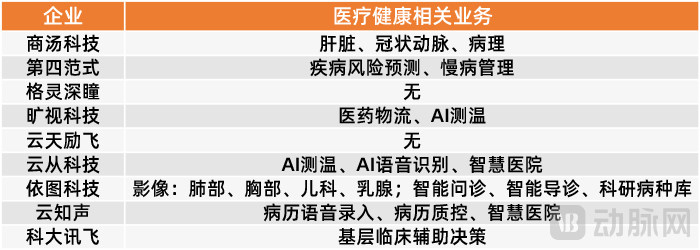
AI Unicorns’ Healthcare Business Layout (Compiled by VCBeat)
In addition to the aforementioned unicorns, two other AI unicorns, Intellifusion and DeepGlint, have recently submitted IPO applications. However, according to their prospectuses and public information, neither company is involved in the healthcare sector.
So, the question arises: why have these AI unicorns underperformed in the AI healthcare sector? VCBeat believes there are several key reasons.
First,Differences in Strategic Layout and Planning, leading to the current predicament of AI unicorns in the healthcare sector.
Unlike medical AI unicorns that go all-in, adopting a "succeed or perish" approach, most AI unicorns tend to favor a platform strategy, focusing on building platforms or algorithms. Their specific implementation details are often vague, and they are unable to commit fully without strong commercial demand.
For instance, AI model training requires corresponding data annotation and acquisition. In the field of medical imaging, simple “copying” fails to meet the requirements for training AI models; instead, images must be meticulously annotated and segmented by physicians before they can be utilized for model training, which incurs substantial costs.
“Given that, why wouldn’t I expand into areas where existing models are already scalable? Why instead embark on such a mentally and physically taxing endeavor that may well yield no return?” said an anonymous individual who has previously worked at multiple AI unicorns.
He further mentioned that a certain AI unicorn enterprise did not set commercialization as its initial goal when entering the healthcare sector. Instead, driven by a comprehensive strategic vision, it aimed to expand from medical imaging to general practice, structure healthcare data, and extend its reach from diagnosis to scientific research, ultimately encompassing pharmaceuticals and insurance. Such an ambitious scope was indeed impressive. However, what no one anticipated was the intensity of AI’s cash burn, which made it difficult for the company to achieve self-sustainability in a timely manner.
In recent years, the pressure of commercialization has been relentlessly straining the fragile nerves of AI unicorns. It has become increasingly difficult for these companies to allocate limited resources to areas with no return on investment. Undoubtedly, this immense commercial pressure is also one of the reasons why AI unicorns have recently flocked to file for initial public offerings.
This leads to the second reason, due toThe small proportion of revenue from medical services has led to a continuous decline in their influence.。
A review of the prospectuses reveals that AI unicorns derive a negligible share of their revenue from healthcare operations. Even Yitu Technology, which is relatively advanced among AI unicorns in the healthcare sector, reported revenues of approximately RMB 100,000, RMB 5.6 million, and RMB 5.63 million from its healthcare business in 2018, 2019, and the first half of 2020, respectively, each accounting for less than 2% of its total revenue. Compared with its substantial investments, these revenues are merely a drop in the bucket.
Meanwhile, iFlytek’s annual report also revealed that although its smart healthcare business achieved year-on-year growth of over 60% in 2020, it accounted for only 2.4% of total revenue. Nevertheless, iFlytek’s absolute revenue from the healthcare sector remains substantial, which is one of the key reasons behind its plan to spin off iFlytek Healthcare for an initial public offering (IPO).
In any company, a lack of sufficient revenue will deprive a department of its voice. Even with strong support from top management, the long-term absence of tangible results will inevitably undermine that backing, leading to executive departures and subsequent strategic vacillation. If this holds true for a giant like Google, it is even more applicable to AI unicorns that are still operating at an overall loss and require substantial cash burn.
Special Rules in the Medical Fieldbecame the straw that broke the camel’s back. This is because any involvement in therapeutic or diagnostic applications necessarily requires compliance with relevant regulations and obtaining medical device certification. There are no shortcuts in this process, and the time and investment required are substantial.
According to industry insiders, the process from registration testing to final regulatory review takes at least one year. If delays occur during clinical trials, the approval timeline may extend to approximately three years, or the project may fail entirely, resulting in a total loss of investment. Based on statistics regarding the historical review of innovative medical devices, VCBeat has found that AI-based imaging devices approved through the Innovative Medical Device pathway typically require about one year—from the public announcement of entry into the special approval procedure to final certification—with the fastest cases taking 10 months.

Approval Status of Select AI Imaging Innovative Medical Devices
Meanwhile, after obtaining regulatory approval, these software-based medical devices must still be updated with utmost caution to meet regulatory requirements. At this year’s World Artificial Intelligence Conference (WAIC), the Center for Medical Device Evaluation of the National Medical Products Administration (NMPA) emphasized in its speech that medical device regulation should focus on full lifecycle oversight. This spans from the initial conceptualization of a product until it is no longer maintained or used. Full lifecycle regulation requires the integration of a quality management system and continuous risk management throughout the entire process.
For AI unicorns accustomed to “rapid iteration,” this is hardly good news. Updates that can be rolled out every few days in other sectors may necessitate re-registration here. It is not only AI companies that have voiced complaints; practitioners from consumer electronics brands have also remarked, “Medical device approval requires separate applications for each product, which is extremely cumbersome.”
If regulatory approval cannot be obtained, commercialization remains impossible, even if the product demonstrates excellent performance during trial use. Of course, strict regulation is undoubtedly necessary for medical devices, as it minimizes product risks to the greatest extent and safeguards patient interests. At its core, this represents a conflict between “fast-moving” companies and a “slow-paced” industry. Faced with such a protracted process akin to the arduous Journey to the West, AI unicorns will inevitably shy away from it whenever alternative options are available.
Although obtaining certification remains challenging, it has indeed become a natural barrier for AI healthcare unicorns when facing larger AI unicorns.
Even after obtaining certification, AI unicorns still faceDeficiencies in Channels. A professional from one of the "Four Little Dragons" stated that, from a technical standpoint, the company is no inferior to independent AI healthcare enterprises; the main issue lies in its distribution channels. In other words, once these channels are opened up, its business can achieve substantial growth.
However, this was clearly no easy feat. It could even be said that any AI unicorn’s ability to establish an absolute moat in a given field stems not only from its technological prowess but also from its superior distribution channels and network resources compared to competitors.
This issue may need to be viewed from two perspectives. If referring solely to medical devices, the current opportunities for AI unicorns are no longer as significant. As medical AI unicorns in various niche sectors complete their commercialization and begin sprinting toward IPOs, they have gradually established solid barriers to entry. Unless there is a major breakthrough in technical architecture, it is hard to imagine latecomers achieving a breakthrough starting from scratch.
In this context, entering the healthcare sector through mergers and acquisitions of ready-made targets may be a more rational approach. This scenario could well unfold in the near future.
If the scope is expanded to encompass all aspects of healthcare, AI unicorns will have substantial room for growth. Notably, Iflytek’s smart healthcare business generated approximately RMB 312 million in revenue in 2020, and Cloudwalk Technology Co., Ltd. secured bids totaling RMB 312 million for smart hospital projects—both figures far exceeding the combined revenues of the three medical AI unicorns that have filed their prospectuses.
From a technical perspective, facial recognition technology used in security can also be applied to smart hospitals, while regulatory scenarios in finance can similarly be utilized for supervision of medical insurance payments. The applications of speech recognition, natural language processing (NLP), and knowledge graphs are even more diverse.
What new landscapes will AI present on this day next year? Let us wait and see.