

DianNei Tech Secures Tens of Millions in Series A Funding, Focused on AI-Powered End-to-End Lung Cancer Solutions
It is reported that in September 2021, Diannei Technology, a medical AI company, completed its Series A financing round amounting to tens of millions of yuan. The round was jointly led by QianDao Fund and Empower Investment, with Huanghe Capital serving as the financial advisor.
Diannei Technology, established in April 2016, is among the first enterprises to enter the field of AI-assisted medical imaging diagnosis, specializing in the development of AI-driven solutions for the full course of lung cancer management.
Success at this juncture is sufficient to demonstrate its value. Over the past few years, this company, which has rarely engaged with the capital markets, has consistently prioritized AI R&D and monetization strategies driven by clinical pain points. With its products now mature, the financing secured by Diannei will accelerate their commercial translation.
Generally, there are two paths for expanding the product lines of medical AI: one is horizontal expansion after establishing a foothold in a specific scenario, such as companies specializing in lung nodule AI branching into breast imaging, or those focusing on diabetic retinopathy moving into pneumonia detection; the other is to concentrate on AI research and development within a specific vertical scenario and expand into subsequent diagnostic and treatment workflows.
Diannei Technology has chosen the second path as its R&D direction, extending backward from AI for pulmonary nodules to gradually conquer key stages such as lung cancer screening, follow-up, assisted surgical decision-making, and prediction of drug efficacy. Building on traditional pathways, it integrates these stages into an integrated solution, enabling doctors and patients to break down data barriers between diagnostic and treatment phases through a single system, thereby achieving full-process management of diagnosis and treatment.
This is precisely what sets Diannei Technology apart. Since its inception, the company has clearly defined and adhered to a strategy grounded in genuine clinical needs, consistently prioritizing clinical value at every stage.
Taking lung nodule-assisted diagnosis as an example, Diannei Technology employs a multi-class classification approach to predict the pathological subtypes of lung nodules, including atypical adenomatous hyperplasia (AAH), adenocarcinoma in situ (AIS), minimally invasive adenocarcinoma (MIA), and invasive adenocarcinoma (IA). It provides recommendations on the degree of early invasion, thereby assisting physicians in conducting a more in-depth evaluation of each patient’s lung nodules.
Why Focus Heavily on the Lung Cancer Market? Diannei Technology Values Its High Prevalence and Low Penetration Rate. According to data from the International Agency for Research on Cancer (IARC), in 2020, there were 816,000 new cases of lung cancer in China, with 715,000 deaths—nearly twice the figure for liver cancer, which ranked second with 391,000 cases.
The high mortality rate is driven by a multitude of factors, including low public awareness of early screening in China, scarce and costly surgical treatment resources, and imprecise medication practices. Addressing these challenges requires collaborative efforts from multiple stakeholders. In response to this situation, Diannei’s comprehensive solutions, which span the entire lung cancer care continuum from early screening to full-course disease management, can effectively alleviate the burden of lung cancer in China.
According to Frost & Sullivan, the number of individuals in China defined as high-risk for lung cancer by the Chinese Society of Clinical Oncology (CSCO) will reach 95.8 million in 2023. With a screening frequency of once every three years, China needs to conduct more than 30 million screenings annually. To manage such a substantial screening volume, services must be decentralized to primary care institutions and supported by artificial intelligence.
Against this backdrop, Diannei Technology has reached deep into grassroots communities, forging pioneering collaborations with local governments in multiple regions—including Shandong, Jiangxi, Yunnan, and Jiangsu—to facilitate broader early screening for lung cancer at the primary care level, with initial results already demonstrating effectiveness.
As part of the Jiangsu Province “Public Welfare Initiative for Lung Cancer Screening, Prevention, and Treatment,” Diannei Technology accompanied the mobile public welfare lung cancer screening vehicle to multiple regions across Jiangsu Province, providing local residents with convenient lung cancer screening services.
During the screening process, Ms. Y, a 39-year-old woman who had never previously undergone targeted lung examinations, received a free low-dose spiral CT scan of the lungs as part of this lung cancer screening initiative. AI-assisted image interpretation and AI-based risk prediction facilitated the timely identification of suspected high-risk nodules, which were subsequently confirmed by on-site physicians. Following the health recommendations provided by the screening doctors, she later visited a medical institution and received diagnostic advice from specialists.
After navigating multiple channels, Ms. Y obtained timely diagnostic recommendations from Shanghai-based specialists through the Feianhao image review platform recommended by Diannei. Subsequently, she adhered to scheduled follow-up visits and implemented appropriate interventions as advised, ultimately achieving full recovery and avoiding the loss of optimal treatment opportunities due to delayed diagnosis.
Diannei Technology launched a free AI-based early screening project in Ganzhou, conducting low-dose spiral CT scans on 1,020 residents. The AI system identified over 300 individuals with pulmonary nodules, including 43 cases with high-risk ground-glass opacities on imaging. With AI-assisted expert diagnosis, 25 patients suspected of having lung cancer underwent minimally invasive surgery and all recovered fully postoperatively.
Such a public welfare initiative not only improves the health of individual patients but also effectively reduces medical insurance expenditures. According to rough estimates by experts, the social value saved through this charitable effort amounts to approximately RMB 7.5 million, far exceeding the previously well-known adage that “every additional yuan spent on screening saves seven yuan in treatment costs.” More importantly, the project saved 25 lives and helped 25 families.
Early screening for lung cancer can effectively help patients detect lesions at an early stage of the tumor. Beyond detection, another key factor lies in treatment. The challenge here is that in 2020, there were as many as 800,000 newly diagnosed cases. In addition to radiology, thoracic surgery—also under significant pressure—similarly requires empowerment through artificial intelligence.
To help thoracic surgeons reduce their workload and improve surgical outcomes, the SurgiPro Intelligent Surgical Decision Support System, developed by Diannei Technology, integrates AI-based pulmonary nodule detection, 3D reconstruction of CT images, and lesion localization. It provides classification of the degree of invasion in lung adenocarcinoma and predicts the benign or malignant nature of subcentimeter nodules, thereby offering physicians precise preoperative planning.
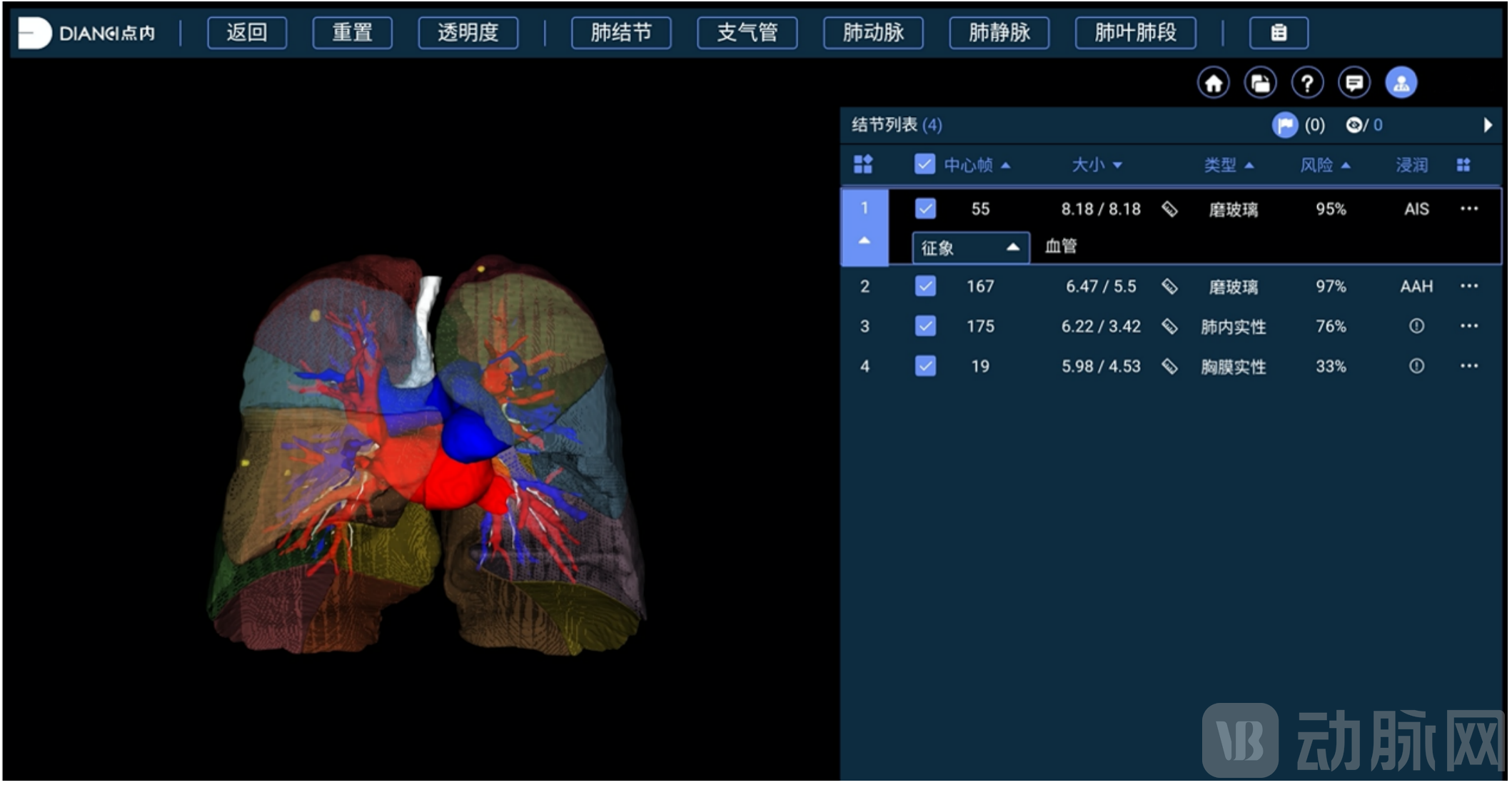
Diannei Technology SurgiPro Preoperative Planning
To further validate the role of Diannei Technology’s artificial intelligence in thoracic surgery, on November 6, 2020, the Thoracic Surgery Professional Committee of the Simulation Medicine Department of the Wu Jieping Medical Foundation announced the launch of a multicenter validation study in collaboration with Diannei Technology for an intelligent auxiliary decision-making system for early-stage lung cancer surgery. Currently, this multicenter project is being conducted at eight centers: Sun Yat-sen University Cancer Center, Shanghai Chest Hospital affiliated with Shanghai Jiao Tong University, Union Hospital affiliated with Fujian Medical University, The First Affiliated Hospital of Zhejiang University School of Medicine, Taizhou Hospital, Jiangmen Central Hospital, Yunnan Cancer Hospital, and Zhengzhou People’s Hospital.
According to experts from the specialized committee, “We have compared AI-based preoperative imaging predictions with the postoperative pathological gold standard for pulmonary nodules, and the consistency of the deep learning model’s predictions is continuously improving.” If Diannei Technology achieves favorable results in multi-center clinical data validation, the relevant technical approach is expected to be incorporated into the expert consensus guidelines of the academic society.
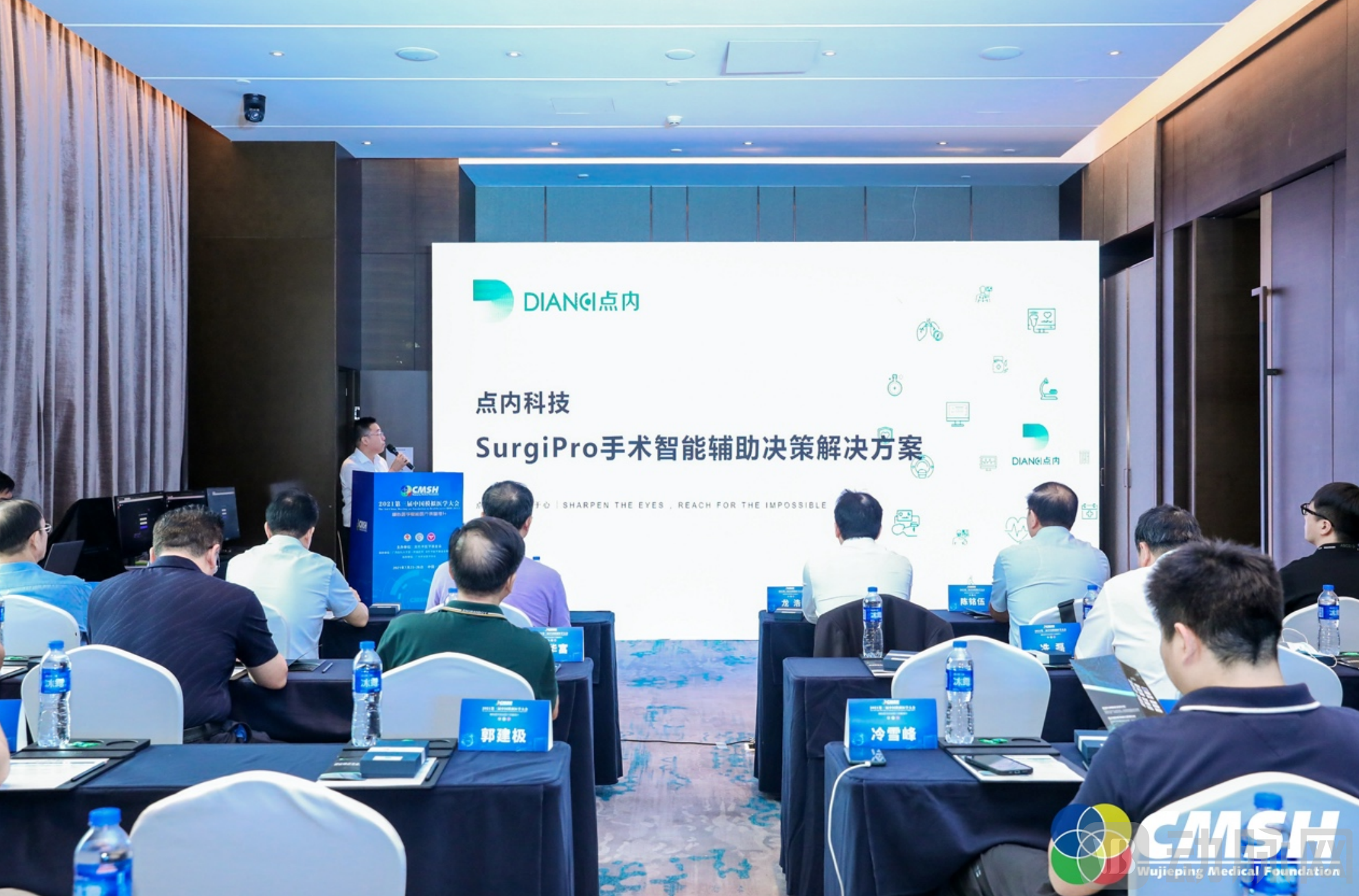
Clinical Conference Hosted by the Wu Jieping Medical Foundation
Building on its precision surgery capabilities, Diannei has also established a product pipeline in the field of companion diagnostics and medication guidance for lung cancer.
According to data from Markets and Markets, the global market size for companion diagnostics was USD 2.61 billion in 2017, and is projected to reach USD 3.13 billion, USD 3.76 billion, USD 4.51 billion, USD 5.42 billion, and USD 6.51 billion from 2018 to 2022, respectively. In the lung cancer segment, which accounts for a significant share of the market, there is substantial clinical demand for dynamic assessment tools that monitor therapeutic efficacy, particularly advances in personalized immunotherapy. It is reported that Diannei Biotechnology has collaborated with expert teams from Shanghai Chest Hospital and Shanghai Pulmonary Hospital to develop a novel automatic deep neural network (DNN) model. This model demonstrates superior performance in assessing the progress of tumor immunotherapy compared to linear measurements performed by clinicians. Related research findings were publicly presented at the 2019 American Society of Clinical Oncology Annual Meeting (ASCO 2019) and the 2020 World Conference on Lung Cancer (WCLC 2020).
For medical AI companies, commercialization is an inevitable hurdle. In this regard, Diannei Technology has primarily adopted three models.
First, Diannei Technology has partnered with iKang Guobin, a leading health checkup provider, to implement a pay-per-visit model across China through iKang’s network and expand this approach to other health checkup centers. By leveraging third-party health checkup centers as a platform, Diannei Technology has extended its business model from medical equipment to medical services, achieving an upgrade in its business model dimensions.
Second, while awaiting Class III medical device certification (with pilot hospital access already secured in certain provinces), Diannei Technology has adopted the Laboratory Developed Tests (LDT) model from the clinical diagnostics sector to acquire DICOM data and implement a per-case fee structure through off-site auxiliary image interpretation.
Third, Diannei Technology initially offers one-time software sales services, followed by services that directly influence or intervene in core diagnostic and treatment processes, thereby locking in and serving post-diagnosis patients through follow-up care. On this basis, Diannei Technology can, on the one hand, influence key aspects such as medication planning, drug research, and clinical trials, thus accelerating pharmaceutical companies’ clinical trial processes; on the other hand, it can provide better companion diagnostic tools to support license renewals, helping ensure precise medication use.
Currently, Diannei has established partnerships with companies such as Johnson & Johnson, iKang Healthcare Group, and China Life Insurance to advance the research and development of pharmaceuticals and consumables for pulmonary diseases; enhance the efficiency and patient experience at health examination centers; and provide data support for risk control and pricing in commercial insurance through AI-driven analytics.
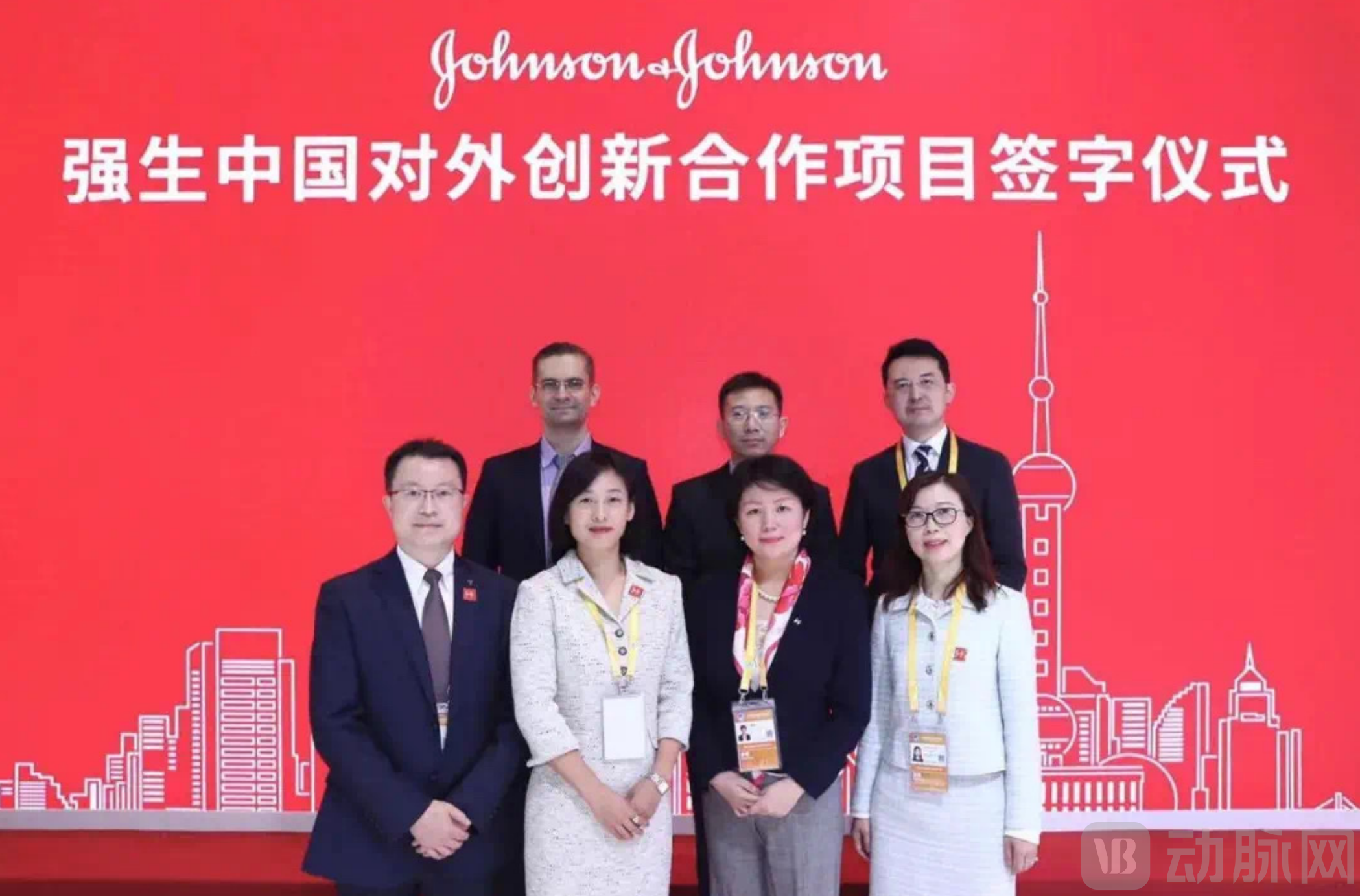
Photo taken on November 6, 2020 (Image source: “JNJ Innovation,” the official WeChat account of Johnson & Johnson China)
Furthermore, Diannei Technology’s clinical trials have achieved the expected outcomes required for clinical application in thoracic surgery, with the trials anticipated to commence by the end of the year. Upon obtaining the Class III medical device certification in the future, Diannei Technology’s commercialization pathway will be further diversified.
Achieving such success in a highly competitive market would not have been possible without the management and expert teams at Diannei Technology.
Ge Liang, founder of Diannei Technology, previously worked at a Fortune 500 pharmaceutical company. He possesses a profound understanding of hospital operational systems and can identify physicians’ needs by analyzing clinical workflows. Co-founder Jin Shengxi formerly taught at China Pharmaceutical University and brings 20 years of management experience in the oncology prevention and treatment industry, enabling him to make accurate forecasts about the future development of the oncology market.
Meanwhile, Diannei has engaged in large-scale research collaborations and clinical pilot programs with Professor Zhang Guozhen’s team at Huadong Hospital Affiliated to Fudan University, as well as expert teams from Shanghai Pulmonary Hospital and Shanghai Chest Hospital, thereby guiding the development of its medical AI in real-world clinical settings.
Regarding this investment, Song Weinan, Medical Investment Director at Qiandao Fund, stated: “As a professional investment institution focused on technological innovation and the industrialization of scientific research achievements, we have always believed in the transformation and opportunities that digitalization and intelligence bring to healthcare, and we remain committed to exploring ways to create greater value for the medical industry. Diannei Technology is one of the few companies in China that has solidly developed AI solutions for lung cancer and extended their application into treatment. Such solutions are leading on a global scale. Therefore, we look forward to working with Diannei Technology to create more value for patients, society, and the nation.”
Yu Junhan, Managing Partner at Heli Investment Management, stated, “We are highly optimistic about the direction of integrating artificial intelligence with other disciplines to address real-world needs. The field of oncology represents a typical scenario where such integration can be directly implemented and achieve a closed-loop business model. Artificial intelligence will have a profound impact on the future delivery of medical services. By embedding AI-driven medical services into primary healthcare systems, Diannei Technology has not only created novel diagnostic and treatment approaches but also improved the diagnostic efficiency and accuracy of primary care physicians. Through continued R&D investment in comprehensive solutions for the entire oncology diagnostic pathway, Diannei Technology will be able to bring greater health benefits to the public.”