

Modern Fertility Files IPO Prospectus: FDA-Cleared At-Home Fertility Test Empowers Women to Understand Reproductive Health

Modern Fertility
Fertility Test Kit and Related Service Provider
According to a report by the U.S. Centers for Disease Control and Prevention (CDC), the number of clinical visits seeking fertility assistance has been increasing year by year, with one in six American couples struggling with infertility. Part of this trend is attributed to the delay in childbearing age among modern individuals.
In recent years, with the rise of women’s awareness of independence, more women have shifted their focus to their careers and pursued professional development, thereby delaying childbearing. Data from the U.S. Centers for Disease Control and Prevention (CDC) show that in 1973, only 2% of women had their first child between the ages of 35 and 44; by 2012, this figure had reached 13%. Moreover, between 2010 and 2014, the number of women giving birth after age 35 increased by 23%.
In the United States, women trying to conceive typically need to make multiple out-of-pocket clinic appointments for physical examinations and a series of invasive tests, with total costs potentially exceeding $1,000. Regardless of whether pregnancy is currently planned, gaining a thorough understanding of one’s fertility status, such as ovarian reserve, can help women make reproductive choices at the most appropriate time.
Headquartered in California, USA, Modern Fertility is a women's health company that develops and provides fertility test kits and related products and services, offering at-home fertility testing for women aged 21–45 to enable them to assess their fertility in the comfort of their own homes.
A few years ago, Afton Vechery underwent a fertility test. Although she had no immediate plans to conceive, she simply wanted to gain insight into her reproductive health. However, the process was far from straightforward; after a series of tests, she was left with some perplexing numerical data and a $1,500 bill.
After a discussion with reproductive endocrinology specialists, Afton Vechery learned that since 2000, women have been having children at later ages than in previous generations. According to biological principles, female fertility naturally declines with age, yet women often only seek to understand their reproductive health when they encounter difficulties conceiving. Although fertility is a crucial component of overall health, it remains a “black box” for many people.
In 2017, Afton Vechery and Carly Leahy co-founded Modern Fertility. The two former executives from Uber and 23andMe firmly believed that greater access to fertility information would empower women with more choices and control. Driven by this conviction, they set out to develop a direct-to-consumer fertility test. In their vision, the test would deliver results comparable to those from fertility clinics, but at a significantly lower cost and with greater ease of understanding.
In May of the following year, the company began selling direct-to-consumer fertility testing services. This was the first test to measure eight reproductive hormones from a finger-prick blood sample. The two founders hoped that this test would become as routine as a Pap smear, providing actionable information to guide timing for conception or decisions about egg freezing.
The company has also launched online fertility webinars, user forums, quizzes, and physician discussion guides, striving to become a fertility service center that facilitates free and open communication. “At Modern Fertility, we are shifting the understanding of fertility from passive to active by providing women with personalized insights into their reproductive health. Only by gaining more data about their own bodies can women make informed decisions regarding IVF, egg freezing, family planning, and other fertility treatments,” said Afton Vechery.
Modern Fertility completed $1 million and $6 million seed funding rounds in August 2017 and May 2018, respectively, with investors including Maveron, Union Square Ventures, First Round Capital, Box Group, #Angels, and Y Combinator.
On June 11, 2019, Modern Fertility announced the completion of a $15 million Series A financing round, led by Forerunner Ventures. Modern Fertility will use these funds to advance fertility science research, develop new reproductive health products, raise women’s awareness of personal health, and provide them with more comprehensive health services. To date, the company has raised a total of $22 million in financing.
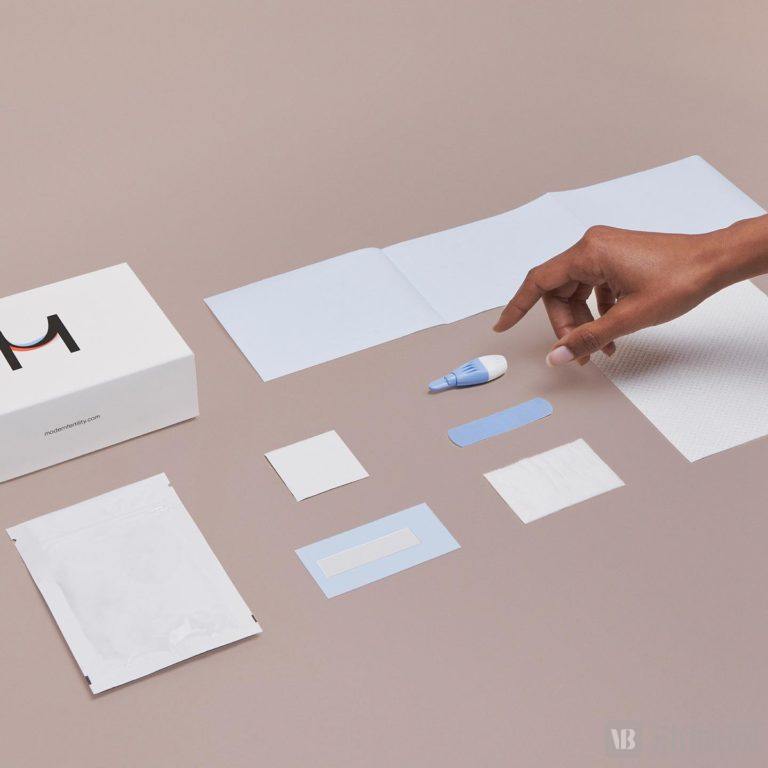
Fertility Test Kit. Image source: Modern Fertility official website
Modern Fertility has developed a female fertility testing kit for home use, which can be completed in three simple steps. Users simply prick their finger, place four drops of blood on the test card, and mail the card to a CLIA-certified laboratory. Within 5–7 days, results will be available on the user’s personal dashboard on the Modern Fertility website. A licensed physician will interpret the results to help users understand their fertility status, and one-on-one consultations with fertility nurses are also available.

Modern Fertility’s fertility testing kit measures eight reproductive hormones, including anti-Müllerian hormone (AMH)—which reliably and rapidly assesses ovarian reserve by estimating the number of antral follicles in the ovaries, thereby evaluating a woman’s reproductive potential and predicting the onset of menopause—follicle-stimulating hormone (FSH), luteinizing hormone (LH), free thyroxine (FT4), prolactin (PRL), estradiol (E2), and thyroid-stimulating hormone (TSH). The kit also provides a report explaining the relationships between hormone levels and ovarian reserve, egg freezing, in vitro fertilization (IVF), menopause, and other related factors.
The kit has currently received FDA clearance and is priced at $160 in the market. Afton Vechery, CEO of Modern Fertility, believes that the product’s target customers are women who do not plan to have children immediately but intend to do so in the future. Fertility issues can potentially impact families; therefore, understanding one’s physical condition in advance allows for more adequate time to prepare. Moreover, the kit is easy to use and eliminates the need for hospital visits, making it particularly friendly to working women.
The company also expanded its product portfolio by launching ovulation tests and pregnancy test kits, along with a proprietary, free companion app. The app can be used in conjunction with fertility, ovulation, and pregnancy tests to generate detailed cycle predictions, or it can be used independently as a tool for tracking menstrual cycles and ovulation without the need for testing kits.
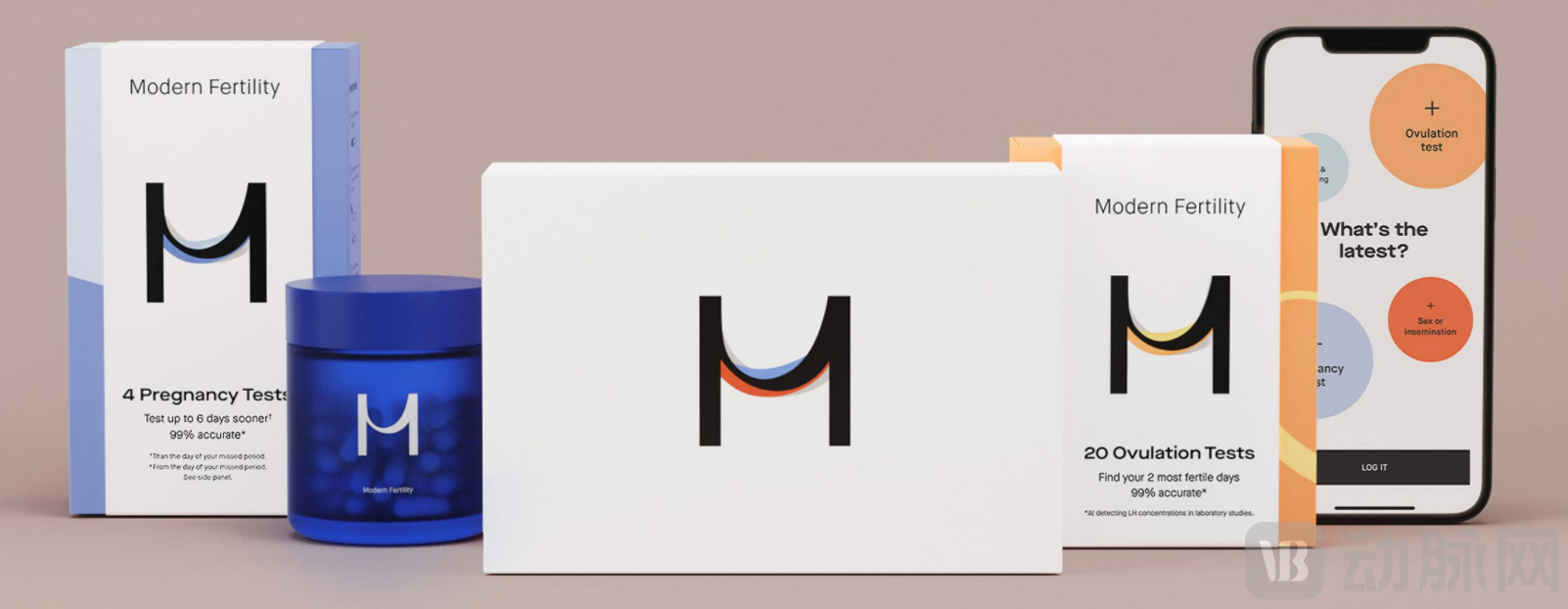
Modern Fertility’s Main Products | Image Source: Modern Fertility Official Website
In addition to enhancing reproductive health services, Modern Fertility is also increasing its investment in clinical research. The research focuses on uncovering the needs of women and their partners to identify more appropriate fertility prediction parameters. The company is currently selling prenatal multivitamins as a subscription-only product at a price of $30 per month.
In the first quarter of 2021, Modern Fertility's revenue increased by approximately 300% year over year.
Overall, the company offers a range of fertility-related products for women at different stages of their reproductive journey. Whether you want to know if you are pregnant or wish to gain deeper insights into your body, Modern Fertility has relevant products available.
On May 19, 2021, Modern Fertility was acquired by Ro, a digital care and telehealth provider, for $225 million. Ro stated that the acquisition would enable it to incorporate fertility testing and reproductive health into its women’s health services suite.
Ro, also founded in 2017, initially provided solutions for men with erectile dysfunction. In recent years, its business has expanded to women’s health, smoking cessation, and the treatment of more than 20 conditions, including sexual health, weight loss, and allergies.
Ro stated that following the completion of the acquisition, it will add fertility testing and reproductive health features to its women’s health services suite, under the vertical leadership of Afton Vechery and Carly Leahy, co-founders of Modern Fertility.
In recent years, with the gradual rise of the “FemTech” (female technology) health concept, the related market has witnessed remarkable growth. The Femtech industry is projected to reach a value of $50 billion by 2025.
The concept of FemTech was first proposed in 2016 by Ida Tin, a Danish entrepreneur and CEO of Clue, a menstrual health management app. It specifically referred to emerging companies operating at the intersection of technology and women's health. Today, FemTech broadly encompasses "all electronic devices, software, or other technologies related to women's health."
In this vast market, entrepreneurs and investors are increasingly placing their bets. According to data from PitchBook, a financial data and research company, the global FemTech industry generated $820.6 million in revenue in 2019 and secured a total of $592 million in venture capital funding.
In recent years, applications and technology companies addressing women’s health needs have continued to emerge, with services spanning menstrual cycle tracking, pregnancy and lactation care, as well as screening and treatment for female-specific conditions.
Abroad, other fertility startups competing in the same space as Modern Fertility include Celmatix, which provides diagnostic and management solutions for women’s health and fertility; OWHealth, which develops mobile applications for menstrual cycle tracking; Ruby, which helps women record their sexual activity and other health information; and Ava, which uses smartwatches to assist female users with conception.
In China, the momentum of FemTech development continues to grow. Last June, "Hao Yun Ma," a maternal health management tool, completed its Series A financing round of nearly RMB 30 million. Incubated by the female health management platform "Da Yi Ma," Hao Yun Ma has operated independently as a company since 2018. Currently, its features cover three major stages: preconception care, pregnancy, and childcare, providing women with comprehensive solutions throughout the entire reproductive journey. The app currently has approximately 12.3 million registered users, with around 2.7 million daily active users and 4.9 million monthly active users. Users spend an average of 33 minutes on the app each day.
At-home early screening, menstrual cycle tracking and management, digital fertility management... As femtech companies continue to emerge, women are increasingly taking charge of their own health, while more personally selecting, purchasing, and accessing a diverse array of healthcare products and services. This market, projected to reach $50 billion, still awaits further exploration by investors and entrepreneurs.