

No Cure, 1% Prevalence: Can Digital Therapeutics Offer Hope for Autism?
Even today, the medical community has yet to identify the precise etiology of autism. “Unknown etiology, no curative treatment” represents the consensus within the field regarding this condition. Nevertheless, variations in the timing and methods of rehabilitative intervention can lead to significantly different prognoses for patients.
In 1987, a controlled study conducted by Ole Ivar Lovaas, co-founder of the Autism Society of America and holder of a Ph.D. in Psychology from the University of Washington, demonstrated that earlier identification and intervention in children with autism lead to significantly better prognostic outcomes. The period before age six is considered the golden window for intervention, substantially increasing the likelihood that affected children can successfully participate in inclusive education.
In this study, which lasted for more than two years, the experimental group received 40 hours of intervention per week, while the corresponding control group received fewer hours of intervention or no intervention at all. Ultimately, 17 out of 19 children in the experimental group achieved inclusive education, whereas only 1 out of a total of 40 children in the control group was able to receive regular education.
Even so, the difficulty of autism rehabilitation remains astronomically high. In recent years, the exploration of new technologies, such as digital therapeutics, throughout the entire course of autism has been gradually transforming the current landscape of autism rehabilitation, bringing hope to these “children of the stars.”
Since the concept of autism was first proposed by Leo Kanner, an expert at Johns Hopkins University in the United States, in 1943, autism has been considered a “low-prevalence” mental disorder.
However, this is merely the tip of the iceberg. Due to stigma surrounding the condition, outdated diagnostic capabilities, and insufficient public awareness, the vast majority of patient families remain reluctant to discuss the diagnosis. As socioeconomic conditions and medical technology continue to advance, people are surprised to realize just how prevalent autism spectrum disorder actually is.
In 2007, the United Nations designated April 2nd each year as “World Autism Awareness Day.” Through sustained public awareness campaigns and science popularization, autism—once a heavily stigmatized and taboo subject—is gradually becoming better understood and more widely recognized by an increasing number of people.
In recent years, the prevalence of autism spectrum disorder (ASD) has risen significantly worldwide. The widely accepted prevalence rate has reached 1–1.5%. According to 2020 statistics from the U.S. Centers for Disease Control and Prevention (CDC), 1 in 54 children was diagnosed with ASD by age 8. This figure represents an increase of nearly 10% compared to the previous estimate.
According to data from the "Report III on the Development Status of China's Autism Education and Rehabilitation Industry" (2019), the incidence of autism spectrum disorder (ASD) ranks first among all types of mental disabilities in China. In 2016, there were 10 million individuals with ASD in China, with an overall prevalence rate of approximately 1%. Among this population, the estimated number of affected children aged 0–14 years may exceed 2 million, and this figure is growing at an annual rate of 10%.
Compared with survey data that is not so intuitive, actual responses from people around us may be easier to make people feel personally—The author of this article simply asked in a WeChat group, and there were three colleagues who immediately stated that their friends or relatives were parents of children with autism in a WeChat group of just over 40 people. The prevalence of autism can be seen from this.
In contrast to the United States, which began autism research as early as the 1940s, China did not initiate systematic studies until the 1980s. In 1982, Professor Tao Guotai of the Nanjing Institute of Child Mental Health published a paper titled “Diagnostic and Classification Issues in Infantile Autism,” reporting four cases of children diagnosed with autism. These were the earliest identified and confirmed cases of autism in mainland China, lagging behind the United States by nearly four decades. Consequently, there are significant deficiencies in the foundational capacity for addressing childhood autism in China, including infrastructure, talent reserves, and research systems.
Currently, there are three major pain points in autism rehabilitation in China that urgently need to be addressed.
The first and most significant pain point is the difficulty in quantifying and digitizing the industry, leading to slow progress in scientific research. The core features of autism include deficits in social communication and social interaction, as well as restricted, repetitive patterns of behavior, interests, or activities. Diagnosis cannot be confirmed, nor can severity be assessed, through any single biological marker (such as genetic, blood, or urine tests). Furthermore, there are currently no medications available to treat or even alleviate the core symptoms of autism.
Therefore, when indicators cannot be quantified or digitized, physicians and rehabilitation therapists must rely on their clinical experience for observation and practice, making it difficult to accurately assess rehabilitation outcomes. Due to variations in early developmental patterns across different ethnic groups, diagnostic and assessment systems suitable for the United States may not be optimal for the actual conditions of pediatric patients in China. However, given that autism research in China is still in the stage of accumulating evidence and lacks a sufficient number of high-quality research institutions, there is a scarcity of diagnostic and assessment tools specifically designed for Chinese children with autism.
The second pain point is the scarcity of medical resources. Currently, the United States has more than 5,000 child psychiatrists and over 50,000 Board Certified Behavior Analysts (BCBAs). In contrast, although China has a significantly larger number of pediatric patients with autism, there are currently only around 500 physicians qualified to diagnose autism, and the number of behavior analysts is far lower than that in the United States.
On one hand, China’s autism care industry started relatively late, and the field is characterized by a long talent development cycle and high entry barriers; on the other hand, due to a lack of corresponding resource support, there are few professionals willing to work in this sector.
Due to insufficient medical resources, doctors are often overworked, leaving only a few minutes for consultation with each pediatric patient. Coupled with the lack of comprehensive diagnostic and assessment tools in the industry, the rates of misdiagnosis and missed diagnosis remain relatively high. This leads to repeated consultations by parents, further depleting the already severely scarce medical resources.
To gain insight into the current status of autism among children in China, ALSOLIFE, a digital healthcare service provider specializing in pediatric mental disorders, collaborated with the Institute of Population Research at Peking University to release the "Report on the Current Status, Needs, and Support Resources for Families of Individuals with Autism in China." According to the report, 79% of children with autism in China have undergone at least two diagnostic evaluations, with 22.8% of preschool-aged children and 32.3% of children of compulsory school age having undergone four or more diagnostic evaluations.
The third pain point is the persistently high cost of rehabilitation. Applied Behavior Analysis (ABA) is currently the gold standard for autism intervention. Autism therapists use ABA to scientifically establish connections with children, achieve phased goals through intervention, and systematically improve their social communication and behavioral challenges, thereby enhancing the functional performance of children with autism.
However, this rehabilitation process requires early intensive intervention, averaging 25–40 hours per week, resulting in staggering direct costs. In 2014, the United States spent $61–66 billion on autism care for young children. Although these costs are covered by its insurance system, they still impose a heavy burden on families of affected children.
Since autism spectrum disorder (ASD) is not covered by medical insurance, the cost of intervention for children with ASD in China has become an unbearable burden for families. Taking Chongqing as an example, based on the author’s understanding of parents of affected children in their circle, the direct monthly expenditure per child with ASD ranges from RMB 6,000 to 8,000, equivalent to half or even more than half of a family’s income. The additional opportunity costs incurred are even immeasurable.
“Report on the Current Status, Needs, and Support Resources for Families of Individuals with Autism in China” shows that the average monthly intervention cost for families of children with autism in China reaches 6,950 yuan. In addition, 56% of these families require one parent to provide full-time companionship, further straining household finances. Although families of children with autism can receive national rehabilitation subsidies (with an average amount and median of 1,620.97 yuan/month and 1,600 yuan/month, respectively), these subsidies fall far short of covering the actual expenses incurred by these families.
As the father of an 8-year-old child, Zhang Zhiguang’s life changed forever the moment his child was diagnosed with autism. While striving to find rehabilitation solutions for his child, he also shared mutual encouragement with other parents facing similar challenges. These shared experiences brought several founders together, ultimately inspiring Zhang Zhiguang, who worked in communications big data and digital copyright, to establish a platform dedicated to helping these “children of the stars” shine as the brightest stars in the night sky.
In 2015, Professor Guo Yanqing, an autism expert from Peking University Sixth Hospital, proposed the ALSO concept, which resonated with the philosophy of Zhang Zhiguang’s team. The ALSO concept emphasizes “grounding in the present while looking toward the future.” It advocates considering the needs of children with autism from as early as age two or three, extending through their twenties and thirties and across their entire lifespan, with the ultimate goal of enabling them to live independently without interference. When designing educational programs, this approach ensures that “current training must incorporate future needs, and future goals must be practiced today.”
If the intervention philosophy of ALSO is integrated into daily life, particularly in the domains of A (Academic Cognition), L (Life Skills), and S (Social Skills), then O (Occupational) outcomes can typically be achieved with just a single opportunity.
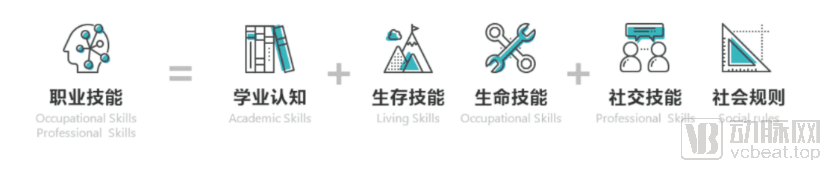
The Meaning of the ALSO Concept
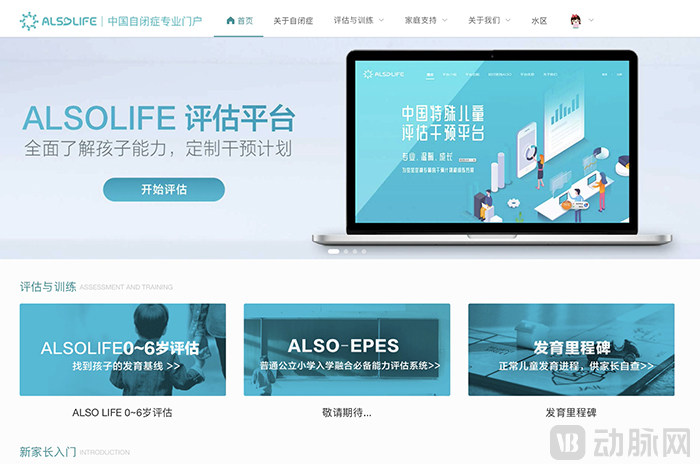
ALSOLIFE’s “China Special Needs Children Assessment and Intervention Platform” was officially launched in February 2017, providing children with autism with future-oriented online assessments, targeted reports, personalized teaching plans, and home-based training guidance. During this phase, the platform cultivated a large learning community and generated a substantial amount of high-quality content, offering guidance to families of children with autism.
These accessible and highly practical resources have greatly benefited parents of children with autism. Zhang Zhiguang and several other co-founders, who are also parents of children with autism, are affectionately referred to by them as “Pao Die,” “Qiu Baba,” and “Kexin Keyi’s Dad.”
In August 2019, ALSOLIFE entered a phase of institutional empowerment, establishing numerous standardized demonstration centers to address the critical shortages of autism rehabilitation professionals, systematic tools, and instructional content. Unlike typical rehabilitation institutions, its founding team possesses backgrounds in telecommunications big data and the healthcare industry, with a profound understanding of the importance of data-driven approaches. To facilitate its transformation into a data-driven health technology enterprise, ALSOLIFE began building its data capabilities from the ground up.
Building on its existing online and offline service systems, ALSOLIFE has established China’s largest patient database, encompassing the full spectrum from assessment to intervention and rehabilitation; it achieves whole-course disease management through the comprehensive collection of diagnostic and rehabilitation data. More critically, ALSOLIFE has developed a robust middle-office data system to leverage and mine its accumulated data, laying the foundation for its subsequent transformation into a data-driven medical technology enterprise.
Meanwhile, ALSOLIFE collaborates with numerous research institutions to explore quantitative and data-driven approaches to autism rehabilitation. Currently, prominent institutions in this field—including Peking University Sixth Hospital, the Peking University Institute of Neuroscience, the Institute of Psychology of the Chinese Academy of Sciences, the School of Basic Medical Sciences at Xi’an Jiaotong University, Microsoft Research Asia, the National Institute of Health Data Science at Peking University, and the College of Language Rehabilitation at Beijing Language and Culture University—have become partner organizations of ALSOLIFE.
ALSOLIFE, an emerging player, also completed its Pre-A and Series A financing rounds during this period, laying a solid foundation for its future development. Building on its earlier accumulations, ALSOLIFE entered a phase of technology-enabled growth in 2021. By extensively developing systems and accumulating data, the company has researched and developed intelligent diagnostic tools and emerging digital therapeutics products, and has helped enhance capabilities and improve experiences within the healthcare industry through medical-grade clinical validation.
In the field of childhood autism, ALSOLIFE ultimately aims to achieve digitalization across this specialized vertical, covering screening, assisted diagnosis, treatment, and disease course management.
Digital therapeutics are a critical component in achieving this goal. As early as 2018, ALSOLIFE had been leveraging the unique characteristics of children with autism spectrum disorder (ASD) to explore the use of game-based interventions for addressing various challenges associated with manual rehabilitation therapies. However, how to introduce this model into the industry and gain acceptance from patients’ families and physicians remained a persistent challenge for Zhang Zhiguang.
The turning point occurred in June 2020, when EndeavorRx, a digital therapeutic developed by Akili Interactive Labs, received FDA approval. It is the first digital therapeutic designed to improve symptoms associated with attention-deficit/hyperactivity disorder (ADHD) and the first video game-based digital treatment to gain FDA approval.
EndeavorRX may resemble interactive action video games, but these games are designed based on neuroscience and developed using proprietary technology. They are not only targeted at the brain regions most in need of stimulation but also adaptively tailored to individual needs.
As a digital therapeutic grounded in evidence-based medicine, it must undergo rigorous testing to ensure its safety and efficacy. Akili has conducted extensive clinical research, including prospective randomized controlled trials. In October 2020, Akili presented data from four clinical trials at the virtual annual meeting of the American Academy of Child and Adolescent Psychiatry (AACAP), which validated the therapeutic efficacy of EndeavorRx.
Inspired by this, ALSOLIFE has joined forces with leading research institutions in the field of autism to tackle the development of digital therapeutics for children with autism. Throughout this process, ALSOLIFE has specifically addressed four major challenges associated with digital therapeutics: the completeness of the theoretical framework, the validity of clinical data, the protection of intellectual property rights, and patient adherence. Currently, it has successfully developed a digital therapeutic solution for children with autism.
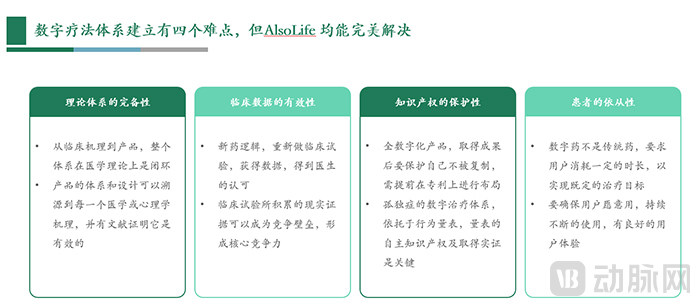
Four Major Challenges in Establishing a Digital Therapeutics System
In rehabilitation therapy, this digital therapeutic draws on FDA-cleared digital therapeutics and leverages carefully designed games for behavioral intervention, grounded in the principles of neuroplasticity and Applied Behavior Analysis (ABA). ALSOLIFE aims to complement human-delivered interventions with its digital therapeutic solution, thereby enhancing industry efficiency and effectively reducing costs.
The primary goal of digital therapeutics has never been to replace human intervention, but rather to integrate with it, achieving more efficient and optimal rehabilitation outcomes. Therefore, for rehabilitation institutions, it can automatically supervise therapists, improve quality, reduce training difficulty and costs, and enable standardized management, thereby lowering operational expenses.
For parents of pediatric patients, it offers the advantages of quantified rehabilitation outcomes, visualized progress, high user retention, and a strong sense of security. The integration of digital therapeutics can also provide much-needed respite for caregivers who are exhausted from long-term care. Furthermore, professionally designed therapeutic protocols help clarify home-based intervention goals, thereby mitigating the risks associated with unprofessional home care practices.
Currently, ALSOLIFE’s offline evidence-based centers serve over 350 individuals daily and have accumulated tens of millions of data records. In the near future, this digital therapeutic, upon completing clinical approval, may transform the landscape of autism diagnosis and rehabilitation for children in China.
In February 2021, the paper “Reliability and validity of a novel caregiver-assessed skills system based on the ALSO conception in children with autism spectrum disorders,” published in Translational Pediatrics, confirmed through a study of 1,050 children with autism spectrum disorder in China that the ALSOLIFE digital therapy can be finely quantified via six major skill domains, 22 assessment factors, and a competency model. Its assessment results can significantly predict scores from classic assessment tools such as the VB-MAPP and PEP-3.
In addition to digital therapeutics, ALSOLIFE has developed an AI-assisted diagnostic tool for autism spectrum disorder as part of its vertically integrated digital solution for this specific condition, thereby enabling the digital quantification of medical services and enhancing service quality to achieve early diagnosis, early intervention, and early rehabilitation.
This AI-assisted diagnostic tool features a training model based on multiple currently widely used auxiliary diagnostic datasets, including ADOS-2, ADI-R, and ABC. Furthermore, its normative dataset comprises norms for over 300 typically developing children, as well as ability, problem behavior, and impairment norms for more than 100,000 children with autism. It also includes over 1,000 video training samples of interactive games and task-based activities featuring children with autism in various scenarios.
Parents of children suspected of having autism can record short videos of their child performing home-based task activities, following the instructions in demonstration videos. These videos are then analyzed by a proprietary machine-learning algorithm to identify diagnostic behavioral features, providing an autism risk assessment and auxiliary diagnostic recommendations. This assists clinicians in making a final diagnosis during face-to-face consultations, thereby improving diagnostic efficiency and accuracy.
This AI-assisted diagnostic tool plays a crucial role in early screening and diagnosis, effectively improving the utilization efficiency of medical resources. Meanwhile, due to its greater accessibility and ease of use, parents of affected children can perform self-checks, avoiding missed optimal intervention windows caused by stigma or difficulties in securing appointments with specialists, thereby enabling children to receive further healthcare support as early as possible. Furthermore, ALSOLIFE leverages digital capabilities to integrate online and offline services, providing whole-course disease management for families affected by autism. For instance, ALSOLIFE currently hosts the largest online community in China’s autism sector and has served nearly 270,000 Chinese families with autism over the past four and a half years. This approach serves as an effective complement to ALSOLIFE’s digital therapeutics and is proving to be a correct paradigm.
On various occasions, Zhang Zhiguang has repeatedly emphasized the importance of evidence-based medicine. He stated that autism research in China often lacks the capacity to “demonstrate the validity of their practices.” The industry frequently fails to establish the scientific rigor of interventions through robust clinical medical practice, instead tending to directly cite research findings from abroad.
As autism spectrum disorder (ASD) garners increasing attention, the ASD rehabilitation industry is inevitably evolving into a sector characterized by high professional barriers yet promising prospects for technological breakthroughs. Industry practitioners, represented by ALSOLIFE, bear the responsibility of actively building industrial infrastructure and enhancing professional standards. To achieve this goal, ALSOLIFE is striving to facilitate the industry’s transformation through vertical disease-specific digital pathways, including digital therapeutics.
Meanwhile, the vast amount of data and the capability to acquire it at high intensity may help China’s digital therapeutics sector catch up and surpass competitors, achieving greater evidence-based rehabilitation outcomes at a lower cost.
“I firmly believe that, much like the development of application-level internet services, China will ultimately take a global lead in digital therapeutics.” This reflects both the ambition of the founder of ALSOLIFE, a company dedicated to supporting children with autism, and the simple wish of a parent raising a child on the spectrum. When that day arrives, perhaps every “child of the stars” will finally shine as the brightest star in the night sky.
References
Guangxi Zhuang Autonomous Region Working Committee for the Care of the Next Generation: “Research Report on the Difficulty of School Enrollment for School-Age Children with Autism in Laibin City, Guangxi Zhuang Autonomous Region”
The Beijing News: “The Dilemma of Inclusive Education for Children with Autism”
Phoenix News: "CPPCC National Committee Member Tai Lihua: Promoting the Systematic Implementation of the 'One Student, One Plan' Approach for Students with Special Needs in General Education Schools under the Special Education Enhancement Plan (2021-2025)"
Translational Pediatrics:Reliability and validity of a novel caregiver-assessed skills system based on the ALSO conception in children with autism spectrum disorders