

ByteDance Accelerates Healthcare Ambitions with Triple Investment in Offline-Rooted Medical Service Providers
ByteDance is accelerating its expansion in the healthcare sector.
Recently, Three Investments by ByteDance Have Come to Light: ByteDance led the C-round investment in the internet healthcare platform “Haoxinqing,” with a total investment amount of RMB 200 million. Additionally, Xiaohé Health, a subsidiary of ByteDance, has become a new shareholder in Amcare USA and Hongda Airui Medical Technology, holding equity stakes of 17.58% and 10.71%, respectively.
Notably, Haixinqing, Amcare, and Hongda Airui Medical Technology all possess “offline DNA.” Haixinqing operates physical offline psychological clinics; Amcare runs seven women’s and children’s hospitals, two comprehensive outpatient centers, and five postpartum care centers; while Hongda Airui Medical Technology owns brands such as Beijing Amcare Airui Cancer Hospital.
Online, ByteDance has also made several significant moves this year. In January, Xiaohe Health established a new company in Hainan, with its business scope including pharmaceutical retail, thereby accelerating its layout in internet healthcare. In April, ByteDance applied to register the “Xiaohe Early Screening” trademark, covering Class 5 pharmaceuticals. In June, the Xiaohe app officially began providing medical aesthetics services to users.
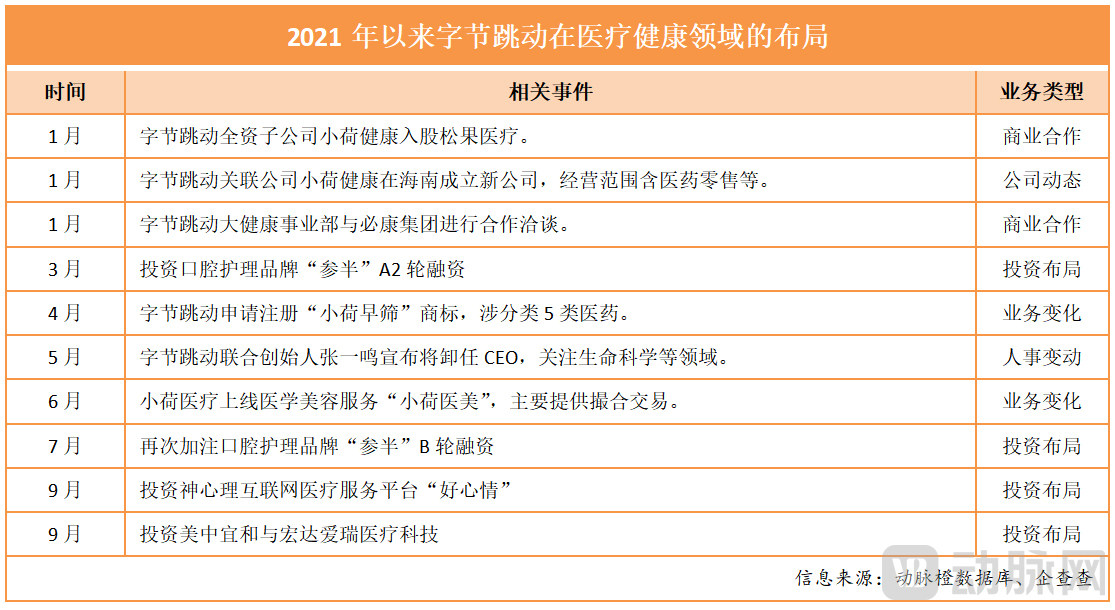
It is evident that ByteDance’s healthcare strategy has become increasingly clear, ranging from frequent investments in offline medical service providers to sustained expansion into online internet healthcare.: Widely deploy medical service institutions offline, build an efficient diagnosis and treatment platform online, and achieve positive interaction within the ecosystem by integrating online and offline healthcare processes.
It is well known that the entry of tech giants into the healthcare sector is no longer a novelty. In recent years, major players such as Alibaba, Tencent, JD.com, Ping An, and Baidu have all made significant waves in the healthcare and wellness industry.
Fierce Competition Amidst a Crowded FieldBased on past experience, due to the distinct product DNA and strengths of each tech giant, their understanding of healthcare and strategic focus areas vary significantly.
So, what is ByteDance’s strategic intent behind its frequent moves in the healthcare and medical sector? How far has it progressed so far, and how will its strategy evolve in the future?
ByteDance Has Been Actively Investing in the Offline Healthcare Sector, Recently Backing Three Healthcare Companies
From the perspective of fundamental business metrics, Haixinqing, founded in 2016, is China’s largest internet healthcare platform dedicated to the central nervous system (CNS) and mental health sectors; Amcare, established in 2006, is a women’s and children’s hospital offering one-stop services encompassing obstetrics, gynecology, pediatrics, assisted reproduction, postpartum rehabilitation, postpartum recovery, and medical aesthetics; Hongda Airui, founded in 2018, is a multidisciplinary tumor consultation platform engaged in oncology treatment and cancer patient education.It can be observed that all three companies operate offline medical service businesses.
In its previous investment layout, whether acquiring Baike Mingyi Network or 1024 Technology, ByteDance primarily targeted companies in the internet healthcare sector. This indicates that,ByteDance’s investment pace is gradually shifting from online healthcare toward the asset-heavy end of medical services.
“After the announcement of Haoxinqing’s financing, many were surprised that ByteDance would invest in the seemingly niche sector of mental health and psychological well-being. In reality, this field is highly compatible with ByteDance’s product ecosystem,” Zheng Hao (a pseudonym), an industry insider close to ByteDance, told VCBeat. He noted that sectors such as mental health and medical aesthetics are the best fit for ByteDance’s robust “content ecosystem” (including Toutiao, Douyin, Huoshan Short Video, etc.). “For ByteDance,With massive traffic at hand, commercial conversion efficiency must be prioritized.”
The underlying reason is that sectors such as mental health, women’s and children’s healthcare, and medical aesthetics differ from other medical fields in their ability to more effectively drive online patient acquisition—for example, through brief mental health assessments and community Q&A sessions for women’s and children’s healthcare and medical aesthetics.
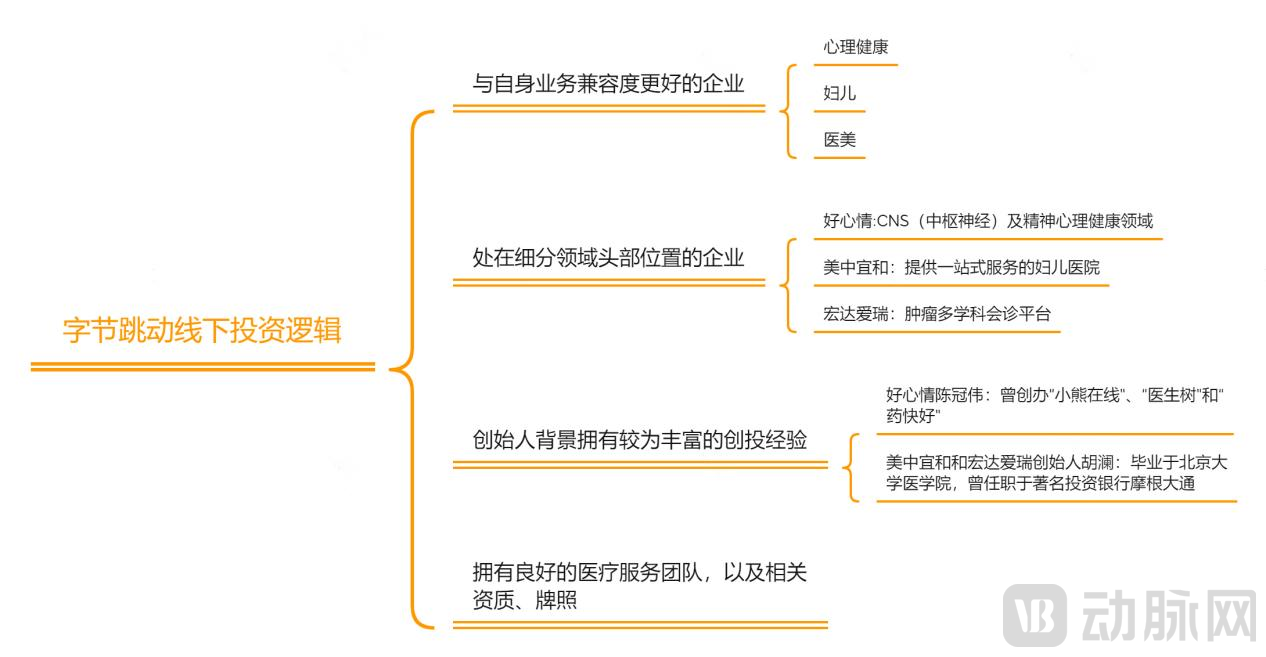
In addition, ByteDance’s investment logic also includes betting on leaders in niche sectors and assessing whether the founders have strong backgrounds.“ByteDance continues to seek suitable offline healthcare service targets, with leaders in niche segments being the most favored,” said Zheng Hao. Whether it is Hao Xinqing, Amcare, or Hongda Airui, all hold leading positions in their respective niche markets.
It is worth emphasizing that Chen Guanwei, the founder and CEO of Haoxinqing, is a seasoned serial entrepreneur. He co-founded the renowned IT portal “Xiaoxiong Online,” the post-diagnosis and post-discharge doctor-patient communication platform “Yishengshu,” and the one-hour medication delivery platform “Yaokuaiahao.” Meanwhile, Hu Lan, a graduate of Peking University Health Science Center, is the founder behind both Amcare and Hongda Airui. He previously worked at the prestigious investment bank JPMorgan Chase and brings extensive experience in capital markets.
In summary, when selecting healthcare service companies for investment, ByteDance prioritizes those with higher business compatibility or leading positions in niche sectors, among which the founders must have substantial venture capital and investment experience.
“Unlike ByteDance’s strategic moves in sectors such as education, its initiatives in the healthcare segment have been more conservative.” In Zheng Hao’s view, although ByteDance is accelerating its expansion into offline medical service institutions, a distinct characteristic of its approach has been considerable caution.Private hospitals and clinics are rife with pitfalls, making quality control of medical care critically important.”
A review of the official websites of three portfolio companies reveals that each maintains a relatively comprehensive professional medical team. Taking Amcare as an example, its website indicates that its gynecological medical team is composed of professionals from tertiary (Grade III) hospitals and secondary specialized hospitals. Furthermore, the company obtained an in vitro fertilization (IVF) license when it acquired Beijing Baodao Maternity Hospital last year.
Additionally,ByteDance is actively expanding its offline presence, driven by a strategic intent to integrate online and offline operations.Thus, it is evident that all three companies possess certain online “genes.” For instance, since its inception, Haixinqing has been strategically deploying big data applications in internet-based diagnosis and treatment. By leveraging big data, the company delivers precise patient education, clinical follow-ups, and disease analysis, as well as targeted clinical medical and pharmaceutical services, thereby achieving effective clinical management. This advantage enables the target companies to better adapt when integrating into ByteDance’s ecosystem.

(Xiaohe Clinic's Online Platform and Offline Physical Locations)
Internally, ByteDance has already begun experimenting with the integration of online and offline operations.An examination of the “Xiaohe” app reveals that the Beijing Xiaohe Outpatient Clinic, which officially opened mid-year, has recently been featured prominently on the homepage. The clinic offers services such as “Doctor Appointment” and “Examination Booking,” and houses departments including Stomatology, Internal Medicine, Traditional Chinese Medicine (TCM), and Ophthalmology. Its business focus is primarily on consumer healthcare and routine examinations. Data shows that there are currently 327 patient reviews.
Having ventured into integrating online and offline operations, ByteDance is accelerating its offline expansion by targeting leaders in various niche sectors. So, what does its online layout look like now?
“Xiaohe Medical,” an independent brand launched online by ByteDance, has maintained a low profile since its debut last year.
Specifically, the product form of “Xiaohe Medical” is the “Xiaohe” APP, which is a typical comprehensive internet healthcare product. After nearly a year of refinement and iteration, it currently covers multiple modules, including “Online Pharmacy,” “Vaccine Appointment,” “Welfare Club,” “Self-Test for Diseases,” “Nucleic Acid Testing,” “Colorectal Cancer Screening,” “Quick Consultation with Doctors,” “Xiaohe Medical Encyclopedia,” and “Patient Cases.”

(Left image: Screenshot from November 2020; Right image: Screenshot from September 2021)
From the interface perspective, the “Xiaohe” app is very similar in functionality to internet healthcare apps such as Yilu (formerly “Alibaba Health”), Ping An Health (formerly “Ping An Good Doctor”), JD Health, Baidu Health, Chunyu Doctor, and Haodf Online.
From an operational perspective, the “Xiaohe” app is currently entering a phase of rapid expansion.For instance, in terms of download volume, monitoring data from Qimai shows that the “Xiaohe” app experienced high download levels on the iPhone platform in February and August this year, with a peak single-day download count of 5,623. The average daily downloads over the past month stood at 2,852, bringing the cumulative total since its launch to 350,000 downloads.
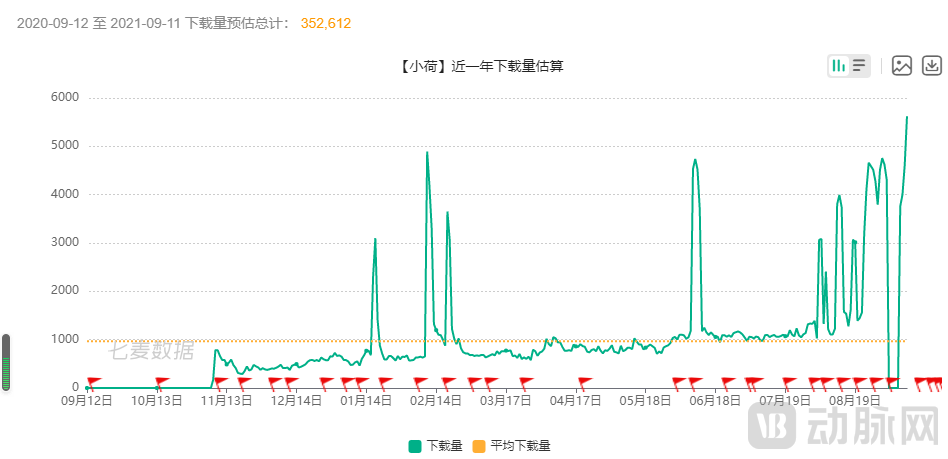
(Image source: Qimai Data)
Using the JD Health app as a benchmark, data from Qimai shows that the JD Health app had an average of 5,868 daily downloads on the iPhone platform over the past month, approximately 2.1 times that of the “Xiaohe” app. In other words,“Xiaohe” App has achieved notable success in its pursuit of the leading internet healthcare apps.
Of course, given the massive installed base of apps such as JD Health, the “Xiaohe” app still lags far behind in total users. This, in turn, will test the actual product and service capabilities of “Xiaohe Medical.”
Thus, returning to the business direction, the overall business of "Xiaohe Medical" can be mainly summarized into three major segments: "Patient Cases," "Medical Services," and "User Tools.", a detailed analysis will follow.
First, regarding the “Patient Cases” sectionByteDance has launched the "Patient Cases" module. According to the introduction, the "Patient Cases" module is positioned as a platform for sharing real treatment experiences among patients.
After reviewing the “Xiaohe” app, it was found that the “Patient Cases” section currently encompasses 11 major categories and nearly 300 subcategories of disease communities. Prominently displayed are key features highlighting this module: “Real Patients,” “Firsthand Experiences,” “Extensive Case Library,” and “Triple Review and Proofreading.”
Based on the browsing results, content related to tumor-associated diseases had the highest volume of shared posts and the greatest number of views. For instance, under the lung cancer entry, there were 249 experience-sharing articles with 268,000 viewers, while the breast cancer entry featured 458 such articles, attracting 251,000 viewers.
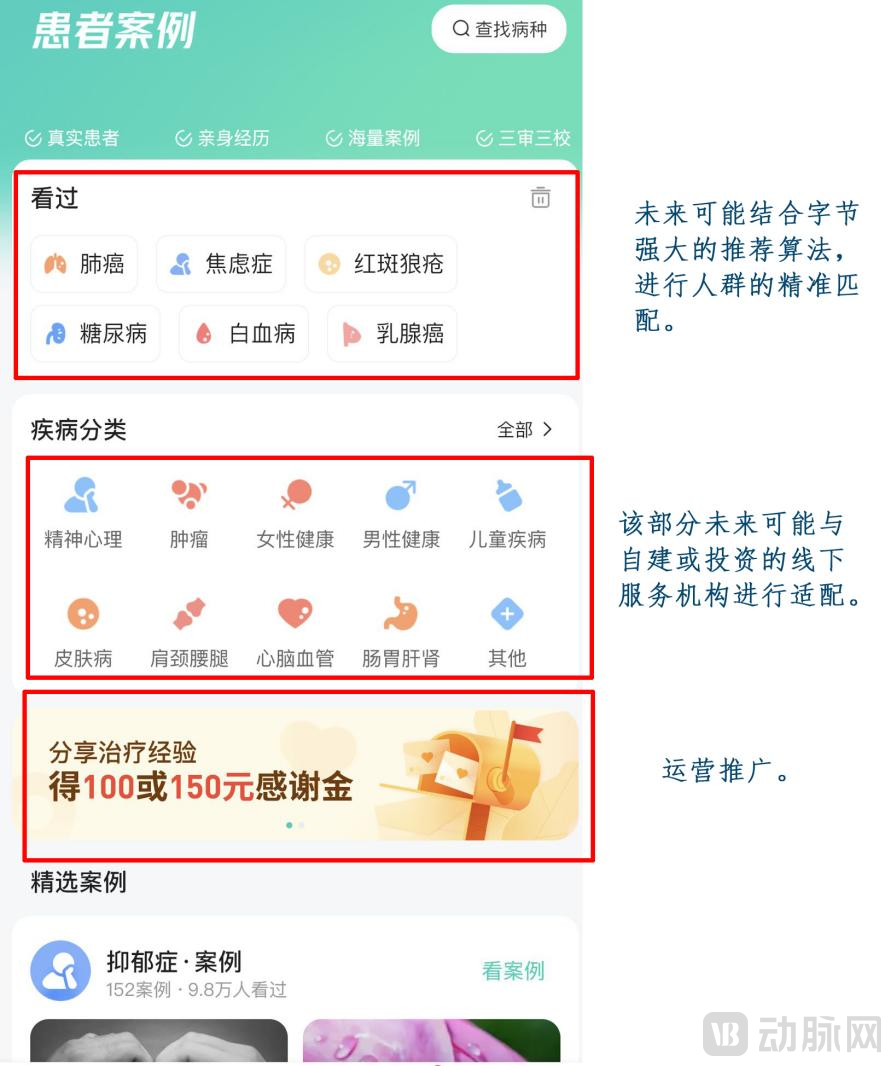 (“Patient Cases” Potential Expansion Directions; Graphic by VCBeat)
Notably, when users click on case studies related to specific diseases, popular science content about the condition appears at the top of the page, attributed to “Xiaohe Medical Encyclopedia.” It is worth mentioning that “Xiaohe Medical Encyclopedia” is an upgraded version of “Baike Mingyi,” which ByteDance fully acquired last year for RMB 500 million. According to officially disclosed data, “Xiaohe Medical Encyclopedia” currently covers 39,000 medical cases.
In terms of weighting, “Patient Cases” is positioned as a top-level category within the “Xiaohe” app, underscoring ByteDance’s strategic emphasis on this business segment. Furthermore, searches for “Xiaohe” across major app stores reveal that the app is positioned as “a platform for authentic medical experience sharing.”
As can be seen from this, to differentiate itself from other internet healthcare apps, the “Xiaohe” app has adopted a strategy of building disease-centric doctor-patient interaction communities. By leveraging experience-sharing content to enhance emotional engagement and complementing it with health science popularization, the app aims to attract and retain users.
Furthermore, in the "Medical Services" sectionIt comprises six sections: “Online Consultation,” “Online Pharmacy,” “Vaccination Services,” “Medical Aesthetics Services,” “Cancer Screening,” and “Clinical Trial Recruitment.”
Based on past development experience in internet healthcare, the “medical services” segment is key to whether ByteDance can establish a viable profit model in the healthcare sector: online consultations enable connections between doctors and patients and help identify patient needs, allowing the platform to achieve commercial monetization by selling products and services. Among these, pharmaceuticals are currently the highest-value-added products in medical service scenarios.
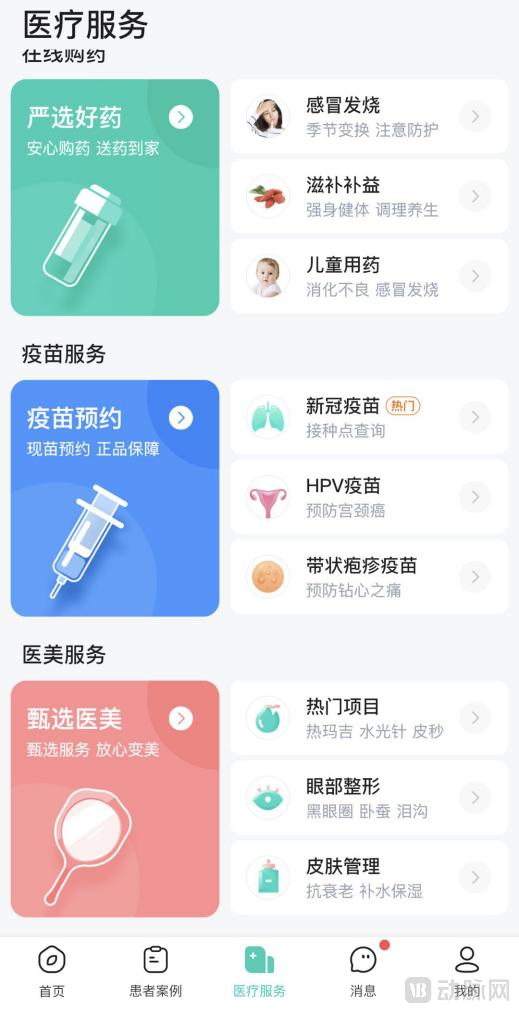
Upon clicking “Online Pharmacy,” it was revealed that Kang Aiduo Pharmacy provides pharmaceutical support services for the “Xiaohe” app. According to the company’s official profile, Kang Aiduo Pharmacy officially obtained its online drug distribution license in 2010 and offers specialized services in departments including oncology, hepatology, and cardiology.
Meanwhile, the services under “Vaccination Services,” “Cancer Screening,” and “Clinical Trial Recruitment” are primarily designed to provide users with more diverse options, thereby increasing app usage frequency and enhancing user stickiness.
Furthermore, as traffic on the app continues to grow to a significant scale, these three categories of services will unlock greater commercialization opportunities for ByteDance, such as collaborating with pharmaceutical companies on digital marketing for new drugs and driving patient referrals to health checkup providers.
Finally, regarding the “User Tools” section, the “Xiaohe” app has launched practical features such as “Self-Test for Diseases,” “Symptom Tracker,” “Food Safety Check,” “My Follow-Up,” and “Menstrual Assistant.”
From the evolution of its layout, it is evident that when the “Xiaohe” app was first launched last year, this section was prominently displayed on the homepage. Currently, however, most of its features have been relegated to less conspicuous locations within the “Me” tab, indicating that ByteDance has yet to establish a clear strategic positioning for these functionalities.
However, with the aggressive promotion of the “Xiaohe” app and the subsequent growth in its user base, the “User Tools” section may be spun off as a standalone module to better support services such as health management.
In summary, ByteDance has established a relatively comprehensive and clear business line in the healthcare sector through its “Xiaohe” app, focusing on leveraging “patient cases” to attract and retain users, monetizing through “medical services,” and strategically deploying “user tools” with practical health management features to unlock further commercialization opportunities.
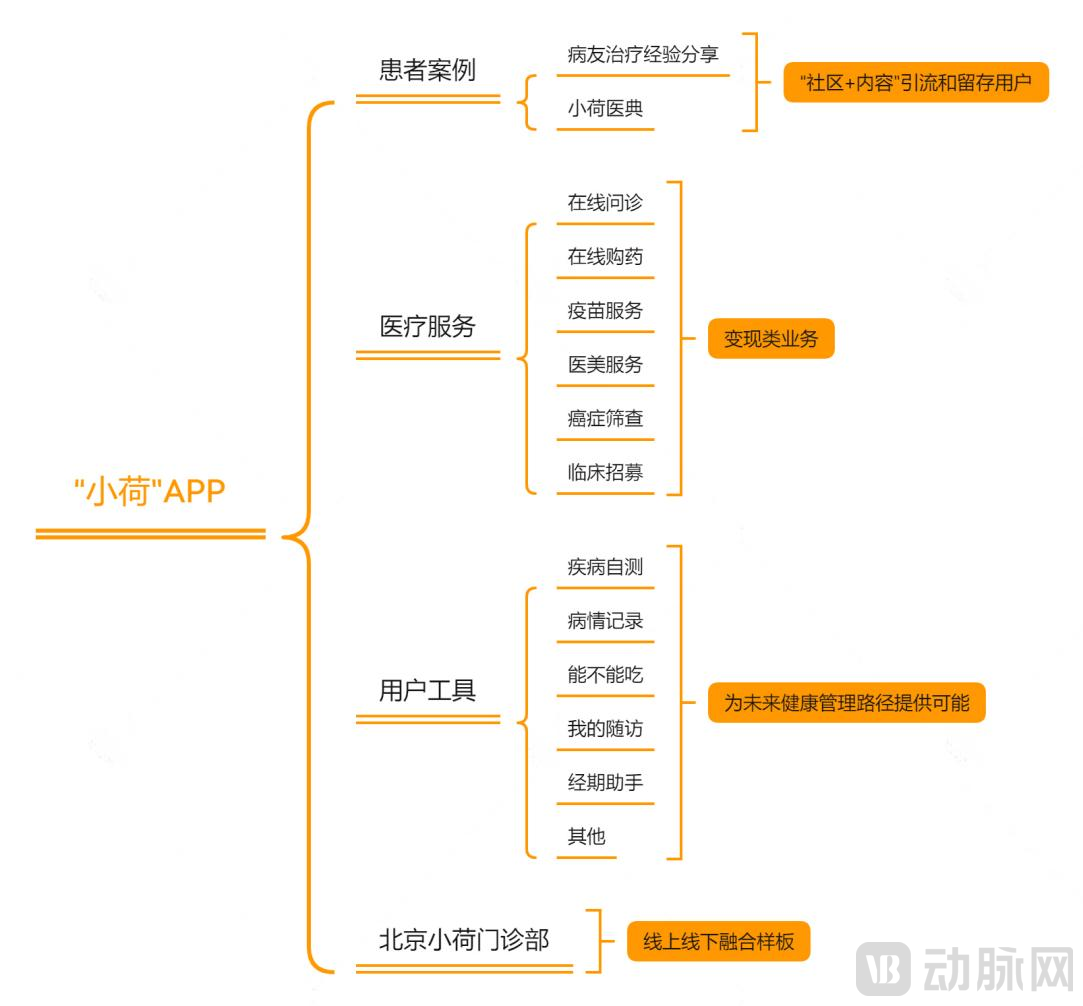 (Information sourced from the “Xiaohe” APP; graphic by VCBeat)
ByteDance has arguably been one of the hottest internet newcomers in recent years, with its every move drawing intense scrutiny from all quarters.
The reasons behind this are not only its ability to consistently produce hit applications such as Toutiao, Douyin, Huoshan Short Video, and Dongchedi, but also its robust capability for commercial monetization.
According to data released by ByteDance in June this year, the company’s revenue in 2020 reached RMB 236.6 billion, representing a year-on-year increase of 111%. Business operations also expanded rapidly. By the end of 2020, ByteDance’s products had achieved 1.9 billion monthly active users worldwide, covering more than 150 countries and regions and supporting over 35 languages.
It was also reported that ByteDance’s advertising revenue, e-commerce revenue, live-streaming gross merchandise value (GMV), gaming segment GMV, and education sector revenue stood at RMB 175 billion, approximately RMB 6 billion, RMB 45–50 billion, RMB 4–5 billion, and RMB 2–3 billion, respectively.It is evident that within the niche sectors where ByteDance operates, a significant number of its business units have achieved substantial revenue.
Consequently, industry insiders cannot help but wonder: Can ByteDance continue to achieve such impressive results in the healthcare sector? To answer this, it may be instructive to examine the current status of fellow internet giants—Baidu, Alibaba, Tencent, and JD.com—in the healthcare industry.
First, through its dual-ecosystem strategy of “content + services,” Baidu Health has covered a range of healthcare-related service functions, including online consultations, medication delivery via appointment, appointment registration, psychological counseling, and insurance. At the “2021 Baidu Health Tribute to Healers Gala” held in July this year, Baidu Health announced that it is building a precise doctor–patient matching engine to accurately connect users with hospitals and physicians, thereby facilitating the digital transformation of public hospitals.
Furthermore, Alibaba Health represents the pharmaceutical e-commerce model. This is primarily because the revenue from its pharmaceutical e-commerce segment has become Alibaba Health’s cash cow. At this year’s Future Healthcare 100 Conference, Alibaba Health unveiled a new strategic vision: gradually deepening its presence in the service sector. Specifically, it aims to integrate online and offline resources into a one-stop healthcare service system along the extensive chain of users’ health and medical needs, comprehensively embedding its services throughout the entire user journey in healthcare and medical treatment.
Finally, looking at Tencent, its healthcare services focus on cloud-based and content-driven offerings, including products such as Tencent Cloud Healthcare Solutions, Tencent Security, and Tencent Medical Encyclopedia. Additionally, Tencent has strengthened its ecosystem synergy by investing in leading vertical healthcare service platforms such as “Haodaifu” (Good Doctor) and “Dingxiang Yuan” (DXY). According to Tang Daosheng, Senior Executive Vice President of Tencent Group and President of the Cloud and Smart Industries Group, Tencent will leverage C2B as a key approach and adopt a “dual-wheel drive” strategy to promote the intelligent transformation of healthcare in the future.
From the perspective of the business strategic directions chosen by the three tech giants—Baidu, Alibaba, and Tencent (BAT)—in the healthcare sector, although their approaches are largely similar to those currently being explored by internet healthcare companies, their areas of focus still bear the distinct imprint of their respective corporate DNA. Therefore,For ByteDance, it remains to be seen whether its recommendation algorithms, which hold a significant advantage in the consumer market, will deliver surprising breakthroughs in the healthcare sector.
Of course, as the focus gradually shifts from the internet side to the healthcare services side, even giants like BATJ still have a long way to go. After all, healthcare services are directly related to people’s lives and safety, and the industry logic differs significantly from that of other sectors. This is not something that can be resolved simply by combining capital, technology, and talent.
From this perspective, ByteDance still has opportunities, but it will take a considerable amount of time to validate them.