Bio-Heart Biotech Re-files for Hong Kong IPO, Showcasing Next-Gen Bioresorbable Stents and Renal Denervation Systems

Bioheart
Interventional Cardiovascular Product Developer
On September 13, Shanghai Bioheart Biotechnology Co., Ltd. (“Bioheart”) filed an application for listing on the Main Board of the Hong Kong Stock Exchange.
Previously, Bioheart had filed its application with the Hong Kong Stock Exchange on February 26 and submitted hearing materials on June 16; the application has now lapsed.
Bioheart is China's leading innovative interventional cardiovascular device company, currently focusing on fully bioresorbable stents and renal denervation therapy.
Bioabsorbable Stents (BRS) Are Primarily Associated with Coronary or Peripheral Artery Disease.
According to Frost & Sullivan, the number of patients with coronary artery disease in China increased from 22 million in 2015 to 24.6 million in 2019, and is expected to further increase to 28 million in 2024.
In recent years, interventional therapy has been rapidly developing for the treatment of vascular diseases, gradually replacing traditional therapies such as invasive surgery and pharmacological treatment. This is because interventional procedures are shorter in duration and minimally invasive, resulting in fewer postoperative complications, enabling faster patient recovery, and alleviating the burden and potential side effects associated with long-term medication use.
Furthermore, the therapeutic devices used in percutaneous coronary intervention (PCI) procedures in China are predominantly earlier-generation products, such as bare-metal stents (BMS) or drug-eluting stents (DES). In contrast to the currently prevalent drug-eluting stents on the market, fully bioresorbable scaffolds enable true anatomical and functional vascular restoration rather than merely implanting artificial foreign bodies. By offering the unique value proposition of “intervention without implantation,” fully bioresorbable scaffolds have the potential to introduce a paradigm shift in interventional cardiology.
Therefore, China’s fully bioresorbable stent market holds immense growth potential. The number of fully bioresorbable stents used in PCI procedures in China is projected to surge at a compound annual growth rate (CAGR) of 92.1%, rising from approximately 11,700 units in 2019 to approximately 306,300 units in 2024. Therefore,The market size of fully biodegradable stent products in China is expected to grow significantly from RMB 200 million in 2019 to RMB 6.6 billion in 2030,RepeatThe compound annual growth rate is 38.5%.
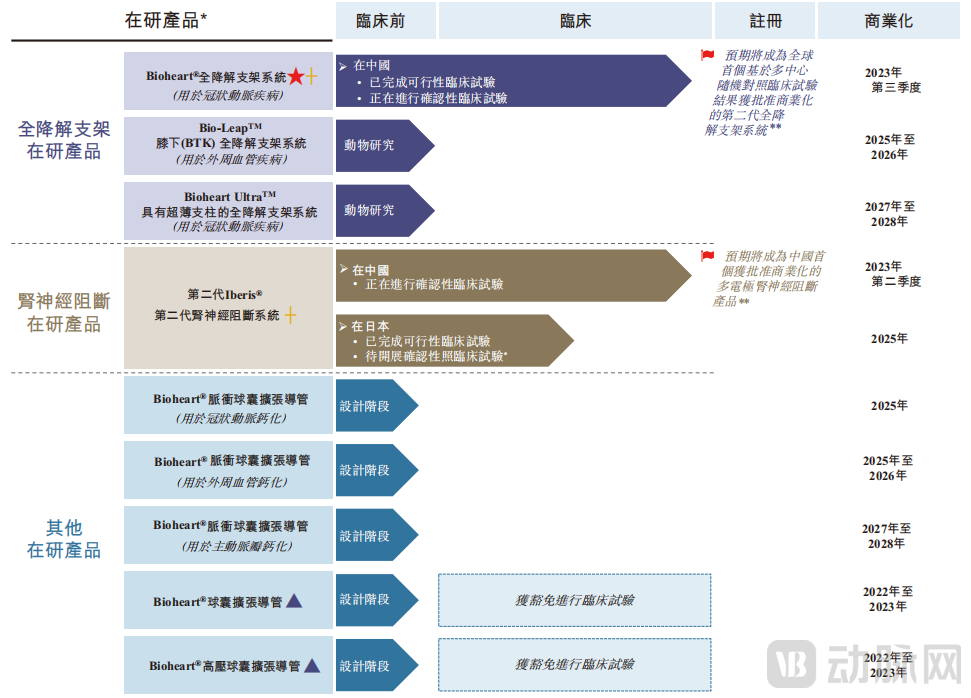
To date, only two fully bioresorbable scaffold products have been commercialized in China, both of which are first-generation devices with strut thicknesses exceeding 150 micrometers. Bioheart is one of only four domestic companies in China with second-generation fully bioresorbable scaffold products currently in clinical trials. Its core product, the Bioheart scaffold, is expected to become the world’s first second-generation fully bioresorbable scaffold system to receive regulatory approval based on results from multicenter randomized controlled trials (RCTs).
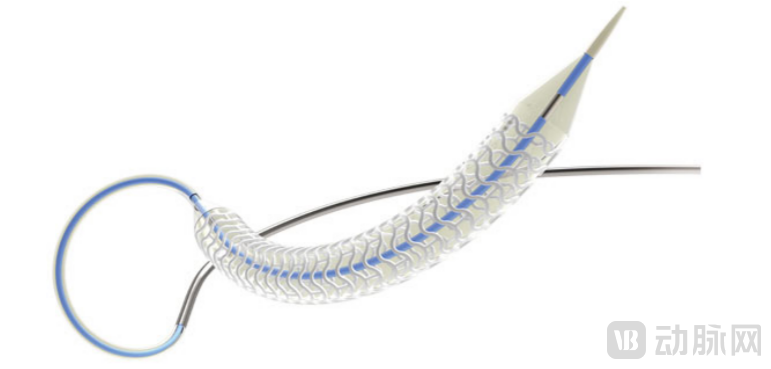
(Bioheart Fully Bioresorbable Stent)
Compared with competing products on the market, Bioheart features many outstanding design characteristics and advantages. For instance, Bioheart’s strut thickness is only 125 to 145 micrometers, yet it provides sufficient radial strength to rival products with strut thicknesses exceeding 150 micrometers. Data indicate that thinner stents are easier for physicians to handle during procedures, accelerate endothelialization, and help reduce the risk of postoperative thrombosis as well as other biological risks.
Meanwhile, Bioheart features an advanced drug-eluting mechanism that enables precise control of drug distribution at different locations on the stent through ultrasonic directional spraying technology. Additionally, Bioheart utilizes proprietary marker inlay technology to provide enhanced visibility during surgical procedures.
The prospectus shows that Bioheart has been recognized by the National Medical Products Administration asInnovative Medical Devices, entered the fast-track approval pathway. In August 2019, Bioheart completed subject enrollment for its randomized controlled clinical trial; in April 2021, Bioheart initiated a single-arm clinical trial. Bioheart expects:Q3 2023 BioheartConvertApproved by the National Medical Products Administration.
In addition to its core product, Bioheart, Bioheart is developing Bioheart Ultra, a next-generation fully bioresorbable stent with ultra-thin struts for the treatment of coronary artery disease, as well as Bio-Leap, a fully bioresorbable stent system for the treatment of infrapopliteal peripheral artery disease. Bioheart plans to initiate clinical trials for both products in 2022 and expects to launch them in China around 2025 and 2027, respectively.
Renal Denervation is Associated with Hypertensive Diseases.
The number of hypertensive patients in China increased from 290 million in 2015 to 310 million in 2019, representing a compound annual growth rate (CAGR) of 2.3%. Additionally, in 2019, only approximately 22% of hypertensive patients had their condition under control, while the remaining patients suffered from uncontrolled or resistant hypertension.
Currently, there are limited therapies with proven clinical efficacy for the treatment of uncontrolled or resistant hypertension. Renal denervation is one of the few therapies with demonstrated clinical effectiveness in managing uncontrolled and resistant hypertension, holding the potential to transform traditional approaches to hypertension treatment.
Recent multiple clinical studies have demonstrated that renal denervation therapy is safe and effective in treating uncontrolled and resistant hypertension, with blood pressure-lowering effects potentially lasting more than three years. This makes it a promising long-term solution with cost-saving potential for the management of hypertension.
Compared with pharmacological therapy, renal denervation is more effective in sustaining 24-hour blood pressure reduction, whereas medication often fails to adequately control blood pressure during nighttime and early morning hours. Despite the significant advantages of renal denervation therapy, there are currently no commercially available renal denervation products in China.
Bioheart is one of only three companies in the Chinese market with renal denervation products in clinical trials. Its investigational product, the second-generation Iberis, is expected to become the first multi-electrode renal denervation product approved in China. Compared with single-electrode renal denervation investigational products, the multi-electrode second-generation Iberis can effectively shorten procedure time and reduce radiation exposure risks for both patients and physicians.
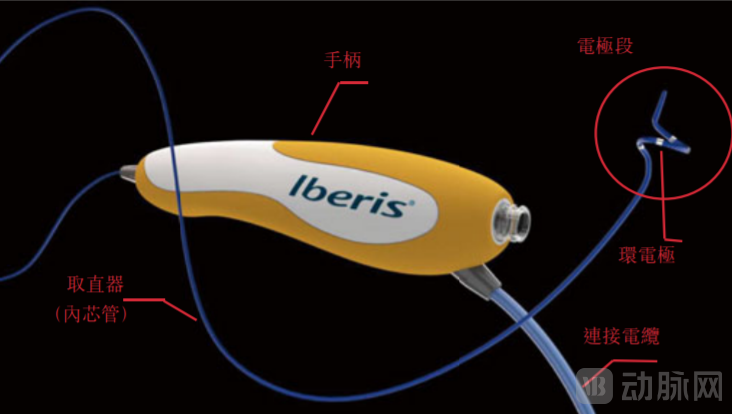
(Second-Generation Iberis Catheter)
Meanwhile, the second-generation Iberis is the only renal denervation product under development in China that features combined ablation of the main renal arteries and their branches. Compared with other investigational products capable of ablating only the main renal arteries, it can enhance the blood pressure-lowering efficacy of renal denervation procedures.
The second-generation Iberis is the world’s only renal denervation product that offers both transfemoral and transradial intervention options for physicians and patients, whereas all other renal denervation products permit only transfemoral access. For patients, transradial intervention is generally less invasive, associated with fewer complications, and enables faster recovery compared with transfemoral intervention. For physicians, having the option to choose between these two approaches during the procedure enhances flexibility, allowing them to select the most appropriate treatment method for their patients.
Currently, the second-generation Iberis has been recognized as an innovative medical device by the National Medical Products Administration and has entered the fast-track approval process. Bioheart is completing its confirmatory clinical trial, which is a randomized sham-controlled trial targeting the second-generation Iberis.ProjectedSecond-Generation IberisApproved by the National Medical Products Administration in the second quarter of 2023.
Meanwhile, Bioheart is collaborating with Terumo to conduct clinical trials of the second-generation Iberis in Japan. To date, Bioheart has completed the first-in-human clinical trial of the second-generation Iberis in Japan, plans to undertake a randomized controlled confirmatory clinical trial in 2022, and expects to launch the second-generation Iberis in Japan in 2025.
The prospectus reveals that, in addition to its fully bioresorbable stent and renal denervation product pipelines, Bioheart is actively advancing the development of its pipeline of balloon catheter products. To date, Bioheart has developed one registered product and has eight investigational products at various stages of development.