

InnoCare Pharma Files for STAR Market Listing with Orelabrutinib Driving Over RMB 100 Million in H1 Revenue
InnoCare
Innovative Drug Developer
On September 13, the star biopharmaceutical company co-founded by Professor Shi Yigong, an academician of the Chinese Academy of Sciences, renowned structural biologist, and founding president of Westlake University—InnoCare Pharma Co., Ltd. (hereinafter referred to as “InnoCare”) has had its application for listing on the STAR Market accepted, with CICC serving as its sponsor.
Previously, in March 2020, InnoCare listed on the Hong Kong Stock Exchange with an issue price of HK$8.95, raising net proceeds of approximately HK$2.093 billion. As of today, InnoCare’s share price has exceeded HK$20, and its market capitalization has surpassed HK$30 billion.
Recently, the pharmaceutical sector in the secondary market has experienced significant volatility due to various factors, including policy changes, market dynamics, and the investment environment. Despite this, InnoCare’s decision to list on the STAR Market at this time demonstrates its strong confidence.
According to the prospectus, InnoCare plans to raise RMB 4 billion in its IPO on the STAR Market. Of this amount, RMB 2.15 billion will be allocated to new drug R&D projects; RMB 167 million to upgrading its drug R&D platform; RMB 394 million to building its marketing network; RMB 87.7385 million to IT infrastructure development; and RMB 1.2 billion to supplement working capital.
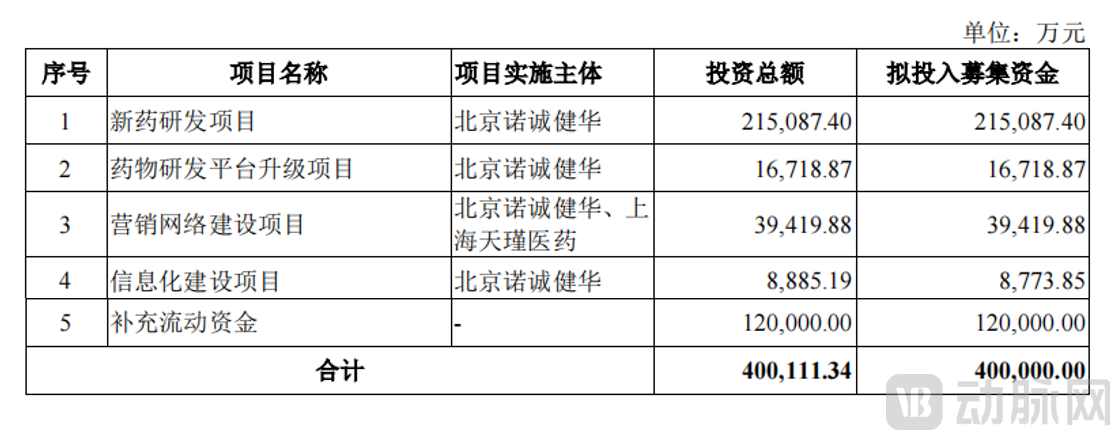
(Image source: InnoCare prospectus)
InnoCare, established in 2015, is an innovative biopharmaceutical company focused on the treatment of malignant tumors and autoimmune diseases, aiming to develop best-in-class or first-in-class drugs with breakthrough potential for the global market. As mentioned at the beginning of this article, one of InnoCare’s co-founders is Academician Shi Yigong. His distinguished career is presumably well known to readers, so it will not be elaborated upon here.
Another Co-founderDr. Jisong CuiFormerly served as General Manager of Biodel Inc. (Beijing) and Head of the Early Development Team in Cardiovascular Disease at Merck & Co.
Dr. Renbin Zhao, Executive Director of InnoCareFormerly served as Director of the Space Biology Laboratory at the China Academy of Space Technology; during his tenure at Johnson & Johnson, he held multiple senior R&D positions and accumulated extensive experience in clinical research.
The core founding team members have collaborated for many years, leveraging their complementary expertise and seamless coordination to drive InnoCare’s efficient and rapid development.
Furthermore, other key members of InnoCare’s management team also possess extensive senior-level experience at major multinational pharmaceutical companies such as Pfizer Inc., GlaxoSmithKline plc, and Bristol-Myers Squibb Company. They have rich industry expertise across all stages of innovative drug development, manufacturing, and commercialization, combining a global innovation perspective with profound industry insights.
The prestigious international scientific advisory team, which includes Academician Shi Yigong; Dr. Zhang Zemin, Deputy Director of the BIOPIC Center at the School of Life Sciences, Peking University, and former Chief Bioinformatics Scientist at Genentech and Roche; and Dr. Arnold J. Levine, a member of the U.S. National Academy of Sciences and the U.S. National Academy of Medicine, Professor Emeritus at the Institute for Advanced Study in Princeton, and the co-discoverer of p53, further enhances InnoCare’s prominence. Leveraging their profound academic insights, this team helps InnoCare significantly improve its capabilities in genome- and protein structure-based drug design and novel target discovery.
It has been a year and a half since InnoCare held its bell-ringing ceremony on the Hong Kong Stock Exchange. Over this period, InnoCare has added nine new product candidates to its pipeline and successfully commercialized orelabrutinib (Yinuokai®).
Currently,In addition to orelabrutinib, which has already been approved for market launch, InnoCare has six products in Phase I/II/III clinical trials and eight products in the preclinical stage.The specific product pipeline is as follows:
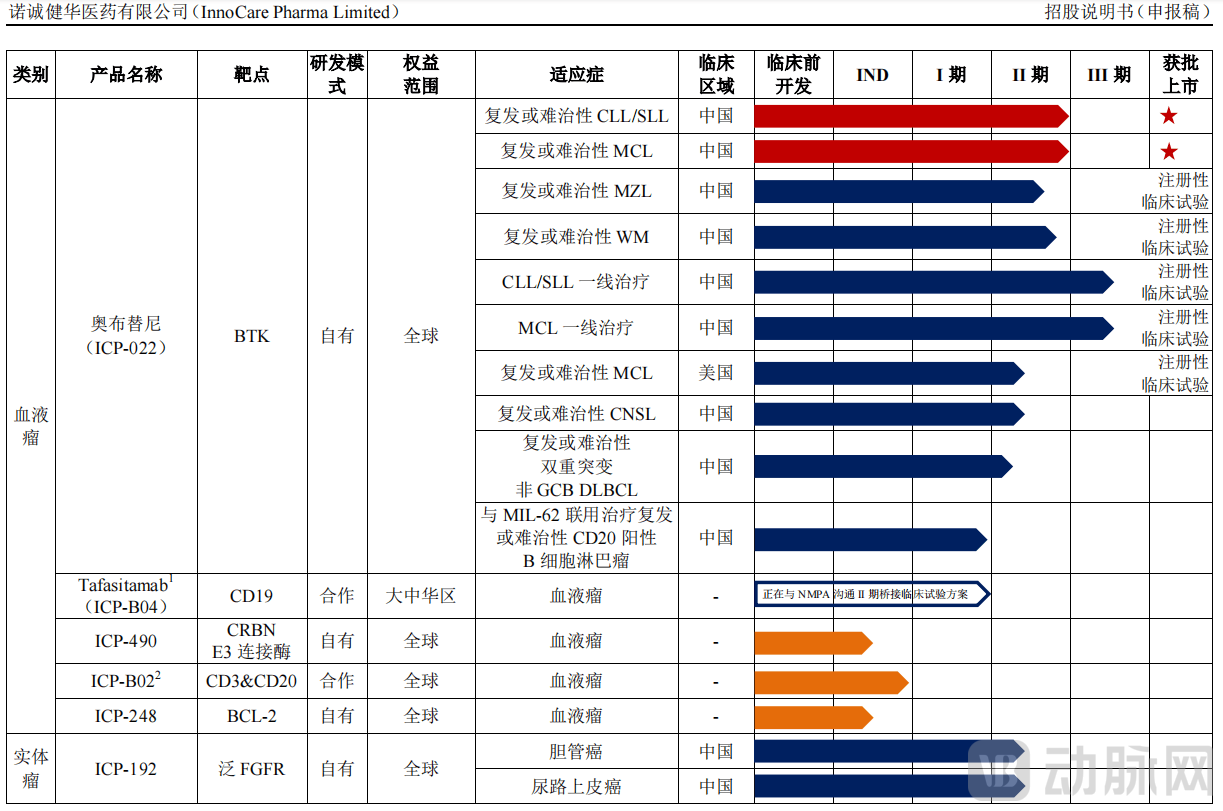
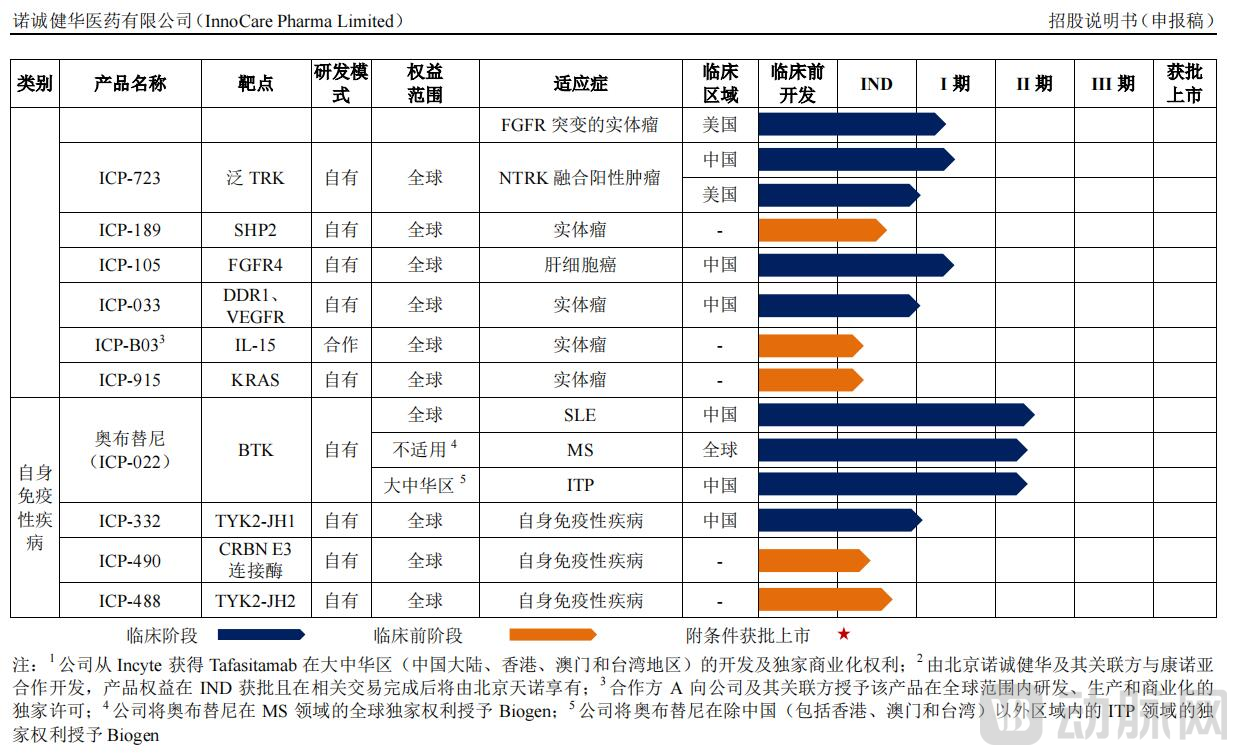
InnoCare’s Product Pipeline Overview
(Source: Company Prospectus)
Next, a brief introduction will be provided according to the therapeutic areas covered by the company’s product pipeline.
In the field of hematologic malignancies, InnoCare boasts a portfolio of highly differentiated and synergistic therapeutic products, including orelabrutinib (a BTK inhibitor), ICP-490 (a CRBN E3 ligase modulator), and tafasitamab (a CD19-targeting monoclonal antibody).
Orelabrutinib (Yinuokai®)It is a potential best-in-class, highly selective, covalent irreversible oral BTK inhibitor, supported by the National Major Special Project for New Drug Innovation. It is primarily indicated for the treatment of various B-cell malignancies and autoimmune diseases. Orelabrutinib is currently InnoCare’s only commercialized product. It received conditional approval from the National Medical Products Administration (NMPA) in December 2020 for the treatment of relapsed or refractory chronic lymphocytic leukemia/small lymphocytic lymphoma (CLL/SLL) and relapsed or refractory mantle cell lymphoma (MCL).
From its founding to the launch of orelabrutinib, InnoCare took only five years.It is widely acknowledged in the pharmaceutical industry that it typically takes around 10 years for a new drug to go from research and development to market launch. This means that InnoCare has more than doubled the R&D efficiency for this new drug. How was such “rocket-like” speed achieved?
Compared with other major marketed BTK inhibitors (ibrutinib, acalabrutinib, and zanubrutinib), based on the disclosed public study data, orelabrutinib:
1) Demonstrated more precise BTK kinase selectivity in the KINOMEscan assay;
2) During the same time period, orelabrutinib achieves more durable and stable BTK target occupancy at a lower dosage compared to other BTK inhibitors, enabling less frequent dosing and significantly improving patient adherence;
3) Clinical trials for the treatment of B-cell lymphoma demonstrated a lower incidence of adverse events, with no cases of severe atrial fibrillation associated with orelabrutinib use—a primary concern for patients with underlying cardiovascular conditions—indicating a superior safety profile.
Therefore, orelabrutinib has gained significant international recognition. In December 2020, the U.S. Food and Drug Administration (FDA) granted orphan drug designation to orelabrutinib for the treatment of relapsed or refractory mantle cell lymphoma (MCL). In June 2021, the FDA granted breakthrough therapy designation to orelabrutinib for the same indication.
The market prospects for BTK inhibitors are also quite promising.According to Frost & Sullivan data analysis, the global market size of BTK inhibitors for the treatment of B-cell lymphoma has grown rapidly, increasing from USD 2.2 billion in 2016 to USD 7.2 billion in 2020, with a compound annual growth rate (CAGR) of approximately 34.1%. This market is expected to continue expanding in the future, reaching USD 20 billion by 2025 at a CAGR of 22.7%. In China, since the approval of the first BTK inhibitor in 2017, the market size of BTK inhibitors for the treatment of B-cell lymphoma has grown rapidly, reaching RMB 1.3 billion in 2020, and is projected to grow to RMB 13.1 billion by 2025 at a CAGR of 58.6%.
As disclosed in the prospectus,Orelabrutinib is the fifth BTK inhibitor globally and the third in China approved for the treatment of various B-cell lymphomas. Given its promising market prospects, InnoCare has secured a certain first-mover advantage. Therefore,While aggressively advancing its product pipeline, InnoCare is also rapidly building market advantages.
As of March 31, 2021, InnoCare had established a commercialization team of more than 130 members to comprehensively promote orelabrutinib, covering hundreds of hospitals across China. Orelabrutinib has been included in the 2021 edition of the CSCO Guidelines for the Diagnosis and Treatment of Lymphoma, where it is listed as a Grade I recommended regimen for the treatment of relapsed or refractory chronic lymphocytic leukemia/small lymphocytic lymphoma (CLL/SLL) and relapsed or refractory mantle cell lymphoma (MCL).
Furthermore, by actively exploring diversified innovative business models, payment methods, and multi-regional commercial insurance options, InnoCare has secured the inclusion of orelabrutinib in government-guided local commercial health insurance programs in more than 20 provinces and municipalities, including Beijing, Shanghai, Chengdu (Sichuan), Suzhou (Jiangsu), and Kunming (Yunnan). InnoCare is also actively participating in the 2021 National Reimbursement Drug List (NRDL) negotiations to maximize patient access to orelabrutinib.
For the sales rights of orelabrutinib outside the Chinese market, InnoCare has adopted a "license-out" strategy to maximize the product's benefits.In July 2021, InnoCare entered into a license and collaboration agreement with Biogen, granting Biogen exclusive global rights to orelabrutinib in the field of multiple sclerosis (MS), as well as exclusive rights in certain autoimmune disease fields outside China (including Hong Kong, Macao, and Taiwan). InnoCare received an upfront payment of $125 million, along with potential clinical development and commercial milestone payments of up to $812.5 million, and is eligible to receive tiered royalties based on net sales.
In the field of solid tumors, InnoCare has a portfolio including ICP-192 (pan-FGFR inhibitor), ICP-723 (pan-TRK inhibitor), and ICP-189 (SHP2 inhibitor)., covering multiple mechanisms of action for the treatment of solid tumors.
In the field of autoimmune diseases, InnoCare is developing multiple products for the treatment of autoimmune disorders caused by B-cell or T-cell dysfunction, including orelabrutinib (a BTK inhibitor), ICP-332 (a TYK2-JH1 inhibitor), and ICP-490 (a CRBN E3 ligase modulator).According to Frost & Sullivan’s analysis, the global market size for autoimmune disease drugs reached $120.6 billion in 2020 and is projected to grow to $175.2 billion by 2030.
In addition to monotherapy, InnoCare is also actively exploring the potential of combining its investigational products with standard therapies or other treatments.
A robust talent pipeline has not only enabled InnoCare to build a product portfolio featuring multiple innovative candidates that strike a high balance between innovation and risk, covering several hot targets with significant market potential, but also established an efficient, integrated biopharmaceutical platform for the company, meeting the dual demands of R&D quality and speed.
In the field of new drug discovery and development,InnoCare regards independent innovation as the engine for sustainable development, and has established a compound optimization platform, a drug polymorph research platform, and a technology R&D and industrialization platform for solubilizing formulations of poorly soluble drugs:
1) Compound Optimization Platform:Accelerating the discovery of highly druggable compounds based on the three-dimensional crystal structures of protein-drug molecules;
2) Drug Polymorph Research Platform:Used to identify the active pharmaceutical ingredient (API) with the dominant crystal form and to support stability studies;
3) R&D and Industrialization Platform for Solubilization Formulations of Poorly Soluble Drugs:Addressing the prevalent formulation bottlenecks in current innovative drugs to effectively enhance the bioavailability of candidate drugs.
InnoCare has established first-class R&D centers in Beijing, Nanjing, and Guangzhou, enabling the company to independently conduct research in chemistry, biology, pharmacology, pharmacokinetics, toxicology, and CMC, as well as drug crystal form research and development.
In terms of clinical research,InnoCare has built a high-caliber clinical development and regulatory affairs team centered in China and the United States, and established a biomarker-based translational medicine research platform to effectively evaluate clinical trial data and enhance drug R&D efficiency. As of March 31, 2021, InnoCare had conducted more than 15 clinical trials across over 100 clinical sites worldwide.
In terms of production,InnoCare has basically completed the construction of Phase I of its production base in Guangzhou. Built in compliance with Good Manufacturing Practice (GMP) standards of China, the United States, the European Union, and Japan, the facility is capable of producing solid dispersions and various formulations, with an estimated annual production capacity of up to 1 billion tablets. The production base is currently preparing for the manufacture of orelabrutinib tablets, with regulatory inspections by relevant drug authorities expected to be completed and commercial production to commence in the first half of 2022. Meanwhile, to accelerate commercialization, InnoCare has partnered with contract manufacturing organizations (CMOs) to ensure production support for orelabrutinib tablets during the early stages of commercial launch.
Although InnoCare demonstrates the potential to become a star stock, like many other biopharmaceutical companies, it has not yet achieved profitability and continues to carry accumulated unrealized losses.
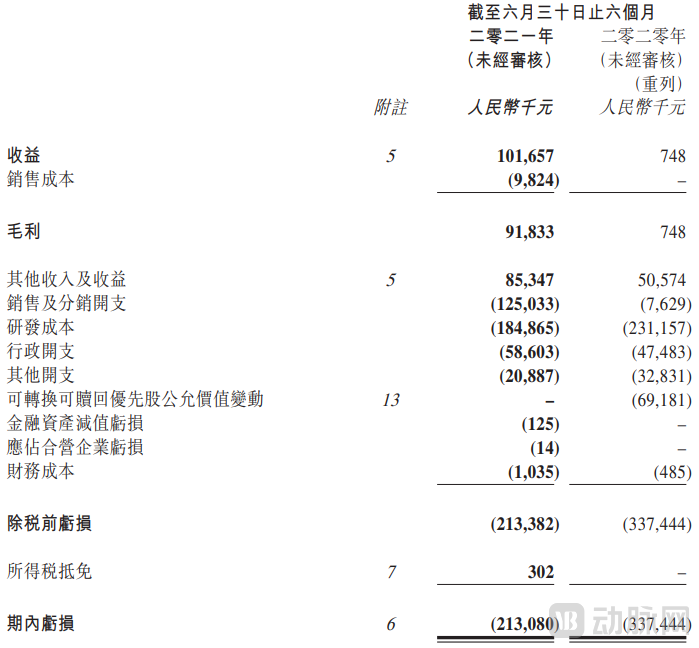
(Image source: Company’s Half-Year Performance Announcement)
Following the market launch of its first commercial product, orelabrutinib, InnoCare reported in its interim results announcement disclosed on the Hong Kong Stock Exchange that sales revenue from orelabrutinib exceeded RMB 100 million in the first half of 2021. Moreover, with the steady advancement of its clinical pipeline, R&D expenses decreased compared to the same period in 2020. Given the sustained revenue stream expected from orelabrutinib, InnoCare’s overall net loss is projected to continue narrowing in the future.
Although the current secondary healthcare market exhibits a degree of instability, it is certain that regardless of fluctuations in the present stock market environment, the broader landscape of robust growth in healthcare remains unchanged; the upward momentum of the pharmaceutical industry remains unchanged; and the growth logic of high-quality enterprises remains unchanged. Technological innovation, differentiated strategic positioning, and global expansion (“going overseas”) are undoubtedly the most appropriate growth pathways for domestic biopharmaceutical companies at present, irrespective of short-term market performance.