

Microbiome Therapeutics Enters Commercialization Era as Roche, Pfizer, Sequoia, and Chunhua Back the Multi-Billion-Dollar Sector
After a quiet surge in popularity, microbiome therapeutics are entering their first year of commercialization.
In August 2020, Seres Therapeutics, a global leader in microbiome therapeutics, finally announced significant Phase III clinical trial results for its flagship product, SER-109, demonstrating a marked reduction in the recurrence rate of recurrent Clostridioides difficile infection (rCDI). As the first publicly traded microbiome therapeutics company to emerge from the investment and financing boom following the launch of the U.S. National Microbiome Initiative, Seres saw its stock price rise substantially for several consecutive days. The positive news regarding SER-109 also reinvigorated investor confidence in China’s microbiome therapeutics sector. Within months, leading domestic companies such as XBiome, Zhiyi Biopharma, and Moon Biotech successfully completed new rounds of financing worth hundreds of millions of yuan. Amid continuously rising investment thresholds in this sector, top-tier investment firms—including Sequoia Capital, Legend Capital, and Chunhua Capital—were drawn to participate.
Two months ago, Seres Therapeutics transferred the commercialization rights of SER-109 in the United States and Canada to Nestlé Health Science for a total consideration of $525 million, bringing the world’s first marketed microbiome therapeutic closer to reality. In China, according to data disclosed by the U.S. Food and Drug Administration (hereinafter referred to as the FDA), XBI-302, developed by UnknownBiotech, received the first Investigational New Drug (IND) approval from the FDA for a fecal microbiota transplantation (FMT) drug in Asia. With clinical trials set to commence shortly, China’s microbiome pharmaceutical industry has reached a significant milestone toward commercialization. Meanwhile, SK08, an investigational candidate from Zhiyi Biopharma, is poised to enter Phase II clinical trials for irritable bowel syndrome (IBS), led by Professor Chen Minhu, Chairman of the Chinese Society of Gastroenterology. Additionally, when Muen Bio announced its Series B+ financing round in June, it stated that the newly raised funds would be used to advance the clinical trials of two innovative live biotherapeutic products.
In early July, XBiome’s recruitment campaign for paid fecal microbiota donations from healthy individuals aged 18–40 in Shenzhen topped the Weibo trending topics. For eligible donors, XBiome provides a subsidy of RMB 300 per donation, with a maximum of 22 donations allowed per month. This means that some individuals could earn an additional RMB 6,600 per month through fecal microbiota donation. “The response far exceeded our expectations,” an XBiome staff member told VCBeat. “Our several work-related WeChat accounts were overwhelmed by the surge in friend requests.”
Although only a fortunate few truly qualify as donors for microbiome-based drug raw materials under current international donor screening standards, this has not prevented feces—amidst public curiosity and revulsion—from evolving from a “yellow broth” remedy documented in Ge Hong’s *Handbook of Prescriptions for Emergencies* over 1,700 years ago into capsules or powder sachets prescribed in clinical practice. This transformation marks a significant advancement in function and value, fundamentally reshaping the underlying logic of the microbiome pharmaceutical industry.
Fecal Microbiota Transplantation (FMT), as the name suggests, refers to the transplantation of functional bacterial communities from the feces of healthy individuals into the gastrointestinal tract of patients, thereby reconstructing a new gut microbiota to achieve treatment of intestinal and extra-intestinal diseases.
The gut microbiota constitutes the largest and most intricate system within the human microecology, comprising a specific proportion of beneficial, neutral, and pathogenic bacterial communities. An imbalance in the structure of the gut microbiota may compromise human health. Research indicates an association between gut microbiota and certain diseases, including digestive disorders, metabolic diseases, immune system disorders, and neurological conditions.
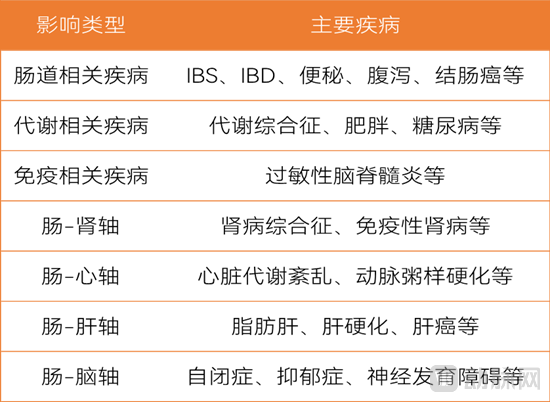
The Relationship Between Certain Gut Microbiota and Diseases (Data source: Compiled by VCBeat from public information)
Among the most prominent areas are diseases of the digestive and endocrine systems. For instance, the development of microbiome-based therapeutics is most advanced for intestinal disorders such as Clostridioides difficile infection, inflammatory bowel disease (including ulcerative colitis and Crohn’s disease), irritable bowel syndrome, and constipation, as well as metabolic conditions like obesity, type 2 diabetes, and metabolic syndrome. According to statistics, by the end of 2019, nearly 300 clinical trials on gut microbiome-based drugs had been registered on ClinicalTrials.gov, covering more than 50 indications. The largest number of clinical trials focused on Clostridioides difficile infection, followed by ulcerative colitis and irritable bowel syndrome.
Furthermore, as research into the relationship between the gut microbiome and disease deepens, the mechanisms underlying pathways such as the gut–kidney axis, gut–heart axis, and gut–brain axis are continually emerging. A broader spectrum of diseases, including autism, depression, cancer, and fatty liver disease, is increasingly being incorporated into the scope of pharmaceutical research targeting the gut microbiome.
Backed by these scientific studies, the potential of fecal microbiota transplantation (FMT) in clinical treatment has gained widespread recognition over the past decade. In 2013, FMT for recurrent Clostridioides difficile infection was included in the U.S. Food and Drug Administration (FDA) treatment guidelines. Four years later, the microbiome was ranked as the top medical innovation by the Cleveland Clinic. In China, three years ago, FMT was assigned a billing code in Guangzhou, thereby overcoming the final barrier to its implementation as a reimbursable clinical medical service. To date, it has been incorporated into the medical billing code systems of more than ten provinces and municipalities across the country.
“However, despite the influx of substantial capital and the persistent efforts by companies such as Finch Therapeutics, Seres Therapeutics, Vedanta Biosciences, and Rebiotix to overcome regulatory and development hurdles, substantive progress in the commercialization of microbiome-based pharmaceuticals has been relatively slow. Some of the earliest candidates have disappeared from the pipeline or entered a stagnation phase; currently, the most advanced candidates are primarily Rebiotix’s RBX2660 and Seres Therapeutics’ SER-109,” an industry practitioner told VCBeat.
The reasons behind this are twofold: on the one hand, the mechanisms underlying the interactions between microbiota and diseases within the microecology are not yet fully elucidated, which to some extent increases the difficulty of designing and validating clinical trials; on the other hand, the unique attributes of microecological drugs as live biotherapeutic products make ensuring consistent safety and efficacy a critical consideration.
First, the gut microbiome is highly complex. Currently, scientists’ understanding of the mechanisms by which it influences health, the interactions within microbial communities, their interplay with human immune responses, and the mechanisms underlying both the causation and suppression of Clostridioides difficile infection remains largely unclear. When developing therapeutics using limited bacterial consortia derived from healthy donor feces, developers often lack clarity on the underlying mechanisms of action; specifically, they are uncertain about which microorganisms are responsible for the therapeutic effect. “Sometimes, it is not even certain whether the species capable of exerting the desired effect are present among the selected strains in the microbiome-based drug,” a researcher with many years of experience in microbiome drug development told VCBeat. “Meanwhile, it is also difficult to determine the model by which the drug will achieve colonization after reaching the gut.”
Furthermore, the manufacturing processes differ significantly from those of traditional pharmaceutical companies. The unique nature of the raw materials necessitates substantial quality monitoring and testing efforts during production. Dr. Tan Yan, founder of UnknownBiome, told VCBeat that, in the production of microbiome-based therapeutics, it is essential to simultaneously control contamination by stray bacteria and harmful pathogens in real time while ensuring high viability rates of the overall microbial consortia, thereby guaranteeing the safety and efficacy of these therapeutics. As microbiome pharmaceuticals are still in the early exploratory phase globally—moving from zero to one—the various stages of research, development, and manufacturing can hardly leverage the well-established outsourcing service systems available for small-molecule and large-molecule drugs. Consequently, the need for companies to independently develop and validate their process workflows undoubtedly raises the barriers and risks associated with microbiome drug development.
As the R&D capabilities of microbiome pharmaceutical companies at home and abroad continue to evolve, obstacles in two key areas are being progressively overcome. “This is a know-how process for everyone,” said Dr. Tan Yan. “We have undergone multiple rounds of production process optimization to gradually reduce batch-to-batch variations. Obtaining FDA IND approval is an important milestone, but it also means greater challenges ahead.” He told VCBeat that, in addition to routine items, the U.S. FDA conducts rigorous reviews for certain bacteria and parasites that are widespread in the United States but rare in China. In response, UnknownBio has made substantial strategic adjustments. Interestingly, as a byproduct of process development, UnknownBio has also established a comprehensive system of production processes, manufacturing techniques, and quality standards that comply with FDA requirements for microbiome drug production.
In a similar vein, after independently completing key steps in the industrialization of microbiome-based drugs over five years—including GLP safety evaluation, strain safety assessment, CMC studies, and pharmacology and pharmacokinetics research—Zhiyi Biologics has also added a CRO service module for microbiome therapeutics. It now offers external services such as research on the relationship between human pathogenic commensal bacterial profiles and diseases, screening of novel functional strains and target identification, as well as platform services for the research and development of live biotherapeutic products.
Driven by policy support, scientific and technological breakthroughs, and capital infusion, the global microbiome-based pharmaceutical industry entered a fast track of development around 2016. In 2007, the United States launched the Human Microbiome Project. Subsequently, the European Union, Canada, France, Australia, and other countries and regions initiated their respective national microbiome programs. In 2016, the United States also invested hundreds of millions of dollars to launch its National Microbiome Initiative.
Driven by microbiome initiatives in these countries, a wave of subsequent star enterprises in microbiome pharmaceuticals has emerged, including Evelo, Finch, Seres, and Rebiotix. According to incomplete statistics, there are now more than 50 microbiome pharmaceutical companies worldwide, with over 30 high-quality firms having collectively raised more than $3 billion. Among these startups, some focus on researching the structural proteins of microbes themselves, such as Second Genome; others concentrate on single-strain research, represented by 4D Pharma and Evelo; while the majority engage in multi-strain mixture research, with representative companies including Seres, Finch, and Rebiotix. Notably, as both Seres and Rebiotix have advanced their drugs for treating Clostridioides difficile infection into Phase III clinical trials, multi-strain microbiome therapeutics have become the segment with the fastest industrialization progress. Analysts predict that by 2026, the global market size for microbiome drugs is expected to reach $10 billion and continue to grow steadily in the future.
In this process, microbiome-based therapeutics have also attracted strategic investments from multinational pharmaceutical giants such as Roche and Johnson & Johnson.
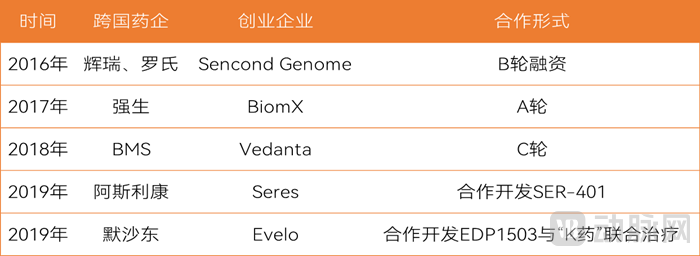
Microbiome Therapeutics Strategies of Select MNCs (Data Source: Compiled by VCBeat from Public Information)
Unlike startups, which are largely engaged in the development of microbiome-based therapeutics for gastrointestinal and metabolic diseases, these multinational pharmaceutical companies have focused their attention on hotter areas, making microbiome drugs a key tool in their competition within tumor immunotherapy.
For example, in 2016, Pfizer and Roche jointly invested in Second Genome, with the funding used to expand its microbial discovery platform and advance research on small-molecule inhibitors targeting microbiome-mediated pathways. In 2017, Johnson & Johnson invested in BiomX, which conducts research on treatments for cancer, liver diseases, and inflammatory bowel disease (IBD) using customized bacteriophages. Meanwhile, Bristol-Myers Squibb’s investment in Vedanta and Merck’s partnership with Evelo aimed to explore combining microbiome-based therapeutics with PD-1 inhibitors to enhance the latter’s efficacy in cancer patients. Additionally, AstraZeneca invested $20 million in Seres Therapeutics to jointly explore methods for improving the efficacy of tumor immunotherapy through microbiota modulation. Regrettably, AstraZeneca’s investment at that time was not directed toward SER-109, which is now on the verge of commercialization.
In China, there are few companies specializing in microbial pharmaceuticals. VCBeat’s analysis reveals that only four companies currently qualify as microbial pharmaceutical firms in the strict sense, yet all have secured tens of millions, or even hundreds of millions, in financing. In other words, China’s microbiome-based pharmaceutical industry is in the early stages of rapid development.
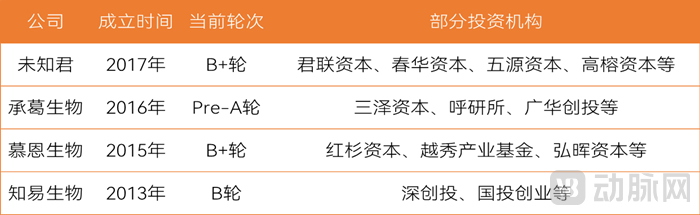
Major Microbiome Pharmaceutical Companies in China and Their Financing Status (Data Source: Arterial Orange Database)
Further observation reveals that the four microbiome pharmaceutical companies each possess distinct strengths. XBiome is a leading AI-driven pharmaceutical company in China, specializing in gut microbiota-based therapies. In early September, XBiome announced that its investigational fecal microbiota transplantation (FMT) drug, XBI-302, had received Investigational New Drug (IND) clearance from the U.S. Food and Drug Administration (FDA). This marks the furthest advancement achieved by any Chinese microbiome pharmaceutical company in the global arena.
To a certain extent, the Investigational New Drug (IND) approval for XBI-302 marks the formal establishment of a complete pathway for Chinese pharmaceutical companies to submit microbiome-based drugs for review by the U.S. Food and Drug Administration (FDA). This represents a critical step in transforming fecal microbiota transplantation (FMT) from a therapeutic procedure into a standardized pharmaceutical product. In practice, although there are relatively abundant precedents of FDA-approved FMT drug applications for reference, the differing focuses of many safety review items mean that numerous detailed requirements still pose novel challenges for domestic microbiome pharmaceutical companies. The successful advancement of XBI-302 into clinical trials provides a key benchmark for Chinese microbiome pharmaceutical enterprises in areas such as donor screening, raw material quality control, manufacturing processes, and platform optimization.
Zhiyi Biotech, the earliest established among them, is primarily engaged in the clinical research and development of next-generation probiotics and live biotherapeutic products, advancing its investigational pipeline SK08 into Phase I clinical trials in China in November 2019. Moonen Biotech and Chengge Biotechnology focus on building technical service platforms; the former is dedicated to constructing a platform for microbial resource discovery and drug development, while the latter mainly explores the establishment of a precision fecal microbiota transplantation therapy platform.
VCBeat has observed that over the past year, many new startups have flooded into the field of microbial pharmaceuticals, yet virtually none have been able to achieve rapid results. The reasons are twofold: on one hand, the development of microbiome-based drugs must be built upon a rich strain library, which cannot be established overnight; on the other hand, leveraging a comprehensive strain library for drug development is a complex endeavor that relies on long-term accumulation of capabilities in computation, clinical trials, and pharmaceutics.
Compared with large-molecule and small-molecule drugs at the same stage, the most significant distinction in live biotherapeutic product development is that the vast majority of live biotherapeutics entering clinical trials utilize natural bacterial strains, necessitating a robust microbial strain repository. In 2012, OpenBiome, the first non-profit microbiome bank in the United States, was established, sparking a global surge in the creation of such repositories. According to incomplete statistics, there are now more than 20 large-scale microbiome banks worldwide. Prominent examples, in addition to OpenBiome, include the microbiome bank at Saint Antoine Hospital in France, the microbiome bank at Leiden University Medical Center in the Netherlands, the Taymount Clinic microbiome bank in the United Kingdom, the microbiome bank at Cologne University Hospital in Germany, and the China Stool Microbiota Bank.
Dr. Tan Yan told VCBeat that Xbiome, a microbiome-based pharmaceutical company founded relatively later in China, was able to secure FDA IND approval ahead of its peers, thanks to its robust strain library and knowledge base capabilities. It is understood that Xbiome has integrated public datasets with its own extensive gut microbiota data from healthy individuals and patients across various indications, collected before and after treatment, to build and continuously enrich its proprietary knowledge base, forming one of the most comprehensive global databases on gut microbiota. This knowledge base includes data from over 5,000 individuals spanning both healthy and disease populations, more than 8,000 records linking host genes to gut microbes, and over 340,000 entries associating microbes with diseases. All data and their corresponding samples have undergone standardized reprocessing and effective integration. “Leveraging our continuously enriched database, we have developed prediction models using gut microbiota as biomarkers, achieving internationally advanced accuracy in predicting responses to PD-1 therapy among cancer patients,” said Dr. Tan Yan.
On the basis of massive microbial libraries, accurately identifying microbial functions and formulating them into medicinal preparations undoubtedly requires the use of artificial intelligence combined with bioinformatics analysis.
It is understood that Xbiome possesses internationally leading bioinformatics analysis capabilities, enabling rapid mining and in-depth insight into data value. Specifically, Xbiome’s two bioinformatics technologies, Xstrain and MSEA, are currently at the forefront globally. Xstrain is the first tool capable of directly resolving strain composition and the corresponding genes of each strain from metagenomic samples. Compared with traditional strain analysis methods, it not only enhances detection sensitivity but also guides strain selection using functional information. MSEA is the world’s first tool to predict host functional changes from differential microbes through text mining. It pioneeringly predicts host-level genetic regulation directly from changes in microbiota composition, contributing to a better understanding of microbe-host interactions and the interpretation of microbial physiological functions.
However, as a novel endeavor with few precedents, microbiome pharmaceuticals involve numerous details that require optimization, posing significant challenges for any team. For instance, microbiome therapeutics are often administered as bacterial suspensions, which must be prepared immediately before use and are difficult to store. Encapsulating these agents would greatly enhance their stability and accessibility; however, determining the optimal formulation for encapsulated microbiome drugs and ensuring strain viability necessitates extensive iterative experimentation. It is reported that Xbiome is exploring advanced microbiome formulations, such as live bacterial microspheres. By leveraging its proprietary technology, the company aims to develop live bacterial microsphere formulations capable of targeting the intestine, thereby precisely delivering the activity and efficacy of gut microbes.
In other words, after years of development, the microbiome therapeutics industry is poised to deliver its first wave of outcomes; however, achieving truly satisfactory results will require concerted efforts across the entire sector and a substantial amount of incremental innovation.
Writing Reference:
Life Science Insights: Gut Microbiota-Based Drug Development
Gut Microbiota Institute: A Comprehensive Analysis of the Precision Fecal Microbiota Transplantation Process
FDA Warning: Fecal Microbiota Transplantation May Lead to Fatal Infections with Multidrug-Resistant Bacteria
How to View the Failure of Seres’ Phase II Clinical Trial for Its Gut Microbiome Drug SER-109?
The Starting Gun Has Fired: When Will the Gut Microbiota Industry Accelerate and Take the Lead?