

Guokang Health: A 16-Year Pioneer in Enterprise Health Management Serving Fortune 500 Giants like Huawei
Factors such as population aging, shifts in disease patterns, and changes in lifestyle continue to challenge the health management industry. Public attention to personal health is growing day by day, and “Big Health” has become a focal point. Globally, companies ranging from India’s Cure.fit to the U.S.-based Welltok are carving out their own entrepreneurial footprints in the field of health management.
Compared with countries such as the United States and Japan, China was relatively late in adopting concepts like “general practice” and “health management.” However, with growing public attention to health issues and the issuance of key policy documents—including the “Several Opinions of the State Council on Promoting the Development of the Health Service Industry,” the “Healthy China 2030” Planning Outline, and the “Medium- and Long-Term Plan for the Prevention and Control of Chronic Diseases in China (2017–2025)”—the domestic health management sector has become increasingly vibrant, gradually moving toward large-scale and standardized development.
This year, a set of data released by Sullivan in the “2021 China Health Management Industry Research Report” further validated this finding: the market size of China’s health management industry has grown from RMB 248 billion in 2015 to RMB 850.3 billion in 2020, demonstrating significant market growth.
Health management is an emerging field. In its early stages, however, only a few domestic companies, such as Shenzhen Guokang Health Management Services Ltd. (hereinafter referred to as “Guokang Health”), seized upon this nascent trend. Established in 2005, Guokang Health secured investment from Qiming Venture Partners three years later.
Martyrs and Pioneers: The Path of Corporate Growth
Early market entry helped Guokang Health build up its resources. After 16 years of development,Guokang Health has assembled a dedicated team of nearly 1,000 general practitioner health stewards,and integrate high-quality medical resources across China from the perspective of health management,Established stable collaborative relationships with over 100,000 physicians across more than 900 Grade A tertiary hospitals in China.
Reflecting on the achievements to date, Yang Huashan, CEO of Guokang Health, described them using the metaphor of a “snowball effect.” He stated, “All of this is the result of our team’s steady progress over 16 years, achieved through diligent and persistent effort—nothing more, nothing less. Much like rolling a snowball, as stakeholders embrace our philosophy, recognize the value our experts bring, and see our capacity to serve a broader client base, they choose our platform, causing the snowball to grow ever larger.”
Guokang Health has established branches in over 30 cities, including Beijing, Shanghai, Shenzhen, Guangzhou, Chengdu, Hangzhou, Nanjing, Wuhan, and Hong Kong, with its service network covering more than 100 cities across China.Meanwhile, the company has also integrated medical resources from Japan, the United States, and other countries to provide clients with healthcare services such as precision health checkups and specialized treatment programs for major diseases.
Provide Solutions Based on Resource IntegrationThis constitutes the core competitive advantage of Guokang Health.Guokang Health leverages this foundation to provide patients with multi-dimensional medical care solutions and manage their health issues and treatment processes.
But “Rome wasn’t built in a day.” Yang Huashan shared with VCBeat some insights from his 16 years of entrepreneurship.He spoke about“Guokang Health has been engaged in health management for 16 years and achieved certain accomplishments; it can now describe itself as a ‘pioneer.’ However, if a ‘pioneer’ does not navigate the path well, it risks becoming a ‘martyr.’ Fortunately, we have not only survived but also thrived.”
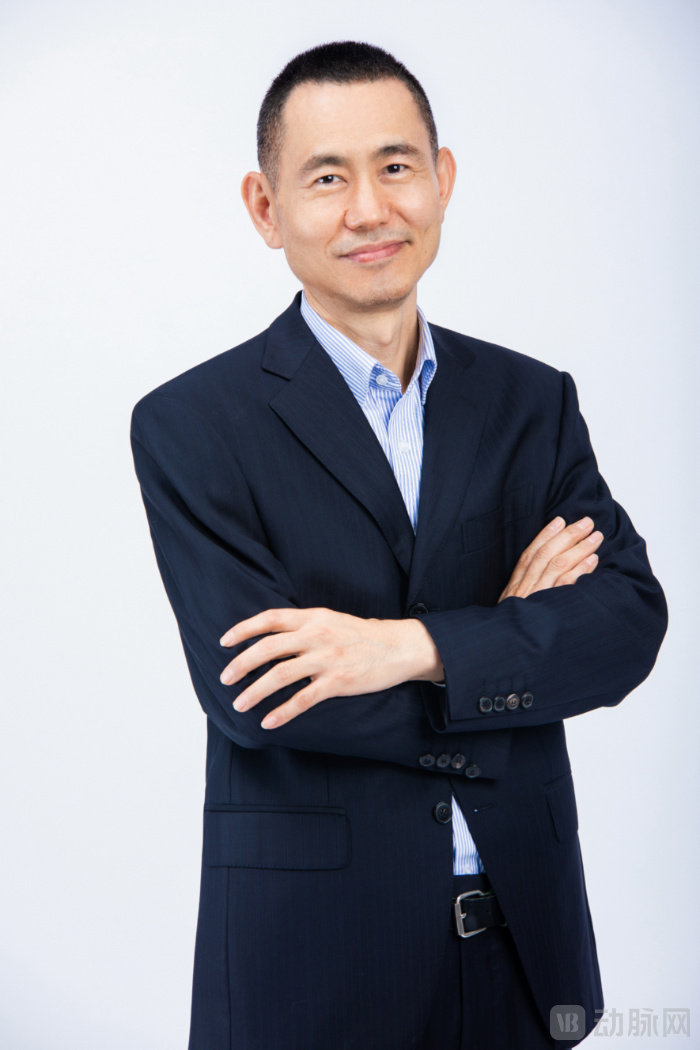
Yang Huashan, Founder of Guokang Health
Before embarking on his exploration of the health management sector, Yang Huashan had co-founded Guoren Communications. His entry into the healthcare field was driven by a distinctive personal experience. He openly acknowledged that this experience exposed the inadequacies of China’s medical services at the time, prompting him to delve into health management. He believes that people require better patient care and need “health gatekeepers.”
In 2005, Yang Huashan registered China's first professional health management company. Over the next decade or so,Guokang Health focuses on health management,Positioned as an “independent third-party service provider,” it generates revenue by charging service fees and membership fees.
Yang Huashan told VCBeat:“By operating in this model, we do not seek profits from drug sales and other links; instead, our fundamental interests are aligned with those of our clients through professional services. This is the key to ensuring client trust. On the other hand, in recent years, the state has consistently emphasized reducing the proportion of drug costs in total medical expenses, making a healthcare model that relies primarily on drug sales for profitability unsustainable.”
In Yang Huashan’s view, health management services and private physician systems are the key to securing long-term value., only by focusing on these two points can long-term benefits be created for customer health.
Guokang Health has championed its role as a health gatekeeper while simultaneously strengthening its enterprise services. Guided by this strategy, the company became the first in the healthcare services industry to receive “National High-Tech Enterprise” certification in 2009, and has since served as the healthcare service provider for TCL, Midea, and Tencent.
Today, Guokang Health has established enterprise-wide solutions for businesses, as well as tailored solutions for the internet, financial, and IT technology sectors. Meanwhile, it provides corresponding health management services to insurance companies and families to mitigate health risks.and has established partnerships with numerous China Top 500 enterprises, including Tencent, Huawei, China Merchants Bank, Hikvision, and Sunac. As of 2018, Guokang Health had continuously served more than 500 large and medium-sized enterprises, as well as over 60 commercial banks and insurance companies.
Strategic Empowerment: From Business Pathway Planning to Digital Transformation
According to the VCBeat database, Guokang Health has secured three rounds of financing to date. In 2007, Guokang Health raised $10 million in Series A funding from Qiming Venture Partners. In 2015, Tongkang Ren invested tens of millions of yuan in Guokang Health. This February, Guokang Health received a strategic investment of tens of millions of RMB from Life Capital.
Capital investors remain relatively cautious about the health management market.For enterprises, having a clear profit model is the key to establishing a firm foothold.
After 16 years in the industry, Guokang Health has revealed the key to its strategy. At its inception, Guokang Health recognized that health management is more critical than standalone physical examinations. Consequently, it focused on health management and private physician services. Over the course of its development, Guokang Health gradually adjusted its strategy, shifting from a dual focus on private physician services and corporate health management to a comprehensive entry into the health management market for large and medium-sized enterprises, thereby gaining favor with more corporate clients.
After years of exploration, Guokang Health has further advanced its management and operational models. The company has now established a B2B2C model integrating three core services—healthcare, referral, and insurance—to provide users with comprehensive solutions that organically combine medical examinations, insurance, and clinical services. In this model, the B2B component focuses on corporate services, capturing enterprise-level entry points to generate revenue from businesses. The B2C component serves individual employees and their families, offering personalized services and products to create added value.
As the wave of technology sweeps in, industries across the board are grappling with the challenge of digital transformation. For health management enterprises, in addition to medical resources, the accumulation of health data has now become a key factor in building industry barriers.Only by digitally reconstructing and upgrading business models can enterprises extend their service radius and serve more customers. Empowered by digital technologies, medical resources can be linked to customers online, enabling general practitioners to serve a larger patient base and significantly improve consultation efficiency. Customers can benefit from more precise, rapid, and personalized services through “intelligent” and “digital” technologies, including customized health checkup plans.
During the interview, Yang Huashan repeatedly mentioned “digitalization.” In his view, “digitalization” represents the current opportunity within the industry.Yang Huashan told VCBeat.“Corporate health management services are increasingly being outsourced to third-party platforms and undergoing digital transformation, with a growing number of large and medium-sized enterprises entrusting their health benefits and employee health management to specialized companies. Enterprises should seize the opportunity of third-party outsourcing to advance industrial internet integration, enabling employees to access health service platforms at any time. Through this digital transformation, companies can establish systems that allow employees to consult with physicians from Grade A tertiary hospitals on demand, as well as schedule medical examinations, view test reports, and receive psychological counseling via the platform.”
Yang Huashan also emphasized that the greatest benefit of digitalization lies in establishing digital health records for employees, reducing misdiagnosis and inappropriate treatment, and providing the most effective informational reference for physicians’ precise diagnosis and therapy. It also enables employees to more conveniently and accurately monitor their own health status, alleviate unnecessary anxiety, and address health issues in a scientific manner.
Accordingly, Guokang Health integrates health with technology,Established a digital R&D team of over 100 members, driving the upgrading and transformation of the digital healthcare industry., to enhance internal operational efficiency, break down data silos, and establish a closed-loop health management system.
Leveraging technologies such as big data and cloud computing, Guokang Health has independently developed the “Guokang Health SaaS,” a comprehensive health management platform that integrates health check-ups, online consultations, online referrals, and insurance claims processing., providing enterprises with first-class one-stop corporate health and wellness solutions, establishing a closed-loop system for health checkups and health management, offering multi-dimensional health management services, and helping enterprises transition their health management comprehensively to the cloud.
Health management is indispensable for enterprises. Shenzhen Guokang Health Management Services Ltd. continues to deepen its engagement in this field, striving to become the digital infrastructure for employee health and wellness benefits at medium-to-large enterprises. Empowered by digital technologies, what new models will Guokang Health pioneer? Only time will tell.