

UBTECH Launches Smart Quarantine Hotel Epidemic Prevention Solution, Setting a Tech-Driven Public Health Benchmark in Shenzhen
On September 16, the donation ceremony for technology-enabled epidemic prevention products organized by the Nanshan District Committee of the Chinese People’s Political Consultative Conference (CPPCC) was held at the CPPCC Member Workstation in Shekou Subdistrict. Leaders attending the event included Chen Jun, Chairman of the Nanshan District CPPCC Committee; Wang Xiaorong, Member of the Standing Committee of the Nanshan District Committee of the Communist Party of China and Head of its Organization Department; Xia Junjie, Director of the Shenzhen Center for Disease Control and Prevention; and Huang Xianfeng, Liu Genping, and Ye Chun, Vice Chairmen of the Nanshan District CPPCC Committee.
The Nanshan District Committee of the Chinese People’s Political Consultative Conference (CPPCC) in Shenzhen, the Shekou Subdistrict CPPCC Members’ Workstation, and the Medical and Health Sector CPPCC Members’ Workstation, in collaboration with UBTECH and other technology enterprises in Nanshan District, have officially launched UBTECH’s Technology-Enabled Epidemic Prevention Solution for Quarantine Hotels. By integrating upstream and downstream industrial chains and leveraging technological epidemic prevention tools such as AI robots, this solution capitalizes on the advantages of contactless, end-to-end integrated services to establish a model for technology-driven epidemic prevention in Shenzhen’s quarantine hotels.
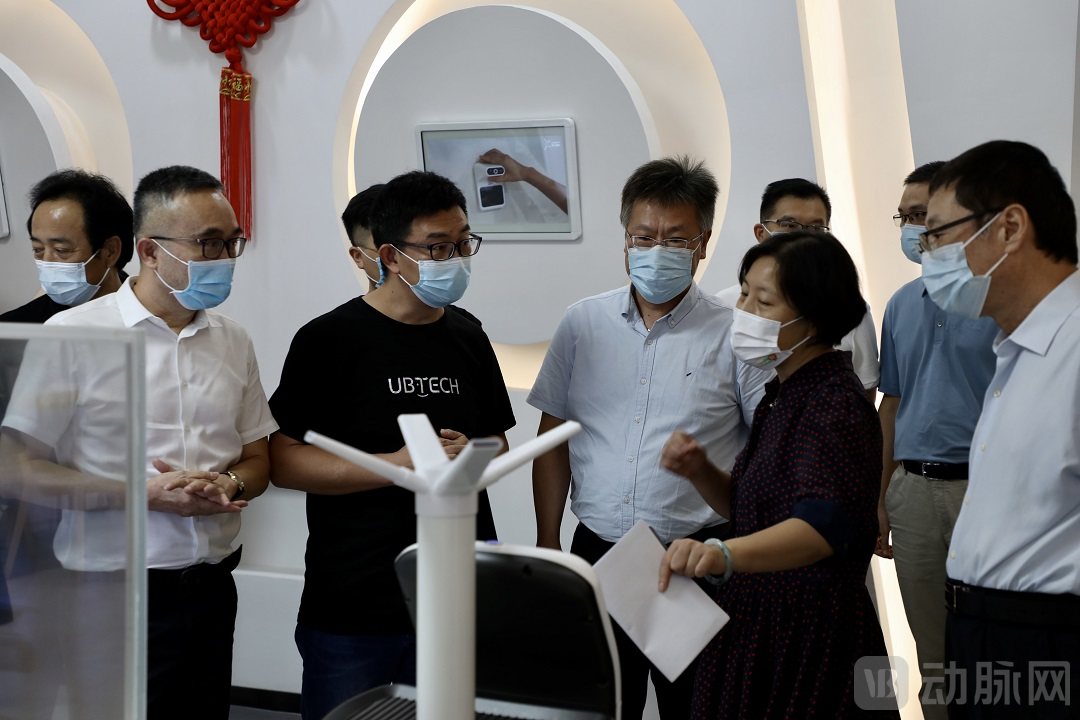
UBTECH Robotics CTO Xiong Youjun Introduces UBTECH’s Tech-Enabled Epidemic Prevention Solution for Quarantine Hotels to Distinguished Guests
Chen Jun, Chairman of the Fifth Committee of the Shenzhen Nanshan District Chinese People's Political Consultative Conference (CPPCC), stated: “The zero-contact, end-to-end integrated solution released today can effectively enhance the efficiency of epidemic prevention and control efforts, prevent cross-infection, and safeguard the lives, health, and safety of the public. This is a tangible manifestation of our commitment to ‘doing practical things for the people.’ I believe these cutting-edge technologies will bring about new breakthroughs in epidemic prevention and control work.”
Wang Xiaorong, Member of the Standing Committee of the Nanshan District Committee of the Shenzhen Municipal Party Committee and Head of its Organization Department, stated: “Under the strong leadership of the CPC Central Committee, all sectors of society have upheld the principle of ‘putting people and their lives first,’ responded promptly to calls for action, and united as one, translating technological innovation into tangible care for the public and healthcare workers. Meanwhile, Nanshan’s technology innovation enterprises have stayed at the forefront, shouldered significant responsibilities, and strived for excellence, demonstrating Nanshan’s commitment and responsibility in the realm of science and technology.”
Currently, the global COVID-19 pandemic continues to resurge, with imported cases constantly emerging and local infections occurring sporadically in China, indicating that epidemic prevention and control have become normalized. Meanwhile, in the context of infection control at quarantine hotels, manual processing poses a risk of cross-infection, while prolonged fatigue and heavy, repetitive workloads increase the likelihood of information omissions.
According to statistics from the National Immigration Administration, a total of 66.973 million inbound and outbound travelers were inspected at ports across China in the first half of 2021. Taking Shenzhen, located at China’s “Southern Gateway,” as an example, the number of key inbound and outbound travelers processed at Shenzhen ports reached 940,000 by the end of May this year. A cumulative total of 11.2285 million person-shifts of staff were deployed, equivalent to an average daily deployment of 29,500 person-shifts.
Quarantine hotels, serving as the frontline in the fight against the pandemic to prevent external imports and internal rebounds, must undergo intelligent construction. By leveraging the contactless advantages of service processing, cross-infection can be effectively reduced. The application of intelligent devices enables timely and accurate risk prediction and control, maximizing safety assurance. The digital operation of quarantine management for epidemic prevention and control effectively integrates and consolidates the comprehensive management of urban epidemic control. The smart home devices inherently available in hotels can also be integrated with technological epidemic prevention solutions, effectively ensuring the efficiency of comprehensive management and coordinated control during quarantine operations.
Xiong Youjun, Chief Technology Officer of UBTECH Robotics, stated: “The newly launched UBTECH Technology-Enabled Epidemic Prevention Solution for Quarantine Hotels leverages intelligent robots for temperature screening, UV and spray disinfection, and delivery and logistics. Integrated with large-screen display and control systems, mobile terminals, and an operations management platform, the solution provides comprehensive epidemic prevention capabilities across all scenarios. It effectively isolates sources of infection, reduces the risk of cross-infection, and improves the efficiency of epidemic prevention efforts, thereby ensuring a safe and secure living environment for quarantined individuals, medical staff, and other personnel.”
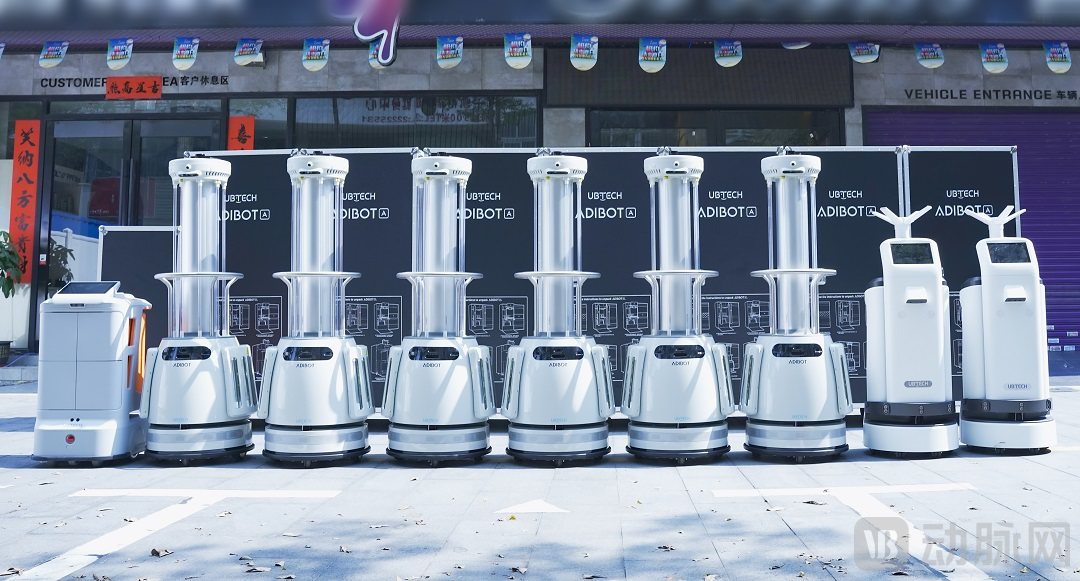
UBTECH’s Technology-Enabled Epidemic Prevention Solution for Quarantine Hotels Implemented at Shenzhen Xicheng Hotel
Currently, UBTECH’s technological epidemic prevention solution for isolation hotels has been implemented at the Xicheng Hotel, a centralized quarantine facility in Shenzhen. On February 14, 2020, the Xicheng Hotel was requisitioned as an isolation hotel in response to the government’s call, offering a total of 138 guest rooms. To date, the hotel has accommodated 4,626 individuals requiring quarantine, among whom 11 tested positive for COVID-19. Xu Wenquan, the hotel manager, stated, “In our daily operations, we are responsible for delivering three meals a day to guests and replenishing daily necessities, as well as carrying out disinfection tasks across all floors twice daily. Such long-duration, high-intensity, and high-risk service work poses significant physical and psychological challenges to all hotel staff. The implementation of the technological epidemic prevention solution for isolation hotels can effectively alleviate the pressure on hotel personnel. With intelligent robots handling item delivery and disinfection, hotel services become more thorough and the environment safer.”
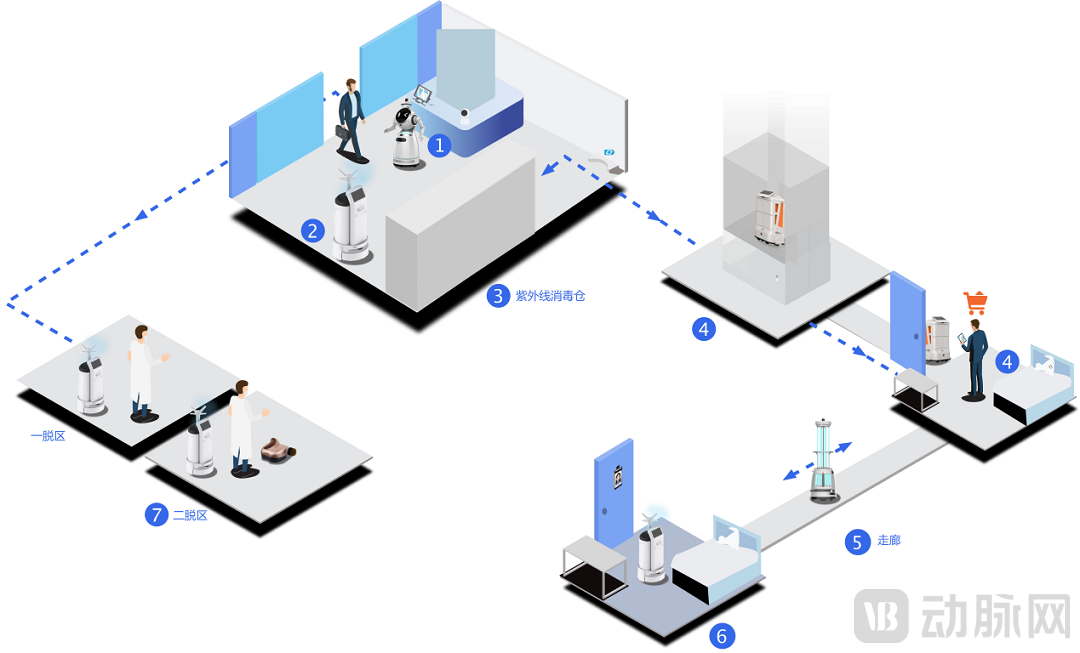
Diagram of UBTECH's Technological Epidemic Prevention Solution for Quarantine Hotels
UBTECH’s Technology-Driven Epidemic Prevention Solution for Quarantine Hotels offers comprehensive tech-enabled products and services across all scenarios, with a diverse array of intelligent robots—such as those for temperature screening, disinfection, and delivery—working in concert to leverage their respective capabilities.
Upon arrival at the hotel, quarantined travelers are greeted by intelligent robots stationed in the lobby, creating a welcoming, home-like atmosphere. These robots can simultaneously measure the body temperature of multiple individuals and inspect and remind guests to wear masks correctly. After check-in, disinfection robots are deployed to autonomously sanitize the area, ensuring the lobby remains free of pathogens.
In high-risk areas teeming with pathogens, such as corridors and elevators, UV disinfection robots play a significant role. In addition to autonomously performing disinfection tasks at scheduled times and locations, staff can also operate the robots remotely for disinfection. Notably, these UV disinfection robots employ high-power, rapid UV-C disinfection, capable of eliminating 99.99% of pathogens within a 40-square-meter space in just 10 minutes, without generating any secondary pollutants.
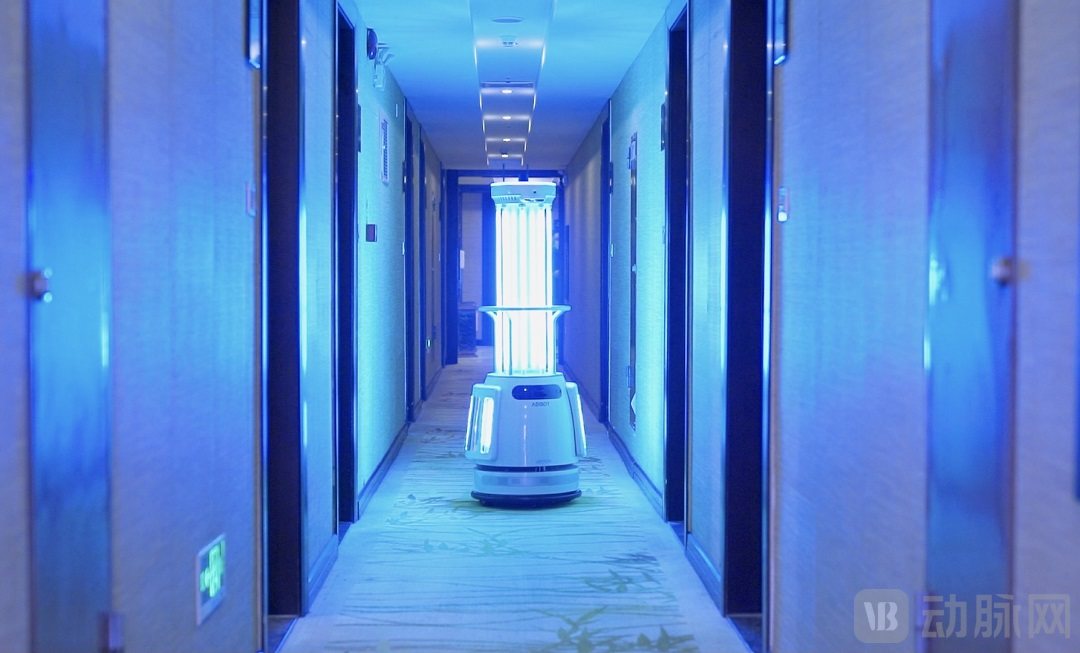
UBTECH UV Disinfection Robot Performs Sanitization Tasks in the Corridors of a Quarantine Hotel in Shenzhen
During the isolation period, infrared thermometers automatically measure guests' temperatures, enabling the command center to monitor their status in real time. Delivery robots provide guests with clean and safe daily necessities. After isolation concludes, disinfection robots automatically navigate to hotel rooms for comprehensive, automated space disinfection.
To prevent robots that interact with passengers from becoming sources of transmission, intelligent robots must enter a UV disinfection chamber for rapid sterilization after completing their tasks. In addition, staff members enter the clean area only after strictly following the doffing procedures in the personal protective equipment (PPE) removal zone. Disinfection robots periodically enter the removal zone to perform sterilization and purify the indoor air, thereby preventing cross-infection.
Since the outbreak of the COVID-19 pandemic in 2020, technological innovations from China, such as intelligent robots, have supported global epidemic prevention and control as well as the resumption of production and daily life, leveraging advantages like continuous operation and “contactless” interaction. The newly released technological solution for epidemic prevention in quarantine hotels is a powerful tool launched by UBTECH Robotics specifically for this application scenario, representing China’s original AI-driven response to normalized epidemic control in the post-pandemic era.