

Bluebird Bio: Addressing Three Critical Challenges in Pharmaceutical Innovation Amid Plummeting Stock Prices

BlueBird Bio
Gene Therapy Developer
Cell therapy refers to a treatment method that utilizes autologous (or allogeneic) adult cells (or stem cells) from patients to repair tissues and organs, primarily encompassing stem cell therapy and immune cell therapy.
Gene therapy refers to the introduction of exogenous normal genes into target cells to correct or compensate for diseases caused by defective and abnormal genes, thereby achieving therapeutic goals. It primarily includes in vivo gene therapy and ex vivo gene therapy, with adeno-associated virus (AAV) gene therapy currently being the most mature approach.
Cellular and Gene Therapy (CGT), as an emerging technology, has experienced particularly rapid development in recent years. According to Frost & Sullivan data, the global CGT market size is projected to reach $30.54 billion in 2025, with a compound annual growth rate (CAGR) of 71% from 2020 to 2025. The Chinese CGT market is expected to maintain a trajectory of rapid growth, with its overall market size reaching $2.59 billion in 2025 and a CAGR of 276% from 2020 to 2025.
Among them is a gene therapy pioneer that has stood firm in this innovative track for nearly three decades—bluebird bio, Inc. (hereinafter referred to as Bluebird Bio).bluebird bio listed on the Nasdaq in 2013, secured approval for the world’s first gene therapy product for inherited blood disorders in 2019, and obtained approvals for two additional products in 2021: Abecma, the first approved BCMA-targeted CAR-T cell therapy globally, and Skysona, the first one-time gene therapy for CALD approved by the EMA.
Bluebird Bio, which has had products approved for several consecutive years, appears to be thriving; yet its stock price continues to decline. Why is this company, now a leader in gene therapy, experiencing such an anomaly? Let us begin by examining the underlying technology at the source of this situation.
Gene therapy and cell therapy have undergone considerable development over a long period, both originating in the 1970s. As early as 1972, Friedmann and Roblin first proposed the concept of gene therapy. In 1973, Steinman and Cohn isolated a population of cells with star-shaped cytoplasmic projections and highly irregular nuclei from mouse spleens, naming them dendritic cells, which marked the beginning of the development of autologous immune cell therapy technologies.
After decades of turbulence, the cell and gene therapy (CGT) sector has witnessed both acclaim and periods of stagnation. In recent years, however, driven by technological advancements, product launches, and strong investor confidence, the CGT sector has entered a phase of robust growth. Meanwhile, government agencies and relevant authorities have continuously introduced new regulations to standardize the cell and gene therapy market.
According to incomplete statistics, over the past year and a half, the FDA has issued dozens of relevant laws and regulations in the field of cell and gene therapy (CGT), including Human Gene Therapy for Neurodegenerative Diseases, Manufacturing Considerations for Licensed and Investigational Cell and Gene Therapy Products During the COVID-19 Public Health Emergency, Guidance for Industry: Testing of Retroviral Vector-Based Human Gene Therapy Products for Replication Competent Retrovirus During Product Manufacture and Patient Follow-up, Guidance for Industry: Long Term Follow-Up After Administration of Human Gene Therapy Products, and Guidance for Industry: Chemistry, Manufacturing, and Control (CMC) Information for Human Gene Therapy Investigational New Drug Applications (INDs).
Not only is its technology outdated, but BlueBird Bio is also an “old hand.”In April 1992, bluebird bio was incorporated in Delaware, United States. It was formerly known as Genetix Pharmaceuticals, Inc., and was renamed bluebird bio in September 2010. In June 2013, bluebird bio went public on the NASDAQ (NASDAQ: BLUE) with an initial offering price of $17 per share.Founded nearly 30 years ago and publicly listed for 8 years, BlueBird Bio boasts a large management and R&D team.
Chief Scientist PhilipD. Gregory, D.Phil., has served as Chief Scientific Officer of bluebird bio since June 2015, overseeing the company’s scientific therapeutic and strategic research planning. Prior to this, PhilipFormer Vice President of R&D at Sangamo, the former monopolist in zinc finger gene editing, actively driving the early discovery and development of IND candidates across multiple therapeutic areas at Sangamo. Additionally, Philip holds a Ph.D. in Biochemistry from Keble College, University of Oxford, and a B.Sc. in Microbiology from the University of Sheffield.
Chief Medical Officer RichardColvin, M.D. and Ph.D. from Duke University School of Medicine, has served as the interim Chief Medical Officer for BlueBird Bio’s severe genetic diseases division since March 2021.Prior to joining bluebird bio, Richard served as Executive Director of Translational Medicine at Novartis., during which he led an anti-infective drug development project for the treatment of hepatitis, respiratory infections, drug-resistant Gram-negative bacterial infections, and parasitic infections. In addition, he also led a gene therapy program for the treatment of hearing loss.
Chief Bluebird NickLeschly holds a Bachelor’s degree in Molecular Biology from Princeton University and an MBA from the Wharton School. Nick has held this position since September 2010. Previously, Nickis a Partner and Founding Member of Third Rock VenturesThird Rock Ventures is a venture capital firm focused on investing in biotechnology startups. In 2007, Nick led the overall formation, development, and business strategy for two portfolio companies: Agios Pharmaceuticals, Inc. and Edimer Pharmaceuticals, Inc. Prior to joining Third Rock Ventures, he worked at Millennium Pharmaceuticals, where he led multiple early-stage drug development projects. Additionally, Nick founded MedXtend and served as its Chief Executive Officer.
In addition to the three core team members introduced above, other key members of BlueBird Bio also possess extensive experience, with most having worked at renowned international companies and founded their own ventures.
R&D Technology + Management Technology: Core personnel have led BlueBird Bio to cultivate three major product platforms—gene therapy, gene editing, and cancer immunotherapy—through years of accumulated expertise.
The former two approaches achieve disease treatment at the genetic level through genetic modification or gene editing. Building on its cancer immunotherapy product platform, BlueBird Bio has established an extensive and comprehensive immuno-oncology franchise, leveraging its core expertise in gene transfer technology and its experience in conducting gene therapy clinical trials. This franchise aims to genetically modify specific cells within patients’ own immune systems (T cells) to target and destroy cancer cells.
Based on its three technology platforms, BlueBird Bio has a total of 17 publicly disclosed products in development and multiple undisclosed products in development across the two major fields of severe genetic diseases and oncology. The indications for these investigational products include cerebral adrenoleukodystrophy, β-thalassemia, sickle cell disease, multiple myeloma, adult acute myeloid leukemia, Merkel cell carcinoma, and other genetic disorders and cancers.
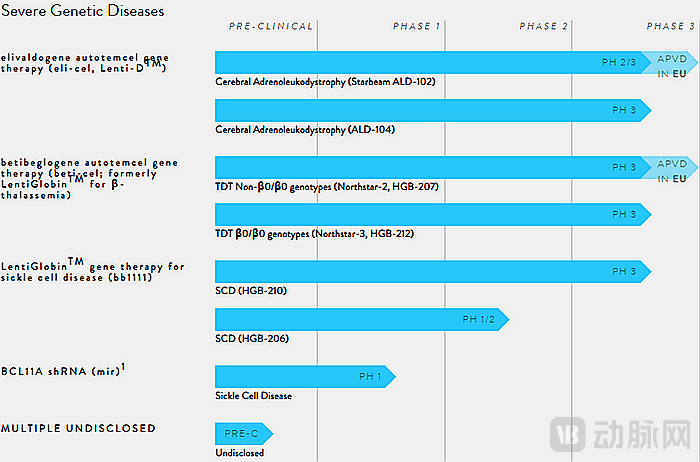
Products in Development for Major Genetic Diseases, Source: Official Website
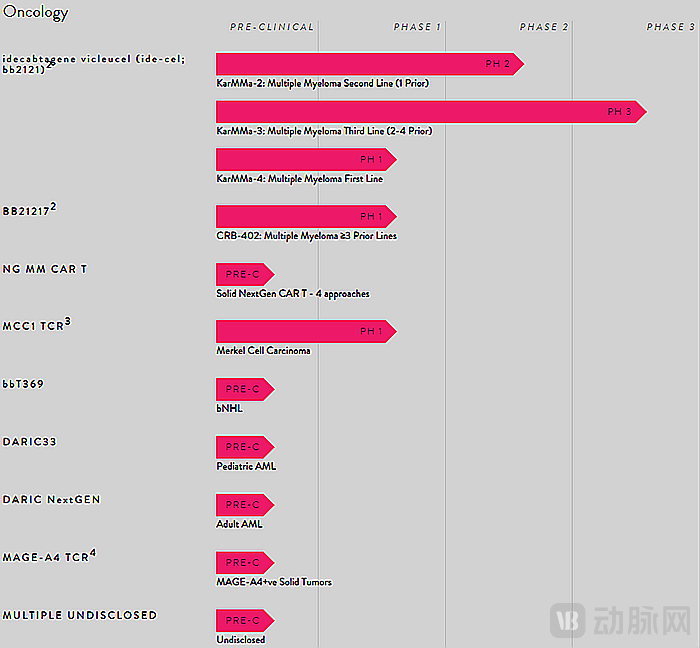
Oncology Pipeline Products, Image Source: Official Website
Among these, cerebral adrenoleukodystrophy (CALD), multiple myeloma (MM), sickle cell disease (SCD), and β-thalassemia are the four disease areas that BlueBird Bio focuses on.
Cerebral Adrenoleukodystrophy (CALD) is the most severe manifestation of adrenoleukodystrophy (ALD), a rare genetic disorder caused by mutations in the ABCD1 gene.Notably, CALD is observed almost exclusively in males.Among them, approximately 40% of males diagnosed with ALD will develop cerebral ALD, with symptoms typically appearing in early childhood (ages 3 to 12).The incidence of this disease is approximately 0.5–1 per 100,000 population, with 95% of cases occurring in males and 5% in female heterozygotes. The prognosis is poor, with death typically occurring within 1–3 years after the onset of neurological symptoms.
Hematologic malignancies are defined as blood or bone marrow cancers. Multiple myeloma (MM) is the second most common blood cancer worldwide, accounting for more than 10% of all hematologic malignancies.Due to the characteristic features of multiple myeloma (MM), namely persistent residual disease and repeated remissions and/or relapses, each relapse worsens patient prognosis. Furthermore, patients with relapsed or refractory MM are difficult to treat effectively because of their resistance to commonly used medications.In the United States, approximately 29% of patients newly diagnosed with multiple myeloma (MM) die within one year of diagnosis, and the five-year survival rate is only about 52%. According to data from the American Cancer Society, there were 32,270 new cases of MM diagnosed in the United States in 2020, with an estimated 12,830 deaths attributable to the disease. It is reported that approximately 100,000 Americans are currently living with this condition.
Sickle Cell Disease (SCD) is an autosomal recessive hemoglobin disorder. Globally, approximately 300,000–400,000 infants with SCD are born each year.The incidence and prevalence of SCD vary by region, with the majority of cases occurring in sub-Saharan Africa, as well as in India, the Middle East, the Caribbean, South America, and the Mediterranean. The prognosis is poor; only approximately 14% of patients survive into adulthood, and in the absence of adequate medical care, most patients die before the age of 30.
β-thalassemia is a rare disease caused by mutations in the β-globin (HBB) gene, and transfusion-dependent β-thalassemia (TDT) is the most severe form of this disease.Due to severe anemia, lifelong regular blood transfusions are required to maintain hemoglobin levels.Since long-term blood transfusions inevitably lead to iron overload, thereby causing severe complications and organ damage. By addressing the underlying genetic cause of β-thalassemia through gene therapy, it is possible to restore the normal function of patients' own hematopoietic stem cells, producing red blood cells with normal hemoglobin content, thus achieving the ultimate goal of curing the disease without relying on blood transfusions.The incidence of this disease is approximately 1 in 100,000. Both incidence and prevalence vary by region, with affected populations primarily concentrated in South Asia, the Middle East, North Africa, and Southern Europe.
From the key therapeutic areas prioritized by bluebird bio, it is evident that the company is committed to tackling major genetic disorders with significant patient populations for which no effective treatments currently exist. Consequently, should bluebird bio secure the first regulatory approval for its corresponding products, it will be well-positioned to capture a leading share of this market.
In response to theseKey PointsIn its focus areas, BlueBird Bio currently has three products successfully approved for market launch.
In June 2019, BlueBird Bio's gene therapy Zynteglo(Formerly known as LentiGlobin, autologous CD34+ cells encoding the βA-T87Q-globin gene)Approved for marketing by the European Medicines Agency (EMA).Zynteglo is a gene therapy indicated for the treatment of patients aged 12 years and older with non-β0/β0 genotype transfusion-dependent β-thalassemia (TDT).
β-thalassemia is a blood disorder affecting patients aged 12 years and older who require regular blood transfusions. Transfusion-dependent β-thalassemia is a severe rare disease with limited treatment options. Studies have shown that after a one-time treatment with Zynteglo, most patients no longer require blood transfusions to maintain red blood cell levels, which also means that patients can avoid iron overload associated with regular transfusions while undergoing treatment.
Zynteglo also became the first gene therapy product for hereditary blood disorders, and with a price tag of $1.77 million, it was dubbed the “second most expensive drug in the world” (second only to Novartis’s Zolgensma). Bluebird Bio certainly enjoyed its moment in the spotlight at the time.
Abecma, a collaboration between BMS and BlueBird Bio in March 2021(idecabtagene vicleucel,ide-cel)Approved by the FDA for market launch, this is the second product successfully approved for bluebird bio, and it is also the world’s first approved BCMA-targeted CAR-T cell therapy., for the treatment of adult patients with relapsed/refractory multiple myeloma (R/R MM) who have received three or more prior therapies, including immunomodulatory agents, proteasome inhibitors, and anti-CD38 antibodies.
Phase II results for Abecma showed an overall response rate (ORR) of 72% among 100 efficacy-evaluable patients, with 28% achieving complete response. Among the 28 patients who achieved complete response, 65% maintained their response for at least 12 months. The approval of Abecma provides patients with relapsed/refractory multiple myeloma (R/R MM) with an effective and durable innovative therapy.
Bluebird Bio’s third marketed product is Skysona, which was approved by the EMA in July this year.(elivaldogene autotemcel, Lenti-D), indicated for the treatment of patients under 18 years of age with early cerebral adrenoleukodystrophy (CALD) who carry an ABCD1 gene mutation and have no HLA-matched sibling hematopoietic stem cell (HSC) donor available.Skysona is the first EMA-approved one-time gene therapy for CALD, and also the second successfully approved and marketed gene therapy from bluebird bio.
Skysona utilizes the Lenti-D lentiviral vector (LVV) for ex vivo transduction to add a functional copy of the ABCD1 gene to patients’ own hematopoietic stem cells (HSCs). These modified HSCs produce substantial amounts of adrenoleukodystrophy protein (ALDP), enabling them to divide and generate other blood cell lineages, thereby achieving therapeutic efficacy.
With nearly 30 years since its founding and eight years as a publicly traded company, Bluebird Bio boasts extensive R&D and management teams, a robust development pipeline, and three successfully launched products. Logically, the company’s growth trajectory should have been unimpeded. However, judged solely by its stock performance, Bluebird Bio’s share price plummeted from its peak of $236.17 in March 2018 to $17.14 in early September this year—a decline of 92.7% over just more than three years! What happened during this period? What lessons can be drawn regarding key considerations for the development of the cell and gene therapy (CGT) sector?
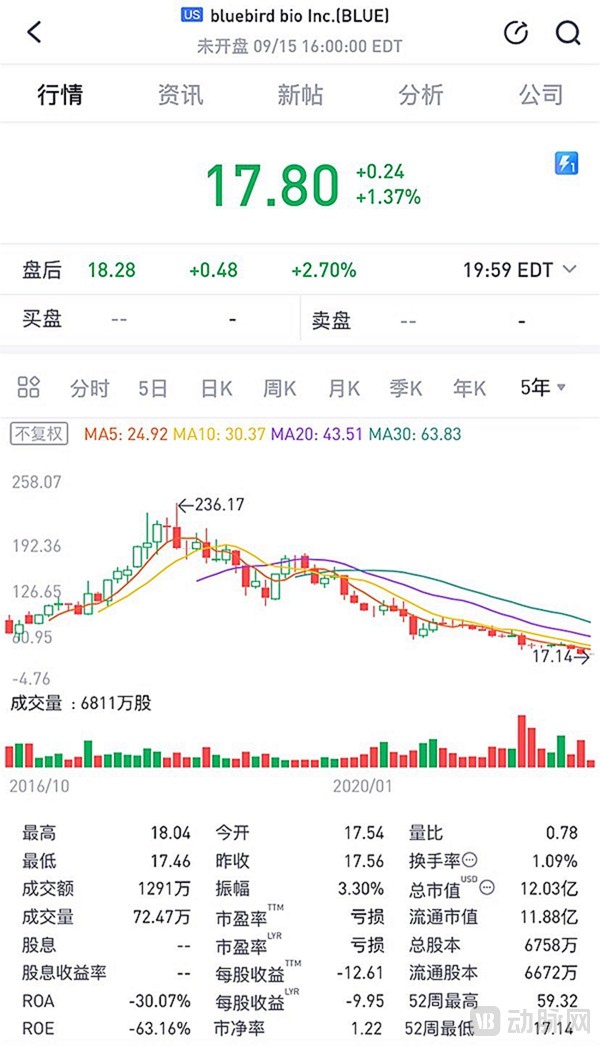
Image source: Tiger Brokers
Let’s first examine the series of misfortunes that have driven BlueBird Bio’s stock price into a continuous decline over the past one to two years:
In May 2020, the FDA delayed approval of bb2121, a CAR-T therapy co-developed by Bluebird Bio and BMS for patients with refractory multiple myeloma, due to insufficient data.
In November 2020, the FDA delayed the marketing application for bluebird bio’s gene therapy LentiGlobin for sickle cell disease (SCD) by a full year due to CMC issues. Previously, the market launch of LentiGlobin in Europe had also been forced to postpone due to manufacturing problems.
In February 2021, the path to market approval for LentiGlobin encountered another setback. This was due to the diagnosis of acute myeloid leukemia (AML) and myelodysplastic syndrome (MDS) in sickle cell disease (SCD) patients enrolled in the Phase I/II clinical trials of LentiGlobin, leading to the suspension of its Phase I/II and Phase III clinical studies in SCD. As Zynteglo, another marketed product from BlueBird Bio, utilizes the same lentiviral vector as that used in the LentiGlobin clinical trials, and given the uncertainty regarding whether the adverse events were related to the lentiviral vector, sales of Zynteglo were also suspended.
In April 2021, BlueBird Bio decided to temporarily withdraw its gene therapy Zynteglo from the German market after failing to reach a price agreement with the German government.
On August 9, 2021, bluebird bio announced the suspension of its lentiviral gene therapy clinical trial for adrenoleukodystrophy (ALD) after one patient developed myelodysplastic syndrome (MDS) during treatment and two other patients exhibited bone marrow cell abnormalities (with potential progression to MDS).
Mixed Reviews, Divergent Perspectives. Amidst a flood of negative news, BlueBird Bio has managed to remain steadfast, thanks to its continuous efforts to prove itself with facts.
For example, after the gene therapy LentiGlobin faced setbacks in its market launch this February, Bluebird Bio discovered, following a one-month investigation, that the lentiviral vector used for gene therapy had integrated into the patient’s VAMP4 gene,Analysis revealed no evidence that insertion into the VAMP4 gene affects the regulation or expression of nearby genes., which demonstrates that this lentiviral gene therapy is unlikely to cause cancer.With the facts clarified, BlueBird Bio has announced the resumption of its clinical trials, and the sales suspension of related products will also be lifted.
Furthermore, while continuously clarifying and optimizing its technologies, BlueBird Bio has not lagged behind in the progress of its product pipeline.Bucking the Trend: Bluebird Bio Secures Approval for Two Products in 2026, namely the world’s first approved BCMA-targeted CAR-T cell therapy and the EMA’s first approved one-time CALD gene therapy. The successive successful launches of these products have enabled bluebird bio to maintain a leading position in gene therapy, despite the impact of continuous negative news.
Overall, in just the past year or two, BlueBird Bio, once a high-flying star, has experienced a roller-coaster ride, oscillating between dizzying highs and troubling lows, with no way to predict whether the next turn will lead to new heights or a precipitous drop. Does this reflect problems within BlueBird Bio as a company?What lies behind this may be an issue that the entire innovative drug industry should pay attention to:
1. Establishing CMC for new technologies is challenging
For any company, the first step in its establishment is to chart out its own CMC (Chemistry, Manufacturing, and Controls) roadmap, which is critical to ensuring the safety and efficacy of subsequent products, as well as the success of scale-up manufacturing.However, many technologies in the industrialization of gene therapy are relatively new, and as a rapidly evolving field, it inevitably leads to discrepancies between reality and expectations. Therefore, the establishment of Chemistry, Manufacturing, and Controls (CMC) for gene therapy poses certain challenges., it may face challenges such as a lengthy and complex manufacturing process, relatively low production volumes that are difficult to scale up, and cumbersome release testing.
This may explain why gene therapy products demonstrate robust data during the R&D phase but encounter issues in subsequent clinical development and commercialization. It also sheds light on why the FDA delayed the approval of BlueBird Bio’s gene therapy marketing application by one year last year due to CMC (Chemistry, Manufacturing, and Controls) issues.
2. Safety: The Perennial Concerns in Gene and Cell Therapy
Whether viral vectors can cause cancer, off-target gene effects, precision of gene editing, immune rejection reactions...These safety-related issues warrant our serious attention; BlueBird Bio has previously suspended relevant clinical trials due to safety concerns, and its marketed products were forced to be withdrawn from sales.Beyond the inherent safety concerns of the technology itself, safety issues related to industrialization are even more closely tied to enterprises and consumers.A company’s world-class foundational research capabilities in gene editing do not guarantee continued success in product translation. During the processes of industrial scale-up and clinical application, it must also address safety issues such as whether production environments meet regulatory standards, whether sample testing yields qualified results, and whether toxicity and adverse effects remain within controllable ranges.
3. Price and Market: Clinical Accessibility Determines Product Value
In addition to regulatory compliance and CMC development, there is another issue concerning practical application—The prices of gene therapy and cell therapy are currently somewhat “prohibitive” for ordinary families, resulting in low clinical accessibility of related products.Even in Europe, where health insurance coverage is relatively comprehensive, Bluebird Bio decided to temporarily withdraw its gene therapy Zynteglo from the German market this April after failing to reach a pricing agreement with the German government.
The most direct way to address pricing issues is to reduce raw material costs, primarily in terms of consumables and equipment required for production.This may involve supply chain issues related to upstream and downstream material suppliers. Opting for localized suppliers can help address concerns regarding time and financial costs, such as supply lead times, after-sales service, and pricing. Furthermore, as a specialized product, a drug loses its inherent value if it cannot be effectively applied in clinical settings to cure patients.
Bluebird Bio, a gene and cell therapy company that has stood for nearly 30 years, has encountered challenges in its development journey that are natural setbacks on the path to exploring new technologies. Can it remain resilient after overcoming one unexpected obstacle after another? Let us give it—and the entire cell and gene therapy field—some time. Within a compliant framework, we anticipate that this technology will rewrite the history of human health in the near future.