

Stanford University: Pioneering Research Commercialization with 2,539 Patent Licenses and Over $2.1 Billion in Revenue
Since its founding in 1885, Stanford University has produced 83 Nobel laureates, ranking seventh worldwide; 27 Turing Award winners, ranking first globally; and 8 Fields Medalists, ranking ninth in the world.
Stanford University's financial report data shows,From September 2019 to August 2020, Stanford University generated approximately $114 million in revenue from licensing 847 patented technologies. Among these, 84 inventions each yielded over $100,000 in revenue, and 10 inventions each generated more than $1 million.
In 2017, the Milken Institute released the report “The Best University for Technology Transfer,” which ranked U.S. universities based on a comprehensive index of technology transfer and commercialization. After evaluating patents, license agreements, licensing revenue, and start-up formations, Stanford University ranked fifth overall.
Stanford University has long been a pioneer in translating scientific research into practical applications, fostering the development of Silicon Valley and the biotechnology industry in Northern California, and setting an example for universities and research institutions across the United States and around the world.
Pioneer in Translational Research: First to Develop OTL, Reinvesting Commercialization Proceeds into Teaching and Research
Stanford University was founded in 1885 by Leland Stanford, a railroad magnate who then served as a U.S. Senator and Governor of California, and his wife, Jane Stanford. To commemorate their son, who had died of typhoid fever, they decided to donate funds to establish a university named in his honor and contributed their 8,180-acre farm, previously used for breeding thoroughbred racehorses, as the campus grounds.
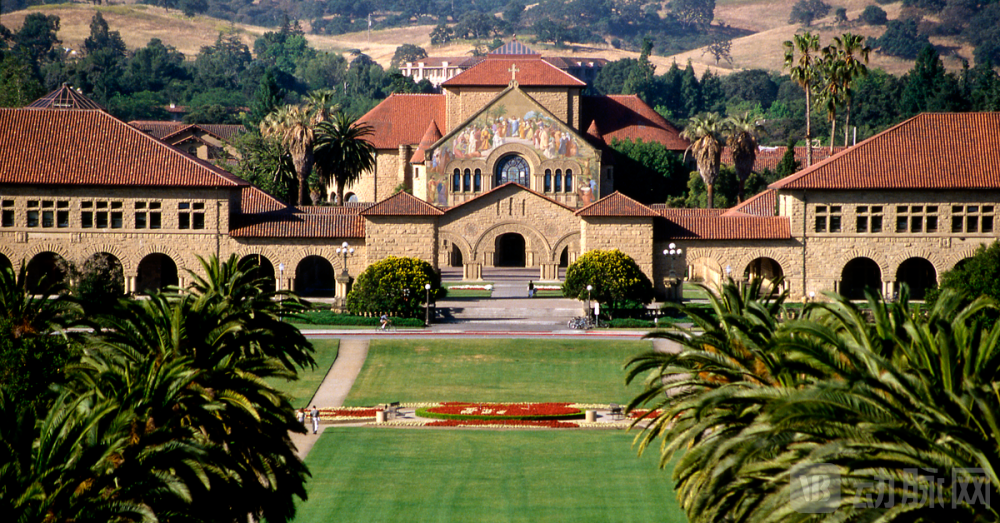
The university’s expansive campus has provided space for innovative discoveries across numerous research institutes and laboratories. In 1956, the linear accelerator was used for cancer treatment for the first time in the Western Hemisphere; in 1964, the first infant sleep apnea monitor was developed; in 1967, bioactive DNA was synthesized in vitro for the first time; in 1981, the world’s first successful combined heart-lung transplant in a human was performed; in 1988, hematopoietic stem cells were first discovered, isolated, and purified, and successfully used for cellular transplantation therapy in cancer treatment; in 1997, the first in vivo optical imaging of genes was achieved; and many other major breakthroughs in the field of medicine have originated from Stanford University.
In 1951, Frederick Terman, Dean of the Stanford School of Engineering, decided to establish an industrial park on campus, leasing one thousand acres of land at a nominal rent for long-term use by businesses and alumni to set up companies, while also providing students with various research projects and internship opportunities.Tech companies continuously moved into the industrial park while simultaneously expanding outward, forming an early version of Silicon Valley.. Since then, Stanford University alumni and faculty have founded, established, or led thousands of enterprises, including world-renowned companies:Google, Nike, Cisco, HP, Charles Schwab, Yahoo!, Gap, VMware, IDEO, NetflixandTeslaetc.
The establishment and development of the Stanford Industrial Park also facilitated the transfer of laboratory technologies to industry.In 1970, Stanford University pioneered the intellectual property management model of establishing an “Office of Technology Licensing” (hereinafter referred to as OTL) within the university., OTL established its core mission at inception: to help translate technological advancements into tangible products that benefit society, while also generating revenue for inventors and the university to support further research.
Stanford University was founded during the American Industrial Revolution and a period of higher education reform, with its educational philosophy consistently reflecting pragmatism and an entrepreneurial spirit. Stanford’s motto is “Die Luft der Freiheit weht,” a phrase originating from the 16th-century German humanist Ulrich von Hutten, translated into Chinese as “The wind of freedom blows.” This motto embodies the university’s enduring encouragement of free inquiry and bold innovation over its more than 130-year history, profoundly influencing generations of Stanford faculty and students.
Professional Management of the Entire Process of Scientific and Technological Achievement Transformation, with Technology Licensing Revenue Exceeding $2.1 Billion
In 1980, the United States enacted the Bayh-Dole Act, formally assigning ownership of inventions to research institutions and directly stimulating the commercialization of patented technologies through commercial incentives. The Bayh-Dole Act is regarded as a watershed moment in the history of U.S. scientific research translation. Prior to its enactment, patent rights arising from government-funded research projects were retained by the government, resulting in weak translation of scientific achievements and leaving many outcomes underutilized. The Act allocated intellectual property revenues into three equal shares: one-third to universities or companies, one-third to the R&D team, and one-third to small and medium-sized innovative enterprises responsible for translating the results, thereby greatly stimulating enthusiasm for the translation of university patent technologies.
Ten years before the enactment of the legislation, Stanford University had already begun to lay the groundwork for research translation initiatives.In 1970, Stanford University pioneered the establishment of an Office of Technology Licensing (OTL) within the university to promote a virtuous cycle between academic research and technology transfer.
Stanford University has a famous saying: “Never let professors sit at the negotiation table.” Why should professors not be involved in negotiations? Because once a technology is developed, tasks such as value assessment, technology transfer, and patent licensing are highly specialized and require high-level professionals to carry them out. Professors should focus on their research areas rather than spending energy on negotiations.
OTL has engaged patent technology brokers to manage the entire process of a patented technology from disclosure to commercialization, while patent applications are handled by law firms.Its operation generally comprises the following five key stages:
I. Disclosure. The inventor submits application materials to the OTL, including an Invention and Technology Disclosure Form; the OTL assigns a technology manager to review the submission and assess its market potential.
II. Assessment. OTL will evaluate whether to apply for a patent based on the available materials.
III. Marketing. Formulate licensing strategies and solicit interest from potentially interested companies. Screen newly established or existing enterprises to ensure the effectiveness of patent licensing; these enterprises must possess the basic conditions necessary to commercialize the invention.
IV. Negotiation. Conduct patent licensing negotiations and execute patent licensing agreements. To avoid conflicts of interest, the university stipulates that inventors shall not participate in patent licensing negotiations between the Office of Technology Licensing (OTL) and enterprises; such negotiations shall be conducted exclusively by technology managers acting on behalf of the university.
V. Allocation. Continuously monitor patent licensing to ensure timely collection and proper allocation of licensing revenue. Distribute the collected cash royalties or equity shares proportionally among the inventor’s department, the university, and the inventor.
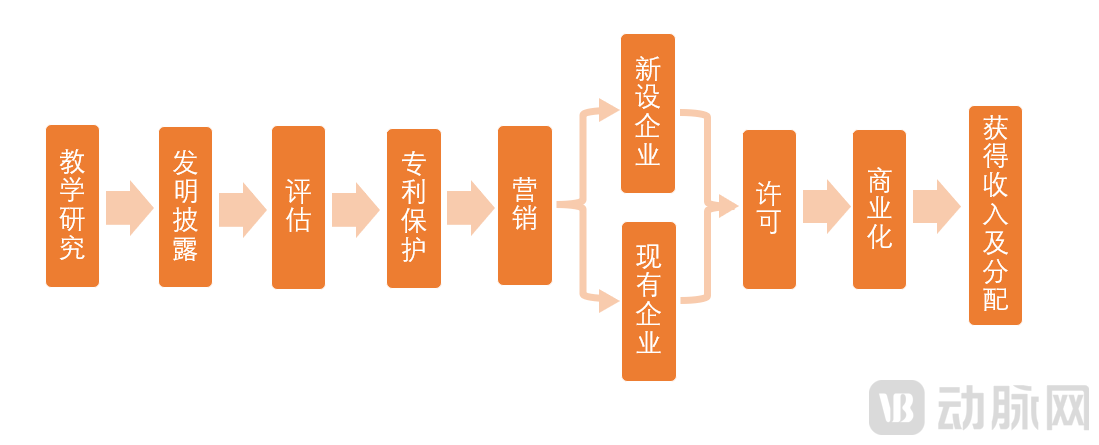
Stanford University OTL Workflow
Stanford University’s Office of Technology Licensing (OTL) has a well-known case of research commercialization. In March 1973, Professor Stanley Cohen from Stanford University School of Medicine and Professor Herbert Boyer from the University of California, San Francisco jointly invented recombinant DNA technology, which later became known as the “Cohen-Boyer gene splicing method.” OTL adopted a non-exclusive licensing model for this technology, granting licenses to 468 companies across various industrial sectors. This technology generated a cumulative revenue of $254 million for Stanford University. During the patent term, recombinant DNA products developed by licensees achieved sales exceeding $30 billion; a total of 2,442 products were developed, with an average of more than 400 new products introduced to the market annually since 1991, among whichThese include synthetic insulin for treating diabetes, thrombolytic agents for treating heart disease, growth hormone for children with developmental delays, and a variety of drugs for treating AIDS, anemia, cancer, and other diseases, all of which have driven the progress of medicine.
OTL has facilitated the commercialization of Stanford’s research achievements, transforming scientific and technological innovations into tangible products, with the resulting revenue used to support the university’s teaching and research endeavors, therebyEstablish a virtuous cycle between university research and technology transfer.
Stanford University's financial report data shows,In the half-century since its establishment, Stanford University’s Office of Technology Licensing (OTL) has generated licensing revenue from 2,539 patented inventions, with cumulative technology licensing income exceeding $2.1 billion.Among these, 575 inventions generated revenues exceeding $100,000, and 103 of these 575 inventions generated revenues exceeding $1 million. From September 2019 to August 2020, Stanford University earned a total of $114 million in patent royalty income from 847 technologies. Among these, 84 inventions generated revenues exceeding $100,000, and 10 generated revenues exceeding $1 million.
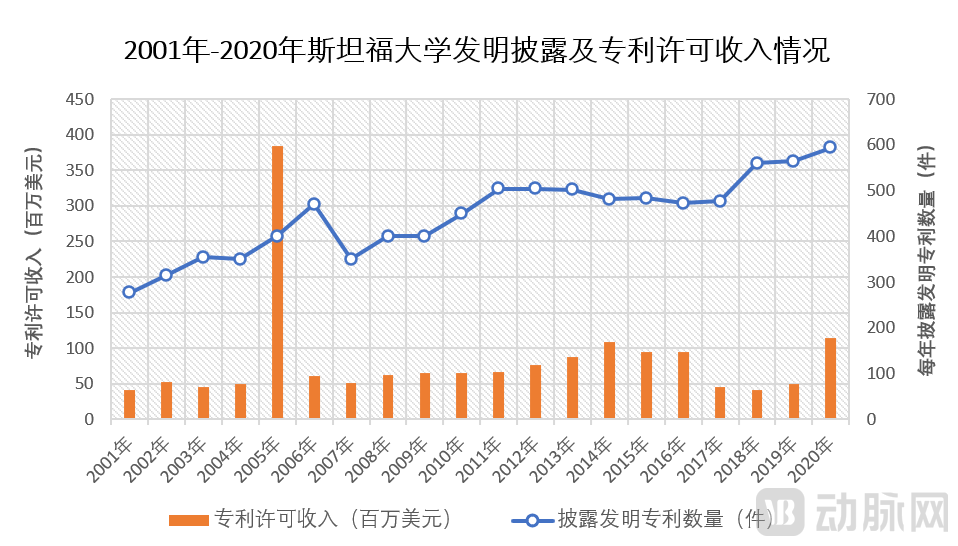
Stanford Technology Licensing Revenue, 2001–2020 Data Source: Stanford University OTL Annual Report
“The 3i Innovation Process” Provides a Guide for Entrepreneurship and Innovation in the Medical Technology Sector
In 2002, Professor Paul Yock of Stanford University founded the Stanford Biodesign Center for Innovation, leveraging Silicon Valley’s abundant medical resources and innovative culture to advance healthcare technology innovation, and systematically disseminating its innovation framework through coursework to a broader community of medical innovators.
The core philosophy of Biodesign is that thorough needs analysis constitutes the DNA of innovation, requiring a multidisciplinary research team to drive R&D innovations centered on clinical needs. Biodesign categorizes medical technology innovations into “Must-Have” and “Nice-to-Have.” Must-Have attributes primarily include point-of-care deployment, accuracy, affordability, and ease of use; Nice-to-Have attributes mainly encompass rapid onset of action, compact size, biodegradable components, and user-friendly operation.
Over the past 20 years, Biodesign has focused on cultivating approximately 10 top-tier innovative talents annually. To date, it has trained more than 200 leading innovators in the medical technology sector across various countries. These professionals have launched significant innovation projects and proposed solutions tailored to diverse clinical needs in different nations, thereby facilitating the practical implementation of these innovations.
To date,Biodesign fellows and its alumni fund have successfully helped establish 51 healthcare technology companies, benefiting over 3.4 million patients, creating more than 960 jobs, and raising over $707.9 million in funding.
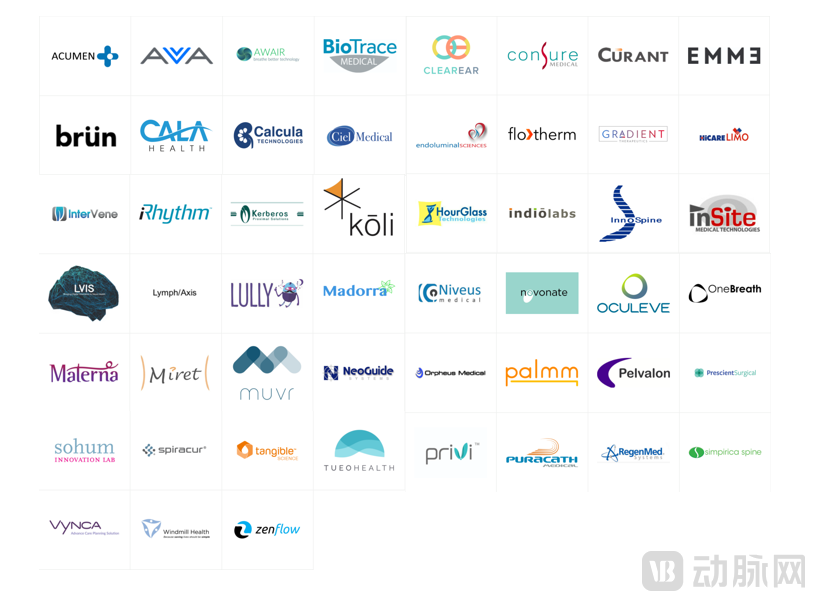
Biodesign-Incubated Portfolio of Healthcare Technology Companies
The Biodesign medical technology innovation process isThe innovation process—from identifying problems and developing technologies to delivering impact and creating value—provides a clear guide for innovation and entrepreneurship for innovators in the medical technology sector.. The innovative process proposed by Biodesign can be mainly summarized as the “3i Innovation Process,” which consists of:
I. Identify: to detect.By observing and collecting a large number of unmet medical needs, and based on key clinical, stakeholder, and market characteristics, several promising candidates are screened and identified.Needs DiscoveryIncluding: developing strategic priorities, exploring needs, and establishing requirement reports.Requirement ScreeningIncluding: disease state fundamentals, review of existing protocols, stakeholder analysis, market analysis, and needs assessment.
II. invent: invention.Designing solutions for one or more defined requirements, the outcomes of this phase will form a concept and develop strategic plans for its implementation, with the aim of introducing the invention into patient care.Concept GenerationIncluding concept ideation and preliminary proposals.Concept SelectionA deep understanding of the regulatory landscape governing medical technology innovation is required, encompassing intellectual property fundamentals, regulatory frameworks, health insurance reimbursement basics, business models, exploration and testing, and final solution selection.
III. Implement: Development.The focus of this phase is on developing and integrating core strategies to launch new businesses or projects based on existing operations. Key themes during the development stage include strategic development and business planning.Strategic DevelopmentA balanced approach is required, taking into account intellectual property (IP), health insurance reimbursement, regulatory affairs, and business models, along with a suite of overarching and cross-cutting strategies. These strategies should focus more deeply on the following key areas: integrating IP with ongoing R&D and clinical programs; regulatory strategy, including quality management; reimbursement strategy; addressing fundamental business barriers and solutions—marketing, sales, and distribution; and consolidating all assets to cultivate sustainable competitive advantages.Business PlanIncluding operational plans and financial models, strategic integration and communication, financing channels, and other pathways.
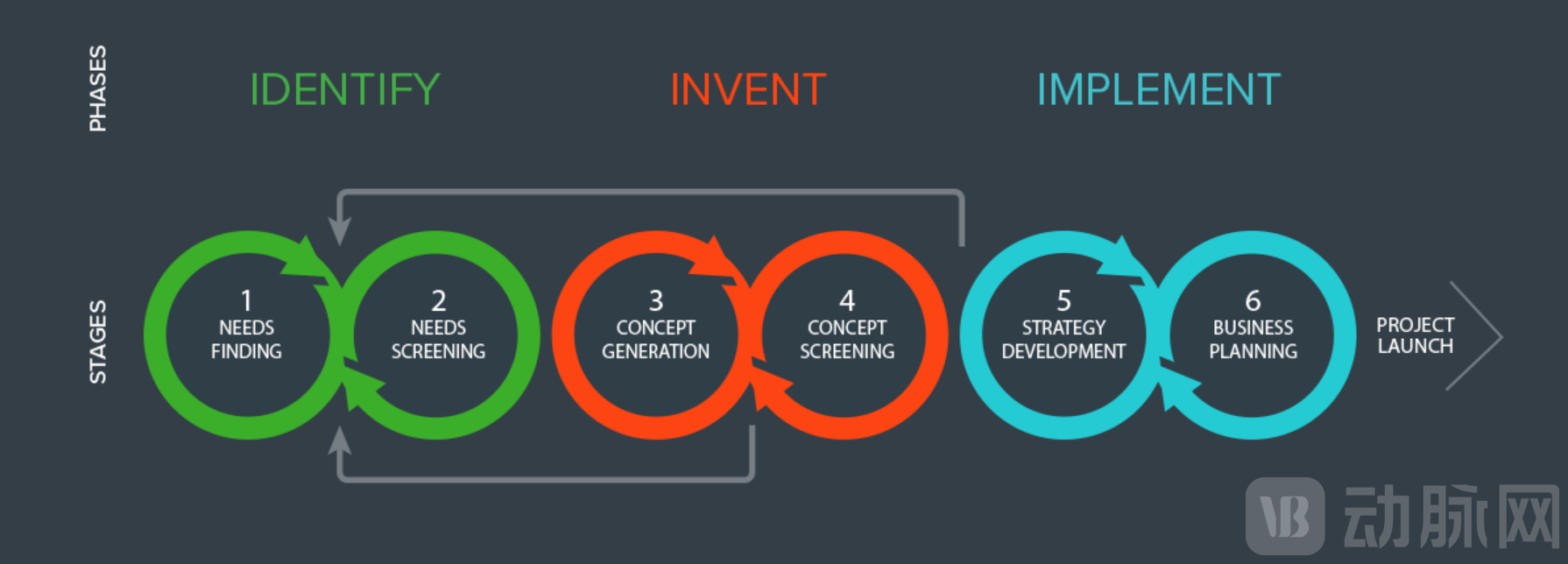
Biodesign Process for Medical Technology Innovation | Image source: Official website of the Stanford Biodesign Center
What are the implications for the commercialization of scientific research achievements at Chinese universities?
In recent years, many universities in China have established dedicated Technology Transfer Offices and issued corresponding management regulations to oversee the commercialization of scientific and technological achievements. For instance, Tsinghua University has formed a technology transfer team comprising technology transfer specialists, intellectual property specialists, compliance and risk control specialists, and general support staff; Nanjing University of Science and Technology has built a professional team of technology managers through market-oriented mechanisms to provide “one-stop” services; and Jiangsu University has assembled a team of over 100 technology managers, adopting a “three-diagnosis model” to facilitate the commercialization of research outcomes.
In the translation of medical research achievements, Tsinghua Industrial Development Institute initiated and established the Global Health Industry Innovation Center (GHIC)., aiming to connect with global medical innovation technologies and resources, and strengthen the transformation of scientific and technological achievements,Facilitating the effective implementation and development of innovative technologies in medical devices, diagnostics, and services,A platform providing comprehensive support for the incubation of medical devices in early- to mid-stage projects.
GHIC has established an operational system for technology transfer and commercialization. By adopting a “public laboratory platform + enterprise technology platform” model, it has facilitated technical collaboration among medical device startups, expanded the application scope for their industrial incubation, and thereby fostered an open, innovative, and sustainable professional incubation ecosystem for the medical device sector. To date, the enterprises supported by the GHIC platform includeTupai, Chaomu, Fubo, Weici, Huawei HengyuanIt incubates more than 20 high-tech, cutting-edge startups. GHIC has also established independent research facilities and laboratory environments tailored to the incubation needs of medical device projects, successively setting up multiple industry-specific laboratories, general technology laboratories, testing support platforms, and cleanroom experimental platforms of varying sizes (Class 10,000).A full-industry-chain incubation platform capable of supporting dozens of medical innovation enterprises through the entire process from R&D, experimentation, and testing to regulatory compliance and policy navigation.
2019,Peking University Health Science Center initiated and officially launched the Peking University Medical Technology Transfer and Innovation & Entrepreneurship Center (hereinafter referred to as the PKU Medical Sci-Tech Innovation Center), aiming to explore new fields, models, and mechanisms for the collaborative development of medical universities and various sectors of society, and to provide a platform for the transformation of scientific and technological achievements in medical colleges and universities across China.
Peking University Medical Science and Innovation Center has pioneered a new model of university-enterprise collaboration, establishingA Precision Acceleration Platform for “Technology Transfer + Innovation and Entrepreneurship” in the Pharmaceutical and Healthcare Sector, Providing One-Stop Services for the Commercialization of Scientific Research Achievements. Core services include patent services, project showcases, talent development, precision matchmaking, innovation and entrepreneurship support, and brand promotion.The center has established a project database for its Science and Technology Innovation Center, soliciting project outcomes in support of the “Double First-Class” initiative in medicine. It has also built an expert think tank for the Science and Technology Innovation Center, integrating multidisciplinary expert resources to assemble China’s most influential team of experts in the field of “Medicine + X” technological innovation. By implementing a multi-tiered project screening mechanism for the submitted outcomes, the center selects high-quality projects with high maturity, significant potential, and clear industrialization pathways to mitigate investment risks.
As can be seen,Universities Are Increasingly Prioritizing the Translation of Medical Research Achievements. Universities, with their large pool of highly qualified researchers, serve as key hubs for scientific and technological innovation. However, in the process of translating research outcomes into practical applications, numerous challenges frequently arise, such as: How to assess whether a technology has commercial viability? Whether to file a patent for a given technology? And how to collaborate and negotiate with enterprises?
According to data from the China National Intellectual Property Administration, by the end of 2019, “Double First-Class” universities in China held more than 250,000 invention patents, with Zhejiang University and Tsinghua University each exceeding 20,000. Furthermore, according to data from the China National Intellectual Property Administration’s “2020 China Patent Survey Report,”China's university patent conversion rate stands at approximately 10.7%, a slight increase from 8.1% in the previous year, yet it remains at a relatively low level.The proportions of the three major technology transfer methods were 4.4% for patent licensing, 3.6% for assignment, and 2.7% for equity contribution via technology. The commercialization rate at universities and colleges stood at only 3.0%, significantly lower than the 46.0% observed in enterprises.
Director Shen Wenjing, Department of Achievement Transformation and Regional Innovation, Ministry of Science and TechnologyIn a previous interview, it was stated that the mechanisms for promoting the commercialization of scientific and technological achievements in Chinese universities are still inadequate, lacking a technology transfer support system and service capacity aligned with international standards. Although some universities in China have established technology transfer offices, their personnel structure, knowledge background, and organizational capabilities are currently insufficient to fully assume the responsibility of providing technology transfer services.
Stanford University serves as a model for scientific research innovation and the commercialization of achievements within the U.S. innovation system, with the Office of Technology Licensing (OTL) playing a pivotal role in the translation of Stanford’s research outcomes.Summarize the transformation experience into the following five points:
First, foster a culture that tolerates failure and encourages free exploration and bold innovation.Stanford University has long placed great emphasis on innovation and entrepreneurship, fostering an excellent ecosystem for such activities. It cultivates an atmosphere that encourages bold innovation and free exploration, underpinned by a diverse culture that tolerates failure.
Second, a highly specialized management team for the commercialization of scientific and technological achievements.Valuation specialists conduct value assessments of inventions and develop legal services related to intellectual property protection and transfer. Technology licensing professionals possess professional backgrounds in life sciences, information sciences, or other high-tech fields, along with business experience. Furthermore, the Office of Technology Licensing (OTL) maintains strong independence in areas such as finance and human resources, significantly enhancing operational efficiency.
Third, an innovative benefit distribution mechanism.Stanford University allocates 15% of the proceeds from the commercialization of research outcomes to the Office of Technology Licensing (OTL), with the remaining 85% constituting the net income from patent licensing. The former is used for OTL’s commercialization incentives and to cover actual expenses such as patent application and protection costs, while the latter is distributed equally, with one-third each going to the inventor(s)/team, their respective school, and their department.
Fourth, the “Silicon Valley” technology park promotes the integration of industry, academia, and research.By uniting universities with robust scientific research capabilities and high-tech enterprises, the favorable entrepreneurial environment and conditions offered by science parks will attract and encourage researchers to transfer their technological achievements to companies or establish their own startups, thereby promoting the integration of industry, academia, and research, as well as technology transfer and the commercialization of scientific and technological outcomes.
5. Autonomous Disposition Rights for Scientific and Technological Achievements.At Stanford University, the primary basis for determining whether a technology should be commercialized by the Office of Technology Licensing (OTL) is the Stanford Intellectual Property Policy. The criterion is as follows: if university resources are used only incidentally, no technology licensing is required. If campus resources are utilized beyond incidental use, ownership of the technology rests with the university, and technology licensing is necessary. The U.S. government imposes minimal regulation and constraints, granting universities sufficient autonomy to manage their scientific and technological achievements.
The commercialization of scientific and technological achievements in universities and research institutes relies on researchers, even more so on research management departments, but most critically on sound institutional mechanisms. We may draw lessons from Stanford University’s experience to address the challenges hindering the translation of academic research outcomes in China’s higher education institutions.