

Backed by Goldman Sachs, Sequoia, Primavera, and Qiming, AI Medical Platform Shukun Technology Files for Hong Kong IPO

SHUKUN
Provider of Intelligent Products and Innovative Solutions
On the evening of September 21, SHUKUN (Beijing) Network Technology Co., Ltd. (hereinafter referred to as “SHUKUN”) filed its prospectus with the Main Board of the Hong Kong Stock Exchange, with J.P. Morgan, BofA Securities, and Bank of China International serving as joint sponsors.
SHUKUN was founded in Beijing in June 2017. By betting on the highly challenging “AI + Cardiovascular” sector and achieving success, SHUKUN emerged as a latecomer to quickly rise to the forefront of the medical AI industry. After obtaining the first Class III medical device certificate for “AI + CTA” in November 2020, SHUKUN rapidly accelerated its commercialization efforts, expanding its product portfolio from “AI + CTA” to the broader “Digital Human” framework, thereby establishing a comprehensive presence across the entire medical AI diagnostics landscape.
In terms of financing, SHUKUN has garnered support from numerous prominent investors, including Goldman Sachs Asset Management, Primavera Capital Group, Sequoia Capital China, Yuanyi Capital, Huagai Capital, 5Y Capital, CCV Partners, Qiming Venture Partners, Bank of China International, CCB International, China Reinsurance Group, and CICC Pucheng. In just four years, SHUKUN raised over RMB 2 billion, achieving a leap from its founding stage to the pre-IPO phase.
The development trajectory of SHUKUN Technology serves as a partial reflection of the broader landscape of medical AI. Following the submission of its prospectus, VCBeat promptly analyzed the document and will conduct a detailed examination of SHUKUN’s key metrics, product portfolio, and sector dynamics.
Looking back at the development of medical artificial intelligence in 2021, its most significant change has been the transition from “chaos” to “transparency.” As of September 20, 2020, three AI companies had filed their prospectuses, with SHUKUN being the fourth.
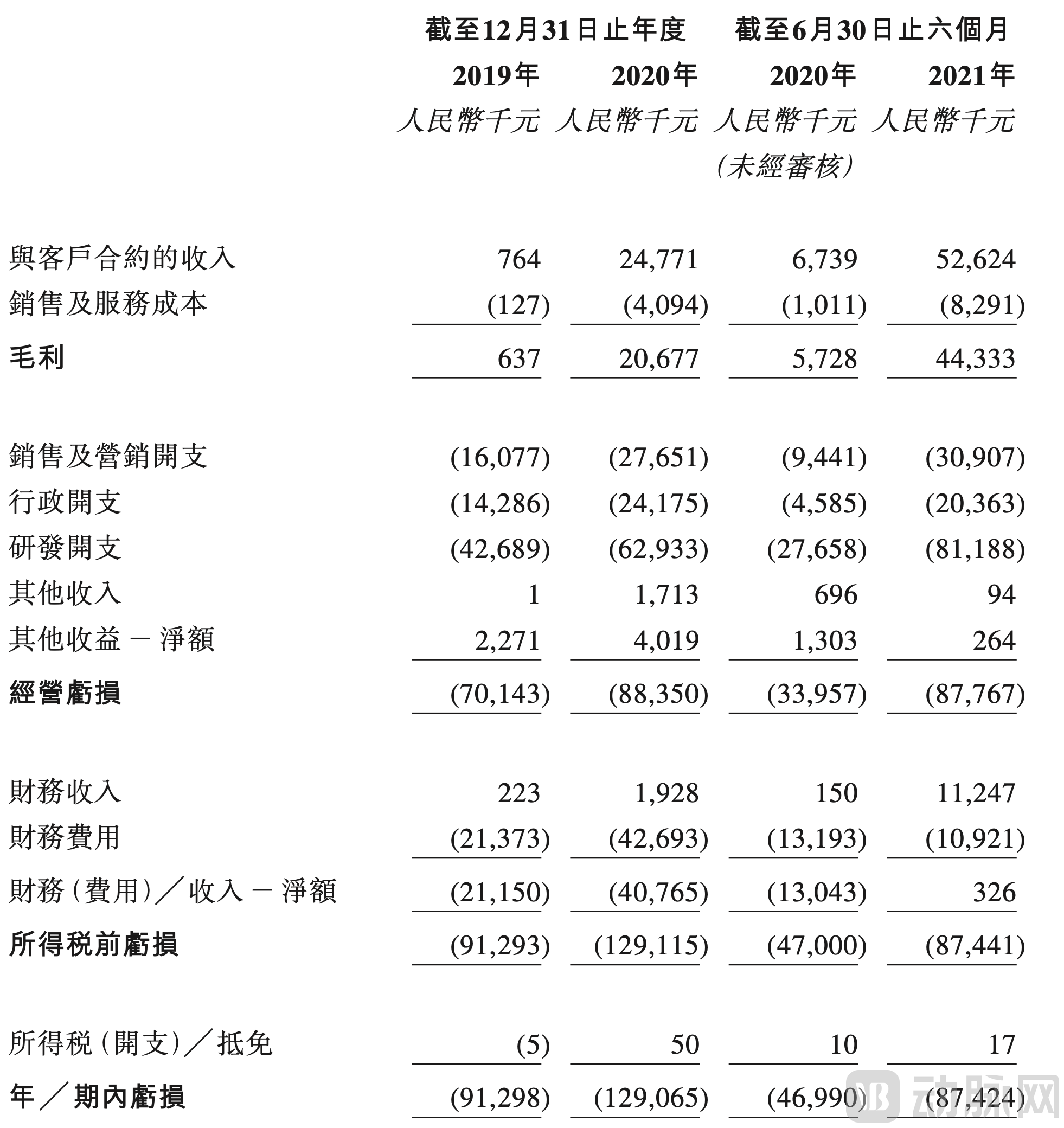
SHUKUN Consolidated Statement of Comprehensive Income
From a revenue perspective, SHUKUN reported operating revenue of RMB 52.62 million and gross profit of RMB 44.33 million in the first half of 2021, achieving a high gross margin of 84.2%. In comparison, Infervision recorded Q1 2021 revenue of RMB 22.13 million, while Airdoc reported annual revenue of RMB 47.67 million in 2020. SHUKUN’s revenue places it among the top tier in the medical imaging AI sector.
What is striking is not only the scale but also SHUKUN’s revenue growth rate. According to the financial statements, SHUKUN had only one customer in 2019, generating a total annual revenue of RMB 760,000; by 2020, this figure had increased nearly 32-fold. Meanwhile, the revenue for the first six months of 2021 represented an increase of nearly sevenfold compared with the same period in 2020.
SHUKUN’s rapid revenue growth stems from its phased implementation strategy. Prior to obtaining the Class III medical device certification, SHUKUN rapidly deployed its coronary CTA products in hospitals through research collaborations and pilot trials. In November 2020, after securing the Class III certification for its “AI+CTA” solution, SHUKUN swiftly transitioned its previous implementation projects into commercial operations. The surging revenue serves as strong evidence of its successful commercialization.
Prospectus data show that SHUKUN’s Digital Doctor products have been adopted by approximately 80% of the top 100 hospitals in China. Total adoption spans more than 1,200 hospitals across different tiers, with commercial procurement secured from approximately 200 hospitals. Among these, over 30% of all Grade A tertiary hospitals, over 20% of other tertiary hospitals, and approximately 5% of secondary hospitals in China have adopted and installed SHUKUN’s products.
SHUKUN’s current semi-annual revenue stands at RMB 52.62 million. With the further penetration of medical AI and the continued expansion of its product portfolio, SHUKUN’s revenue is poised to continue growing at a geometric rate in the near term.
To achieve growth on such a scale, medical AI companies must possess both robust R&D capabilities and strong sales prowess. According to physician evaluations gathered by VCBeat, numerous cardiologists have praised SHUKUN for its “accuracy and ease of use,” while its 246-member sales team has ensured the rapid clinical deployment of its medical AI solutions. Driven by these dual strengths, SHUKUN’s revenue has expanded rapidly.
Meanwhile, SHUKUN’s operating results have changed. In the first six months of 2020, SHUKUN posted a net loss of RMB 33.96 million; in the same period of 2021, the net loss increased to RMB 87.42 million, an increase of RMB 53.46 million. One reason for this change was R&D spending: SHUKUN’s R&D expenditures were RMB 27.66 million in the first six months of 2020 and RMB 81.19 million in the same period of 2021, an increase of RMB 53.53 million. The two figures are nearly identical.
This may be good news for SHUKUN. With substantial capital infusion into R&D, SHUKUN’s digital platform is poised for rapid growth next year. Given that the value of medical imaging AI companies largely depends on the breadth of their covered therapeutic areas, SHUKUN Technology may achieve a dual breakthrough in market share and revenue after expanding its portfolio and establishing comprehensive, body-wide solutions.
The “Financial assets at fair value through profit or loss” section further substantiates SHUKUN’s strong prospects. The prospectus shows that the net fair value losses/(gains) on financial liabilities at fair value through profit or loss turned from positive to negative in 2020, indicating a gradual increase in its valuation. Coupled with continued increased investments from Sequoia and Goldman Sachs, SHUKUN’s future development is indeed worth anticipating.
Currently, the auxiliary diagnostic products of many medical imaging AI companies still enter hospitals through bidding processes, similar to medical IT companies. In terms of revenue scale, SHUKUN has surpassed some listed medical IT companies.
This is merely the beginning. As medical AI companies gradually gain price approval and inclusion in national health insurance coverage, their commercial pathways will evolve accordingly. The business models for medical artificial intelligence hold immense potential, and under this new landscape, medical AI companies may face a market approaching one trillion yuan in value.
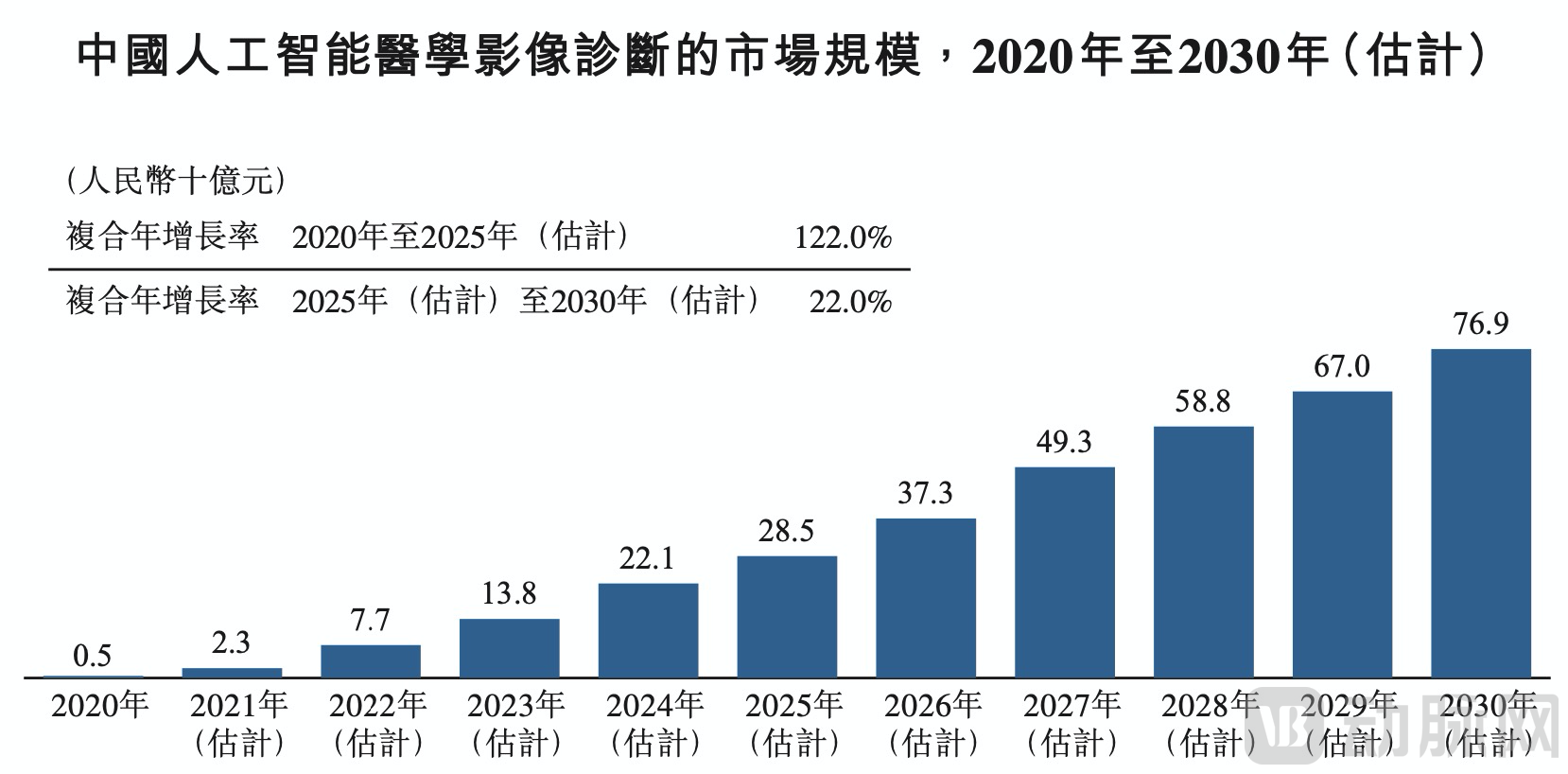
Market Size of China's AI Medical Imaging Diagnosis Sector (Data Source: SHUKUN Prospectus)
In SHUKUN’s statement of comprehensive income, R&D expenditures totaled RMB 81.19 million over the six-month period, representing 154.19% of sales revenue. With such substantial financial investment, what returns has SHUKUN actually achieved? The term “Digital Doctor Platform” may provide the answer to this question.
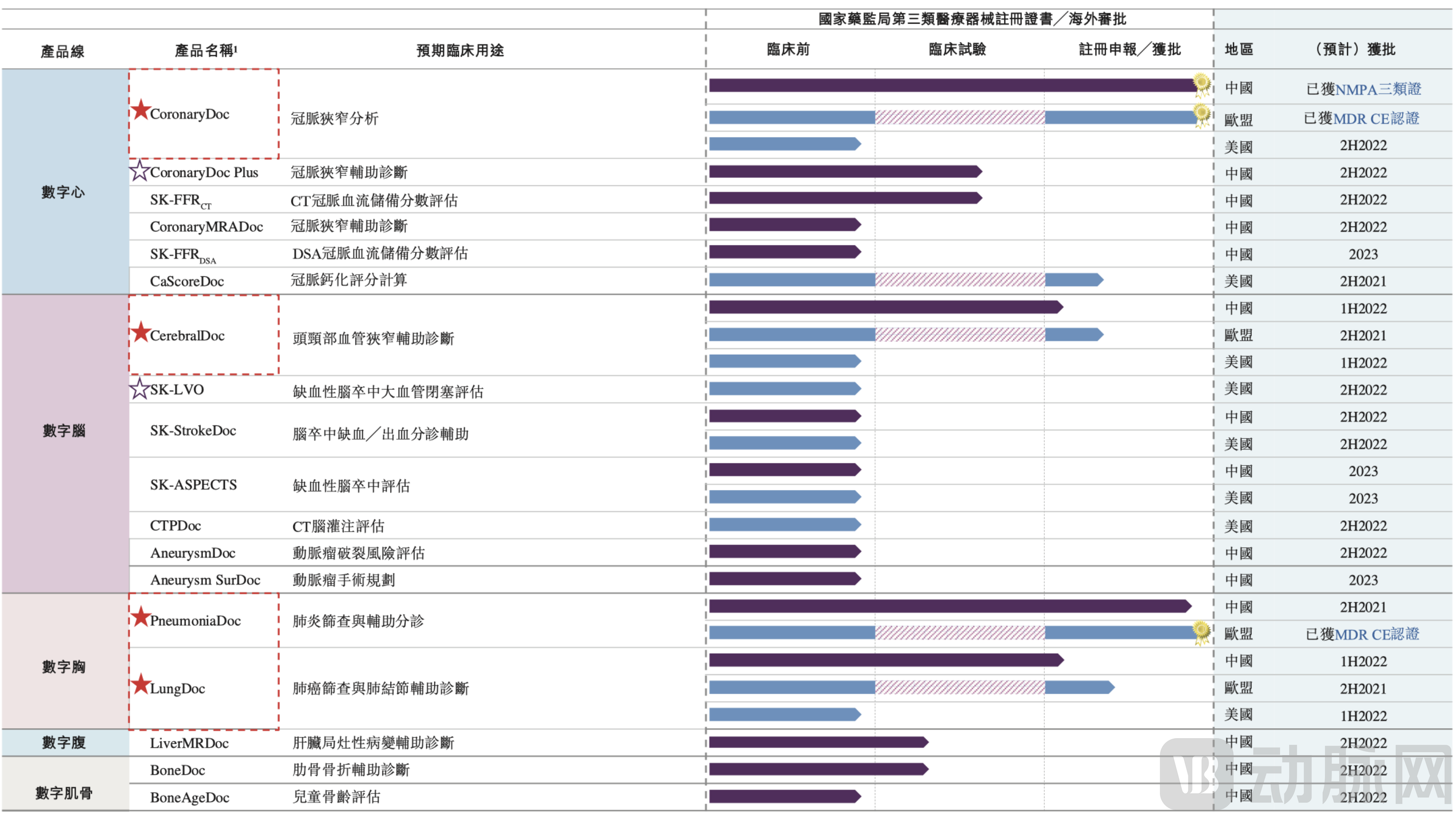
SHUKUN Pipeline Map
The so-called “Digital Doctor Platform” is a continuously evolving portfolio of platform-based imaging AI products launched by SHUKUN, built upon its leading AI Digital Human technology platform, designed to consistently address the critical pain points of clinical departments.
In the past, SHUKUN’s coronary CTA, one-stop stroke solution, and liver MR achieved continuous breakthroughs in specific clinical scenarios, yet each faced inherent bottlenecks. To achieve further advancement, next-generation AI products must transcend the limitations of single departments and single modalities. By focusing on human physiological functions and adopting a holistic perspective, these solutions can deliver more precise and convenient smart healthcare services to patients.
Taking this as the entry point, SHUKUN independently developedDigital Human Artificial Intelligence Technology PlatformAs the technical support for the Digital Doctor Platform, it integrates digital products for various anatomical regions, including “Digital Heart,” “Digital Brain,” “Digital Chest,” “Digital Abdomen,” and “Digital Musculoskeletal System,” to form a comprehensive suite comprising multiple “infrastructure” components.Digital Doctor Portfolio Platform. In the context of multimodal data, every piece of infrastructure must be capable of providing a comprehensive solution.
Further subdivided, SHUKUN’s Digital Doctor suite of platforms leverages imaging acquisition techniques such as non-contrast cardiac CT combined with CT angiography, non-contrast chest CT, non-contrast and contrast-enhanced head and neck CT, cerebral CT perfusion imaging, and non-contrast and contrast-enhanced liver MRI. It encompasses intelligent imaging solutions for multiple anatomical regions, including the cardiovascular system, cerebrovascular system, lungs, liver, and musculoskeletal system.
As a hospital-level intelligent imaging platform, the Digital Doctor Suite can serve as a critical entry point for diagnosing major acute and chronic diseases. According to data collected by VCBeat, this platform is applicable to multiple clinical scenarios, including coronary heart disease, cerebral infarction, tumors, trauma, chest pain centers, stroke centers, and cardiology specialties. It has established a multidisciplinary diagnosis and treatment model supported by an imaging platform, ultimately forming a comprehensive hospital-level intelligent imaging solution.
Taking the most mature “Digital Heart” as an example, this product integrates SHUKUN’s previously established offerings. Specifically, by combining coronary AI solutions, intelligent CT-based calcium scoring assessment, CT-FFR, FAI, and intelligent TAG assessment, these components collectively form the “Digital Heart” family. Following this integration, SHUKUN can develop diagnostic models based on multimodal data, which not only address physicians’ individual needs but also deliver comprehensive diagnostic solutions.
To date, SHUKUN has spent nearly four years building its Digital Human AI technology platform, completing 37 products including Digital Heart, Digital Brain, Digital Chest, Digital Abdomen, and Digital Musculoskeletal systems. Although there is still some distance to go before achieving a complete solution, the Digital Doctor portfolio platform has already demonstrated significant value in medical institutions, as evidenced by the adoption of its single-organ-focused products. After all, patients need only undergo a single scan of a specific organ to screen for a wide range of common conditions, which effectively reduces diagnostic and screening costs and leverages AI to realize the true concept of “superior physicians preventing disease before it occurs.”
The concept of the “Digital Doctor Portfolio Platform” conceals the development trends of medical artificial intelligence. Since the initial formation of medical AI devices in 2019, these devices have expanded their scope from medical imaging to clinical practice, striving to penetrate deeper into the core of medicine. For instance, some companies have ventured into auxiliary surgical planning for breast surgery, leveraging AI-enhanced ultrasound to improve the accuracy of puncture localization. Others have strengthened the diagnostic intelligence of AI, enabling it to differentiate between benign and malignant tumors and localize lesions, thereby assisting thoracic surgeons in precise surgical planning.
However, for most enterprises, these attempts remain isolated “points,” making it difficult for AI applications to synergize and generate new value. In contrast, the advantage of the “Digital Doctor Portfolio Platform” lies in its provision of a comprehensive “network.” By designing within this network, SHUKUN can integrate its AI applications, potentially covering the entire diagnostic and treatment workflow for specific organs, thereby embedding AI as an integral part of clinical practice.
After 2021, medical AI companies have successively entered the final sprint toward initial public offerings (IPOs). With profitability taken into account, sales capability has become a key priority alongside R&D capability, emerging as a focal point for corporate efforts during this phase.
Based on data disclosed in the IPO prospectuses of various medical AI companies, SHUKUN currently has 175 R&D personnel, exceeding Keya’s 160, Infervision’s 113, and Airdoc’s 62. Additionally, it has 246 sales personnel, surpassing Keya’s 203, Infervision’s 75, and Airdoc’s 85.
This data reflects two key points: first, SHUKUN has set an ambitious strategic scope, aiming to expand into new markets while capturing existing ones; second, medical AI companies are generally making dual investments in R&D and sales. In the 2021 medical imaging AI sector, competition centered on market share among enterprises.
Therefore, for investors, SHUKUN’s “impressive” prospectus may demonstrate how medical AI has achieved unprecedented explosive growth—from addressing critical real-world pain points to commercialization, and ultimately to revenue figures and market size—thereby further igniting investor enthusiasm.