

Nanda Fit and JD Health Announce Strategic Partnership to Establish 'Diabetes & Weight Management Center' and Advance Digital Therapeutics for Obesity
On September 10, 2021, Nandafei and JD Health entered into a strategic partnership, holding a signing ceremony at the JD Group headquarters in Beijing. The two parties will jointly establish the “JD Health Diabetes Medical Weight Loss Center,” aiming to serve the 90 million users on the JD platform identified with obesity-related tags, and leverage their respective technological advantages to jointly explore digital therapeutics for obesity tailored to the needs of the Chinese population.
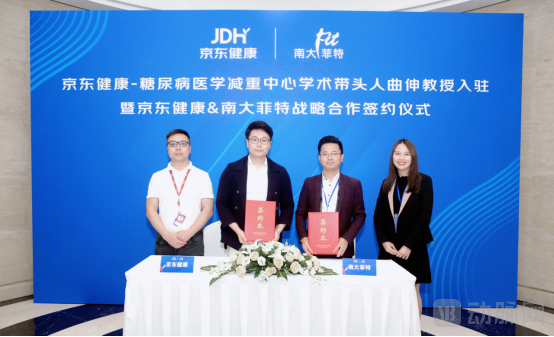
(Guangzhou Nandafei Signs Strategic Cooperation Agreement with JD Health)
Mr. Yin Hui, Founder and CEO of Nandafei, stated, “Since 2015, Nandafei has built and implemented a comprehensive in-hospital and out-of-hospital intervention system for obesity and chronic diseases. Spanning from tertiary hospitals to internet hospitals, we have conducted obesity assessments and patient education for tens of thousands of individuals, providing intensive interventions for over 15,000 users with obesity-related chronic conditions. Among them, 41.2% were patients with obesity comorbid with type 2 diabetes, and 11.1% were adolescents with obesity. Through this strategic partnership with JD Health to jointly establish the ‘Diabetes Medical Weight Loss Center,’ we will continue to explore the Chinese model for implementing lifestyle interventions in the field of obesity, accelerate the deployment of digital therapeutics for obesity, benefit more patients with obesity, and contribute to the prevention and control of chronic diseases!”
It is reported that as early as June 2021, JD Health collaborated with Guangzhou Nandafei Medical and Health Technology Co., Ltd. on the “Medical Fat Loss” module during the “618 National Health Experience Officer” campaign, preliminarily validating the feasibility of delivering personalized, customized health solutions to households through various scenarios and access points.
Professor Qu Shen currently serves as Director of the Department of Endocrinology and Metabolism at Shanghai Tenth People’s Hospital, Tongji University; Director of the Institute of Obesity Medicine, School of Medicine, Tongji University; and one of the inaugural science popularization experts appointed by the National Health and Family Planning Commission. With many years of dedicated expertise in the field of obesity, he has undertaken dozens of related research projects and published over 100 SCI-indexed papers. Under his leadership, the Institute of Obesity Medicine at Tongji University School of Medicine and the Specialty Clinic for Obesity, Metabolism, and Weight Loss at Shanghai Tenth People’s Hospital have pioneered a disease-centered obesity management model in China, accumulating extensive practical experience in the development of obesity-related clinical disciplines.

(Professor Qu Shen spoke at the symposium)
Following the establishment of the JD Health Diabetes Medical Weight Loss Center, the three parties will fully leverage their respective strengths: First, Professor Qu Shen will draw upon his years of exploration and practice in the field of obesity, combined with the research institute’s scientific experimental findings; second, JD Health will contribute its capabilities in reaching 90 million users tagged as obese through precise labeling, as well as its strengths in internet healthcare, pharmaceutical supply chain, and digital-intelligent technologies; and third, Guangzhou Nandafei Medical and Health Technology Co., Ltd. will apply its years of practical experience in managing obese patients by constructing a D (Diet)-E (Exercise)-H (Behavior)-P (Psychology) lifestyle intervention system featuring “tri-disciplinary co-management” (physicians, dietitians, and exercise specialists) alongside an AI-powered intelligent follow-up system. This collaboration aims to optimize clinical diagnosis and treatment processes for obesity, enhance health education, weight management, medical outcomes, and efficiency for obese patients, raise awareness among more patients regarding overweight, obesity, and associated risks, and help patients identify scientific, targeted solutions.
According to the 2020 Report on the Nutritional Status and Chronic Diseases of Chinese Residents, based on Chinese (Asian) criteria, the prevalence rates of overweight and obesity among adults were 34.3% and 16.4%, respectively, meaning that more than half of Chinese adults are overweight or obese. This marks the first time in nationwide survey reports that these proportions have exceeded one-half, indicating that, in absolute numbers, China has 600 million individuals who are overweight or obese, ranking first globally.
Obesity is not merely an increase in body weight; it is also defined as a chronic inflammatory disease of adipose tissue caused by metabolic imbalance. It can trigger 16 related complications, including metabolic syndrome, type 2 diabetes, dyslipidemia, hypertension, non-alcoholic fatty liver disease, polycystic ovary syndrome, and female infertility, and may further serve as a significant risk factor for severe COVID-19.
Regarding obesity prevention and control, the Outline of the “Healthy China 2030” Plan explicitly states that by 2030, the growth rate of the overweight and obese population must be significantly slowed. Furthermore, the Implementation Plan for Obesity Prevention and Control in Children and Adolescents, formulated by six departments including the National Health Commission and the Ministry of Education, sets forth specific requirements to address obesity, aiming to curb the development of this major public health issue that affects the physical and mental well-being of children and adolescents in China.
Overweight and obesity in the population are not only problems brought about by social development but are also closely linked to people’s lifestyles and behaviors. Consistent with American and European guidelines, relevant Chinese guidelines also recommend lifestyle intervention as the first-line treatment for obesity. However, despite this consensus, the clinical application of lifestyle interventions for obesity remains unsatisfactory due to a lack of sufficient local data to guide practice. Furthermore, the consensus documents do not provide detailed specifications for lifestyle interventions; consequently, clinical lifestyle intervention is, to some extent, absent, and there is a lack of widely accepted standardized protocols.
In the United States, digital therapeutics that deliver digital health coaching remotely via internet-connected devices have been proven to be an effective approach for preventing and managing overweight and obesity. From 2011 to June 2020, the total amount of publicly disclosed financing for global companies specializing in digital therapeutics for obesity reached $764 million (excluding IPOs, private placements, etc.). According to Crunchbase data, leading company Omada Health raised a total of $256.5 million across nine funding rounds. Founded in 2011, Omada Health provides users with comprehensive digital care programs. It leverages digital technologies to guide users in achieving sustainable lifestyle and behavioral changes, and establishes evidence-based care pathways spanning both in-hospital and out-of-hospital settings to help users attain their health goals. Effective lifestyle interventions can help users prevent obesity-related chronic diseases and reduce the incidence of associated complications.

(Founder of Nandafei Speaks at the Symposium)
Yin Hui, founder of Nandafei, further shared his views on advancing digital therapeutics for obesity: “Omada Health operates on the philosophy that ‘Automation doesn’t drive the best outcomes. People do,’ which aligns perfectly with Nandafei’s own principles. Digital technology will undoubtedly serve as a significant catalyst in obesity management and even broader chronic disease management, substantially reducing costs and improving efficiency in implementing lifestyle interventions in China, thereby benefiting more patients. However, this does not mean that the involvement of internet healthcare and digital technologies can replace the human element. At the current stage, effective chronic disease management still relies on the participation of professional teams; digital tools empower rather than replace these professional management teams. Following our strategic partnership with JD Health, we will continue to utilize the ‘Three-Coach Collaborative Management’ CIMWM (Companion-based Multidisciplinary Weight Management) model to support the diagnosis and management of obesity. Furthermore, by leveraging JD Health’s advantages in big data, artificial intelligence, and supply chain capabilities, combined with our proprietary AI-MDT lifestyle intervention model, we aim to further accelerate and refine the development of digital management models for obesity.”
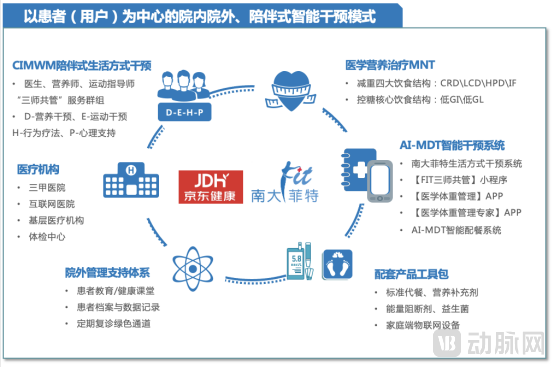
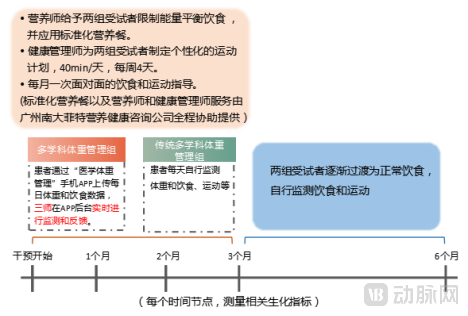
According to reports, a related study was published online in *Nutrition & Metabolism* in February 2021. The CIMWM model, independently developed by Nandafei in accordance with medical guidelines, has been validated by evidence-based medical data through clinical intervention trials jointly conducted at 11 centers in China, including the First Affiliated Hospital of Nanjing Medical University. The findings demonstrated that “weight management under the regular guidance of physicians, dietitians, and health managers can scientifically and effectively improve participants’ body weight, BMI, body composition (BFM and VFA), ALT, AST, lipid profiles, and insulin resistance. Furthermore, a combined online and offline lifestyle management approach can more effectively enhance patient adherence, thereby achieving the goal of lifestyle restructuring.”
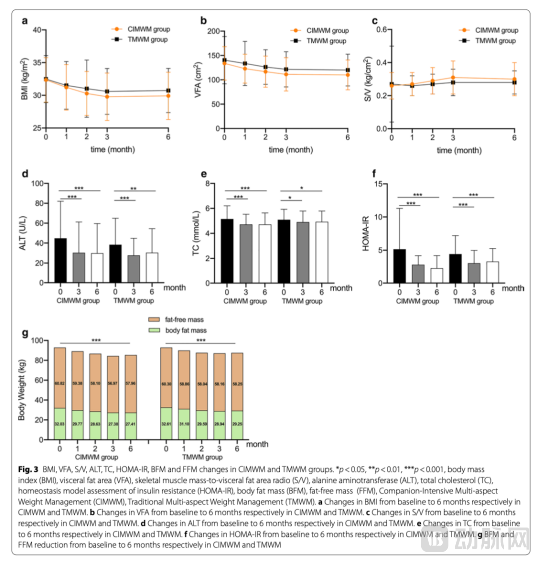
Currently, Nandafei has supported the establishment of obesity clinics in more than 50 Grade A tertiary hospitals across 16 cities, including Guangzhou, Shenzhen, Shanghai, Dongguan, and Nantong, providing comprehensive in-hospital and out-of-hospital solutions for obesity. Statistical data show that the average weight loss achieved through its medical weight management program is: 4.2 kg after 28 days of intervention, 7.4 kg after 56 days, and 11.19 kg after 90 days.
In the future, Nandafei will strive to become a leader in medical-grade chronic obesity management in China, developing digital therapeutics for obesity tailored to the needs of the Chinese population. By filling the gap in feasible clinical lifestyle intervention solutions, we aim to enhance treatment outcomes for patients and reduce the societal costs associated with the prevention and control of obesity-related chronic diseases, thereby creating health value through technological innovation in medical services for chronic obesity management.