

Overcoming Clinical Translation and Cost Challenges in iPSC-Based Cell Therapy
iPSC-derived cell products can be manufactured in batches and undergo quality control, as well as multiple rounds of gene editing. This addresses the challenges of scaling up production and implementing quality control for primary cell-based therapeutic products, offering greater consistency, stability, and safety while significantly reducing costs.
However, substantial innovative work remains to be completed in the early-stage chemistry, manufacturing, and controls (CMC) and preclinical research of induced pluripotent stem cells (iPSCs), creating an urgent need to establish corresponding standards and specifications. The iPSC field continues to face numerous challenges, including those related to raw materials and excipients, manufacturing processes, quality control, equipment, talent, and regulatory oversight. In the face of a vast market and significant demand, next-generation therapeutic technologies always present both opportunities and challenges. Collaboration will help accelerate the delivery of these innovative therapies, providing patients with safe and effective treatments more rapidly.
Recently, BioBAY and VCBeat/VCBeat New Medicine jointly hosted an offline salon themed “The Benevolent Power of iPSC Clinical Translation,” bringing together experts from various fields to discuss recent advances in the induced pluripotent stem cell (iPSC) sector, as well as future challenges and breakthroughs.
The Yangtze River Delta Special Session brought together numerous professionals from the industrial and investment sectors in Nanjing, Hefei, Hangzhou, Shanghai, and Suzhou to comprehensively interpret the challenges and breakthroughs in iPSC therapy from multiple perspectives, including clinical translation, industry development, and financing progress.
The guests attending this special session included Fan Jing, Founder & CEO of Huade Bio; Tong Jiansong, CEO of Saiyuan Bio; Wang Pengyuan, Chief Scientist at Aipu Regenerative Medicine; Zhang Ying, Co-founder of Zhongsheng Suyuan; Yan Pixi, Co-founder of Shize Bio; Wang Haotian, Vice President of Investment at Legend Capital; as well as numerous industry and research professionals.
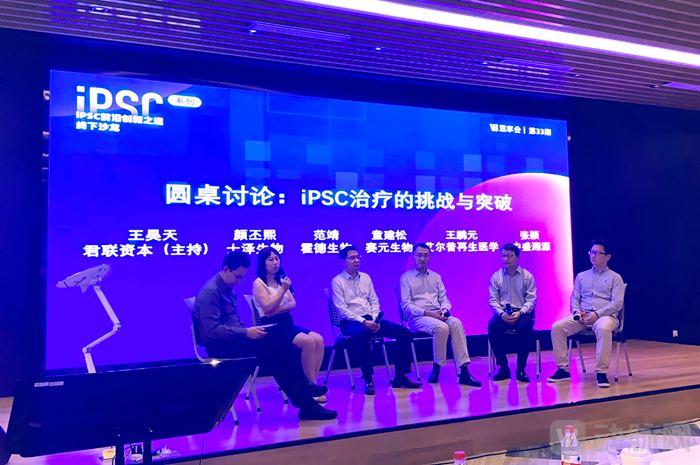
Below are excerpts from the “Roundtable Discussion on Challenges and Breakthroughs in iPSC Therapy” held in the Yangtze River Delta region:
Since its emergence in 2007, iPSC reprogramming technology has demonstrated significant potential for clinical applications after 15 years of development. The recent influx of capital and enterprises further confirms that this field is entering a period of rapid growth, driven by the maturation of underlying technologies and supporting industry infrastructure.
Fan Jing, Founder & CEO of Huode Biotech, stated:“For the past 17 years, I have been engaged in research on neurological disorders. Since 2012, at the Institute for Cell Engineering of Johns Hopkins University School of Medicine in the United States, I have employed iPSC-based neural differentiation techniques to generate various types of human neural precursor cells, and utilized these in vitro-derived human neurons for drug screening and investigations into disease mechanisms. Furthermore, through a series of experimental validations conducted initially in our laboratory and subsequently by third parties—involving the transplantation of human neural precursor cells into mouse models of stroke, as well as the Company’s transplantation studies in non-human primate (monkey) models of stroke—it has been demonstrated that these human cells can indeed survive long-term in vivo, integrate into neural circuits, and promote the recovery of hemiplegic function in animals.”
“We have thus recognized the immense therapeutic potential of iPSC-derived cells, particularly for neurological sequelae or neurodegenerative diseases such as stroke and Parkinson’s disease—conditions that are difficult to address with large-molecule drugs, small-molecule drugs, or even gene therapy.
“Therefore, around 2016, we conceived the idea of founding Huode Biology and established the company in early 2017. It was only after immersing ourselves in the industry over the past few years that we realized the immense workload involved in developing such novel cell-based products into therapeutic drugs. However, if the direction is correct and mechanistically feasible, I believe what remains to be addressed are merely the specific challenges inherent in the innovative drug development process.”
Saiyuan Bio CEO Tong Jiansong stated:“I am a ‘newcomer’ in the field of iPSCs; my hands-on engagement with iPSCs for the development of cancer therapeutics began when I joined Saiyuan Biologics. However, I am a ‘veteran’ in the field of immune cells. Since entering the pharmaceutical industry in 2015 to develop CAR-T cell therapies and later embarking on my entrepreneurial journey, I have experienced and witnessed the numerous bottlenecks that indeed exist in cell therapy areas such as CAR-T.”
“For example, in my previous work on developing UCAR-T cell product processes, I faced bottlenecks in establishing cell production processes using fully closed automated equipment, as well as issues such as the long preparation cycle required when developing autologous CAR-T cell products. And”iPSCs can, in principle, overcome these bottlenecks.”
Zhang Ying, Co-Founder of Zhongsheng Suyuan, stated:“When I completed my doctoral degree, induced pluripotent stem cells (iPSCs) had only been introduced three years earlier, were in their early nascent stage, and related articles had just begun to be published.”At the time, I felt that this was a vast field, because even just one type of cell, such as mesenchymal stem cells, has very broad applications.Whether it is assisting in the current screening of large-molecule and small-molecule drugs or independently developing them into marketable therapies in the future, this remains a field worthy of exploration.
“Currently, whether in medical services or drug development, many different institutions have already engaged in stem cell technologies represented by iPSCs, or are leveraging them as a foundational platform to enhance their products. iPSCs have the potential to become a long-term endeavor whose lifecycle may even outlast all of us present here. It warrants our continuous exploration, and we now stand together at the starting line to drive the industry’s growth.”
Yan Pixi, Co-Founder of Shize Biotechnology, stated:“I entered the stem cell field about a decade ago. After completing my Ph.D., I joined a company focused on the industrialization of mesenchymal stem cells (MSCs), where I observed that MSCs indeed demonstrate significant therapeutic efficacy for certain indications in the field of cell therapy. The gradual clarification of various laws and regulations, combined with the deep expertise accumulated by our founder, Dr. Li Xiang, over more than ten years in the stem cell sector prior to establishing Shize Biologics, has further strengthened our confidence in dedicating ourselves to the field of cell therapy.”
“However, the industry entry barrier for MSCs is slightly lower than that for iPSCs,”While raising the barriers to entry, iPSCs have also brought disruptive challenges to the industry, including process development and scale-up manufacturing in the industrial translation of cells. This highlights both the challenges and opportunities involved in transforming cell therapy into a standardized pharmaceutical product.”
Wang Pengyuan, Chief Scientist at Aipu Regenerative Medicine, stated:“I first entered this industry by working with MSCs. After spending roughly seven or eight years in the MSC field, I began engaging with iPSCs around 2013.”"At the time, I felt this was a very cool cell type—it possesses multipotent differentiation potential without the ethical concerns associated with embryonic stem cells."
As the field of induced pluripotent stem cells (iPSCs) continues to attract attention from both academia and industry, it is important to return to the product itself; iPSC-derived cell therapy products will undoubtedly face numerous new challenges as they transition from research to clinical application.
Dr. Fan Jing stated, “HuoDe Biologics is currently in the pre-IND filing stage, so clinical development represents a critical and entirely new phase for us.”I cannot elaborate on what our future in clinical practice will look like, but I can say that we have always been fully prepared to meet the clinical challenges of the future., since our inception, we have not only drawn on the experience of existing clinical products but have also continuously collaborated with partner hospitals to discuss and refine clinical protocols.
“In terms of CMC and preclinical animal studies, we also design and develop with clinical end-points in mind, striving to simulate clinical treatment regimens as closely as possible. Of course, despite our ongoing preparations, there may always be unforeseen circumstances in clinical trials, which require our clinical team and experts to work together to resolve, thereby providing valuable clinical evidence for product commercialization.”
Dr. Zhang Ying stated, “In the iPSC field, relevant institutions and enterprises in all countries will successively enter the clinical phase within the near future.“For iPSC-derived cell products, our goal is to leverage the unique pharmaceutical attributes of iPSC technology to mass-produce standard drugs that surpass current therapies in both efficacy and safety. This is the minimum requirement for truly advancing iPSC technology to the stage of drug development.”
Dr. Yan Pixi stated, “As an emerging enterprise in the field of stem cell therapy, Shize’s core team members have accumulated over a decade of professional expertise in the industry. Currently, in addition to actively advancing clinical collaborations, what distinguishes us from other companies is our greater focus on the pharmaceutical development stage and the entire industrialization process.”
“We have been focusing on the challenges anticipated during the Investigational New Drug (IND) stage since the early phases, including process optimization, development, and validation, to avoid unnecessary pitfalls down the line. Currently, our entire team is making every effort to accelerate the preclinical research, industrial translation, and clinical application of Shize’s iPSC-derived therapeutics.”
Dr. Tong Jiansong stated, “Saiyuan Bio is a startup; while pursuing ‘China-specific’ clinical translation speed, we must also comply with relevant national regulatory requirements.”Many cell therapy companies’ projects fail during the IND application and commercialization stages, largely due to incomplete early-stage cell manufacturing processes.
“There is another scenario: discovering during the commercialization phase that competitors have lower costs, which represents a significant challenge that may arise post-commercialization. Therefore, an exclusive focus on accelerating clinical translation while neglecting comprehensive process development in the early stages can yield mixed results.”
Dr. Wang Pengyuan stated, “As a company focused on regenerative medicine for the myocardium, Alpu faces a key challenge and priority in technology: truly differentiating iPSCs into cells with specific functions. In other words, how to ensure that these cells possess full functionality while eliminating non-functional or harmful cells. Alpu has been continuously optimizing its process development in this area.”
Following the insights shared by industry experts on clinical translation, one cannot help but consider the sourcing of raw materials behind these project pipelines. Can the domestication of upstream materials keep pace with the current product research and development in the industry?
As a user of these upstream materials, Dr. Fan Jing stated:“The production of clinical-grade reagents involves stringent control over a large volume of raw materials, imposing high demands on facilities, management, manpower, and financial support for the entire GMP quality system, raw material inventory, and quality control. We currently source all our raw materials from internationally renowned suppliers, but we eagerly anticipate the emergence of more Chinese manufacturers specializing in the R&D of clinical reagents, consumables, and automated equipment, such as Zhongsheng Suyuan.”
“Although China’s entire industrial chain is gradually improving, it still fails to keep pace with the demands of industrial development. Without domestic alternatives, force majeure events such as foreign monopolies and pandemic outbreaks would significantly disrupt corporate R&D efforts. We call for increased investment in this sector to better align with downstream market demand and foster coordinated development across the upstream and downstream segments.”
As a developer of domestically produced reagents and consumables, Dr. Zhang Ying from Zhongsheng Suyuan stated:“At least until Phase III clinical trials, all raw materials used in the product must be auditable; however, the vast majority of imported material suppliers find it difficult to provide the necessary cooperation. We have developed certain products to address this need. Furthermore, batch-to-batch variability in raw materials can adversely affect product development and commercialization. Differences in supply lead times and suppliers for foreign-sourced raw materials are highly likely to cause inter-batch discrepancies, thereby impacting R&D.”
Product development and the R&D of corresponding materials and equipment are advancing in tandem in China. Amid this rapid growth, where will the next breakthrough in the iPSC field emerge?
Dr. Wang Pengyuan stated, “iPSCs are experiencing accelerated development in the fields of neuroscience, cardiology, and tumor immunology; the next breakthrough may well involve a cascading surge across these three domains.”
Dr. Yan Pixi stated, “In fact, every company has its own areas of expertise and pipeline strategies. Whether in the neurological field or other specialized sectors, when a company chooses to focus deeply on a specific area and truly develop it into iPSC-derived therapeutics, it must navigate not only early-stage drug development but also a series of challenges in later stages, including process scale-up, validation, and quality standard control. Each of these incremental advancements represents a breakthrough for the industry, collectively contributing to the continuous improvement of quality standards for stem cell-based therapies.”
“SoI believe that every niche sector will have a major breakthrough point., only when the overall quality of iPSC-based therapeutics is improved can the industry’s entry barriers and development be elevated, thereby enabling the entire sector to better benefit patients.“Focused on Cell Therapy, Patient-Centered”, which is also Shize’s original aspiration.”
Dr. Zhang Ying stated, “I believe that any type of iPSC represents a new cell variety, and with the addition of new modifications in the future,”I believe that some platform-based cell therapy products may give rise to new innovations that disrupt the current landscape of drug development.”
Dr. Tong Jiansong stated, “Solely from the perspective of drug development using iPSCs, neural cells, cardiomyocytes, and immune cells represent highly promising research directions and constitute key technological breakthroughs. Furthermore, from the standpoint of product development itself, if corresponding products can achieve robust clinical efficacy and address current urgent clinical needs, they will undoubtedly emerge as significant breakthroughs in the future.”
Dr. Fan Jing stated, “First, achieving breakthroughs in our respective fields is itself a success. Second, critical issues such as long-term safety and efficacy in true clinical practice require sustained follow-up. Furthermore, cell therapies derived from the combination of gene editing and induced pluripotent stem cells (iPSCs) represent a promising area of anticipation. However,”The breakthrough we anticipate most is the emergence of a truly universal master cell line.”
The next major breakthrough could stem from the successful market launch of products, optimization of technological bottlenecks, or real-world clinical efficacy outcomes. Given the current pace of development, it is anticipated that within the next three years, dozens to hundreds of cell-based therapies will flourish in a vibrant and diverse landscape.
Next-generation products will inevitably undergo continuous iterative optimization on this foundation, driving the iPSC field forward.