

Bailingda Biotech's 'Zhou Quan' Program Pioneers Preventive Periodontal Care Amid Global Burden Affecting Nearly 90% of Adults
In the oral healthcare industry, awareness of periodontal disease prevention and treatment appears relatively weak compared to high-profile sectors such as clear aligner orthodontics and dental implants.
However, public records show thatPeriodontal diseases have affected nearly 90% of the global population, and in the Global Burden of Disease Study 2010, “severe periodontitis” ranked sixth among 291 common diseases.
Furthermore, periodontal health is closely linked to the fields of orthodontics and dental implants, as well as to systemic health, with far-reaching implications.
“Periodontal health is the foundation for various dental treatments, including endodontic and periapical diseases, prosthodontics, orthodontics, dental implantology, and oral medicine surgeries.”Professor Wang Zuomin from the Department of Stomatology at Beijing Chaoyang Hospital, Capital Medical University, has publicly stated that orthodontic treatment achieves remodeling of periodontal bone tissue through the application of force. Periodontal health influences orthodontic treatment, and in implant therapy, “without sufficient alveolar bone support, dental implants would be as precarious as a castle in the air.”
Moreover,Periodontal health is also associated with diabetes, atherosclerosis, chronic kidney disease, cardiovascular disease, and obesity.
Therefore, in recent years, under the “Healthy China 2030” strategy, the state has introduced a series of policies to shift the focus of periodontal care from treatment to prevention. Industry-related organizations have also successively issued guidelines for treatment and prevention and control, standardizing periodontal examination and diagnosis and treatment methods.
Meanwhile, as healthcare cost containment intensifies and policies encouraging innovation in traditional Chinese medicine (TCM) enterprises are rolled out, can periodontal disease prevention and control offer substantial growth potential—serving as a “second curve” for TCM companies? What should be the focal points for these enterprises as they expand into new business areas? What are the entry barriers to this sector? How can companies leverage favorable policies to implement practical solutions focused on “prevention”? And what are the future development trends? To address these questions, VCBeat interviewed Su Minhua, founder of Bailingda Biotechnology, in search of answers.
“I’m so tormented by periodontitis that I’m nearly depressed. I underwent subgingival scaling at the hospital six months ago. It was fine for about a month after the procedure, but then my gums started bleeding again. Now I find myself thinking about my teeth every day—it’s really driving me to depression.”
“I’ve also had my upper molar extracted, and the upper molar on the other side needs to be pulled as well. I’m just toughing it out. I’m getting depressed because of periodontitis.”
VCBeat discovered on an online forum that many periodontitis patients are expressing significant distress due to treatment outcomes falling short of expectations, with some even exhibiting depressive tendencies.
How Profound Is the Impact of Periodontitis?
First, in terms of prevalence, according to publicly available data, periodontal disease in the broad sense encompasses all diseases of the periodontal tissues, with a prevalence rate exceeding 90%. In contrast, periodontal disease in the narrow sense refers to periodontitis involving destruction of the deep periodontal tissues and representing more severe clinical types, with a prevalence rate higher than 40%.
According to the results of China’s Fourth National Oral Health Epidemiological Survey, the mean number of remaining teeth among adults aged 65–74 years was 22.5, an increase of 1.5 teeth compared with ten years earlier. The prevalence of complete edentulism decreased by 33.8%, indicating an improvement in the oral health status of the elderly population.
However,The detection rate of dental calculus was 96.7%, and the detection rate of gingival bleeding was 87.4% among middle-aged adults aged 35–44 years, representing a 10% increase compared with ten years ago., there is a need to further enhance awareness of oral health care.
Secondly, in terms of correlations with other diseases, existing studies have shown that periodontal disease is associated with a variety of conditions, including diabetes, atherosclerosis, chronic kidney disease, rheumatoid arthritis, cardiovascular disease, and even depression.
Taking depression as an example, although the causal relationship and underlying mechanisms between periodontitis and depression have not been further validated, an epidemiological study published in 2019 indicated a positive correlation between the incidence of periodontitis and that of depression, with *Porphyromonas gingivalis*, the primary pathogen of periodontitis, identified as the inducing factor.
Finally, in terms of the socioeconomic impact incurred, according to data on the average annual healthcare expenditures in the 27 EU member states from 2008 to 2012, with diabetes ranking first at €13.7 billion in expenditures, followed by cardiovascular diseases at €10.5 billion,Oral diseases ranked third, with expenditures of RMB 7.9 billion, surpassing spending on cancer and respiratory diseases.
Therefore, periodontal diseases have received increasing attention from the oral healthcare industry and the state, with a gradual shift in philosophy to move the focus from “treating existing diseases” to “preventing diseases before they occur.”
For example, a chairman of the Private Dental Practice Branch of the Chinese Stomatological Association once publicly stated that periodontal disease prevention and maintenancePeriodontal care should be the core business and the most critical component of a dental clinic’s service offerings. “By establishing periodontal disease treatment as a competitive advantage, a clinic can create a buffer and reservoir to withstand market fluctuations. The philosophy of periodontal therapy among private-practice dentists should encompass three key aspects: systematic treatment, long-term maintenance, and lifelong health management.”
Moreover, this trend can also be discerned from the relevant policies issued by the state.
In 2017, the General Office of the State Council issued the "Medium- and Long-Term Plan for the Prevention and Control of Chronic Diseases in China," pointing out thatIncorporate oral health into routine physical examinations; strengthen interventions for common oral diseases such as periodontal disease, and prioritize guidance and intervention for chronic conditions and oral diseases prevalent among the elderly.
In 2019, the National Health Commission issued the “Action Plan for Healthy Oral Health (2019–2025),” which emphasized adhering to a prevention-first approach, promoting appropriate technologies for the prevention and control of oral diseases as a means to comprehensively improve the oral health status of the Chinese population and support the development of a Healthy China.Optimize oral health management initiatives targeting the first 1,000 days of life, children, young and middle-aged adults (working population), and the elderly.
Meanwhile,TCM enterprises' innovative development has also welcomed a wave of favorable policy support.
Both the “Opinions of the Central Committee of the Communist Party of China and the State Council on Promoting the Inheritance, Innovation, and Development of Traditional Chinese Medicine” and the “Implementation Opinions of the National Medical Products Administration on Promoting the Inheritance, Innovation, and Development of Traditional Chinese Medicine” state that encouragement and support should be provided for improving marketed traditional Chinese medicine products through the application of new technologies, new processes, and new dosage forms that demonstrate advantages in clinical application.Encourage enterprises to conduct secondary development of traditional Chinese medicine;
In the Outline of the “Healthy China 2030” Plan, leveraging the unique advantages of Traditional Chinese Medicine (TCM) is dedicated an entire chapter, emphasizing the integration of TCM strengths with health management, strengthening research and development of TCM prevention and treatment technologies and new drugs for major difficult-to-treat diseases and chronic diseases, and continuously promoting the development of TCM theory and practice.
Against this backdrop, driven by industry demand and favorable policy tailwinds, the prevention and treatment of periodontal diseases appear to offer significant growth potential for traditional Chinese medicine (TCM) innovators striving to break through market bottlenecks.
Established in 2012, Bailingda Biotechnology Co., Ltd. primarily focuses on the development and promotion of natural products for periodontal diseases. The company has developed two core products: “Shennong Dianfang” Periodontal Care Toothpaste and “Zhouquan” Oral Antibacterial Gel, thereby forming an oral health management solution centered on periodontal disease.
“During the pandemic, an increasing number of people began to choose traditional Chinese medicine (TCM), and more industry professionals have become willing to enter the field of TCM-based prevention and treatment of periodontal diseases. However, at present, there are still certain difficulties in both R&D approval and market promotion,” Su Minhua revealed to VCBeat.
“Zhouquan,” pronounced the same as “zhouquan” (meaning comprehensive or all-around), signifies bringing health to patients and ensuring their well-being. This program primarily focuses on the prevention and control of oral diseases, particularly periodontal diseases. In conjunction with medical interventions by dental professionals, it builds upon routine diagnosis and treatment of patients’ periodontal health by supplementing with “Zhouquan” Oral Antibacterial Gel and “Shennong Dianfang” Periodontal Care Toothpaste to consolidate therapeutic effects, enhance the immunity of periodontal tissues, and provide services such as nursing guidance and regular follow-ups, thereby helping patients maintain long-term periodontal health.
“Zhouquan” Oral Antibacterial Gel and “Shennong Dianfang” Periodontal Care Toothpaste are the two core products currently developed by Bailingda, serving as the product foundation for the “Zhouquan” solution.
VCBeat has learned that, Currently, in clinical practice, antibiotic agents such as minocycline ointment, iodine glycerin, and compound chlorhexidine mouthwash occupy the majority of the market share for periodontitis medications, with minocycline ointment holding the largest share.
According to relevant data from the China Pharmaceutical Industry Information Center, Minocycline ointment (Arestin), a periodontitis-targeted drug marketed by OraPharma Inc./Valeant, was the only periodontal disease treatment to rank among the global top 500 best-selling drugs in 2016, with its market size reaching $142 million at that time.
In China, Perioce®, produced by Japan’s New Era Co., Ltd., remains the leading brand of antibiotic drugs for periodontitis, holding a significant market share.
However, the excessive use of antibiotics poses a range of harms to patients, which appears to create opportunities for innovative traditional Chinese medicine (TCM) to enter this therapeutic arena.
“Antibiotics can achieve good therapeutic effects in the short term, but they also have many side effects. For example, long-term use can lead to a decline in systemic immunity,” said Su Minhua. “Of course, some members of the public still hold stereotypes about traditional Chinese medicine (TCM), believing that TCM requires a long treatment cycle and has a slow onset of action. However, Bailingda’s two products not only take effect quickly in a safe and gentle manner, but are also suitable for long-term use.”
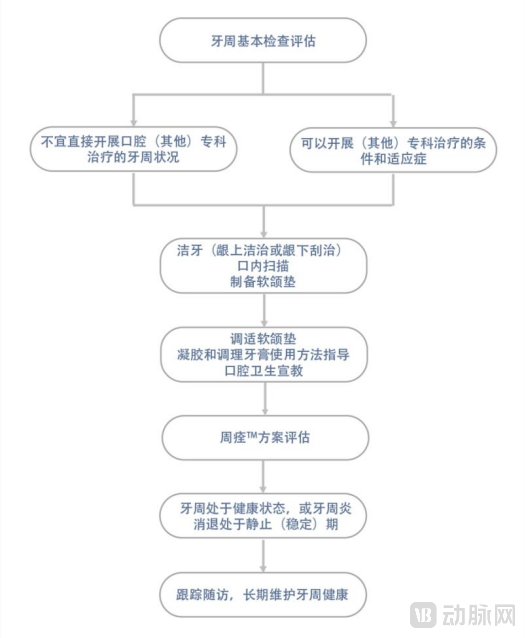
"Clinical Application Protocol of 'Shennong Dianfang' Periodontal Care Toothpaste (Image provided by Bailingda)"
From the perspective of product attributes, both “Zhouquan” Oral Bacteriostatic Gel and “Shennong Dianfang” Periodontal Care Toothpaste are secondary developments of the exclusive traditional Chinese medicine prescription “Guchi San” for periodontitis, and both feature formulations based on the “medicine and food homology” principle.
From the perspective of clinical manifestations,In 1996, the School of Stomatology at Peking University, in collaboration with the School of Stomatology at Tongji Medical University and the School of Medicine at Hubei Medical University, conducted relevant experiments and reached the following conclusion:“Guchi San” can effectively eliminate local inflammation in periodontal tissues, alleviate and resolve gingival swelling, pain, and associated symptoms.
By 2014, a report from the National Clinical Trial Base for Oral Medications indicated that after continuous use of “Shennong Dianfang” periodontal care toothpaste, gingival bleeding decreased by 20%. In terms of alleviating tooth sensitivity, “Shennong Dianfang” provided immediate pain relief, with a 100% efficacy rate.
According to the latest test report issued by an MA/CNAS-certified testing agency: After three minutes of use, the “Shennong Dianfang” periodontal care toothpaste achieved a 99.98% inhibition rate against Porphyromonas gingivalis; after 20 minutes of use, the “Zhouquan” oral antibacterial gel achieved an inhibition rate of over 99.9% against Porphyromonas gingivalis, Streptococcus mutans, and Fusobacterium nucleatum.
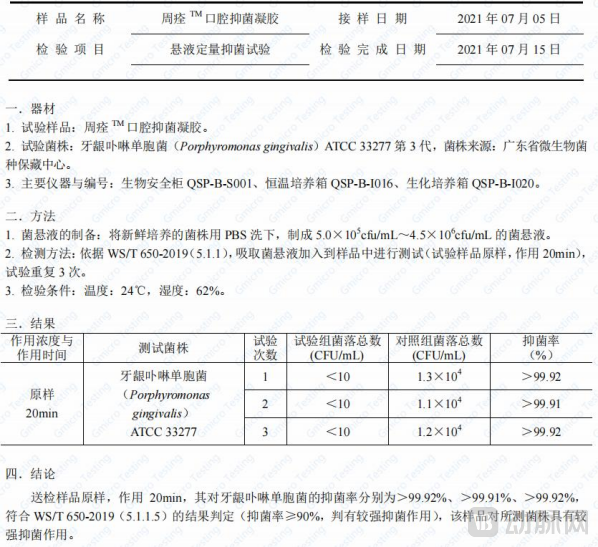
“Zhouquan” Gel Antibacterial Rate Test Report (Image provided by Bailingda)
Approval of innovative traditional Chinese medicine (TCM) drugs remains highly challenging, raising concerns among some industry stakeholders.
The product forms of “Shennong Dianfang” Periodontal Care Toothpaste and “Zhouquan” Gel reveal the dedication Bailingda has poured into their development.
According to Su Minhua, in order to better adapt to the new consumer market environment and improve patient compliance, the team conducted extensive field research, ranging from taxi drivers to white-collar executives, and from artists to military personnel. Ultimately, they determined on two product forms that are convenient to use and highly accessible to end consumers: “toothpaste” and “gel.”
“Currently, in clinical periodontal practice, over 90% of periodontal inflammation cases rely primarily on antibiotics for temporary adjunctive relief,” stated Su Minhua. He noted that against the backdrop of increasingly stringent global policies restricting antibiotic use, a traditional Chinese medicine (TCM) product that is highly effective, safe, free of side effects, and suitable for long-term use will be more readily embraced by both healthcare providers and patients.
“In the post-pandemic era, many dental clinics are undergoing transformation, gradually shifting from the current offline treatment-oriented model to a community-based oral health management model focused on prevention and early intervention,” said Su Minhua. Bailingda’s “Zhouquan” periodontal care program is rooted in the community, providing at-home periodontal care based on non-surgical treatments.
Specifically, this program involves three key stakeholders: community-based dental clinics, patients, and community periodontal disease prevention and control advocates.
Regarding the rationale for selecting community-based dental clinics as the implementation setting, Su Minhua stated that the decision was primarily driven by two considerations:
First, the “Zhouquan” protocol is a home-based periodontal care regimen based on non-surgical treatment.
“Periodontal diseases are primarily managed through two approaches: non-surgical and surgical treatments. Non-surgical therapy constitutes the fundamental treatment that every patient with periodontal disease must undergo. Surgical intervention is introduced only when periodontitis has progressed to a more advanced stage and non-surgical treatment alone cannot fully resolve the condition,” said Su Minhua.
Non-surgical treatment of periodontal diseases mainly includes plaque control, oral hygiene education, removal of pathogenic irritants such as plaque and calculus (supragingival scaling, subgingival scaling, etc.), antimicrobial therapy, and occlusal adjustment.
“From the perspective of plaque control targeting the etiologic agents of periodontal disease, every individual should undertake plaque control, with the first step being non-surgical treatment,” stated Wang Qintao, former Chairman of the Periodontology Committee of the Chinese Stomatological Association.Non-surgical treatments generally involve less trauma. Even in elderly patients or those with systemic diseases who cannot tolerate surgical intervention, non-surgical management remains a viable option. “The most skilled physicians are those who can treat diseases using non-surgical methods.”
“Currently, although capabilities vary, nearly every community-based dental clinic has the capacity to provide nonsurgical periodontal therapy,” said Su Minhua.
Second, the service radius of current dental clinics is typically within 5 kilometers, meaning that community residents remain their primary source of patient traffic.Furthermore, “in the current era of normalized epidemic prevention and control, reducing crowd gatherings and population mobility remains a primary measure for controlling the COVID-19 pandemic. The ‘Zhou Quan’ protocol adopts a community-based approach, enabling patients to maintain oral health at home, which aligns well with epidemic prevention requirements.”
In Bailingda’s “Zhou Quan” program, the role of community periodontal disease prevention and control promoter is perhaps its most distinctive feature.
What Is a Community Periodontal Disease Prevention and Control Promoter?
According to Su Minhua, under the “Zhou Quan” program, community periodontal disease prevention and control promoters hold a dual role: they serve both as product distributors within their communities and as oral health educators.
“Community periodontal disease prevention and control promoters can be individuals concerned about and passionate about oral health, or they can be community opinion leaders; they need to possess the ability to mobilize resources within the community,” introduced Su Minhua. This has inadvertently created job opportunities, allowing more people to share in the dividends of the rapidly growing oral care market.
ButMore importantly, the role of community periodontal disease prevention and control promoters can alleviate the market promotion pressure on oral diagnosis and treatment institutions, empower community oral healthcare providers through product advantages and distinctive solutions, and help them achieve profitable growth.
According to earlier reports by VCBeat, in 2020, due to the impact of the COVID-19 pandemic, approximately 30% of dental hospitals and clinics across China were struggling for survival, 40% were operating in a rather dismal state, and only 30% reported relatively strong profitability.
Behind the data lie issues such as high labor costs and high customer acquisition costs for dental clinics.
andThe “Zhou Quan” program can help dental clinics increase patient volume by leveraging the role of community periodontal disease prevention and control promoters.
“Community periodontal disease prevention and control promoters have an important role as community oral health educators, and these educational activities can essentially be viewed as a means of driving patient traffic to community dental clinics,” said Su Minhua. This approach provides quantifiable economic returns for physicians and community promoters engaged in science popularization and health education, thereby helping to alleviate the long-standing challenge in periodontology and preventive dentistry departments characterized by heavy workloads, low financial compensation, and suboptimal outcomes.
Furthermore,The “Zhou Quan” program not only simply drives patient traffic to dental clinics but also enhances the stickiness between community patients and dental practices through a series of services.
“In traditional periodontal diagnosis and treatment workflows, follow-up disease management after patients complete their treatment and leave the clinic may be neglected or yield suboptimal outcomes, but”The “Zhou Quan” protocol mandates physicians to conduct regular follow-ups with patients.,” said Su Minhua.
Specifically, after the completion of treatment, the physician will instruct the patient on the proper use of “Zhouquan” gel and “Shennong Dianfang” periodontal care toothpaste, guide the patient in performing correct oral hygiene practices, and follow up on their oral condition at specified intervals. The duration and frequency of follow-up are determined based on the patient’s specific clinical needs.
“In fact, clinics were not very enthusiastic about carrying out such work in the past, but now the follow-up process can also bring them tangible benefits, which motivates clinics to conduct patient follow-ups,” said Su Minhua. This process has also effectively enhanced patient loyalty to the clinics.
Regarding Bailingda’s future strategic layout, Su Minhua stated that, in terms of products, the company will continue to develop traditional Chinese medicine (TCM) periodontal care products and solutions tailored to different population groups. Given the association between periodontal diseases and numerous major systemic conditions, Bailingda will conduct research on the efficacy of its “Shennong Dianfang” formulation for additional clinical indications.