

Over 120 Innovative Medical Devices Certified, with 340+ Cumulative Approvals in 7.5 Years: Full List and Company Highlights
Not long ago, the National Medical Products Administration (NMPA) issued a notice announcing that the innovative product “Dental Implant Surgery Navigation and Positioning System,” manufactured by Yake Smart (Beijing) Technology Co., Ltd., had successfully received market approval. This makes it the 121st medical device to ultimately gain approval through the Special Examination and Approval Procedure for Innovative Medical Devices.
After several years of development, the Special Approval Procedure for Innovative Medical Devices has delivered a strong performance record. VCBeat (WeChat ID: Vcbeat) has also compiled statistics on innovative medical devices that have entered this approval procedure over the years (hereinafter referred to as “entered approval” for brevity, to distinguish from the final approval of registration certificates).
China's medical device industry started relatively late. Constrained by the industrial base, raw material quality, medical standards, and physicians' awareness of innovation at that time, no original or innovative medical device products were developed. Most early medical devices were imitations of foreign products.
Certainly, this phenomenon is quite common worldwide. As the saying goes, “Imitation is the first step toward creativity and the initial form of learning.” Imitation is one of the important methods by which humans learn and master skills. In the history of national development around the world, many powerful countries initially advanced through imitation, built upon it with innovation, and ultimately achieved surpassing their predecessors.
With the continuous advancement of technological and economic capabilities, China has begun to emerge across various industries, fostering independent innovation and even introducing products that lead the world. Particularly in the field of high-end medical devices, China has proposed the concept of “domestic substitution” in recent years.
This program is a key initiative launched by the National Medical Products Administration to foster innovative development in the medical device sector. It has played a positive role in encouraging research and innovation, promoting the adoption and application of new technologies, and driving the growth of the medical device industry. In addition to enhancing visibility and reputation, relevant authorities employ strategies such as early intervention, dedicated personnel assignment, and end-to-end guidance. Under these measures, priority review and approval are granted without lowering standards or streamlining procedural requirements, thereby significantly accelerating the approval process—a development of substantial significance for enterprises.
Of course, to enjoy the benefits of convenience, a product itself must meet a sufficiently high standard. The pilot innovation program clearly stipulates that medical devices must satisfy three criteria—patentability, performance, and finalization—to be eligible for the Special Approval Procedure for Innovative Medical Devices. In particular, regarding performance, the product’s core working principle or mechanism of action must be a domestic first, its technology must be at an internationally leading level, and it must demonstrate fundamental improvements in performance or safety compared with similar products, along with significant clinical application value.
In 2018, influenced by the international environment, the development of high-tech industries in China was affected. As one of the ten key priority areas outlined in "Made in China 2025," China's high-performance medical device industry was also impacted. According to "Made in China 2025," the high-performance medical device industry includes high-performance diagnostic and therapeutic equipment such as imaging devices and medical robots; high-value medical consumables such as fully biodegradable vascular stents; mobile health products such as wearable devices and remote diagnosis and treatment solutions; and new technologies such as bio-3D printing and induced pluripotent stem cells.
Affected by this and in light of the actual experience gained during several years of trial implementation, the National Medical Products Administration (NMPA) officially released the updated “Special Examination Procedures for Innovative Medical Devices,” which came into effect on December 1, 2018, replacing the previous trial procedures for innovative devices. Compared with the earlier version, the new regulations impose stricter requirements on the “innovativeness” of innovative medical devices, specifying precise timelines for patents and further requiring companies to substantiate the “innovative” nature of their products through evaluation by patent agencies.
The promulgation of new regulations, coupled with resource support, has led to an explosive growth in China’s innovative medical devices over the past one to two years. According to VCBeat’s insights from industry professionals, there are three main reasons for the rapid growth of innovative medical devices in recent years.
First, the innovation environment for medical devices is better than ever. In recent years, China has provided stronger policy support to foster innovation in the medical device sector, attracting greater concentrations of talent and capital; meanwhile, the global supply chain system has become more robust compared to the past.
Second, the rise in intrinsic demand. As living standards improve, people are both willing and able to choose life-critical medical devices, while also pursuing higher-quality healthcare. This substantial intrinsic demand has driven the rapid development of innovation in the medical device industry.
Currently, China’s medical device industry still has significant room for growth. Compared to the 1:1 pharmaceutical-to-device ratio in the U.S. market, China’s ratio stands as high as 3:1. As a result, the growth rate of China’s medical device market over the past few years has been more than double that of the pharmaceutical market. Therefore, innovative medical devices in China hold substantial potential for future growth.
Third, capital markets have shown greater recognition of the medical device sector compared to the past. With smooth IPO channels, the industry as a whole is experiencing healthy development. Increasingly, capital is focusing on innovation in medical devices, which further promotes their advancement. The continuous emergence of innovations has attracted more investment opportunities, initially establishing a positive feedback loop.
According to statistics from VCBeat, as of September 23, 2021, a total of 346 medical devices had entered the approval process for innovative medical devices. In 2017, 64 innovative medical devices entered the approval process, marking the peak to date.
It should be noted that, in accordance with medical device approval regulations, certain innovative medical devices that ultimately receive certification have been split into two separate certificates. In other words, a single innovative medical device or approval batch may correspond to two NMPA certificates. For the purpose of statistical consistency, such cases will uniformly be counted as two approved devices.
2019 marked the first year of implementation for the revised regulations, during which the number of approved innovative medical devices declined compared to the previous year. This decrease was evidently attributable to the stricter requirements imposed by the new regulations. Indeed, this outcome aligned with the original intent of the regulatory updates: to encourage enterprises to invest greater effort in innovation through more rigorous standards.
In the past two years, the number of innovative medical devices entering the approval process has begun to grow rapidly. In the first half of 2020, only 18 devices entered the innovative medical device approval process, and the pace was not significantly affected by the pandemic. However, in the second half of the year, the National Medical Products Administration (NMPA) completed the approval of as many as 35 innovative medical devices, approaching the total number approved throughout all of 2019.
In 2021, this growth trend continued, with the approval of 42 innovative medical devices completed by September. Based on the approval volume for the first three quarters, even in the worst-case scenario, the total number of approvals for the full year of 2021 would at least match that of the previous year.
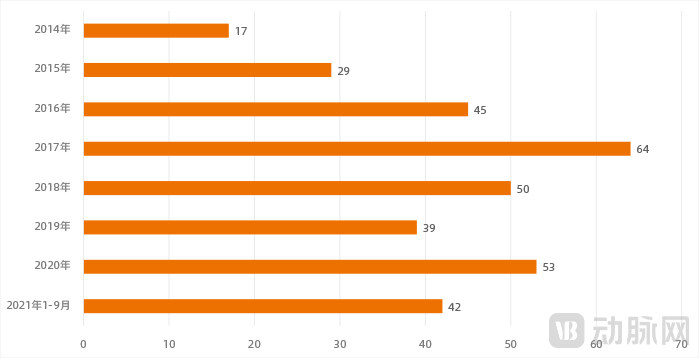
Approval Status by Year
Classified by the region where enterprises are located, the top five regions with the highest number of innovative medical devices approved through the special review procedure over the years are Beijing (66), Shanghai (58), Guangdong (56), Jiangsu (46), and Zhejiang (26). This clearly highlights the geographic concentration of China’s high-end medical device industry. Notably, the Yangtze River Delta region alone accounts for a total of 130 approved devices, representing 37.6% of the cumulative approvals over the years.
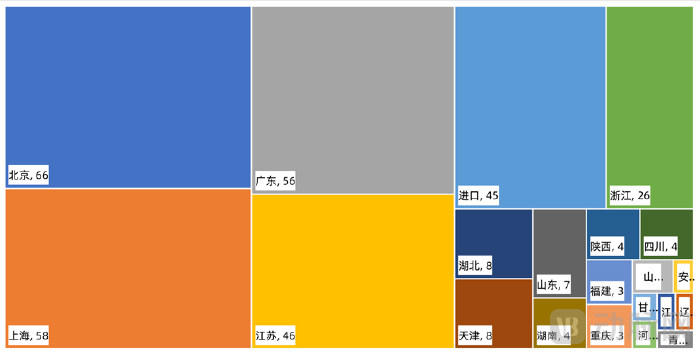
Approval Status by Region Over the Years
For comparison, the number of approved imported innovative medical devices also reached 45, placing them among the top five. The approval of imported innovative medical devices indicates, on one hand, that they possess unique technological advantages for which there are currently no domestic alternatives; on the other hand, since the ultimate goal of the innovative medical device approval process is “domestic substitution,” there remains significant room for Chinese-made alternatives in many niche segments within these technological fields.
Following the release of the stricter Special Review Procedures for Innovative Medical Devices at the end of 2018, we also compiled statistics on the regional distribution of approvals under the new regulations from 2019 to the present. According to the data, the top five regions entering the innovative medical device review process between 2019 and 2021 were Guangdong (24), Shanghai (23), Beijing (22), Jiangsu (15), and Zhejiang (12). For comparison, a total of 22 imported innovative medical devices were approved during this period.
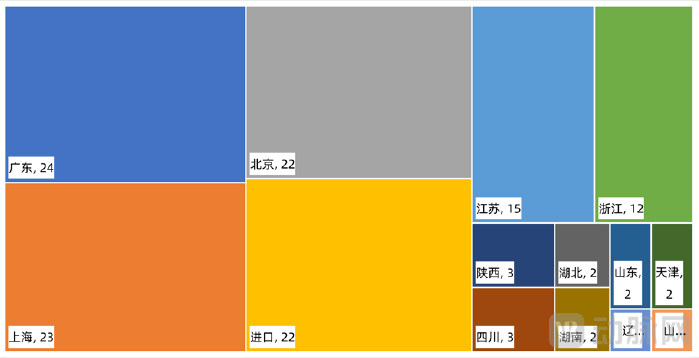
2019–PresentApproval Status by Region
Compared with the cumulative rankings, there are slight differences in regional distribution following the implementation of the new regulations. The Pearl River Delta, led by Guangdong, and the Yangtze River Delta, headed by Jiangsu, Zhejiang, and Shanghai, demonstrate strong development momentum, highlighting the robust innovation capabilities of these two regions. It is also worth noting that Beijing’s advantage has become less pronounced after the introduction of the new regulations, indicating a gradual decline in the relative benefits previously associated with its proximity to regulatory authorities.
Among the top ten companies ranked by the number of approved innovative medical devices over the years, LifeTech Scientific (Shenzhen) Co., Ltd. has demonstrated outstanding performance, taking a clear lead with 10 approvals. Its innovative medical devices are primarily concentrated in the cardiovascular field.
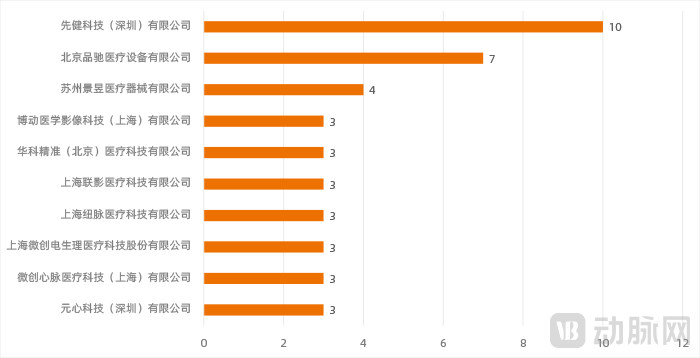
Top 10 Companies by Number of Product Approvals Over the Years
Founded in 1999, this Shenzhen-based enterprise is a global leading supplier of minimally invasive interventional medical devices for the treatment of cardiovascular, cerebrovascular, and peripheral vascular diseases. Currently, it holds a leading position in the global market for congenital heart disease (CHD) occluders and is the world’s second-largest supplier of CHD occluders.
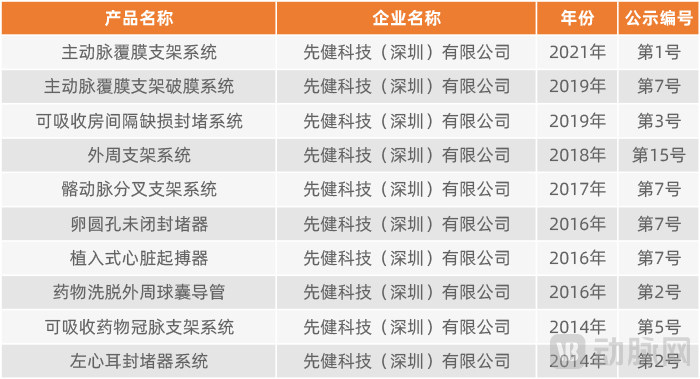
Status of Products Submitted for Approval by Lifetech Scientific (Shenzhen) Co., Ltd.
Beijing PINS Medical Equipment Co., Ltd. and Suzhou Jingyu Medical Instrument Co., Ltd. were the companies with the second-highest number of listed products.
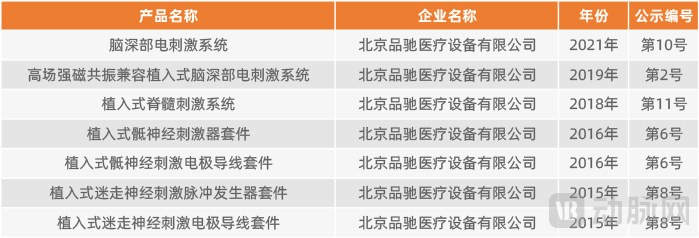
Status of Products Submitted for Approval by Beijing PINS Medical Equipment Co., Ltd.

Status of Products Under Approval by Suzhou Jingyu Medical Device Co., Ltd.
It is worth noting that large medical device groups have extensive portfolios, often with multiple subsidiaries holding approvals. A typical example is MicroPort Scientific Corporation, which has secured approvals for 17 innovative medical devices through its nine subsidiaries. Based on this calculation method, MicroPort Scientific Corporation should be considered the enterprise with the highest number of approved innovative medical devices to date.
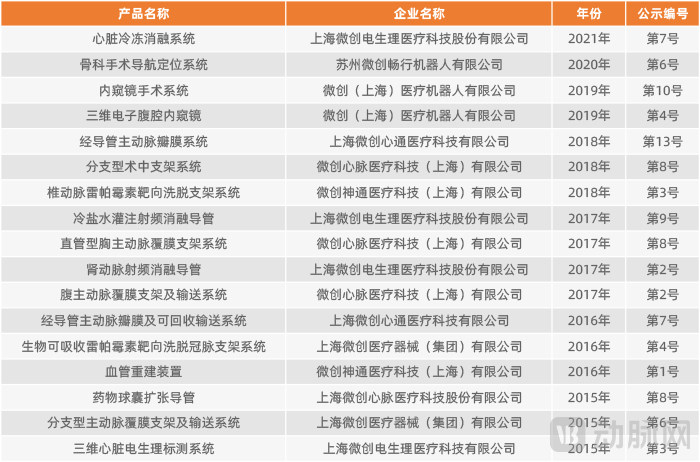
MicroPort Medical's Historical Approval Status
LifeTech Scientific also has three subsidiaries with a total of 14 innovative medical devices approved.
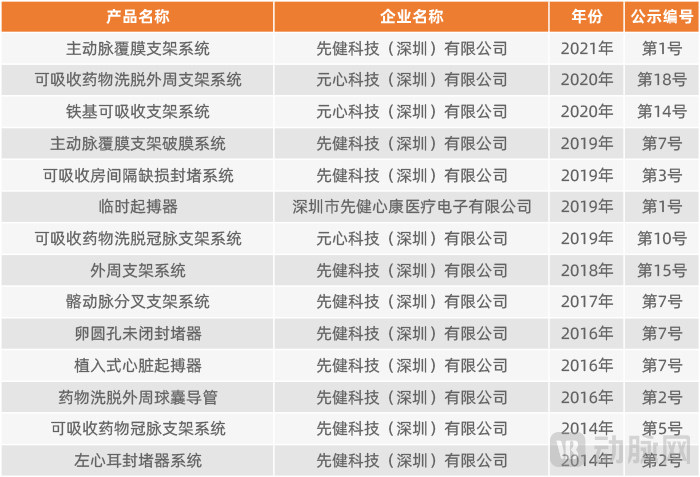
Historical Approval Status of LifeTech Scientific
After a reorganized statistical analysis, the top five companies with approved innovative medical devices are MicroPort Scientific Corporation, Lifetech Scientific Corporation, PINS Medical Co., Ltd., United Imaging Healthcare, and Jingyu Medical.
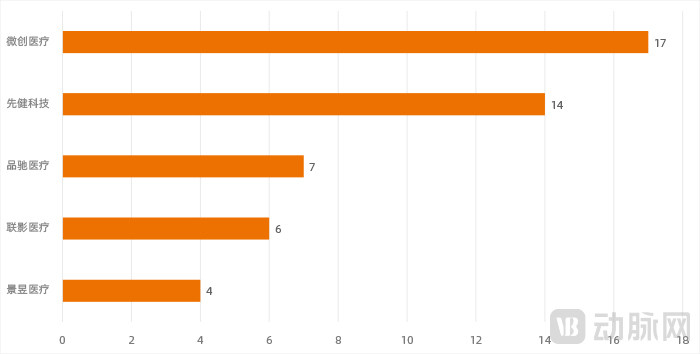
Top 5 Groups by Product Approval Rankings Over the Years
Due to the inherent challenges in identifying affiliated enterprises and the vast total number of companies, our statistics may contain omissions; corrections are welcome.
Although more than 300 medical devices have entered the approval process for innovative medical devices over the years, the number actually approved is far lower. On one hand, entering this special approval pathway does not mean that the lengthy clinical trial process can be reduced without limit; on the other hand, some products fail to gain approval even after many years due to an inability to demonstrate their innovativeness.
According to VCBeat statistics, as of September 23, 2021, a total of 121 innovative medical devices had ultimately obtained NMPA medical device registration certificates, representing an approval rate of 35%.
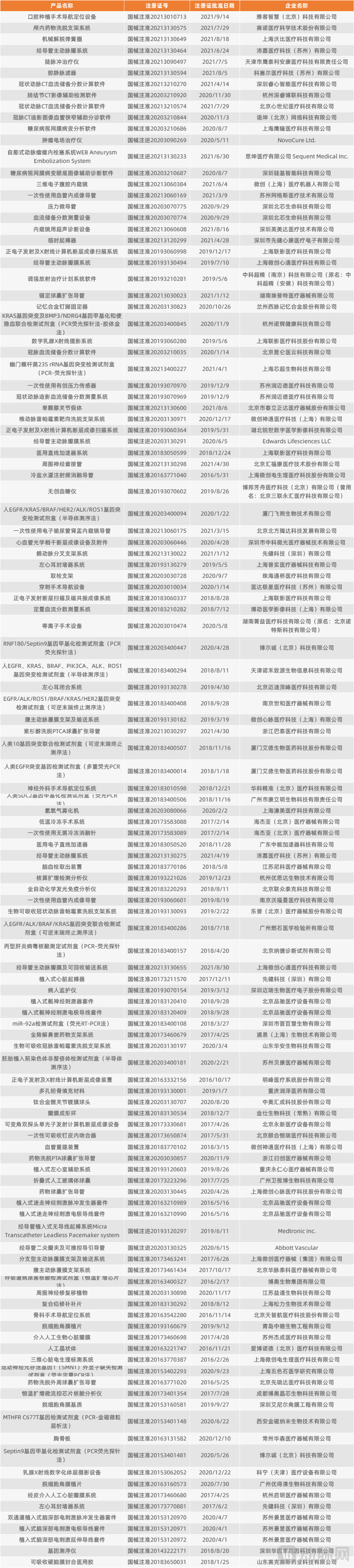
Medical Devices Approved Through the Special Review Procedure for Innovative Medical Devices Over the YearsProducts with NMPA Registration Certificates
Due to the extended time frame, early-issued registration certificates for innovative medical devices have gradually expired and require renewal or replacement with new certificates. It is also normal that more recent innovative medical devices have not yet obtained certification. Therefore, the timing of certificate issuance holds no practical value and was not analyzed.
In terms of the regional distribution of final approvals for innovative medical devices, Beijing ranks first, with a total of 31 innovative medical devices ultimately obtaining NMPA registration certificates. Shanghai (23), Guangdong (20), Jiangsu (18), and Zhejiang (7) rank second to fifth, respectively, mirroring the overall landscape of innovative medical device approvals.
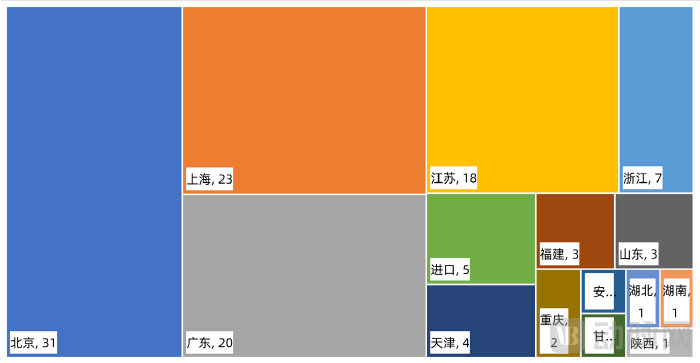
Medical Devices Approved Through the Special Approval Procedure for Innovative Medical Devices Over the YearsGeographic Distribution of NMPA Registration Certificates
In terms of the final certification rate, Beijing holds a significant advantage, with a rate as high as 47%. This means that nearly half of Beijing’s innovative medical devices ultimately achieve registration. Shanghai (39.7%), Jiangsu (39.1%), Guangdong (35.7%), and Zhejiang (26.9%) rank second through fifth, respectively.
Jiangsu Province is particularly noteworthy. In recent years, Jiangsu has implemented a range of flexible policies for medical device registration and related services to encourage the development of the medical device industry, yielding significant promotional effects. These measures are also worthy of reference by other provinces and municipalities.
The time required to progress from entry into the innovative medical device approval pathway to final certification varies depending on the product. Innovative medical devices involving cardiovascular and surgical procedures generally require three years, with some cases extending to as long as five years. For instance, Shanghai MicroPort CardioFlow’s transcatheter aortic valve and retrievable delivery system was approved as an innovative medical device as early as 2016 but only recently obtained its Class III registration certificate from the National Medical Products Administration (NMPA).
Relatively speaking, innovative medical devices such as IVD (In Vitro Diagnostics) and AI-powered solutions often require only about two years to obtain regulatory approval. Given the urgency of clinical application, there are even cases where devices entered the Innovative Medical Device Review Program and received approval within the same year. For instance, Hangzhou Deepwise’s CT-based pulmonary nodule detection system was approved into the Innovative Medical Device Review Program in 2020 and obtained its NMPA Class III certification by late November 2020, a remarkably swift process.
This also demonstrates that the NMPA adopts differentiated strategies based on product risk during the approval process, maintaining a more cautious stance toward higher-risk interventional devices.
In terms of companies obtaining certificates, MicroPort Medical secured a total of 10 registration certificates, far surpassing other enterprises. It is particularly noteworthy that MicroPort maintained a high certification rate of 58.9%, even with as many as 17 innovative medical devices approved.
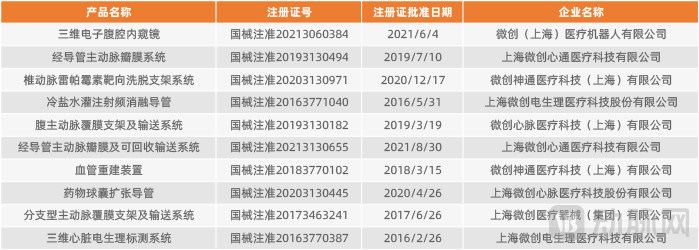
MicroPort Medical Passes the Special Approval Procedure for Innovative Medical DevicesNMPA Registration Certificate Status
LifeTech Scientific, United Imaging Healthcare, and PINS Medical each obtained four NMPA registration certificates, tying for second place.

United Imaging Healthcare Granted Special Approval for Innovative Medical DevicesNMPA Registration Certificate Status

PINS Medical Passes the Special Approval Procedure for Innovative Medical DevicesNMPA Registration Certificate Status
After years of sustained investment in research and development, many industries in China have gradually moved beyond the phase of imitating foreign products, entering a stage of independent and original innovation. In numerous fields, they have even achieved world-leading positions, giving rise to companies such as Huawei and DJI that wield absolute influence within their respective industries.
Against this backdrop, the state’s emphasis on innovative medical devices has continued to intensify. Guided by current national strategies and overall development trends, China’s medical device R&D has entered a new stage in recent years, with a steady emergence of original medical devices and a favorable momentum of growth.
In the future, innovative medical devices must adhere to five core principles: being guided by clinical needs and user experience; prioritizing simplicity in design and ease of use; integrating medical principles with engineering technology as a starting point; focusing on minimally invasive techniques and repeatable interventions; and pursuing the fusion of science and art. We believe that, with the continuous efforts of industry, academia, and research sectors, China’s medical device industry will eventually stand at the pinnacle of the global stage.