

Industry Experts Collaborate to Innovate and Connect the Upstream and Downstream of the iPSC Value Chain
iPSCs represent a revolutionary discovery significant enough to rewrite textbooks. Possessing functions similar to those of embryonic stem cells, they can differentiate into virtually any cell type in vivo under specific induction conditions. In contrast to the side effects and prolonged treatment courses associated with prescription drugs, regenerative medicine therapies such as iPSC-derived cell therapy hold promise for achieving true functional cures, fundamentally transforming the current therapeutic approaches and outcomes for chronic diseases and major refractory conditions.
However, most induced pluripotent stem cell (iPSC) initiatives in China remain at the research stage, with their chemistry, manufacturing, and controls (CMC) and production processes still needing to be established or refined. No quality standards or clinical application submission guidelines for iPSC-derived differentiated products have yet been formulated in China, and a relatively mature industrial chain for iPSCs has not yet taken shape. In the future, the development of the iPSC industry will require collaborative efforts from enterprises, hospitals, and regulatory authorities to jointly drive progress.
Recently, Peking University Medical Innovation Valley and VCBeat/VCBeat New Medicine jointly hosted an offline salon themed “The Leap in the iPSC Innovation Chain,” aiming to bring together experts from various fields to discuss current innovations and challenges in the induced pluripotent stem cell (iPSC) sector within the industry. This Beijing session gathered numerous industry professionals from drug development, technology, and material support sectors, providing a comprehensive analysis of innovation and transformation across the iPSC therapeutic industry chain through discussions on cutting-edge technologies, latest project advancements, and future development trends.
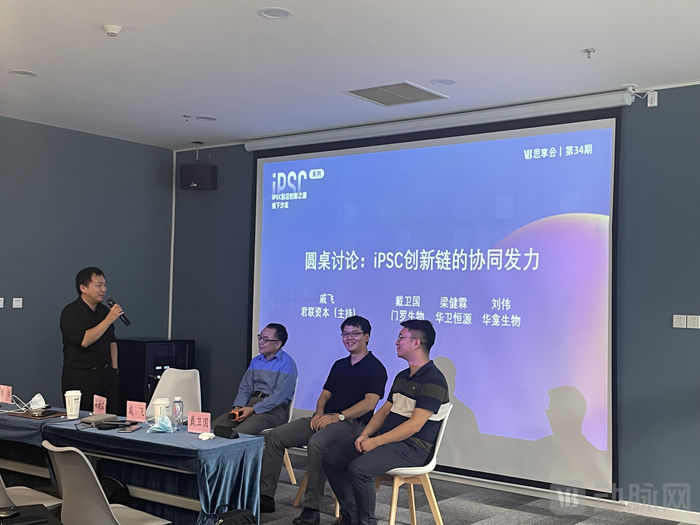
The guests attending this special session included Dai Weiguo, CEO of Monro Bio; Liang Jianlin, CEO of Hua Wei Heng Yuan; Liu Wei, Co-founder & CEO of Hua Kan Bio; Qi Fei, Executive Director of Legend Capital; as well as numerous industry and research professionals.Below are excerpts from the “Roundtable Discussion on Synergistic Efforts Across the iPSC Innovation Chain” held in Beijing:
Stereotypes are common in many areas, and the biopharmaceutical sector is no exception. Many people habitually assume that innovative biopharmaceutical companies are mostly concentrated in the Yangtze River Delta region, but in reality, leveraging the university resources in Beijing, the city has also gathered many pharmaceutical innovation enterprises, accelerate the translation of cutting-edge academic research outcomes into industrial applications, thereby fostering comprehensive and robust growth across the entire biopharmaceutical industry value chain.
Downstream: iPSC-derived cell products can be produced at scale with controlled quality
Among the most cutting-edge hot topics in biomedicine recently, iPSCs undoubtedly hold a prominent place. Since early last year, with the release of Fate Therapeutics’ clinical data, the stem cell industry has ushered in a new wave of development.
In this regard,Dr. Dai Weiguo, CEO of Menro Bio, stated:“iPSC-CAR-NK cell therapy offers three potential advantages: off-the-shelf availability, a low risk of cytokine release syndrome, and promising application prospects in the field of solid tumors. However, the long-term safety and durability of these products require further validation through clinical outcomes. In particular, strategies to prevent or reduce recognition and elimination by host immune cells, thereby significantly enhancing the durability of therapeutic efficacy, warrant further investigation.”
“Monroe Bio applies gene editing alongside other immunosuppressive regimens, with the aim ofEffectively controlling immune rejection reactions, such as graft-versus-host disease (GVHD) and host-versus-graft disease (HVGD), that may be triggered by allogeneic cell infusion can thereby enhance safety and long-term efficacy. Furthermore, from an industry perspective, the application of iPSC-derived cell therapies faces greater challenges in process scalability and quality control, even while ensuring technological innovation.”
In addition to the rapid recent advancements in iPSC-derived cell therapies, other areas of regenerative medicine are also evolving at a remarkable pace. For instance, HuaWei Hengyuan is dedicated to developing innovative solutions for immune rejection and male infertility from a regenerative medicine perspective, holding multiple invention patents for targeted differentiation technologies in regenerative medicine. Furthermore, HuaWei Hengyuan has achieved the world’s first large-scale production of human immune-privileged Sertoli cells.
In this regard,Dr. Liang Jianlin, CEO of Hua Wei Heng Yuan, stated“Theoretically, Sertoli cells themselves lack proliferative capacity, thus essentially precluding industrial-scale production. However, we have currently achieved large-scale preparation of Sertoli cells through in vitro induction techniques, and patents have been filed for our achievements. Initially, we induced the differentiation of embryonic stem (ES) cells into Sertoli cells. However, considering factors such as cost, induced pluripotent stem cells (iPSCs), which share similar functional characteristics with ES cells, may facilitate industrialization more effectively.”
“Furthermore, the indications we selected also differ slightly.In the field of cell therapy, the industry’s focus has largely been on developing treatments for hematologic and solid tumors. In contrast, we are targeting conditions such as male azoospermia, cell transplantation therapies for diabetes, and autoimmune diseases. For instance, current pharmacological treatments for rheumatoid arthritis inevitably disrupt the systemic immune system. However, by leveraging Sertoli cells, we can achieve localized immune privilege with fewer side effects, offering distinct advantages over conventional drugs. In cell transplantation therapy for diabetes, we employ an immune privilege mechanism to ensure the long-term survival and functional efficacy of transplanted cells.
Upstream: Original Process Innovation, Breaking Foreign Monopolies
Whether it involves iPSCs, MSCs, or other cell therapies, we require upstream suppliers of source materials and equipment.
As a cell therapy manufacturing and pharmaceutical developer, Dr. Liu Wei, Co-founder & CEO of Huakan Biotech, stated:“HuaKan Biotech is an innovative company specializing in the development of scalable cell manufacturing processes and products,We can provide industrial-scale culture and preparation solutions based on 3D cell microcarrier technology for companies engaged in the research and development of cell-based therapeutics.We established our team around 2010. At that time, cell therapy in China was still in the early stages of research, and it remained uncertain whether cells could be developed into therapeutic drugs. Therefore, we decided to first develop a related drug delivery vector.
“By 2014, although no cell therapy products had yet been launched on the market, we had already recognized the significant potential of cells in areas such as viral production and drug screening. Our strategy gradually shifted toward developing original, innovative processes to break foreign monopolies, moving our focus from addressing in vivo delivery challenges to solving ex vivo culture issues. Over the following three years, we successfully addressed a series of challenges related to the scalability, cost, stability, and consistency of ex vivo cell culture.”
“In 2018, the company was officially founded by a scientific research team from Tsinghua University, with its core technology derived from the commercialization of technological achievements at Tsinghua University.”Among these, our 3D FloTrix cell microcarrier sheet series represents the world’s first integrated process solution for industrial-scale culture and expansion of cell-based therapies, as well as a globally innovative injectable pharmaceutical excipient product capable of delivering stem cells."Our company has achieved GMP-compliant mass production and stable sales, securing product orders worth tens of millions of yuan. These advancements stem from our unwavering original aspiration: the pioneering and innovation of proprietary manufacturing processes."
Transitioning from upstream R&D suppliers of materials and equipment to downstream product end-users. Dr. Liang Jianlin stated, “We place significant emphasis on their delivery functionality, as it can address certain safety and stability concerns. Additionally, we look forward to their development of automated culture solutions and equipment for induced pluripotent stem cells (iPSCs) or embryonic stem cells (ESCs).”
Dr. Dai Weiguo stated, “There are two relatively important aspects that we need to consider.”First, communicate with regulatory authorities to ultimately obtain approval., because in the process of industrializing the substitution of upstream materials and equipment with domestically produced alternatives, once we choose to use new domestic products, changes are unlikely to be made later due to the complexity of process modifications. Therefore, the company must engage with regulators early on regarding the application of these innovative materials or equipment, obtain regulatory feedback as soon as possible, and prepare for final approval.
“Second, with development, these equipment and material suppliers should also continuously optimize.”, thereby continuously solving problems and delivering value for downstream cell therapy R&D.Innovation must center on value creation, and communication with regulatory authorities is critical, as all pharmaceutical products require regulatory approval.。”
The entire iPSC field, and indeed the broader cell therapy industry, represents a new frontier, where enterprises inevitably encounter challenges and difficulties in the course of innovation.
Cell Therapy Development: Upstream Process Innovation Drives Downstream Industrialization
In response, Dr. Liu Wei stated: “For upstream enterprises, innovation in original processes is critical to the industrialization of downstream cell therapy products.In the field of cell therapy development, the proprietary upstream manufacturing processes will have a series of significant impacts on downstream cell therapy products, including cost, consistency, safety, and vulnerability to foreign monopolies. Only by adhering to original innovation in upstream processes can we break foreign monopolies, gradually expand our global footprint, and realize the vision of “in China for global.”
“Based on this, we have developed the 3D FloTrix cell microcarrier series. Currently, we have signed strategic cooperation agreements with multiple companies holding Investigational New Drug (IND) approvals for cell therapies and those filing new drug applications. Among them, several cell therapy developers are already leveraging our ‘intelligent manufacturing’ process for large-scale 3D cell production to conduct verification testing at the National Institutes for Food and Drug Control (NIFDC) and submit IND applications, jointly promoting the industrialization of novel cell therapy drugs.”
The downstream industrial innovation chain involves multiple cross-cutting regulations
Dr. Liang Jianlin stated, “Although innovation is particularly supported across all industries,In the actual process of industrialization, overly disruptive technological innovations can, to some extent, become an obstacle. Due to the frequent lack of referenceable experience and cases both domestically and internationally, more difficulties and challenges may need to be overcome during practical implementation.For instance, since our applied technologies encompass both stem cell technology and gene editing technology, we must comply not only with the laws and regulations governing stem cell technology but also with those pertaining to gene editing.
“Due to the lack of referenceable examples, we consulted numerous experts during the initial process design, integrating multidisciplinary insights spanning cell sourcing, cell engineering, delivery vectors, and subsequent process validation. Although the ‘Technical Guidelines for Pharmaceutical Research and Evaluation of Human-Derived Stem Cell Products (Draft for Comments),’ released this August, is merely a guidance document, it finally provides a regulatory framework for innovative enterprises like ours to follow.”
Dr. Dai Weiguo added, “In fact, most companies are willing to pursue original innovation and develop First-in-Class therapies. At the same time, we also observe that many enterprises prefer to engage in innovations that already have established benchmarks or standards.Because, in theory, innovation carries the risk of failure, these companies all take cost considerations into account.Secondly, when everyone is at the forefront of innovation, team stability and execution capability are particularly important.Finally, more scientifically grounded regulatory policies are needed, along with further reforms in regulatory frameworks to guide and support the novel therapeutic products and approaches that have emerged in recent years, such as iPSC-derived cell therapy products.
“Whether in terms of the innovation environment, team capabilities, or regulatory policies, although further efforts are needed to achieve more truly pioneering breakthroughs in China, a look back at the past five or ten years reveals significant improvements in the current landscape. It can be said that now is the best time for pharmaceutical innovation. As the pharmaceutical innovation ecosystem continues to strengthen and mature, the pharmaceutical industry will sustain its innovation and development.”
From the perspective of upstream materials, the vast majority of raw materials and equipment in China's traditional healthcare industry are monopolized by foreign companies.However, since the outbreak of the pandemic, many enterprises have recognized the importance of domestic substitution.In the entirely new field of cell therapy, domestic production is more important from a long-term development perspective. Even if China achieves leadership in just one extremely minute aspect, it could potentially resolve critical bottlenecks imposed by imported products.
From the perspective of downstream cell therapy products, off-the-shelf allogeneic cell therapy products represent one of the key trends in the future development of cell therapy. Current personalized therapies suffer from long manufacturing lead times and high product costs, making mass production unfeasible. Immune rejection remains a significant challenge for off-the-shelf allogeneic products., different companies have chosen different approaches to address this issue, such as altering the immunogenicity of cells by knocking out certain genes. Although these genes appear to be non-essential in humans based on current understanding, their potential future utility remains unknown. Therefore, establishing a super-donor bank may be the most feasible strategy for applying universal, off-the-shelf cell therapy products.
Overall, innovations in mechanisms and targets, upstream supply chain advancements, and even minor innovations across the entire industry have all contributed to driving industrial development. It is often said that the 21st century is the era of life sciences, and indeed, biomedical innovation enterprises are flourishing everywhere. Looking ahead, multi-party coordination across the entire innovation value chain is essential to synergize efforts and promote industrial development more efficiently.