

Gu Yitang Achieves Hundreds of Millions in Revenue and Profitability Through Digitalized TCM Services
The internetization and digitalization of traditional Chinese medicine are increasingly becoming a trend.
In December 2017, the National Administration of Traditional Chinese Medicine issued the “Guiding Opinions on Promoting the Integrated Development of TCM Health Services and the Internet,” outlining China’s development path for “Internet + Traditional Chinese Medicine” by deepening the integration of TCM medical services with the internet and developing online TCM wellness and healthcare services.
The outbreak has brought greater visibility to the potential of Traditional Chinese Medicine (TCM). Recently, whether it was Gushengtang, a TCM chain provider, filing its prospectus with the Hong Kong Stock Exchange in June, or Alibaba Health announcing in August its partnership with Xiaolu Zhongyi to further expand its TCM footprint, these developments have sent a clear signal to the outside world: TCM is increasingly moving from the background to the forefront.
As a traditional Chinese medicine (TCM) enterprise in the internet healthcare sector, Gu Yitang, founded in 2014, is an early entrant to the industry. As its peers gradually move toward initial public offerings (IPOs), how is it exploring the internet-based and digital transformation of TCM, and how is it building its own business model?
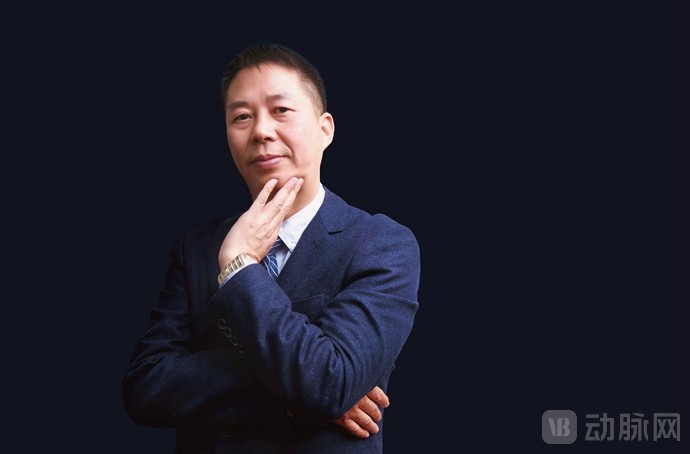
Yang Jichang, Founder of Guyitang
We interviewed Yang Jichang, founder of Guyitang, to hear him share the story of Guyitang and his vision for its future.
Driven by a Passion for Traditional Chinese Medicine: Building “Internet + TCM” Services
During the interview, Yang Jichang mentioned the word “complex” more than once. His deep-seated attachment to Traditional Chinese Medicine (TCM) marked the beginning of his commitment to the field and was also the reason why Guyitang persisted for several years despite operating at a loss.
His deep-seated affinity for Traditional Chinese Medicine (TCM) can be traced back to his childhood. Yang Jichang told VCBeat that his mother was a folk herbalist, and neighbors would frequently seek her medical advice and treatment when they fell ill. Her expertise in moxibustion left an indelible impression on his childhood.
“Growing up in a family environment where I was constantly exposed to Traditional Chinese Medicine (TCM), and witnessing the remarkable efficacy of herbal remedies, I developed a strong aspiration for TCM from an early age. I resolved to promote greater public understanding and adoption of TCM.”
However, things did not go as planned. Initially, Yang Jichang embarked on a career path that had little to do with Traditional Chinese Medicine (TCM). After leaving a state-owned enterprise, he ventured into entrepreneurship in the early 1990s, engaging in domestic and international trade across various regions of Guangdong and Zhejiang provinces. By 2014, having achieved modest success in his business endeavors, Yang Jichang finally found the opportunity to reflect on his life’s direction. He resolutely chose to devote himself to the field of TCM, which he had long admired. This decision was driven not only by his lifelong passion for TCM but also by an experience he had two years earlier.
In 2012, Yang Jichang had to undergo Western medical treatment involving the surgical removal of partial tissue due to throat pain. However, the surgery failed to alleviate his symptoms. He recognized that many patients worldwide suffer similarly from such debilitating conditions. After achieving recovery through Traditional Chinese Medicine (TCM) conditioning and rehabilitation, Yang Jichang became even more convinced of the correctness of his decision to dedicate himself to the field of TCM.
Traditional Chinese Medicine (TCM) has long emphasized the importance of renowned, experienced TCM practitioners and authentic, geo-specific medicinal herbs. However, even with their widespread reputation, these practitioners are often limited by the geographic reach of their offline clinics and dispensaries, resulting in a relatively small patient base and significant inconvenience for those seeking care from other regions. In response, Guyitang initially planned to leverage the “Internet+” model to expand the coverage of TCM services, establishing an integrated online-offline service system. This approach aims to enhance the service capacity of renowned TCM experts while better serving a broader patient population.
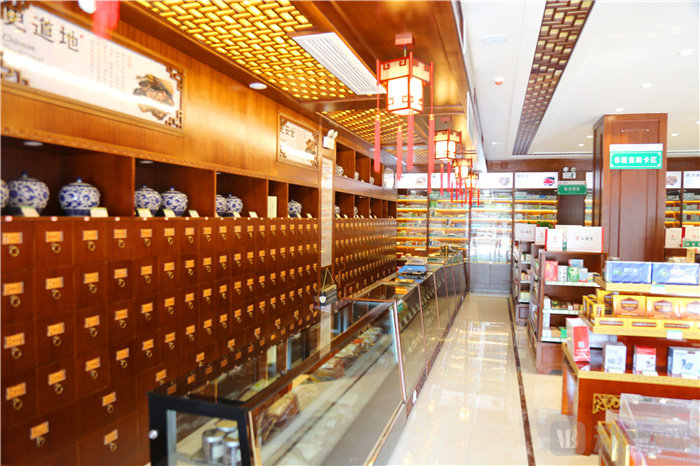
Gu Yitang Traditional Chinese Medicine Clinic
However, in 2014, the timing was not yet ripe. With policy support for the development of internet hospitals, Guyitang successfully obtained its first internet hospital license in Ningxia in April 2019. Its earlier strategic layout in the field of traditional Chinese medicine (TCM) was then able to expand rapidly through online channels. In fact, the entrepreneurial journey was far from smooth; Yang Jichang nearly exhausted all the wealth he had accumulated from his previous business ventures. Nevertheless, he stated in an interview, “At that time, I felt more regret for the plight of traditional Chinese medicine, believing that we should not leave it behind. Therefore, I did not pay much attention to financial matters.”
2019 marked a turning point for Guyitang. Yang Jichang pointed out: “First, our traditional Chinese medicine (TCM) health management system has become fundamentally standardized. Second, we have officially embarked on the path of developing chain pharmacies and chain TCM clinics. Third, our smart TCM clinics have transitioned from concept to practical implementation. Fourth, as one of the first pioneers in Hunan Province, our internet hospital has officially obtained its operating license, and the majority of our systems are independently developed, demonstrating considerable R&D capabilities. Fifth, many of our self-developed health products have achieved strong market performance, and we have secured numerous patents and regulatory approvals.”
The turning point yielded tangible results: in 2019, Guyitang achieved annual revenue in the hundreds of millions and ultimately turned a profit. Further positive developments followed. In September 2021, after securing its first internet hospital license in Ningxia, Guyitang obtained its second such license in Hunan Province, further strengthening its commitment to the field of online traditional Chinese medicine (TCM).
From Disease Treatment to Health Management: How Guyitang Has Evolved
Yang Jichang stated,Gu Yitang has traversed a path from pharmacy to medicine, from specialty diseases to general practice, and from disease treatment to health management.
Initially, Gu Yitang focused its attention on prescriptions.Since its establishment in 2014, Guyitang’s team has traveled extensively across Hunan Province, collecting nearly five to six hundred folk herbal prescriptions. These prescriptions were rigorously evaluated by professional research institutes, and only those proven effective through scientific research were selected. To better leverage these formulations, Guyitang entered into a strategic partnership with the Hunan Academy of Traditional Chinese Medicine.Appointed authoritative experts, including Peng Yanmei, Director of the Preparation Room at the Hunan Academy of Traditional Chinese Medicine, as technical consultants., has built a professional team to address R&D challenges. The institute has developed multiple patented in-house hospital preparations and products based on the concept of "medicine and food having the same origin." It is reported thatTo date, Gu Yitang has independently developed nearly 113 products based on the concept of "medicine and food homology," obtained approval for 12 in-house hospital preparations, held 30 software copyrights, and filed 37 product patent applications.
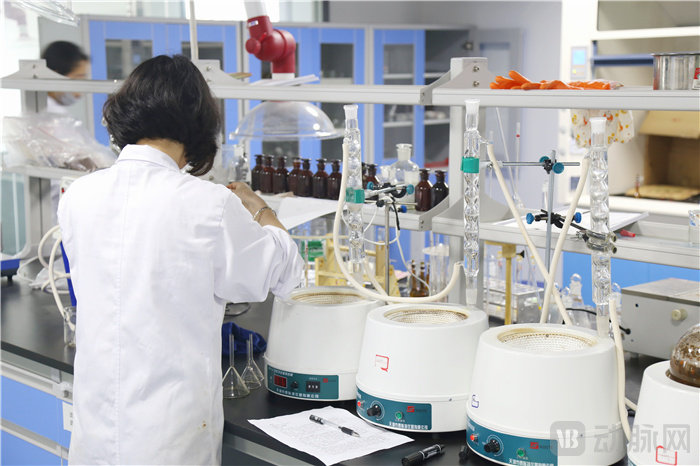
Gu Yitang R&D Laboratory
Meanwhile,Gu Yitang has also recognized the importance of renowned senior traditional Chinese medicine (TCM) practitioners on the supply side of medical services.When establishing its offline TCM clinics, Gu Yitang has partnered with numerous renowned and experienced TCM practitioners, adopting a “front-clinic, back-store” model,Integrated the traditional Chinese medicine pharmacy into the ecosystem built by Gu Yitang.
Created by GuyitangOffline TCM Clinics, the clinic houses departments such as Internal Medicine of Traditional Chinese Medicine, Andrology, Gynecology, and Acupuncture & Tuina, andBy adopting the “specialty-focused + generalist-supported” business model, we provide patients with medical services spanning from specialized care to primary care.Chinese herbal medicine chain stores not only provide pharmaceutical services but also offer sales channels for Guyitang’s products based on the concept of “medicine and food sharing the same origin.”Online, Gu Yitang also leverages its ownPharmaceutical Mallmultiple platforms, providing patients with traditional Chinese medicine and certain products that are both medicinal and edible.
Gu Yitang has further expanded its service boundaries during its development.
To enable TCM clinics to enhance their diagnostic and treatment capabilities as well as service efficiency,Gu Yitang has developed a CDSS (Clinical Decision Support System) for offline TCM clinics to empower their operations., collaborate with TCM clinics to diagnose patients and collect data through smart devices, effectively providing comprehensive nutritional health management solutions for patients.
As the Healthy China 2030 Strategic Plan proposes shifting the focus of disease prevention upstream and further promotes the concepts of “preventing disease before it occurs” and “treating pre-disease conditions,” Gu Yitang, under the guidance of this policy,Expanding from Disease Treatment to the Field of Health Management, by establishing a digital and standardized smart platform for Traditional Chinese Medicine (TCM), and training specialized professionals such as disease-specific health managers, to provide users with health management services encompassing prevention, treatment, and rehabilitation.
To deliver more professional traditional Chinese medicine (TCM) health management services, Guyitang has established a strategic partnership with Hunan University of Chinese Medicine, engaging in in-depth collaboration on the design of an internet-based platform for common chronic diseases and health management under the “Internet+” framework. In October 2020, Guyitang and Hunan University of Chinese Medicine jointly compiled China’s first series of training textbooks for medical staff at internet TCM hospitals, thereby building a talent reserve for such institutions. On September 1, 2021, Guyitang partnered with Hunan Medical College to officially establish and launch the “Guyitang 5G Health Management Laboratory,” marking further progress toward its goal of creating a highly influential integrated service platform for TCM health management.
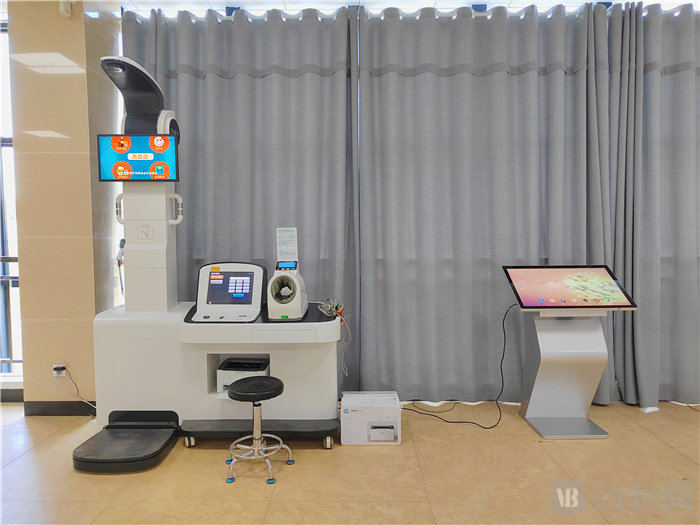
Gu Yitang 5G Health Management Laboratory
From 2014 to 2021, seven years of exploration enabled Gu Yitang to ultimately establish an integrated online-to-offline (OMO) service model.
Online,Gu Yitang has established a renowned physician studio system through its internet hospital platform, leveraging internet and AI technologies to develop the CDSS (Gu Yitang Intelligent Clinical Decision Support System), thereby empowering physicians, medical institutions, and pharmaceutical manufacturers with its internet hospital platform and chronic disease health management platform.
Offline,Gu Yitang currently operates 38 offline TCM clinics, bringing together over 100 renowned senior TCM practitioners and licensed TCM physicians. It has established a business model centered on specialized TCM departments, supplemented by other clinical departments, to provide users with efficient, disease-specific treatment services.
Furthermore, the research, development, and production of products based on the principle that “food and medicine share the same origin,” as well as in-house hospital preparations, provide tangible support for Guyitang’s medical services. While building an integrated online-offline service model to reach more patients,Gu Yitang is also conducting studies, including real-world research, with more hospitals., further enhance patient follow-up, accumulate patient data, and provide positive feedback to the traditional Chinese medicine medical service chain.
Replicating the Model: Leveraging Connectivity to Expand Chains of TCM Clinics
For Yang Jichang, once a stable profit model has been established, the next step is to replicate the model and further increase the number of existing TCM clinics to achieve broader coverage. In an interview, he mentioned that Gu Yitang will continue to expand its offline TCM clinic network to approximately 100 locations through company-owned operations (primarily) and franchise partnerships.
Meanwhile, Yang Jichang highlighted the importance of authentic TCM medicinal materials. Gu Yitang also plans to construct a 40,000-square-meter facility dedicated to the selection, storage, and post-harvest processing of these authentic herbs, thereby maximizing the therapeutic efficacy of Traditional Chinese Medicine.
Yang Jichang is undoubtedly very clear about what lies ahead:
In terms of technological innovation, Guyitang Internet Hospital plans to increase R&D investment in its technological capabilities, focusing on disease-specific solutions within its Clinical Decision Support System (CDSS) and developing digital therapeutics;
In terms of health management, Guyitang plans to continue its systematic research and development of health management screening, exercise management programs, dietary management programs, and tracking implementation systems, aiming to address current challenges from both medical and internet system perspectives;
In terms of smart hardware, Gu Yitang plans to increase R&D efforts for smart devices in its offline stores and for home-use by patients, enhancing their detection and monitoring capabilities to better serve medical and health management systems, thereby supporting user management and real-world studies.
In Yang Jichang’s view, the internet healthcare sector requires significant capital-intensive investment. However, they are more inclined to collaborate with institutions and enterprises that adhere to long-termism. Guyitang will continue to deepen its presence in the internet healthcare field, further integrating online and offline medical service resources through its internet hospital platform. By empowering physical stores via this platform, Guyitang aims to enhance store value while leveraging its self-built “Internet + Healthcare” ecosystem to better serve a larger patient population.