

World's Smallest Artificial Heart Developer Files IPO Prospectus, Highlighting Future of Minimally Invasive MCS
Editor’s Note: Abiomed completed three pivotal strategic transformations in its history through three major acquisitions, gradually evolving into a medical device giant with a market capitalization of hundreds of billions. These three steps were: acquiring an interventional pump to tap into the untapped market for cardiology-focused ventricular assist devices (VADs); acquiring a foldable interventional pump to further break through the market ceiling for interventional VADs; and acquiring ECMO technology to build a comprehensive, platform-based life support portfolio. The strategy of this VAD giant reveals the future development trends for the world’s smallest artificial heart: smaller intervention profiles, higher flow rates, and more comprehensive extracorporeal life support.
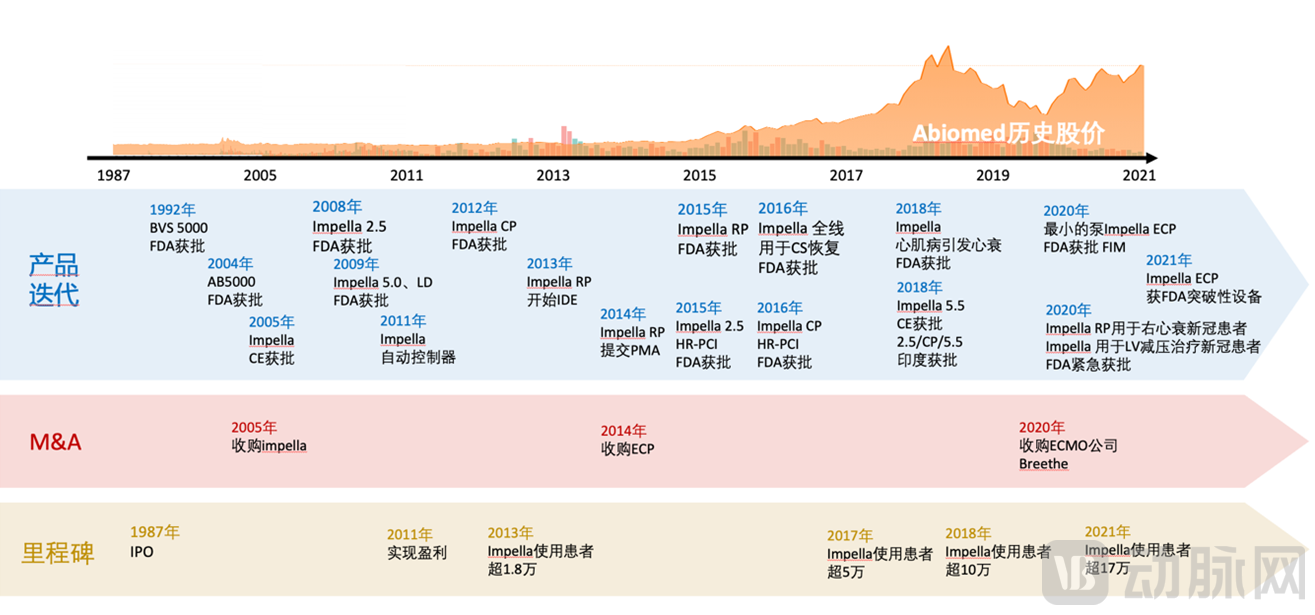
Since 2004, Abiomed has become the fastest-growing medical device company listed on the U.S. stock market. Over the past decade, Abiomed has ranked among the top three performers of all stocks in the S&P 500 Index. Throughout its development, Abiomed has undergone three major mergers and acquisitions and strategic transformations. With each acquisition and the company’s strong financial performance, it has achieved a remarkable market capitalization of nearly $100 billion ($14.9 billion).
Notably, Abiomed achieved three pivotal strategic transformations in its history through three major acquisitions, gradually evolving into a medical device giant with a market capitalization of hundreds of billions. These three steps were: acquiring an interventional pump to tap into the untapped market for ventricular assist devices (VADs) in cardiology; acquiring a foldable interventional pump to further break through the market ceiling for interventional VADs; and acquiring ECMO technology to embark on a comprehensive platform-based life support strategy.
Impella: Transitioning from Implantable to Extracorporeal VADs, Embracing a Broader Market
During the first decade after its founding, Abiomed focused on the research, development, and manufacturing of implantable ventricular assist devices (VADs), with product lines including the BVS5000 and ABS5000 implantable VADs; however, its revenue remained modest. In 2005, after acquiring Impella from Germany, Abiomed gradually expanded into new indications in the United States, enabling ventricular assist devices—originally used in cardiac surgery—to enter the field of cardiology.
Currently, the Impella percutaneous ventricular assist device is FDA-approved for circulatory support in high-risk PCI and the treatment of cardiogenic shock, with ongoing clinical studies further expanding its indications into the STEMI domain. The Impella product line now accounts for more than 80% of the company’s total revenue.
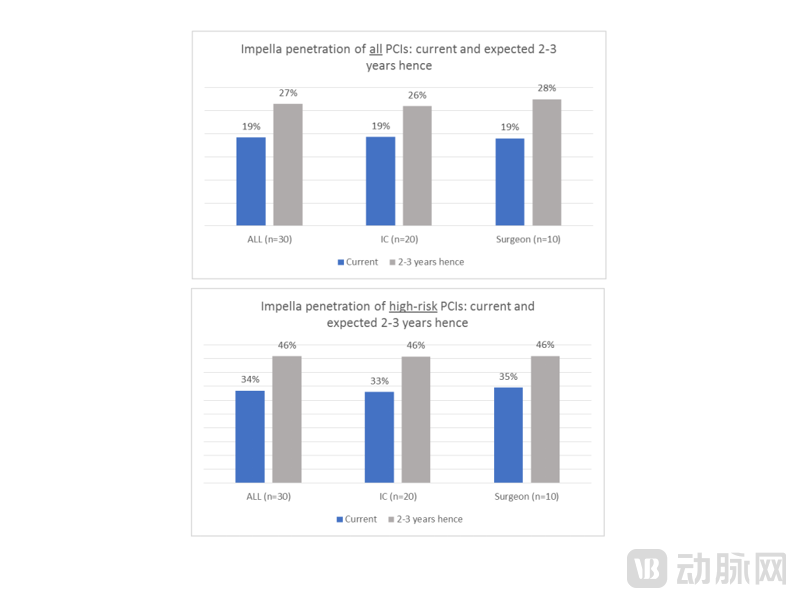
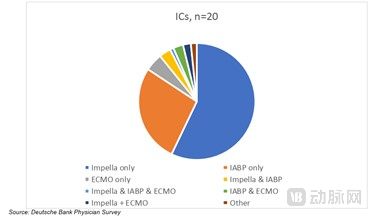
In a research report released this June, Deutsche Bank pointed out that since Impella received FDA approval for the indication of high-risk PCI in 2015–2016, its penetration rate and patient usage in the field of interventional cardiology have grown rapidly year by year. To date, the penetration rate of Impella in all PCI procedures has reached 19% (Figure 1), and 34% in high-risk PCI procedures (Figure 2). Interviews with U.S. physicians indicate that both cardiologists and cardiac surgeons expect Impella to maintain rapid growth over the next two to three years, with its penetration rate reaching 27% of total PCI procedures (Figure 1). Currently, among U.S. cardiologists using circulatory support devices for high-risk PCI, Impella accounts for 64% of all types of circulatory support devices used; specifically, Impella is used as a standalone device in 57% of cases, while the use of the traditional method, intra-aortic balloon pump (IABP), has shrunk to 28% (Figure 3).
ECP: Breaking Through the Bottleneck of Target Market Expansion—Size
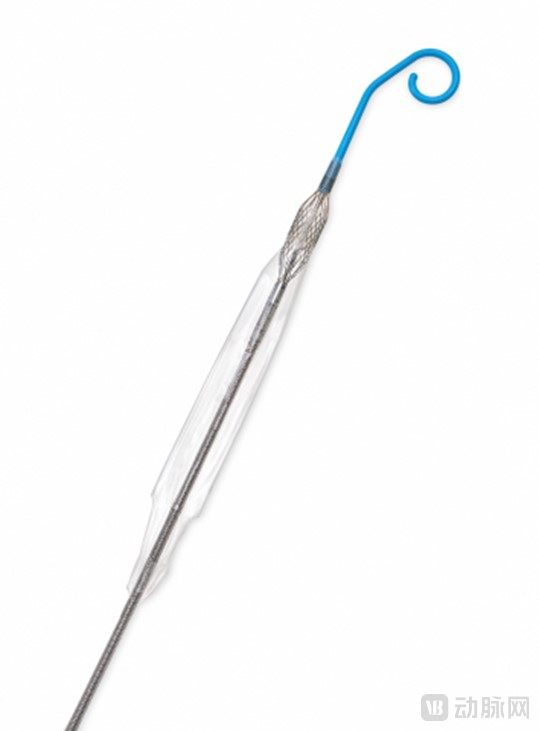
Although the Impella product line has performed impressively in the market, Abiomed still made a visionary acquisition of ECP in 2014 to develop the latest generation of heart pumps—the foldable interventional pump.
The Impella ECP is currently the smallest ventricular assist device in the world, with an insertion profile of only 9 Fr (3 mm). This slender design, combined with a more user-friendly delivery system, significantly reduces vascular complications—the delivery system diameter of the previous-generation Impella was 2–3 times that of the ECP—and shortens the learning curve for physicians, while still achieving flow rates exceeding 3.5 L/min. Within the aorta, the ECP expands to a diameter of 18 Fr; the increased impeller operating diameter substantially improves hemocompatibility compared to traditional non-folding Impella devices, thereby reducing the risk of serious complications such as hemolysis. These two advantages will further expand the target market size and penetration rate of the Impella ECP, which reflects Abiomed’s strategic ambition in acquiring ECP seven years ago.
ECP initiated its U.S. clinical trials last year, and the clinical data from 21 patients in its Investigational Device Exemption (IDE) study have been highly promising. Just two weeks ago, the Impella ECP was granted “Breakthrough Device” designation by the FDA, which is expected to accelerate its market approval in the United States.
ECMO: From Circulatory Support to Multi-Organ Support, the Beginning of Horizontal Synergistic M&A
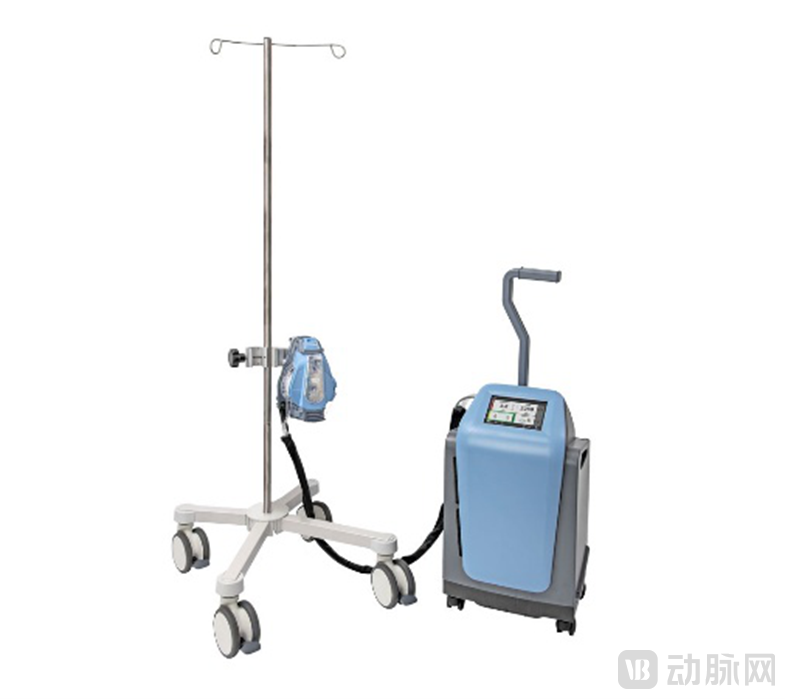
In 2020, Abiomed acquired Breethe™, an extracorporeal membrane oxygenation (ECMO) company, completing its third transformation and shifting Abiomed’s strategy toward multi-organ support rather than solely circulatory support. The post-acquisition ECMO system, OXY-1, can be used in conjunction with the Impella circulatory assist system to form a novel ECMO configuration known as ECPella, which has already entered clinical application. Coinciding with the COVID-19 pandemic in 2020, Abiomed’s strategic layout began to demonstrate its effectiveness, as the FDA granted expedited approval for the use of Impella in supporting critically ill COVID-19 patients.
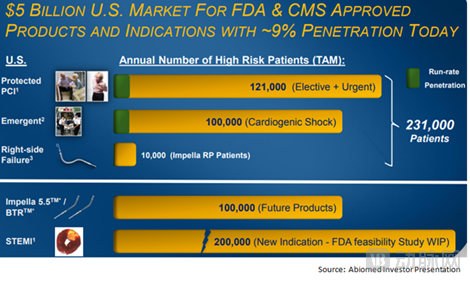
The market for Mechanical Circulatory Support (MCS) is vast, yet current penetration rates remain low. Conservatively estimated, the target market volume for Impella in the United States stands at 335,000 procedures annually, representing a market value of approximately $8.6 billion. Currently, however, the penetration rate within this U.S. target market is only 9%. Technological innovation will continue to drive higher penetration: ongoing device miniaturization will boost utilization rates not only among existing users but also by expanding into emerging indications such as ST-segment elevation myocardial infarction (STEMI). Surveys of clinicians indicate that both cardiac surgeons and interventional cardiologists support strong growth expectations for Impella. Double-digit growth is anticipated within the existing indicated patient population, while new miniaturization technology—specifically the ECP pump—is expected to significantly stimulate market penetration among both interventional cardiologists and cardiac surgeons.
Key Factors Affecting Market Penetration: Two-Thirds Are Related to Intervention Size
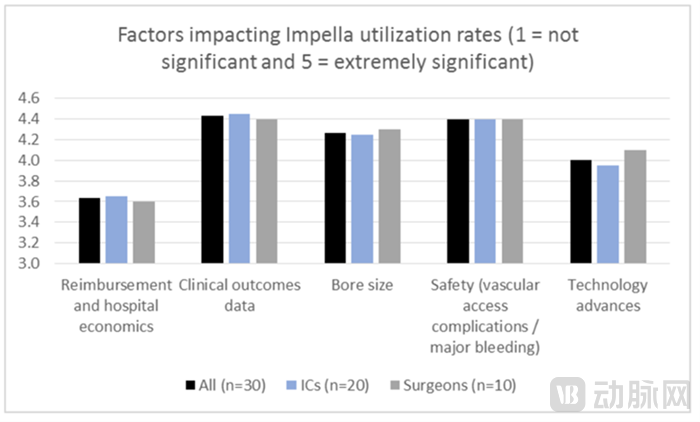
The latest survey of U.S. physicians using Impella (see figure below) reveals that among the five primary factors influencing Impella utilization (market penetration), the most critical are device profile size, safety (specifically, avoiding vascular access site and bleeding complications), and clinical evidence-based medicine (related to circulatory support flow rates). Of these three key factors, two-thirds are directly related to device profile size, while one-third is associated with both size and flow rate.
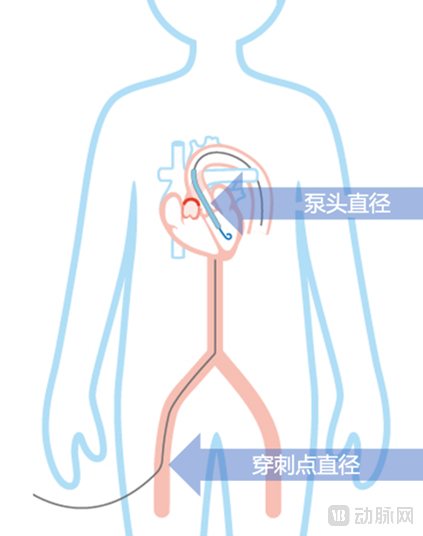
Unmet Need – Small puncture site size, large pump head size
If CP could meet market demand, why did Abiomed spend heavily to acquire ECP? In fact, after Impella had been on the market for many years, large-scale clinical feedback highlighted the need for a delivery system with a sufficiently small profile at the puncture site to reduce vascular complications, and an impeller with a sufficiently large diameter at the pump head to enhance effective and safe flow while reducing hemolytic complications.
However, the current rate of vascular and bleeding complications associated with Impella 2.5 and CP devices reaches 10%. As indicated by the aforementioned physician survey, vascular complications are a significant factor severely hindering further market penetration of Impella. Moreover, the peak flow rates of Impella devices (e.g., 4 L/min for Impella CP and 2.5 L/min for Impella 2.5) do not represent their typical operational flow rates. Due to the small catheter size of the CP and 2.5 pumps (<14 Fr), the impeller must rotate at ultra-high speeds to maintain the corresponding flow.
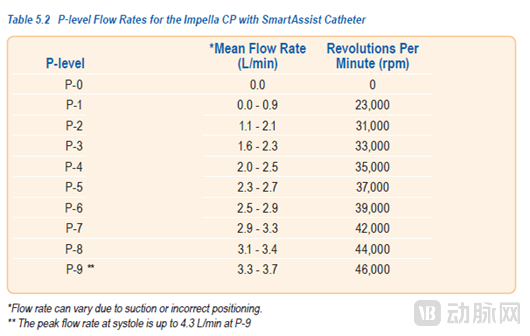
Clinical studies have shown that in multivariate regression analyses of various complications, the pump head size of the Impella CP is positively correlated with hemolysis, which is related to the rotational speed of the pump head impeller constrained by its size. As demonstrated by the flow/pressure curve of the Impella CP (see figure below), the rotational speed reaches 30,000 revolutions per minute (rpm) at a flow rate of 2 L/min. Prolonged maintenance of this rotational speed significantly increases the risk of hemolytic complications. Therefore, in clinical practice, the peak flow rate of the Impella CP (4 L/min, with a rotational speed approaching 50,000 rpm) is typically sustained for only five minutes. Subsequently, the rotational speed must be reduced to avoid hemolysis, resulting in a corresponding decrease in flow rate, which substantially limits its clinical applicability.
Key Growth Driver: Size reduction expands the addressable market by >40%
The reduction in device size is the primary driver of future market growth, with utilization rates expected to increase by more than 40% from current levels. To address the vascular complications associated with the currently available Impella CP, Abiomed has specifically developed a 9Fr expandable delivery sheath compatible with the CP system, thereby reducing the intervention size at the vascular access site.
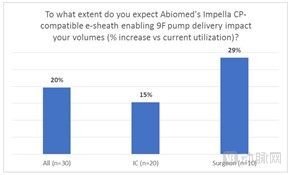
U.S. physician survey results (left chart below) indicate that the 9F XR expandable delivery sheath will drive a 20% expansion in the current target market for Impella use, with a particularly notable 29% increase in the surgical segment.
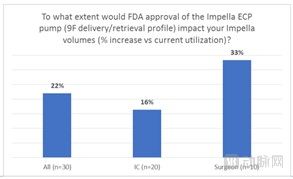
And when the true 9F Impella ECP product is launched, clinicians estimate that it will drive a 22% increase in the target market size, including a 33% increase among surgeons (see the right panel of the figure below).
Extended Duration of Circulatory Support + Expanded Indications
The Impella product line is expanding from short-term circulatory support to cover clinical scenarios requiring short-to-medium-term circulatory support (14 days) (see figure below). Currently, six Impella ventricular assist systems have received FDA approval for high-risk PCI protection and the treatment of cardiogenic shock. Among these, two percutaneous pumps (Impella 2.5 and Impella CP) primarily target the interventional cardiology market for high-risk PCI protection and short-term prophylactic management of cardiogenic shock. Three surgical pumps (Impella 5.0, Impella LD, and Impella 5.5) focus on the cardiac surgery market, providing short-to-medium-term support for cardiogenic shock. These devices offer prolonged circulatory support for critically ill patients, allowing clinicians more time to assess the timeline for cardiac function recovery.
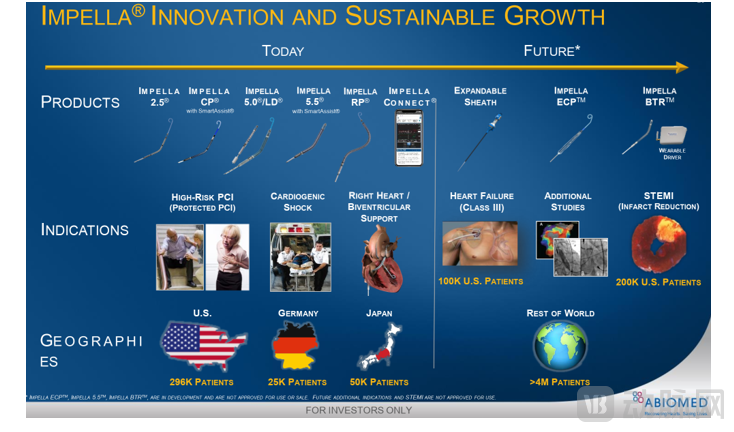
Historically, Abiomed has driven multiple clinical studies, gradually expanding the potential market space significantly with robust evidence-based medical data (see figure below). The two most recent important studies are: ① PROTECT IV: Based on the evidence from this clinical study, the target market space for high-risk PCI expanded by more than threefold. ② STEMI-DTU RCT: The ongoing STEMI DTU study is a prospective, multicenter, two-arm randomized controlled trial planning to enroll 668 patients undergoing treatment for ST-elevation myocardial infarction (STEMI). Previous pilot studies have shown that using Impella before coronary reperfusion can reduce infarct size. It is expected that further market expansion will occur after future approval of the STEMI circulatory support indication, capturing approximately 25% of the STEMI patient market.
Comprehensive Coverage of Multi-Organ Extracorporeal Life Support
As a pioneer in interventional mechanical circulatory support, Abiomed has not rested on the commercial success of its flagship Impella device. To address the comprehensive needs of patients with acute circulatory failure, Abiomed continues to innovate technologically (such as miniaturization of extracorporeal pumps) and strategically deploy full-scenario solutions for emergency life support. In 2020, Abiomed acquired an ECMO product line to develop new indications for ECPella—a combined Impella + ECMO therapy—aimed at meeting the needs of patients suffering from both circulatory and respiratory failure. In the same year, the FDA authorized the use of Impella to provide circulatory support for patients with COVID-19.
References:
1、Abiomed annual reports and investor presentation;
2、2021-06-18-ABMD.OQ-Deutsche Bank-Abiomed Size Matters;
3、Vela2020, Cardiovascular Revascularization Medicine, Volume 21, Issue 5, May 2020, Pages 629-637.
Author:
Chen Yang
M.D. from Peking Union Medical College, with extensive clinical experience at Fuwai Hospital (National Center for Cardiovascular Diseases) and Beijing Anzhen Hospital. Possesses over a decade of experience in the healthcare industry and investment, having led innovative medical device investments at a top-tier USD-denominated fund, and holds proven expertise in the commercialization and IPOs of multiple medical device companies.