

Connectivity-Driven Original Technologies and Extreme Innovation Research: Micro-Level Strategies Under the Macro Trends of the Oncology Gene Testing Industry
“Macro is what we must accept, while micro is where we can make a difference.”
— Charlie Munger

Amid the crisis of the rampant COVID-19 pandemic and the retreat of globalization, industries across the board are undergoing systemic transformation, either proactively or reactively. While many strive to identify factors that can predict and influence macro-level trends, starting from the micro level—whether in terms of insight or action—represents the optimal solution.
The fundamental transformation of the biomedical industry began well before the onset of the crisis, with the proposal of the “Precision Medicine” concept in 2015.The practical experience of “diagnosis first, treatment later” has become a consensus, and the achievement of this consensus is inseparable from gene testing technology.
In the field of precision oncology, the value of genetic testing is particularly significant. This is not only due to the fundamental nature of cancer as a "genetic disease," but also because technological advancements have led to increasingly broad and profound changes in tumor diagnosis and treatment driven by genetic testing.
In terms of breadth, the clinical application of genetic testing has gradually expanded from tumor molecular subtyping and medication guidance to scenarios with greater potential, such as early screening and minimal residual disease (MRD) detection. In terms of depth, genetic testing is progressively delving into the “deep waters” of basic research, including liquid biopsy and multi-dimensional biomarkers, becoming a critical tool for advancing innovative clinical diagnosis and treatment research.
Broad in application, deep in exploration. As factors such as technological iteration and resource aggregation gradually accumulate and transform, the value landscape of tumor genetic testing continues to expand, becoming a decisive factor in initiating a reinforcing loop for the development of precision oncology systems, and gradually forming a macro trend in its own industry development—“Whole-Course Disease Management”。
With the macro trends in the oncology genetic testing industry now evident, how should companies operating within this sector act at the micro level to align with these trends, achieve their strategic layouts, and even emerge as leaders shaping the next phase of macro-level industry development?
During the 2021 CSCO Annual Meeting, the premier academic conference on precision oncology in China, VCBeat focused on Berry Oncology, a representative company in the tumor genetic testing industry that has established a “whole-course management” model. By examining Berry Oncology’s performance in the two highly competitive sectors of early screening and minimal residual disease (MRD) detection, we sought to find answers.
The fervor surrounding early cancer screening is well known. Taking the star enterprise Grail as an example, its $8 billion valuation did not in the least diminish Illumina’s determination to repurchase it. Recently, Grail announced a collaboration with the NHS to conduct a multi-cancer early detection study involving one million participants, further heightening public attention and expectations for the early screening sector. Shifting focus back to China, driven by the policy direction of the “Healthy China 2030” Planning Outline, genuine public demand, and vast market potential, numerous companies have entered the early screening arena, with some firms dedicated solely to early screening successfully completing their initial public offerings (IPOs).
However, a highly controversial topic has long persisted in the early cancer screening sector: Is pan-cancer early screening superior, or is single-cancer early screening better? This debate has even led to the conclusion that only companies that have pursued pan-cancer early screening from the outset possess stronger R&D capabilities.
The vote cast by the primary market with their feet proves that,The debate between pan-cancer and single-cancer indications is merely a matter of research strategy selection, and differences in chosen pathways do not reflect the strength or weakness of a company’s R&D capabilities.
Regarding the selection of research strategies,Each has its own merits, whether in terms of technical pathways and product positioning, or application scenarios and market potential.
While the potential of pan-cancer early screening is undeniable, its implementation challenges and risks cannot be overlooked; similarly, while the application preference for single-cancer early screening is evident, its efficiency and capability in addressing practical clinical issues must not be ignored.
Moreover,Starting with early screening for a single cancer type, it is still possible to advance toward multi-cancer early detection, thereby gaining additional research experience and technical expertise.
In fact, whether for pan-cancer or single-cancer types, three types of clinical studies—pilot, retrospective, and prospective—are indispensable for validating the reliability of early screening products. Prospective studies, in particular, require a sufficiently large cohort that closely reflects real-world populations.
Companies must not only refine their technology platforms while “breaking through the three barriers,” but also collaborate with more partners to build prospective cohorts, and secure sufficient funding to support time- and resource-intensive research. Meeting these conditions merely establishes a foundational capability; delivering a credible product signifies crossing the basic threshold from “0 to 1,” thereby qualifying a company to discuss its R&D strength.
At this early screening-focused session, Berry Oncology provided a textbook example for those following the early screening sector.
Berry Oncology launched in April 2018 the thenChina’s First and Only Ultra-Large-Scale Prospective Cohort for Early Liver Cancer Screening Based on NGS TechnologyThe research project PreCar, which remainsCurrently the world’s largest and most rapidly advancing prospective cohort study of liver cancer.
PreCar has invested over RMB 200 million and collaborated with nearly 20 Grade A tertiary hospitals to conduct a multicenter study involving a cohort of more than 10,000 high-risk individuals. The liver cancer early screening product was developed and validated through the PreCar project.“Laisining” was launched in 2020, with a sensitivity of 95.42% and a specificity of 97.91%.
Subsequently, Berry Oncology disclosed the latest findings from the PreCar prospective screening study (PreCar-S): The HIFI technology, based on whole-genome sequencing of cell-free DNA (cfDNA) and integrating multi-dimensional genomic features such as end motifs, fragment size distribution, and nucleosome footprints, can effectively detect a greater number of patients with very early-stage hepatocellular carcinoma.The proportion of patients with very early-stage disease is more than 20 times higher than that in the general population, enabling very early diagnosis of liver cancer 6–12 months earlier than traditional serological and imaging methods.
This HIFI technology, sharing its name with “High-Fidelity,” has drawn particular attention from VCBeat, as Berry Oncology’s research in the field of early lung cancer screening is also based on HIFI, a foundational and versatile platform technology. Its connectivity is first reflected in the “one-to-many” model.
Another important piece of information disclosed at the meeting was thatData Released from the Lung Cancer Early Screening Pilot Study Led by Peking University People’s Hospital in Collaboration with Multiple Hospitals and Berry OncologyThe enrollment of the pilot study cohort exhibits two prominent characteristics: first,High Proportion of Stage I Lung Cancer, reaching 80.9%, this is the target population that truly requires early screening via blood tests; secondly,Lung adenocarcinoma accounts for a high proportion, reaching 89.2%., which aligns with the characteristics of lung cancer incidence in China.
The latest research results indicate that, compared with conventional serum protein biomarkers,HIFI Model Demonstrates Superior Efficacy in Early Lung Cancer Screening(AUC = 0.912, with the area under the ROC curve exceeding 0.9).
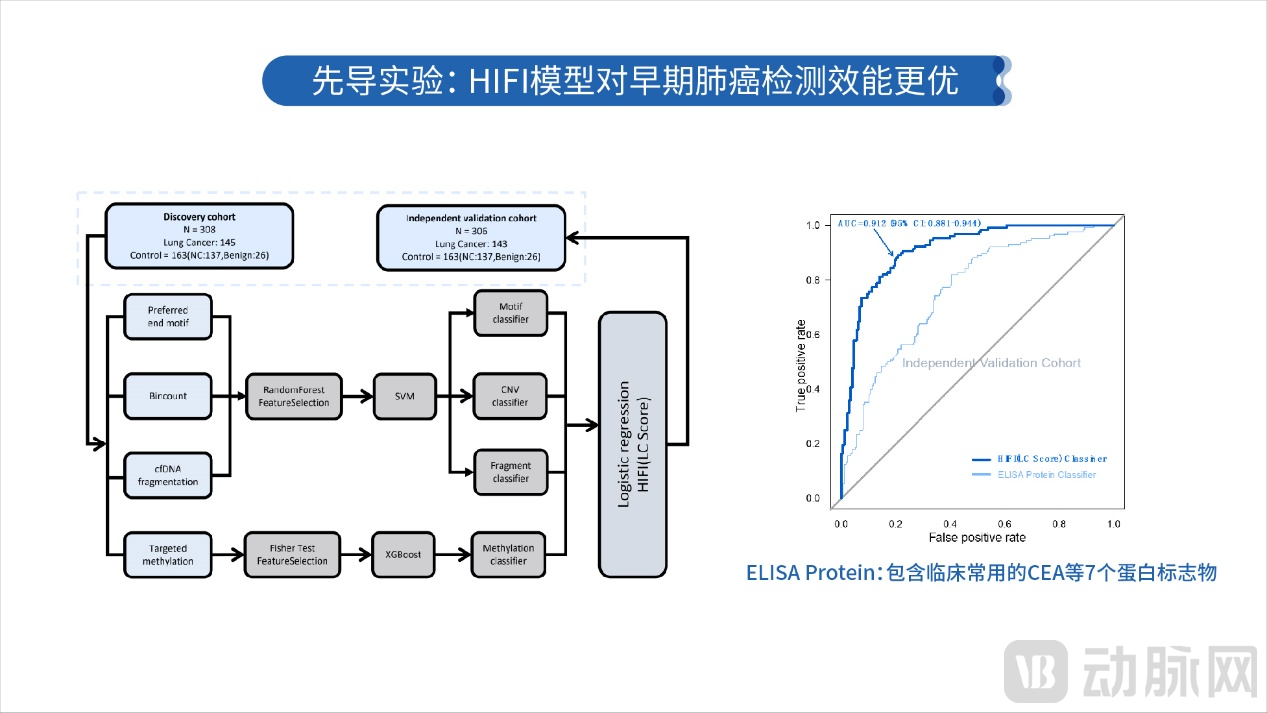
Such an “impressive” area under the ROC curve is rarely seen in the field of early lung cancer screening. As Professor Yang Fan from Peking University People’s Hospital affirmed regarding the HIFI technology: “Compared with other international early-screening models, our model is no inferior and even slightly superior, which is very encouraging.”
The embodiment of HIFI technology’s connectivity in the “1 to All” model is demonstrated in Berry Oncology’s PreCar Project Phase II. Beyond early screening, cfDNA whole-genome sequencing technologyIt can also be used for the differential diagnosis of benign and malignant liver nodules, as well as for monitoring postoperative recurrence of liver cancer.
As one of the key research directions in Phase II of the PreCar project, initiated by Professor Ren Hong, Director of the Institute of Viral Hepatitis at Chongqing Medical UniversityNational Multicenter Study on Differentiating Benign from Malignant Liver Nodules Officially Launched This July
In this project, Berry Oncology has collaborated with 16 clinical medical centers across China, while Academician Wang Hongyang of the Chinese Academy of Engineering and Professor Hou Jinlin from the Department of Infectious Diseases at Nanfang Hospital, Southern Medical University—the lead experts for Phase I of the PreCar project—continue to provide strategic guidance. Berry Oncology has already completed more than half of the comprehensive pathway for whole-course management of liver cancer.
Although some companies have already crossed the threshold from “0 to 1,”Enterprises capable of executing “one-to-many” and “one-to-all” models remain few and far between; platform-based technologies with robust connectivity are key.Moreover, such technology is one of the key elements enabling enterprises to lead the macro trends in industry development.
If early screening represents the incremental market for the tumor genetic testing industry, then MRD constitutes its existing stock market.
However, compared to the field of early cancer screening, MRD testing started slightly later in terms of clinical, industrial, and even capital attention.
It is neither unimportant nor devoid of future prospects. On the contrary, as minimal residual disease (MRD) constitutes the root cause of postoperative tumor recurrence, its precise detection holds significant clinical value for prognostic assessment and adjuvant therapy guidance. Furthermore, the attributes of high patient repurchase frequency and strong willingness to pay endow it with substantial commercial value, especially when considered alongside the annually increasing number of newly diagnosed cancer patients.MRD testing is widely recognized as the “second growth curve” of the tumor genetic testing industry.
The late start and slow progress of MRD testing are attributed to inadequate technical performance and insufficient clinical research.
Taking solid tumors as an example, conventional imaging modalities fail to enable early detection, while serological biomarkers exhibit insufficient diagnostic performance. With the rapid advancements in NGS-based liquid biopsy technologies in recent years, blood-based ctDNA testing has been held in high expectation; however, it still faces challenges such as low abundance (due to limited release into circulation and rapid metabolic clearance) and significant interference.
Berry Oncology has long been at the international forefront of innovative research into MRD detection for solid tumors.The findings of the DYNAMIC research project were published in *Clinical Cancer Research* in 2019. This project was conducted in collaboration between Berry Oncology and the team of Academician Wang Jun from Peking University People's Hospital.The world’s first prospective study to precisely assess perioperative dynamic changes in ctDNA,AlsoThe First Study to Use ctDNA for Monitoring Postoperative MRD in Lung Cancer Patients Among the Asian Population.
Upon publication, this work was highlighted by Nature Reviews Clinical Oncology, which featured a dedicated commentary describing it as “providing a novel perspective on postoperative monitoring for lung cancer and potentially aiding clinical decision-making.”
The reason this study has drawn significant attention from *Nature* lies in the extreme innovativeness of the research. This studyNot only has the limit of detection been pushed to the ten-thousandths place, but the half-life of ctDNA has also been pinned down to 30 minutes, with the baseline date precisely set at three days post-surgery.
At this CSCO conference, Professor Yang Fan presented the latest findings from the DYNAMIC study with an expanded sample size. “The preoperative blood positivity rate is a key indicator for evaluating the sensitivity of ctDNA detection. Currently, wectDNA was detectable in preoperative blood samples of 64% of patients with stage IB–IIIA disease, while the positive detection rate exceeded 90% in patients with stage IIIB–IV disease."Professor Yang Fan stated."
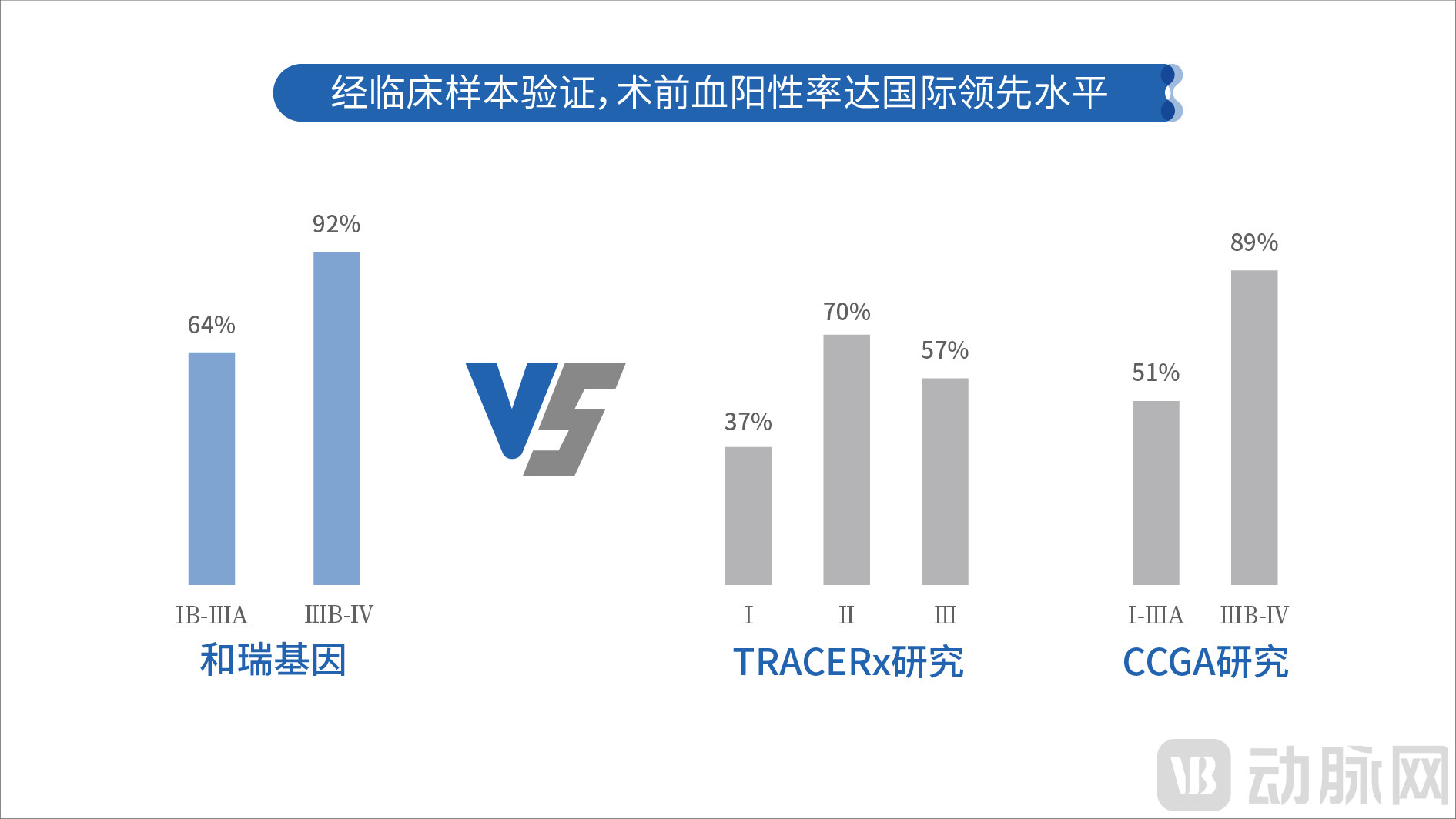
This achievement was made possible by Berry OncologyOriginal Research and InnovationThe cSMART technology, combined with an ultra-high sequencing depth of 30,000X, achieves a limit of detection (LOD) as low as 0.02%.Professor Yang Fan pointed out during his sharing, “This signifies that Berry Oncology’s technological capabilities are no longer inferior to leading international technologies.”
Based on its DYNAMIC research findings, Berry Oncology has commercialized “He Yu An” for monitoring minimal residual disease (MRD) recurrence in solid tumors, while continuing to explore the application of low-depth whole-genome sequencing (WGS) in MRD detection to further enhance sensitivity and specificity.
The relentless pursuit of innovative research excellence is vividly demonstrated in Berry Oncology’s exploration of MRD detection, constituting another key element that positions the company to lead macro-level industry trends.
Final Remarks
Although the concept of “precision medicine” was first proposed by the United States, its essence and value have been implemented and realized in China through the high-level strategic positioning of emerging industries. This approach has been repeatedly emphasized and advanced in numerous guiding policy documents, such as the 14th Five-Year Plan and Healthy China 2030, ensuring concrete implementation at the grassroots level.
At the macro level, proactively adjusting to align with developmental trends, and at the micro level, pragmatically advancing technological innovation, are important strategies for realizing one’s strategic layout. Meanwhile, connectivity-oriented original technologies and extreme innovation research are key factors enabling Chinese national enterprises to lead the global macro-trends in technological innovation.